World Bank lifts Malaysia’s 2026 growth forecast to 5.1pc on AI investment wave世界银行将马来西亚2026年经济增长预期上调至5.1%,理由是人工智能投资热潮。
KUALA LUMPUR, Oct 6 — Malaysia’s economy is expected to grow by 5.1 per cent this year and 4.7 per cent in 2027, largely driven by external demand from artificial intelligence...
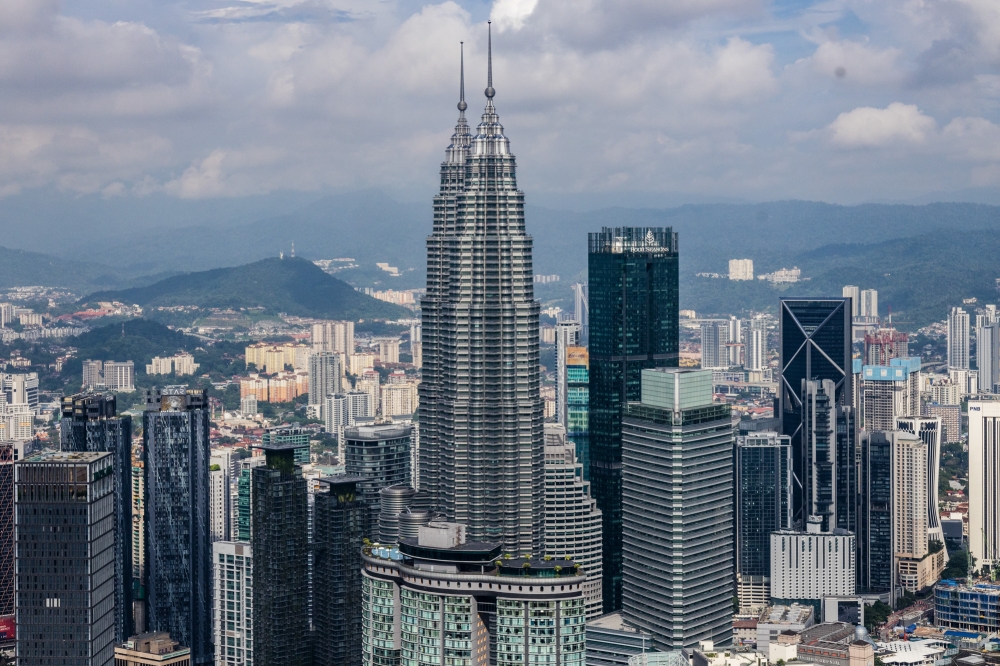
Malaysia's economy is set to grow by 5.1% in 2023, driven by strong external demand for AI-related investments and exports, according to the World Bank.
This growth outpaces the regional average, although concerns persist about Malaysia's heavy reliance on the AI sector, which could face risks from a potential downturn in global AI investment.
Key challenges include the need to enhance foundational skills among the workforce and mitigate the impacts of high energy prices and El Niño on growth prospects.
The report highlights the significant role AI plays in reshaping labor demand and supporting export growth in East Asia.
KUALA LUMPUR, Oct 6 — Malaysia’s economy is expected to grow by 5.1 per cent this year and 4.7 per cent in 2027, largely driven by external demand from artificial intelligence (AI)-related investment and exports, according to the World Bank.
Lead economist for Malaysia Apurva Sanghi said the revision is 0.7 per cent percentage points higher from its previous April forecast and above regional growth of 4.5 per cent.
“Malaysia has recorded the strongest AI-driven export growth in the region, with more than 70 per cent of the country’s overall export growth in early 2026 attributed to increased demand for AI related products.
“So, Malaysia is really riding the AI wave, and while it sounds good, the corollary is that growth excluding AI-related goods has been weak, raising concerns about the economy’s dependence on the AI sector. A slowdown in global AI investment could significantly impact on Malaysia,” he said during a media briefing on October 2026 East Asia and Pacific (EAP) Economic Update today.
He cautioned that a potential reversal in the global AI boom is a key downside risk to Malaysia’s economic outlook, adding that fully realising the technology’s potential would require faster adoption and broader diffusion.
“Malaysia still lags in equipping its population with strong foundational skills, as highlighted in previous Malaysia Economic Monitor reports and other studies,” he said.
Apurva said a sharp reversal could affect Malaysia through two channels: financial channels, wherein the repricing of AI assets could trigger capital outflows from emerging markets, and the real economy channels, through a slowdown in global trade, especially given Malaysia’s strong linkages to the US and China.
“A repricing of AI related assets could prompt global risk aversion and tighten financial conditions, potentially leading to capital outflows from emerging markets including Malaysia.
“The second channel is through the real economy particularly slowdown in trade. If the US growth slows, that has an impact on Malaysia’s growth. In fact, in previous analysis, we showed that a one-percentage-point slowdown in the US growth lowers Malaysia’s growth by 0.8 percentage point,” he said.
Meanwhile, chief economist for Asia Franziska Ohnsorge said the EAP region’s growth is projected to moderate to 4.5 per cent in 2026-2027 or 0.3 percentage point higher than the projected six months ago. This is largely driven by strong high tech investment and exports in countries that are part of the AI value chain.
Several countries in the region, including China, Malaysia, the Philippines, Thailand, and Vietnam are benefitting significantly from their roles in value chains for goods related to AI.
“But elsewhere in the region, high energy prices are weighing on growth prospects. The influence of AI on the region’s industry is unmistakable.
“AI is already reshaping labour demand, with firms increasingly seeking workers with both AI-related and complementary skills, particularly in areas such as mathematics, communications and collaboration,” she said.
Ohnsorge said East Asia’s electronics sector is a major participant in AI-related value chains and that is helping support growth even while cost of the energy is holding back other sectors.
She said AI-related products account for more than half of export growth in several East Asian countries and more than 70 per cent of export growth in Malaysia, the Philippines, Thailand and Vietnam.
At the same time, she said elevated energy prices continue to weigh on growth prospects and have contributed to higher inflation across the region in 2026, with price pressures expected to remain elevated into 2027.
Looking ahead, she noted that the downside risks to the growth outlook include a potential slowdown in global AI-related activity, persistently high energy prices and greater-than-expected damage from El Nino, particularly through its impact on agricultural production. — Bernama
Penang, MAHB ramp up plans for new international routes as PIA expansion progresses
Malaysia to push stronger Asean action on transboundary haze next year, says minister
Bersatu acted in ‘bad faith’ to cripple Perikatan before Melaka polls, Takiyuddin claims in court filing
世界银行预测,在人工智能相关投资和出口的强劲外部需求推动下,马来西亚经济在 2023 年将增长 5.1%。
尽管马来西亚对人工智能行业的严重依赖可能会面临全球人工智能投资下滑带来的风险,但其增长速度仍超过了区域平均水平。
主要挑战包括需要提高劳动力的基本技能,以及减轻高能源价格和厄尔尼诺现象对增长前景的影响。
该报告强调了人工智能在重塑东亚劳动力需求和支持出口增长方面发挥的重要作用。
吉隆坡,10 月 6 日——世界银行表示,马来西亚经济预计今年将增长 5.1%,2027 年将增长 4.7%,这主要得益于人工智能 (AI) 相关投资和出口带来的外部需求。
马来西亚首席经济学家阿普尔瓦·桑吉表示,此次修正后的经济增长率比4月份的预测高出0.7个百分点,高于4.5%的区域增长率。
“马来西亚在人工智能驱动的出口增长方面取得了该地区最强劲的成绩,预计到 2026 年初,该国整体出口增长的 70% 以上将归功于对人工智能相关产品需求的增加。
“所以,马来西亚确实搭上了人工智能浪潮的顺风车,虽然听起来不错,但随之而来的问题是,剔除人工智能相关产品后的经济增长疲软,这引发了人们对马来西亚经济过度依赖人工智能行业的担忧。全球人工智能投资放缓可能会对马来西亚产生重大影响,”他在今天举行的2026年10月东亚及太平洋地区(EAP)经济展望媒体简报会上表示。
他警告说,全球人工智能热潮可能出现逆转,这对马来西亚的经济前景构成重大下行风险。他还补充说,要充分发挥这项技术的潜力,需要更快地采用和更广泛地推广。
他说:“正如之前的《马来西亚经济监测报告》和其他研究中所强调的那样,马来西亚在为民众提供扎实的基础技能方面仍然落后。”
阿普尔瓦表示,急剧逆转可能会通过两个渠道影响马来西亚:金融渠道,人工智能资产重新定价可能会引发新兴市场的资本外流;以及实体经济渠道,全球贸易放缓,尤其考虑到马来西亚与美国和中国的紧密联系。
“人工智能相关资产的重新定价可能会引发全球风险规避情绪,并收紧金融环境,从而可能导致包括马来西亚在内的新兴市场资本外流。
“第二个渠道是通过实体经济,特别是贸易放缓。如果美国经济增长放缓,就会对马来西亚的经济增长产生影响。事实上,我们之前的分析表明,美国经济增长每放缓一个百分点,马来西亚的经济增长就会下降0.8个百分点,”他说道。
与此同时,亚洲首席经济学家弗兰齐斯卡·奥恩索格表示,预计2026-2027年东亚和亚太地区的经济增长将放缓至4.5%,比六个月前的预测高出0.3个百分点。这主要得益于人工智能价值链相关国家的高科技投资和出口强劲增长。
该地区的几个国家,包括中国、马来西亚、菲律宾、泰国和越南,都从其在人工智能相关商品价值链中的作用中获益匪浅。
“但在该地区其他地方,高昂的能源价格正在拖累增长前景。人工智能对该地区产业的影响是毋庸置疑的。”
她表示:“人工智能已经重塑了劳动力需求,企业越来越倾向于寻找同时具备人工智能相关技能和互补技能的员工,尤其是在数学、沟通和协作等领域。”
Ohnsorge表示,东亚电子行业是人工智能相关价值链的主要参与者,这有助于支持增长,即使能源成本阻碍了其他行业的发展。
她表示,在一些东亚国家,人工智能相关产品占出口增长的一半以上;在马来西亚、菲律宾、泰国和越南,人工智能相关产品占出口增长的70%以上。
与此同时,她表示,高企的能源价格继续对经济增长前景构成压力,并导致该地区2026年通货膨胀加剧,预计价格压力将持续到2027年。
展望未来,她指出,增长前景面临的下行风险包括全球人工智能相关活动可能放缓、能源价格持续高企以及厄尔尼诺现象造成的损失超出预期,尤其是对农业生产的影响。——马新社
随着槟城国际航空公司扩张计划的推进,槟城和马来西亚机场控股公司(MAHB)加快了开通新国际航线的步伐。
马来西亚部长表示,马来西亚明年将推动东盟采取更有力的行动应对跨境烟霾问题。
达基尤丁在法庭文件中声称,土团党在马六甲投票前“恶意”削弱国盟