8 public officers referred to police after review of property purchases near future MRT stations8名公职人员因在地铁站附近购置房产被移交警方调查
A referral does not mean wrongdoing has been established, said Chan Chun Sing, adding that due process will be followed. Read more at straitstimes.com.
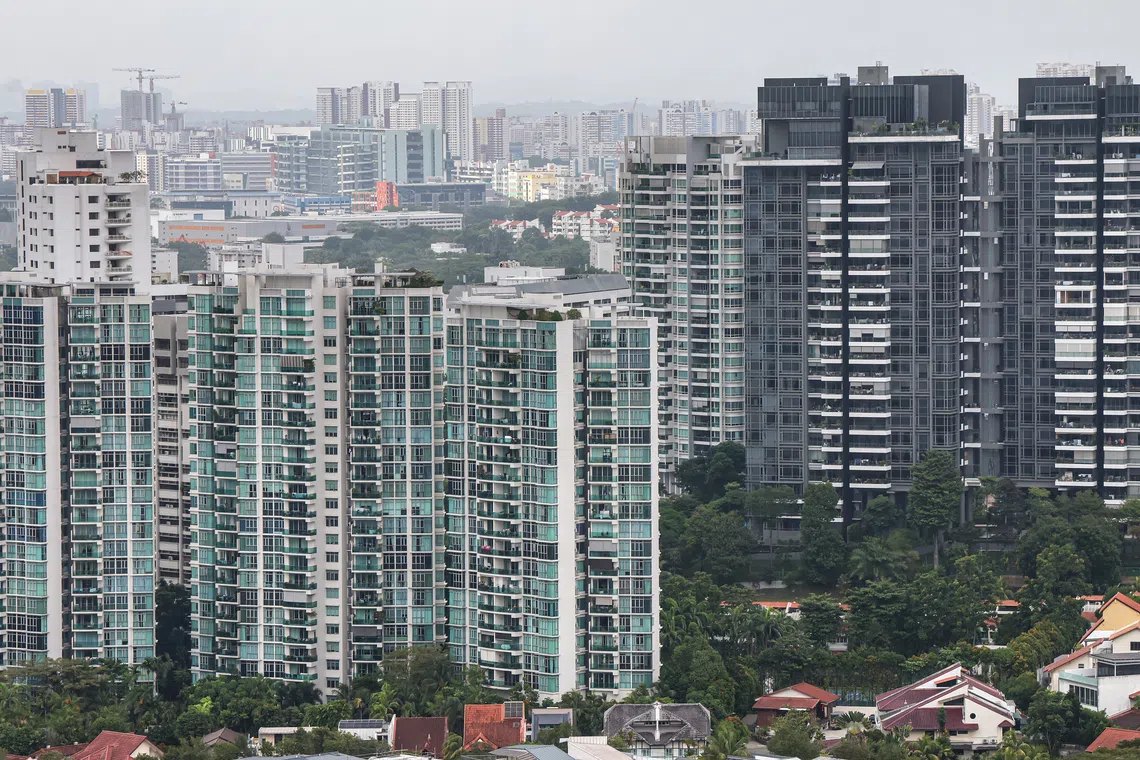
The eight cases were flagged either because of the specific circumstances surrounding the property purchase, or because there was not enough information to rule them out from further review, said Coordinating Minister for Public Services Chan Chun Sing.
Published Oct 06, 2026, 04:24 PM
Updated Oct 06, 2026, 04:24 PM
SINGAPORE — Eight public officers whose property purchases warrant further examination have been referred to the police, said Coordinating Minister for Public Services Chan Chun Sing.
He told the House that the Public Service Division (PSD) has reviewed property transactions made by 191 public officers who worked in agencies involved in rail planning and bought properties between 2007 and 2014 near locations that were subsequently announced as MRT stations.
Chan was responding on Oct 6 to MPs’ questions about a research paper that claimed civil servants involved in rail planning and their families had disproportionately purchased property near unannounced train stations.
He said the eight cases were flagged either because of the specific circumstances surrounding the property purchase, or because there was not enough information to rule them out from further review.
“Let me emphasise that a referral does not mean that wrongdoing has been established,” he added. “The police will look into the facts independently, and due process will be followed.”
The authors of the research paper published on Sept 11 by the US non-profit National Bureau of Economic Research (NBER) had claimed they found “clear evidence of informed trading”.
They cited findings that purchase intensity near planned MRT stations was higher for civil servants than for a control group of non-civil servants with similar demographic attributes and housing consumption behaviours. The statistical association uncovered by the NBER paper concerned MRT announcements in or before 2011.
The PSD said in a statement on Sept 25 that the Government was reviewing home purchases made between 2007 and 2011 by officers involved in rail planning at the time, in cases where the properties were close to sites subsequently announced as MRT stations.
On Oct 6, Chan said the Government has carried out its own checks using government records and chose to extend the review from 2011 to 2014 as a matter of prudence, as many new MRT station locations were announced in the years after 2011.
Asked by Alex Yam (Marsiling-Yew Tee GRC) how long the review would take and whether the Government would release a full report, Chan said it would be completed as soon as possible, with any relevant findings published in full.
As for how many transactions could ultimately fall within the extended review period, Chan replied that 191 cases have been reviewed so far, with more to be examined if further information warranted it.
To Yam’s other question of why the pattern identified by the paper appeared to disappear after 2011, Chan said there was currently no reason to believe that something had fundamentally changed after that year, but this would be examined as part of the review.
Twelve other MPs had filed questions on the matter, with several asking if present safeguards may be strengthened in light of the findings.
They include WP MP Gerald Giam (Aljunied GRC) who asked if the scope of asset declaration rules for public officers will be expanded to cover their parents and financially independent children, beyond the officer’s spouse or financially dependent children.
Yip Hon Weng (Yio Chu Kang) and WP MP He Ting Ru (Sengkang GRC) asked if officers’ property declarations are cross-checked against their access to planning information.
Responding, Chan said any further measures should be proportionate to the risks and practical to implement, while allowing legitimate personal transactions to proceed with appropriate oversight.
He also said the public service regularly reviews its rules and has strengthened them over time, adding that it will consider whether there are gaps to address, based on the present review.
But he noted that even with strong safeguards, no system can eliminate the possibility of wrongdoing entirely. “We must therefore continue to reduce the opportunities for abuse, maintain effective means of detection, and act firmly where evidence of wrongdoing emerges,” he added.
Elysa Chen (Bishan-Toa Payoh GRC) asked if public officers, contractors and consultants involved in infrastructure planning are subject to different declaration or transaction rules than the wider Public Service.
To this, Chan said agencies have safeguards covering persons outside the public service who are given access to sensitive government information, pointing out that contractors, consultants, and other personnel are subject to appropriate confidentiality, conflict of interest, and information handling requirements.
Agencies may also impose additional requirements on them depending on the nature and sensitivity of the work involved, he added.
MPs also asked whether checks should extend to other infrastructure projects and property transactions, including schools or land-use decisions, as well as property sales before the announcement of the 15-month wait-out period in September 2022.
Chan said the Government has not undertaken such a general review, as the present checks were limited to the specific assertions in the NBER working paper about rail planning and property purchases over a particular period.
“We should not assume that officers with access to non-public information have misused it,” he added.
The Government would, however, look into cases where specific information gives reasonable grounds for concern in another context, he said.
Asked by Rachel Ong (Tanjong Pagar GRC) how the Government would avoid actual or perceived conflicts of interest in deciding whether to refer cases for further investigation, Chan said the PSD’s review is meant to establish the relevant facts, not determine criminal culpability.
Where the facts disclose grounds for concern, the matter will be referred to the appropriate law enforcement agency, whether the Police or the Corrupt Practices Investigation Bureau, depending on the circumstances, he said. That agency will look into the matter independently and determine the appropriate course of action.
To Ong’s other question about the funding of the NBER research, Chan said the Government does not have information about its sources of funding.
“More fundamentally, our approach is to assess the substantive claims in the paper on their merits – by examining the methodology, the available evidence and, most importantly, the underlying facts,” he added.
As the NBER paper used private-property transaction records from 1995 to 2019 and linked buyers to records of civil servants in the Singapore Government Directory Interactive, Gho Sze Kee (Mountbatten) asked if additional safeguards are needed to protect officers’ confidentiality.
Chan said certain information on property transactions and ownership is already publicly accessible for legitimate reasons, and some information about civil servants’ appointments and responsibilities also needs to be available in the public domain.
“We should not restrict access to such information simply because it may be linked across different sources,” he added, while assuring the MP that the Government will continue to ensure that personal information about public officers which does not need to be made public is “appropriately protected”.
Asked by Nominated MP Azhar Othman whether owning multiple properties should be considered a red flag for civil servants, Chan said the approach must also be fair to public officers, who would have legitimate housing and investment needs.
“The fact that they can have more than one property is not necessarily a red flag,” Chan said.
Instead, he said it would be a red flag if an officer had assets “way beyond what your financial means or your income allow you to have”.
“But if you husband your resources well and you make judicious investments, that itself is not a red flag,” he added.
Public Service Division
公共服务统筹部长陈振声表示,这八起案件之所以被标记出来,要么是因为房产购买的具体情况,要么是因为没有足够的信息排除进一步审查的可能性。
发布于 2026 年 10 月 6 日下午 4:24
更新于2026年10月6日下午4:24
新加坡——公共服务统筹部长陈振声表示,八名公职人员的房产购买行为需要进一步调查,已被移交警方。
他告诉国会,公共服务署 (PSD) 已审查了 191 名在参与铁路规划的机构工作的公职人员在 2007 年至 2014 年间购买的房产交易情况,这些房产位于后来宣布为地铁站的地点附近。
10月6日,陈在回应议员们关于一份研究报告的质询时表示,该报告声称参与铁路规划的公务员及其家人不成比例地在未公布的火车站附近购买了房产。
他说,这八起案件之所以被标记出来,要么是因为房产购买的具体情况,要么是因为没有足够的信息排除进一步审查的可能性。
他补充道:“我要强调的是,移交调查并不意味着已经认定存在不当行为。警方将独立调查事实,并遵循正当程序。”
美国非营利组织国家经济研究局 (NBER) 于 9 月 11 日发表的研究论文的作者声称,他们发现了“知情交易的明确证据”。
他们引用研究结果指出,公务员在规划中的地铁站附近购房的强度高于具有相似人口统计特征和住房消费行为的非公务员对照组。NBER论文揭示的这一统计关联与2011年或之前发布的地铁项目公告有关。
公共服务署在9月25日发表声明称,政府正在审查2007年至2011年间参与铁路规划的官员购买的房屋,这些房屋的地点后来被宣布为地铁站。
10月6日,陈先生表示,政府已利用政府记录进行了自己的核查,出于谨慎考虑,选择将审查期限从2011年延长至2014年,因为2011年之后宣布了许多新的地铁站选址。
当被马西岭-油池集选区议员 Alex Yam 询问审查需要多长时间以及政府是否会发布完整报告时,陈先生表示,审查将尽快完成,任何相关调查结果都将全文公布。
至于最终有多少交易可能纳入延长审查期,陈先生回答说,目前已审查了 191 起案件,如果进一步的信息有必要,还将审查更多案件。
对于Yam提出的另一个问题,即为什么论文中指出的模式在2011年后似乎消失了,Chan表示,目前没有理由相信在那一年之后发生了根本性的变化,但这将作为审查的一部分进行调查。
另有 12 位议员就此事提出了质询,其中几位询问,鉴于调查结果,是否可以加强现有的保障措施。
其中包括工人党议员严燕松(阿裕尼集选区),他询问公职人员资产申报规则的范围是否会扩大,使其涵盖公职人员的父母和经济独立的子女,而不仅仅是其配偶或经济上依赖的子女。
叶汉荣(义顺集选区)和工人党议员何廷儒(盛港集选区)质问,官员的财产申报是否与其获取的规划信息进行交叉核对。
陈先生回应说,任何进一步的措施都应该与风险相称,并且切实可行,同时允许合法的个人交易在适当的监督下进行。
他还表示,公共服务部门会定期审查其规章制度,并随着时间的推移不断加强这些制度。他还补充说,根据目前的审查结果,公共服务部门将考虑是否存在需要弥补的漏洞。
但他指出,即使采取强有力的保障措施,任何制度都无法完全消除不当行为的可能性。“因此,我们必须继续减少滥用职权的机会,保持有效的侦查手段,并在发现不当行为证据时采取坚决行动。”他补充道。
陈伊丽莎(碧山-大巴窑集选区)问道,参与基础设施规划的公职人员、承包商和顾问是否与更广泛的公共服务人员适用不同的申报或交易规则。
对此,陈表示,各机构都有保障措施,保护那些能够接触到敏感政府信息的非公务人员,并指出承包商、顾问和其他人员都须遵守适当的保密、利益冲突和信息处理要求。
他还补充说,根据工作的性质和敏感程度,相关机构也可能对他们提出额外的要求。
议员们还询问,检查是否应该扩展到其他基础设施项目和房地产交易,包括学校或土地用途决定,以及在 2022 年 9 月宣布 15 个月等待期之前进行的房地产销售。
陈先生表示,政府尚未进行此类全面审查,因为目前的审查仅限于NBER工作文件中关于特定时期铁路规划和房地产购买的具体断言。
“我们不应假定那些能够接触到非公开信息的官员滥用了这些信息,”他补充道。
他表示,不过,如果具体信息在其他情况下引发了合理的担忧,政府将会调查此类案件。
当丹戎巴葛集选区议员王瑞秋询问政府在决定是否将案件移交进一步调查时,如何避免实际或潜在的利益冲突时,陈表示,公共服务署的审查旨在查明相关事实,而不是确定刑事责任。
他表示,如果事实揭示出令人担忧的情况,案件将移交相应的执法机构,视情况而定,可能是警察部门或反贪污调查局。该机构将独立调查案件,并决定采取适当的行动。
对于翁提出的关于 NBER 研究资金来源的另一个问题,陈表示,政府没有关于其资金来源的信息。
“从根本上讲,我们的方法是根据论文的实质内容来评估其价值——通过审查方法论、现有证据,以及最重要的,基本事实,”他补充道。
由于 NBER 的论文使用了 1995 年至 2019 年的私人财产交易记录,并将买家与新加坡政府互动名录中的公务员记录联系起来,Gho Sze Kee(蒙巴顿)询问是否需要额外的保障措施来保护官员的机密性。
陈表示,出于正当理由,有关房地产交易和所有权的某些信息已经可以公开获取,有关公务员任命和职责的一些信息也需要向公众公开。
“我们不应该仅仅因为此类信息可能来自不同的来源就限制对其的访问,”他补充道,同时向这位议员保证,政府将继续确保无需公开的公职人员个人信息得到“适当的保护”。
当官委议员阿兹哈·奥斯曼询问公务员拥有多处房产是否应被视为危险信号时,陈表示,这种做法也必须对公职人员公平,因为他们有合法的住房和投资需求。
陈说:“他们拥有多处房产并不一定就是危险信号。”
相反,他表示,如果一名警官拥有的资产“远远超出其经济能力或收入所允许的范围”,那将是一个危险信号。
“但是,如果你能合理利用资源并进行明智的投资,这本身并不是一个危险信号,”他补充道。
公共服务部