AI company Zero Gravity investing S$20m in Singapore, including in badminton research人工智能公司Zero Gravity在新加坡投资2000万新元,其中包括羽毛球研究项目。
The firm will establish its global headquarters here, and part of its research will look into how artificial intelligence could help badminton players improve their performance.
新闻视频
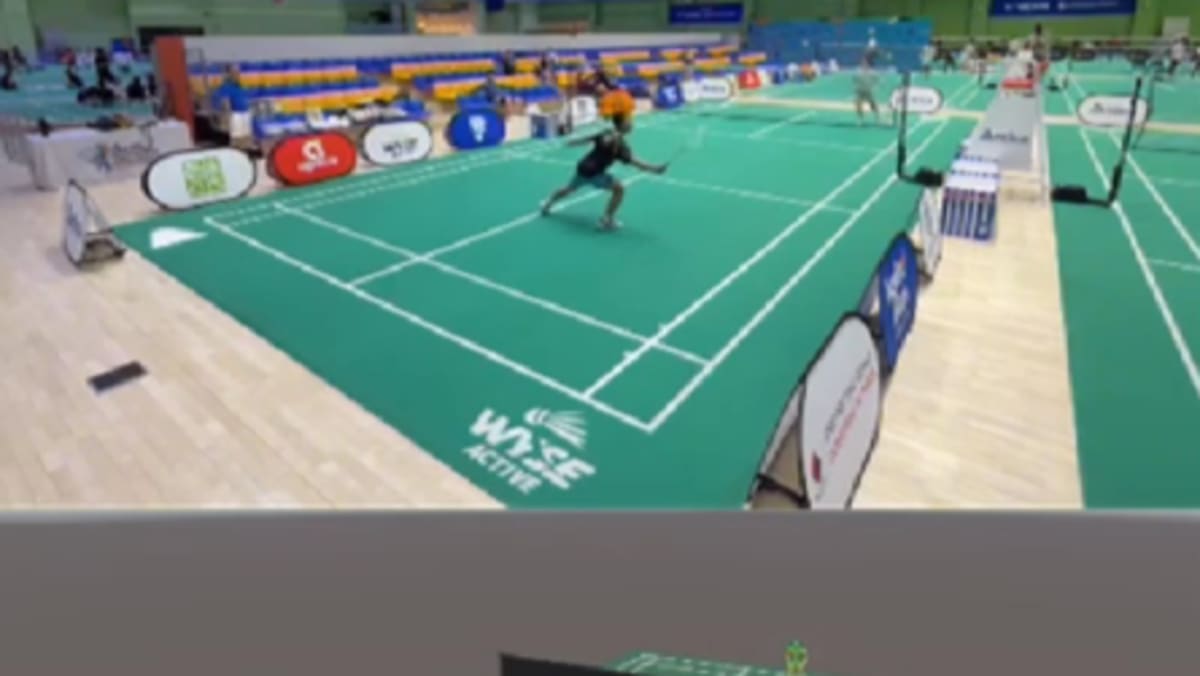
The firm will establish its global headquarters here, and part of its research will look into how artificial intelligence could help badminton players improve their performance.
Researchers are exploring the development of a badminton foundation model, bringing together data on players’ movements, videos, training and competitions. (Image: 0G-NTU AI Research)
This audio is generated by an AI tool.
SINGAPORE: Artificial intelligence infrastructure company Zero Gravity (0G) is investing S$20 million (US$15.6 million) in Singapore over the next five years.
The company announced the investment at its 0G Dev Day at the National Gallery Singapore on Monday (Oct 5).
It will also establish its global headquarters here, using Singapore as a base to develop AI research and talent and take new applications to international markets.
Of the investment, S$10 million will go towards establishing its headquarters and growing its operations and team.
CNA Games Guess Word Crack the word, one row at a time Buzzword Create words using the given letters Mini Sudoku Tiny puzzle, mighty brain teaser Mini Crossword Small grid, big challenge Word Search Spot as many words as you can Show More Show Less “Our commitment to Singapore is not simply about opening an office. It's about research, talent, innovation and long-term investment,” said 0G CEO and co-founder Michael Heinrich. Another S$9 million will support research collaborations at institutes of higher learning. This comprises an existing S$5 million partnership previously announced last November with Nanyang Technological University and a further S$4 million intended for collaborations with other universities and academic partners. The remaining S$1 million will go towards AI and badminton research with NTU and Y Badminton Academy.
“Our commitment to Singapore is not simply about opening an office. It's about research, talent, innovation and long-term investment,” said 0G CEO and co-founder Michael Heinrich.
Another S$9 million will support research collaborations at institutes of higher learning. This comprises an existing S$5 million partnership previously announced last November with Nanyang Technological University and a further S$4 million intended for collaborations with other universities and academic partners.
The remaining S$1 million will go towards AI and badminton research with NTU and Y Badminton Academy.
0G CEO and co-founder Michael Heinrich speaking at the 0G Dev Day at the National Gallery Singapore on Monday. (Image: CNA)
AI ON THE BADMINTON COURT
Mr Heinrich said researchers are exploring the development of a badminton foundation model, bringing together data on players’ movements, videos, training and competitions.
AI could help coaches pick up details they might otherwise miss, said Dr Maliki Osman, patron-in-chief of the Singapore Badminton Association.
“Typically, when we look at sports, it's always the traditional coaches using their own experiences to try to build up capabilities,” said Dr Maliki, formerly minister in the Prime Minister's Office before retiring from politics last year.
“But I'm beginning to see there's a lot of potential for AI to be used.”
This could also help coaches tailor training for younger players and potentially reduce their risk of injury.
“When you infuse data on anatomy, the coaches can get to see that (for example) the muscle strength of (an) 11-year-old is not fully developed, and therefore may not want to push that player too fast, (they) know where his limits are,” Dr Maliki added.
Under a three-year partnership with Y Badminton Academy, there are also plans to create more opportunities for students from neighbourhood schools to take part in the sport.
This could include creating a tournament and providing pathways for promising young players to be identified for further development.
Badminton was chosen because of its “multi-faceted” nature, said Dr Maliki, adding that other than running and jumping, the racket sport also includes eye coordination and hand movements which AI could provide insights into.
He added that the research is still at an early stage and is too soon to draw conclusions, but he hopes that any applications developed could eventually support national athletes and other sports.
SINGAPORE AS A LAUNCHPAD
Senior Minister of State for Digital Development and Information Tan Kiat How, who delivered the keynote address at the event, said Singapore could play a part in the next wave of AI.
“How do we play that useful role? It is by creating an ecosystem of not just ideas and innovators, technology companies providing the capabilities, but also adoption,” he said.
Mr Tan added that Singapore could serve as a starting point for companies to deploy and adapt AI solutions before taking them to other markets.
“Ultimately, technology is not for technology’s sake,” he said.
“It's for the difference in lives, societies, communities, economies, better jobs, better opportunities.”
Get our pick of top stories and thought-provoking articles in your inbox
Stay updated with notifications for breaking news and our best stories
Join our channel for the top reads for the day on your preferred chat app
该公司将在此设立全球总部,其部分研究将探讨人工智能如何帮助羽毛球运动员提高成绩。
研究人员正在探索构建羽毛球基础模型,该模型整合了球员的动作、视频、训练和比赛数据。(图片:0G-NTU AI Research)
这段音频是由人工智能工具生成的。
新加坡:人工智能基础设施公司 Zero Gravity (0G) 将在未来五年内向新加坡投资 2000 万新元(1560 万美元)。
该公司于周一(10 月 5 日)在新加坡国家美术馆举行的 0G 开发者日活动上宣布了这项投资。
该公司还将在此设立全球总部,以新加坡为基地发展人工智能研究和人才,并将新的应用推向国际市场。
其中1000万新元将用于建立总部,并扩大其业务和团队。
CNA游戏猜词游戏:逐行破解单词;流行词游戏:用给定的字母组成单词;迷你数独:小巧的谜题,强大的脑力挑战;迷你填字游戏:小方格,大挑战;单词搜索:尽可能多地找出单词。显示更多 显示更少 “我们对新加坡的承诺不仅仅是开设办事处,而是关于研究、人才、创新和长期投资,”0G首席执行官兼联合创始人迈克尔·海因里希表示。另有900万新元将用于支持高等院校的研究合作。这包括去年11月宣布的与南洋理工大学合作的500万新元现有项目,以及用于与其他大学和学术伙伴合作的400万新元。剩余的100万新元将用于与南洋理工大学和Y羽毛球学院合作开展人工智能和羽毛球研究。
“我们对新加坡的承诺不仅仅是开设办事处,而是关乎研究、人才、创新和长期投资,”0G首席执行官兼联合创始人迈克尔·海因里希表示。
另有900万新元将用于支持高等院校的研究合作。这其中包括去年11月宣布的与南洋理工大学的500万新元现有合作项目,以及用于与其他大学和学术伙伴合作的400万新元。
剩余的 100 万新元将用于与南洋理工大学和 Y 羽毛球学院合作开展人工智能和羽毛球研究。
0G首席执行官兼联合创始人迈克尔·海因里希周一在新加坡国家美术馆举行的0G开发者日活动上发表讲话。(图片:CNA)
人工智能在羽毛球场上的应用
海因里希先生表示,研究人员正在探索羽毛球基础模型的开发,将球员的动作、视频、训练和比赛数据整合在一起。
新加坡羽毛球协会首席赞助人马利基·奥斯曼博士表示,人工智能可以帮助教练发现他们可能忽略的细节。
“通常情况下,当我们审视体育运动时,总是那些传统教练利用自己的经验来培养运动员的能力,”马利基博士说道。他曾担任总理办公室部长,去年从政坛退休。
“但我开始意识到人工智能有很大的应用潜力。”
这也有助于教练为年轻球员量身定制训练计划,并有可能降低他们受伤的风险。
“当融入解剖学数据时,教练们就能看到(例如)11岁孩子的肌肉力量尚未完全发育,因此可能不想让这名球员进步太快,(他们)知道他的极限在哪里,”马利基博士补充道。
根据与 Y 羽毛球学院为期三年的合作协议,还有计划为附近学校的学生创造更多参与这项运动的机会。
这可能包括举办锦标赛,并为有潜力的年轻球员提供发展途径,以便他们能够得到进一步培养。
马利基博士表示,之所以选择羽毛球,是因为它具有“多方面”的特点。他还补充说,除了跑跳之外,这项球拍运动还包括眼部协调和手部动作,而人工智能可以对此提供见解。
他补充说,这项研究仍处于早期阶段,现在下结论还为时过早,但他希望开发出的任何应用最终都能为国家运动员和其他体育项目提供支持。
新加坡作为启动平台
新加坡数码发展及新闻部高级政务部长陈杰豪在活动上发表主旨演讲时表示,新加坡可以在下一波人工智能浪潮中发挥作用。
“我们如何才能发挥这种有益的作用?这需要我们创建一个生态系统,其中不仅包括创意和创新者,以及提供技术能力的科技公司,还包括技术的应用,”他说道。
陈先生补充说,新加坡可以作为企业部署和调整人工智能解决方案的起点,然后再将其推广到其他市场。
“归根结底,技术不是为了技术而技术,”他说。
“这关乎人们的生活、社会、社区、经济的改变,关乎更好的工作和更好的机会。”
订阅我们的邮件,即可获取精选热点新闻和引人深思的文章。
订阅通知,第一时间获取突发新闻和精彩报道。
加入我们的频道,即可在您常用的聊天应用上获取当日热门文章。