Big offensive EW capabilities in a small package小巧机身蕴藏强大的进攻性电子战能力
BAE Systems’ Shadow EW delivers compact, low-SWaP electronic warfare capabilities for drones, small airborne platforms and other unmanned systems.
新闻视频
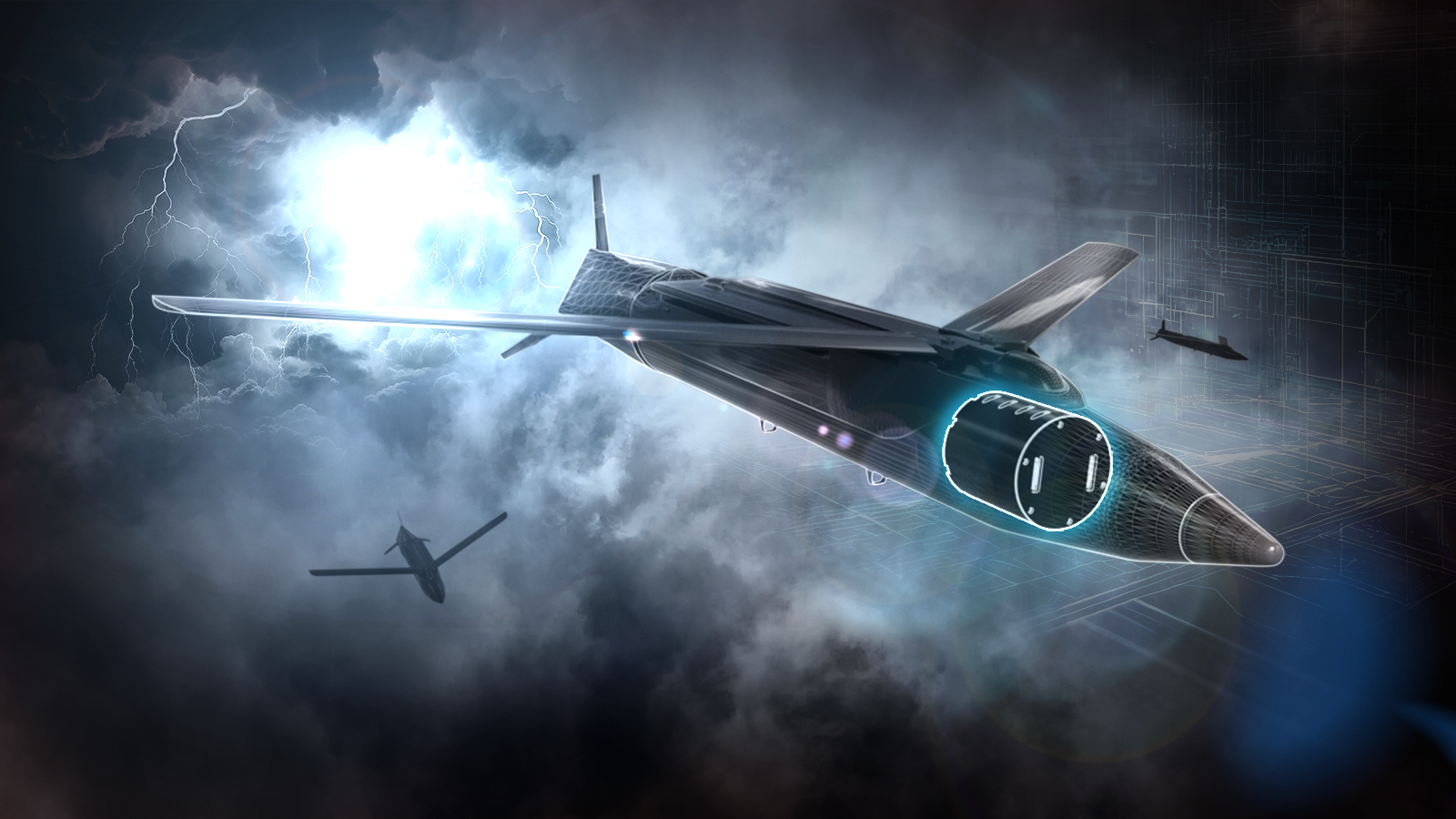
BAE Systems’ Shadow EW™ compact electronic warfare (EW) solutions provide critical situational awareness and self-defense capabilities for a diverse and growing range of small airborne platforms. (BAE Systems)
If there’s one request of electronic warfare (EW), it’s that it can be disruptive from farther distances yet still compact for small airborne platforms, drones, and mass munitions at the aerial layer that are presently dominating ground conflicts around the world.
To bring greater offensive EW capability to the aerial layer, BAE Systems has introduced its small-form-factor software defined radio (SDR) family of products. Shadow EW brings greater offensive capability to modern and legacy aerial systems. Breaking Defense spoke with Dan Mooney, director of business development, and Rebecca Cruz, director, Shadow EW products, at BAE Systems, about how Shadow EW brings new benefits to smaller platforms.
Breaking Defense: Electronic warfare is changing rapidly. What is the threat scenario driving the need for smaller, more efficient SDRs?
Mooney: The No. 1 thing that we see, the demand from our customers, is increased range. The main things that are changing are longer range systems, smaller systems, and access into the increased areas of denial.
Dan Mooney, director of business development, BAE Systems
With that, the need for scalability in EW systems to enable area access for these small on-demand, or medium- or large-class platforms, that’s really the need that we see, is to increase the range of unmanned systems and entry into highly contested environments to our war fighters’ systems.
Mooney: The key here is the timelines. What is required today is a shorter response time in terms of the rapidly evolving EW environment. Things that used to take either years or months to adapt to now require a timeline of days, or a matter of hours.
We’re able to leverage software as the key enabler so that we can meet the mission of the day. Making sure that the war fighter has these systems available to them when they need it – that is the goal of Shadow EW. It’s the ability to upgrade to things like software, firmware, not a hardware material type change. It’s a software change so that these systems are available when needed.
Rebecca Cruz, director, Shadow EW products, BAE Systems
Cruz: The Shadow EW systems are not designed to be bespoke products for any singular platform. They’re designed to support rapid payload insertion and meet a number of different needs across varying mission sets.
What are the specific EW capabilities that you’re looking at for platforms such as drones or mass munitions? How does that vary from a larger, more traditional platform?
Mooney: They don’t necessarily vary much. The Shadow EW system is developed and targeted to address affordable mass systems, but can also scale to things like higher-speed type systems or things like an exquisite-type platform in the unmanned realm. What we’re focused on here isn’t necessarily any reduction or addition of capabilities, it’s a reduction of SWaP (size, weight and power) and enabling those key features to be available to these lower-cost, unmanned or attritable systems.
Cruz: The modularity is critical here, too. With the system being modular as it is, you can purchase different boxes, including the SDR, to place on a platform instead of just one large exquisite system.
Mooney: The beauty of Shadow EW are the capabilities, or jobs, that used to take two, three or four boxes now is hosted within a singular system at a reasonable price point for the platform to lower the logistical implementation of multiple boxes, smaller SWaP and a lower price point of an all-in-one system.
What capabilities do these systems offer compared to legacy systems?
Mooney: The keys here are situational awareness, targeting, survivability, deception, and collaborative behavior. These are all things that as our customers look for network collaborative autonomy and behaviors, being able to leverage those across things like targeting, survivability and deception, we’re able to do that across these unmanned systems.
How quickly is Shadow EW able to adapt to new threats?
Mooney: I can’t get into all the details and specifics of that, but with Shadow EW, we’re able to partner with the warfighter to be able to meet their timelines given the mission. I can tell you with certainty that it’s not months or years. We are working on the timelines that the warfighter dictates to us, and as a partner with them to be able to meet the mission of the day and not be the squeaky wheel.
Cruz: That drives to our commercial stance. Part of the reasoning for driving to commerciality is we heard the Department of War talk about getting things fielded into the warfighter’s hands quicker. BAE Systems has and is continuing to internally invest to get apps built, to get hardware built, so that we have things readily available to field quicker to the warfighter.
As products get old, we are working through refresh cycles. We’re continuing to refresh that software, firmware and stay ahead of emerging threats so that when new threats emerge, we have more options to provide to our customers.
Your systems are software-defined; what about the hardware?
Mooney: Beyond just the software piece, it’s the agnostic nature of the hardware, as well. We’re not bespoke to any certain apertures and antennas, not bespoke against any singular interface or standard, it’s open standards. Software is the key, but as new platforms come online, we want that rapid insertion. The Shadow EW systems are not bespoke to the other parts of the RF radio frequency package.
Cruz: As a part of that product refresh cycle, we are closely tuned in and tied in with our business development teams and such that we’re consistently monitoring the needs, the warfighters’ needs, the market, and working to stay ahead of any changes that need to be made to that architecture. As we refresh the products, we’re being informed by the communications that our business development teams are bringing back to us.
What should be the takeaways about Shadow?
Cruz: The environment is changing, as Dan said, sometimes even by the minute. Shadow EW represents a critical shift in how we think and how BAE Systems develops and delivers our products, specifically the cost-effective electronic warfare that is highly manufacturable, in order to scale and get these to our warfighter in a rapid manner.
The product delivers a big punch in a small box, and they are meant to address that low-cost need that our warfighters have been looking for and asking for to protect our nation and protect themselves in their day-to-day operations.
Mooney: Shadow enables access to the best of breed for what BAE Systems does. With our history and our pedigree with electronic warfare, it’s commonplace to think of delivering these large systems that are quite expensive. Whereas here, as Rebecca said, highly manufacturable, high volume, and able to be lower cost to meet budgets of respective programs.
It also enables access for customers with Shadow EW to proven capabilities from BAE Systems’ EW prowess. Capabilities that have been proven in simulation environments, in operational theater, Shadow EW leverages down into a smaller box at a lower SWaP available when needed. Don’t think tens or hundreds of systems, think multiple thousands.
BAE系统公司的Shadow EW™紧凑型电子战(EW)解决方案为种类繁多且日益增长的小型空中平台提供关键的态势感知和自卫能力。(BAE系统公司)
如果说电子战(EW)有什么要求的话,那就是它能够从更远的距离进行干扰,同时又能保持紧凑,以便小型空中平台、无人机和空中大规模弹药能够部署,而这些正是目前主导世界各地地面冲突的武器。
为了增强空中作战的进攻性电子战能力,BAE系统公司推出了小型软件定义无线电(SDR)系列产品。Shadow EW系统为现代和传统空中系统带来了更强大的进攻能力。Breaking Defense网站采访了BAE系统公司业务发展总监丹·穆尼和Shadow EW产品总监丽贝卡·克鲁兹,探讨了Shadow EW系统如何为小型平台带来新的优势。
突破防御:电子战正在迅速变化。是什么威胁形势推动了对更小、更高效的软件定义无线电(SDR)的需求?
穆尼:我们看到客户最迫切的需求是提高射程。主要的变化在于射程更远、系统更小,以及能够进入更多敌方控制区域。
Dan Mooney,BAE系统公司业务发展总监
因此,电子战系统需要具备可扩展性,以便这些小型按需平台或中型或大型平台能够进入特定区域。我们看到的真正需求是增加无人系统的范围,并使我们作战人员的系统能够进入高度对抗的环境。
穆尼:关键在于时间节点。如今,在瞬息万变的电子战环境中,我们需要更短的响应时间。过去需要数年或数月才能适应的事情,现在只需几天甚至几小时就能完成。
我们能够利用软件作为关键推动因素,从而完成当日任务。确保作战人员在需要时能够使用这些系统——这就是“影子电子战”的目标。它指的是软件、固件等方面的升级,而非硬件材料的更换。这是一种软件升级,旨在确保这些系统在需要时可用。
Rebecca Cruz,BAE系统公司Shadow电子战产品总监
克鲁兹:影子电子战系统并非为任何单一平台量身定制的产品。它们的设计旨在支持有效载荷的快速插入,并满足不同任务组合中的多种不同需求。
您正在关注无人机或大规模杀伤性武器等平台的具体电子战能力是什么?这与更大、更传统的平台有何不同?
穆尼:它们之间的差异并不大。“影子”电子战系统是为应对价格适中的大规模系统而开发的,但也可以扩展到更高速度的系统,或者像无人领域的精密平台。我们关注的重点并非是功能的增减,而是降低系统的尺寸、重量和功耗(SWaP),并使这些关键特性能够应用于这些低成本、无人或可消耗的系统。
克鲁兹:模块化设计在这里也至关重要。由于系统本身就是模块化的,你可以购买不同的组件,包括软件定义无线电接收器(SDR),并将它们放置在平台上,而不是只能使用一个大型的、精致的系统。
Mooney:Shadow EW 的优势在于,以前需要两到三个甚至四个盒子才能完成的功能或任务,现在都集成在一个系统中,而且价格合理,这使得平台能够降低多盒子部署的物流成本,减小 SWaP,并降低一体化系统的价格。
与传统系统相比,这些系统具备哪些功能?
穆尼:关键在于态势感知、目标定位、生存能力、欺骗和协作行为。这些都是我们的客户在寻求网络协作自主性和行为时所需要的,而能够在目标定位、生存能力和欺骗等方面利用这些能力,正是我们在这些无人系统中能够实现的。
Shadow EW 能够以多快的速度适应新的威胁?
穆尼:我无法透露所有细节,但通过“影子电子战”项目,我们能够与作战人员合作,在既定的任务期限内完成任务。我可以肯定地告诉你,这不会耗时数月甚至数年。我们严格按照作战人员的要求制定时间表,并与他们携手合作,确保按时完成任务,而不是成为拖后腿的人。
克鲁兹:这促使我们采取商业化策略。我们之所以致力于商业化,部分原因是我们听到美国陆军部谈到要尽快将装备交付给作战人员。BAE系统公司过去和现在都在进行内部投资,开发应用程序和硬件,以便我们能够更快地将装备交付给作战人员。
随着产品老化,我们会进行更新换代。我们会持续更新软件和固件,并密切关注新出现的威胁,以便在新威胁出现时,能够为客户提供更多选择。
你们的系统是软件定义的;那么硬件呢?
Mooney:除了软件之外,硬件的通用性也至关重要。我们不针对任何特定的孔径和天线,也不针对任何单一的接口或标准,我们采用的是开放标准。软件是关键,但随着新平台的上线,我们希望能够快速部署。Shadow电子战系统并非针对射频组件的其他部分而设计。
克鲁兹:作为产品更新周期的一部分,我们与业务拓展团队保持密切联系,持续监测作战人员的需求、市场动态,并努力提前应对架构方面的任何变更。在产品更新过程中,我们会参考业务拓展团队反馈的信息。
关于《影子》,我们应该记住什么?
克鲁兹:正如丹所说,环境瞬息万变,有时甚至每分钟都在变化。“影子电子战”标志着我们思维方式以及BAE系统公司开发和交付产品方式的重大转变,特别是成本效益高、易于制造的电子战产品,以便能够快速扩大规模并交付给作战人员。
该产品体积小巧,威力强大,旨在满足我们作战人员一直以来所寻求和要求的低成本需求,以保护我们的国家和他们在日常行动中保护自身安全。
Mooney:Shadow系统让BAE系统公司能够获得业内顶尖的技术。凭借我们在电子战领域的悠久历史和卓越成就,我们通常会想到交付那些价格昂贵的大型系统。而正如Rebecca所说,Shadow系统具有高度可制造性、高产量,并且能够降低成本,以满足各个项目的预算需求。
它还使拥有 Shadow EW 的客户能够利用 BAE Systems 久经考验的电子战能力。这些能力已在模拟环境和作战环境中得到验证,Shadow EW 将其集成到一个更小巧、更轻便、重量更轻的设备中,以便在需要时随时可用。不要想着几十或几百套系统,而是要考虑数千套。