The haze and the pulse of the region该地区的薄雾和脉搏
OCTOBER 7 — “You want to save the world, but you don’t want it to change.” — Ultron to the AvengersKL’s skyline of late looks funky. It’s like the city is situated...
The article discusses the severe haze in Kuala Lumpur, attributing it to large-scale agricultural burning primarily in Indonesia, driven by economic motives.
It criticizes the prioritization of profit over environmental health, linking the haze to increased health risks such as cardiac arrests and asthma.
The piece advocates for societal introspection and suggests adopting a "Jubilee" concept, a period of rest for the land and environment, as a way to counteract the relentless pace of capitalism.
The commentary implies that the pursuit of economic growth often comes at the cost of environmental and human well-being.
OCTOBER 7 — “You want to save the world, but you don’t want it to change.” — Ultron to the Avengers
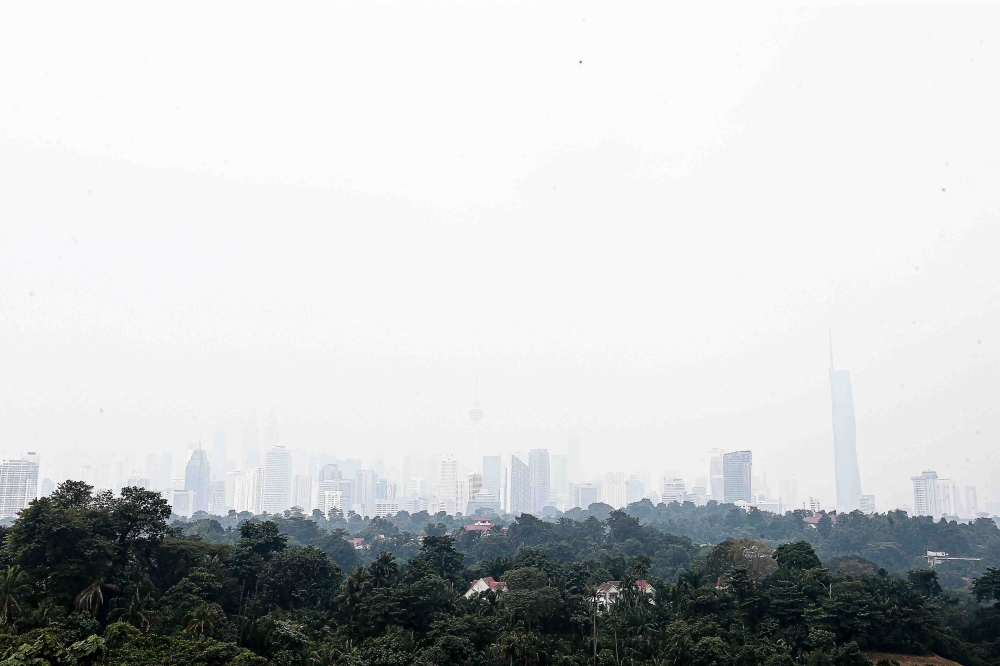
KL’s skyline of late looks funky. It’s like the city is situated 20,000 feet above sea-level. Looks like heaven... but smells like hell.
The haze is like purgatory veiled in dry ice. And purgatory in Christian teaching is that place where souls are cleansed and refined (for, literally, heaven’s sake).
Is there something our unenviable air quality readings can teach us as a nation? As a region? Can the haze, uh, cleanse us of anything?
Imagine a mega- sensei checking the pulse of our region. What would he be listening for other than the haze? What would he be concerned about apart from the immediate symptom?
My guess is he wouldn’t be pumped up about simply removing the smoke and pollution from the skies — he’d also want to ensure the land as a whole is clean.
I’m thinking this sensei would say that South-East Asia is suffering from over-consumption, over-construction, over-everything.
The haze is like an elemental dump-site taking flight. It’s our trash thrown back at us.
Because we all know the forest fires are tied to economics and cost-cutting measures performed in near-indifference to anything else.
Industrial-scale agricultural burning – primarily for palm oil and pulpwood production in Sumatra and Kalimantan, Indonesia – uses cheap and fast practices to clear land.
When coupled with extremely dry weather, voilà, our cities look like Genting Highlands in the evening.
Can we blame the Indonesian farmers? Sure we can. But in the end we mustn’t ignore the overall greed of society which has led to this.
We now know that the haze is correlated with a rise in cardiac arrests, asthma cases and so on (see note 1) so, well, this is yet another example of how corporate and/or governmental prioritisation of money-making extracts a toll from the people.
TLDR: The lack of care for the environment is killing us.
The haze is yet another symptom of capitalism which extols income and revenue at the expense of its human subjects. And this time the region, instead of merely families and communities, suffers.
The Jubilee proposal
In the Bible – particularly the book of Leviticus chapter 25 – the Jubilee was proposed as a once in 50-year event in which, for an entire year, the land lies fallow.
All debts are cancelled, prisoners set free. It was like a socio-political reset. Most importantly – in the context of the haze – it was also an economic and environmental time-out.
Let the land, the air, the animals and Nature as a whole take a break .
Quit worrying about GDP and just consume what’s already produced. No need to bother with “Customer Experience”; muse instead on “Imagine the Land as Customer”.
Rest. Relax. Chillax.
Of course, capitalism knows no year-long Jubilees (and, sadly, there is no evidence the Jubilee was ever implemented in history). It only understands two-week work-from-hotel vacations.
Essentially, the haze reminds us that economics isn’t everything
Recall in 2010 that an Icelandic volcano blew up, and 95,000 flights were grounded? Many travellers lamented their fate on TripAdvisor, but let’s face it: It’s not every day that Mama Earth tells the hubris-soaked humans to stop whatever they’re doing and just be .
“You want to fly to London? Nope. Not gonna happen. Ash-cloud. You can row there if you wish”.
Maybe Ultron wasn’t entirely wrong. We often don’t want real change, so now our cities, the very region north and north-east of Kalimantan, look like Everest base-camp at dawn.
Note 1: The key study for haze and cardiac arrests is Ho, Andrew Fu Wah, et al. “Air quality and the risk of out-of-hospital cardiac arrest in Singapore (PAROS): a time series analysis.” The Lancet Public Health 7.11 (2022): e932-e941. For asthma it’s Kulkarni, Anagh, et al. “Short-Term Exposure to PM2. 5 and Emergency Department Visits for Asthma and Chronic Obstructive Pulmonary Disease.” JAMA Network Open 9.9 (2026): e2636306.
* This is the personal opinion of the writer or publication and does not necessarily represent the views of Malay Mail.
Kingdoms made of cardboard: When adults make it hard for kids to buy toys
Two new Chinese blockbusters show us how it’s done
Are your children sleeping in a hostel tonight?
Budget-tight Suhakam wants stronger public funding even if allowed to generate own revenue, says chairman
Nearly 51 years later, daughter of former Perak police chief Khoo Chong Kong remembers the man behind his uniform
‘A happy family?’: Zara Qairina’s stepsister says she never met teen, but regularly viewed photos on social media
文章讨论了吉隆坡的严重雾霾,并将其归咎于主要在印度尼西亚进行的大规模农业焚烧,而这又是由经济动机驱动的。
它批评了将利润置于环境健康之上的做法,并将雾霾与心脏骤停和哮喘等健康风险增加联系起来。
这篇文章提倡社会反思,并建议采用“禧年”的概念,即让土地和环境休息一段时间,以此来对抗资本主义无情的步伐。
该评论暗示,追求经济增长往往会以牺牲环境和人类福祉为代价。
10月7日——“你想拯救世界,但你不想让它改变。”——奥创对复仇者联盟说
吉隆坡近来的城市天际线看起来有点怪异,仿佛这座城市坐落在海拔两万英尺的高空。看起来像天堂……但闻起来像地狱。
那片薄雾就像笼罩在干冰中的炼狱。而基督教教义中的炼狱,正是灵魂得到净化和提炼的地方(说真的,为了上天的缘故)。
我们糟糕的空气质量读数能给我们这个国家、这个地区带来什么启示吗?雾霾能净化我们吗?
想象一下,一位超级大师正在检查我们地区的状况。除了雾霾之外,他还会关注什么?除了眼前的症状之外,他还会担心什么?
我猜他不会仅仅满足于消除天空中的烟雾和污染——他还希望确保整个国家都干净。
我想这位老师会说东南亚正遭受过度消费、过度建设、各方面过度发展的困扰。
雾霾就像一个漂浮在空中的垃圾场,是我们扔回给我们的垃圾。
因为我们都知道,森林火灾与经济和削减成本的措施息息相关,而这些措施几乎完全无视其他一切。
工业规模的农业焚烧——主要用于印度尼西亚苏门答腊岛和加里曼丹岛的棕榈油和纸浆木材生产——采用廉价快捷的方式清理土地。
再加上极度干燥的天气,瞧,我们的城市夜晚看起来就像云顶高原一样。
我们能责怪印尼农民吗?当然可以。但归根结底,我们不能忽视导致这一切的整个社会的贪婪。
我们现在知道,雾霾与心脏骤停、哮喘病例等的增加有关(见注释 1),所以,这又是一个企业和/或政府优先考虑赚钱而给人民带来代价的例子。
简而言之:对环境缺乏关爱正在毁灭我们。
这场雾霾是资本主义的又一例证,它以牺牲人民的利益为代价,追求收入和利润。而这一次,受苦的不仅仅是家庭和社区,而是整个地区。
禧年提案
在《圣经》中——特别是《利未记》第 25 章——禧年被提议为每 50 年一次的事件,在这一年中,土地整整一年处于休耕状态。
所有债务都被免除,囚犯被释放。这就像一次社会政治重置。更重要的是——在雾霾笼罩的背景下——这也是一次经济和环境的暂停。
让土地、空气、动物和整个大自然休息一下。
别再担心GDP了,直接消费已经生产出来的东西就好。不必费心搞什么“顾客体验”,不如想想“把土地想象成顾客”。
休息。放松。放松一下。
当然,资本主义不承认长达一年的禧年(而且,可悲的是,也没有任何证据表明禧年在历史上真正实施过)。它只理解为期两周的酒店工作假期。
从本质上讲,这场雾霾提醒我们,经济并非一切。
还记得2010年冰岛火山爆发,导致95000架航班停飞吗?许多旅行者在TripAdvisor上抱怨自己的遭遇,但说实话:地球母亲并不是每天都会告诉那些傲慢自大的人类,让他们停止一切所作所为,回归自然。
“你想飞去伦敦?不可能。到处都是火山灰。你要是想去,可以划船过去。”
或许奥创说的并非全错。我们往往不愿接受真正的改变,所以现在我们的城市,以及加里曼丹岛北部和东北部的地区,看起来就像黎明时的珠穆朗玛峰大本营。
注1:关于雾霾与心脏骤停的关键研究是Ho, Andrew Fu Wah等人的“新加坡院外心脏骤停风险(PAROS)空气质量与风险:时间序列分析”。《柳叶刀公共卫生》7.11 (2022): e932-e941。关于哮喘的关键研究是Kulkarni, Anagh等人的“短期暴露于PM2.5与哮喘和慢性阻塞性肺疾病急诊就诊”。《美国医学会杂志网络开放版》9.9 (2026): e2636306。
* 这是作者或刊物的个人观点,并不一定代表《马来邮报》的观点。
纸板王国:当成年人让孩子们难以购买玩具时
两部新的中国大片向我们展示了如何做到这一点。
你的孩子今晚睡在青年旅舍吗?
预算紧张的泰国人权委员会主席表示,即使允许其自行创收,也希望获得更多公共资金支持。
近51年后,霹雳州前警察总长邱崇光的女儿依然记得这位身着制服的男人。
“幸福的家庭?”:扎拉·凯里娜的继妹称她从未见过这位少女,但经常在社交媒体上看到照片。