Defense bill calls for outside scrutiny of Marines’ modernization plan国防法案要求对海军陆战队的现代化计划进行外部审查
A provision in Congress' not-yet-final annual defense authorization bill calls for "an independent review, assessment, and analysis" of Force Design 2030.
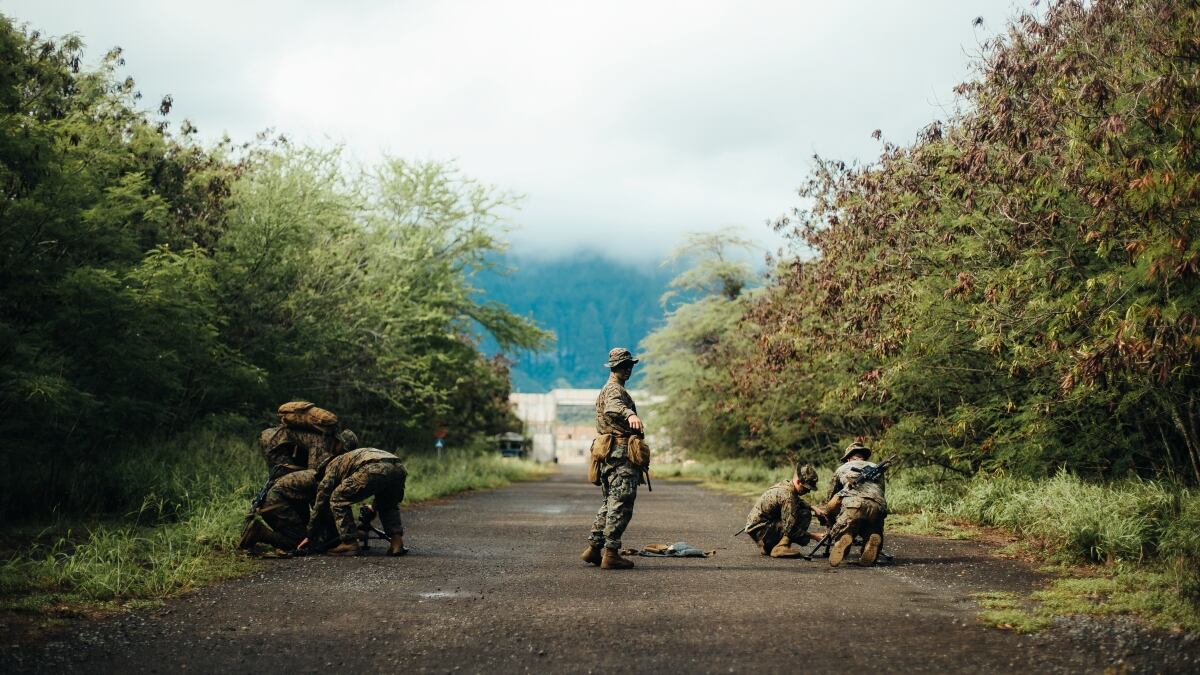
The Marine Corps likely will have to get an outside review of its controversial overhaul plans thanks to a provision in Congress’ defense authorization bill.
The provision in the annual National Defense Authorization Act signals lawmakers are listening to the retired Marines who have voiced concerns about the direction the Corps is taking, retired Marine Col. Mark Cancian, a senior adviser with the Center for Strategic and International Studies, said on Monday.
The bill calls for the Pentagon to contract with a federally funded research and development center that will “conduct an independent review, assessment, and analysis of the modernization initiatives of the Marine Corps” within three months of the bill becoming law.
The provision signals Congress will get to examine the details of the modernization plan that critics have contended was created without sufficient oversight, a claim the Marine Corps has denied.
Since the 2020 unveiling of Force Design 2030 — a sweeping set of changes aimed at better preparing for conflict with a technologically sophisticated adversary — the Corps has trained Marines to fight in stealthier, dispersed groups and has shed older platforms in favor of ones that will enable that approach to war. Force Design marks a shift in focus from land wars in the Middle East to potential conflict with China in the Pacific.
As part of related initiatives that now-retired Commandant Gen. David Berger also championed, the service also has updated its personnel management, training and logistics.
Some major changes — which include getting rid of tanks, cutting some cannon artillery and reorganizing traditional units — haven’t gone over well with everyone in the Corps or retired Marine community.
The retired generals who oppose Force Design hope the assessment would be “a very thorough analysis with many different perspectives brought together,” according to Cancian.
“On the other hand, it could just be one of those routine efforts that don’t produce much that’s new or interesting,” Cancian said.
Cancian said he supports some of the Marine Corps’ changes in the Pacific but has concerns about what he sees as the service walking away from its global responsibilities and combined-arms structure.
The House and the Senate each had included similar provisions requiring the assessment in their own versions of the defense bill, and the provision made it into the compromise bill released late Wednesday.
In Cancian’s view, likely contenders to receive the contract to conduct the assessment include Rand, the Institute for Defense Analyses or the Center for Naval Analyses.
Outside analyses of Force Design 2030 haven’t been required in previous years’ National Defense Authorization Acts. The 2021 act did require an outside study of the structure of Marine Corps aviation under Force Design.
The outside assessment of Force Design will examine questions that include, in boiled-down form:
What evidence does the Marine Corps have to back up the changes it has made?
Does the war in Ukraine make Force Design changes seem more or less advisable?
Can the defense industrial base, in a timely fashion, develop and produce the tech the Corps wants for Force Design?
Does Force Design meet the requirements of combatant commanders, who lead forces across the globe?
Does Force Design comply with the federal law laying out the required organization and functions of the Marine Corps?
How should the Marine Corps prepare for future conflict?
Within a year of inking the contract for the assessment, the research and development center must submit a report on the results of the assessment to the Pentagon. The defense secretary must then provide that report to the congressional defense committees.
The report must be unclassified, though it may include a classified section.
Another section of the bill calls for the Marine Corps to provide Congress detailed annual briefings on the implementation of Force Design, with the first one taking place no later than March 15.
The Corps doesn’t comment on pending legislation, Maj. Eric Flanagan, a Marine spokesman, said when asked about the bill Nov. 29.
In the years since the Corps unveiled Force Design 2030, some retired Marine leaders with concerns about the plan have pleaded with Congress to give it more scrutiny , lobbied military brass for course changes and taken the unusually public step of writing op-eds critical of the current Marine leadership’s decisions.
Retired Brig. Gens. Jerry McAbee and Mike Hayes wrote in The National Interest in March, “The Congress cannot assume every prospective military innovation and transformation is necessarily good for the national defense simply because it offers seductive budgetary solutions and illusions of future ‘silver bullet’ technologies.’”
Some Force Design critics believe Berger circumvented the normal combat development process “with a small cabal of supposed ‘thinkers’ whose ideas were never subjected to the needed professional scrutiny,” retired Lt. Gen. Paul Van Riper told Marine Corps Times in June.
Current Marine leaders have argued the Corps must adapt to technological developments, especially the rise of long-range precision strikes that could kill slow, easily trackable groups of Marines. They have asserted Marines remain relevant not just for a Pacific fight but also for global crisis response .
Berger, who championed Force Design during his four years as commandant, repeatedly emphasized that the initiative arose from extensive wargaming and experimentation.
“None of this is fabricated by one or two people,” Berger said in June, with less than a month left in his term as the top Marine leader. “It is driven by a gigantic machine of very experienced, very smart people.”
Gen. Eric Smith, who was sworn in as commandant in September after serving as the acting commandant for more than two months, has voiced his strong support for Force Design, which he helped craft . But he has expressed willingness to adapt the initiative.
“Any time there’s data that says we need to change to be modern, more lethal or ready, I’m in favor of that, and I’m committed to change wherever change is required,” Smith told Congress in June.
Gen. David Berger, who initiated Force Design, stands with Gen. Eric Smith, who has stated he will press ahead with the initiative, during Berger’s relinquishment of command ceremony at Marine Barracks Washington, D.C., July 10. (PO1 Alexander Kubitza/DoD)
Smith said he has had conversations with all the retired commandants, assistant commandants and combatant commanders at the Oct. 27 Military Reporters and Editors conference in Washington.
“We’re all in agreement that there’s one commandant at a time,” Smith said. “Right now, that’s me.”
Two days later, Smith experienced a cardiac arrest that landed him in the hospital for weeks.
Assistant Commandant Gen. Christopher Mahoney, another supporter of Force Design , is performing the duties of commandant while Smith recovers. Smith has declared his intention of returning to work as soon as he can.
Van Riper told Marine Corps Times on Monday it would be unrealistic to expect Smith to abandon Force Design right after the Corps made extensive divestments of traditional capabilities like tanks and cannon artillery. But he said it’s possible Smith could lay the groundwork for acquiring more modern forms of those divested platforms.
In Cancian’s view, the outside assessment could provide Smith a justification for making changes to Force Design 2030 or even offer him ideas about what changes to make.
“This is a tool that the new commandant could use if he wants to reshape 2030 and make it his own,” Cancian said.
Irene Loewenson is a staff reporter for Marine Corps Times. She joined Military Times as an editorial fellow in August 2022. She is a graduate of Williams College, where she was the editor-in-chief of the student newspaper.
由于国会国防授权法案中的一项条款,海军陆战队很可能需要对其备受争议的改革计划进行外部审查。
退役海军陆战队上校、战略与国际研究中心高级顾问马克·坎西安周一表示,年度国防授权法案中的这项条款表明,立法者正在听取退役海军陆战队员的意见,他们对海军陆战队的发展方向表示担忧。
该法案要求五角大楼与一家联邦政府资助的研究和开发中心签订合同,该中心将在法案生效后的三个月内“对海军陆战队的现代化举措进行独立审查、评估和分析”。
该条款表明,国会将有机会审查现代化计划的细节,批评人士称该计划是在缺乏足够监督的情况下制定的,但海军陆战队否认了这一说法。
自2020年发布“2030部队设计”以来——这是一系列旨在更好地应对与技术先进的对手冲突的全面改革——海军陆战队已训练陆战队员以更隐蔽、分散的作战方式作战,并淘汰了老旧平台,转而采用能够支持这种作战方式的新平台。“2030部队设计”标志着海军陆战队的重心从中东的陆地战争转向了与中国在太平洋地区的潜在冲突。
作为已退休的司令官大卫·伯杰将军所倡导的相关举措的一部分,该部队还更新了其人事管理、训练和后勤保障。
一些重大变革——包括取消坦克、削减部分火炮和重组传统部队——并没有得到海军陆战队或退役海军陆战队员群体的普遍认可。
据坎西安称,反对“部队设计”的退役将领们希望评估结果能够“非常彻底地分析,并汇集许多不同的观点”。
“另一方面,这可能只是例行公事,不会产生什么新颖或有趣的东西,”坎西安说。
坎西安表示,他支持海军陆战队在太平洋地区的一些改革,但他对该军种放弃其全球责任和联合兵种结构感到担忧。
众议院和参议院都在各自的国防法案版本中加入了类似的条款,要求进行评估,而该条款最终被纳入了周三晚些时候公布的妥协法案中。
坎西安认为,兰德公司、国防分析研究所或海军分析中心很可能获得进行评估的合同。
以往的《国防授权法案》并未要求对“2030年部队设计”进行外部分析。但2021年的法案确实要求对“2030年部队设计”框架下的海军陆战队航空兵结构进行外部研究。
外部对“部队设计”的评估将考察以下问题(简而言之):
海军陆战队有什么证据来支持其所做的改变?
乌克兰战争使部队设计调整显得更加可取还是更不可取?
国防工业基地能否及时研发和生产海军陆战队部队设计所需的技术?
部队设计是否满足指挥全球各地部队的作战指挥官的要求?
部队设计是否符合联邦法律规定的海军陆战队组织结构和职能?
海军陆战队应该如何为未来的冲突做好准备?
在评估合同签订后一年内,研发中心必须向五角大楼提交评估结果报告。国防部长随后必须将该报告提交给国会国防委员会。
报告必须为非机密文件,但可以包含机密部分。
该法案的另一部分要求海军陆战队每年向国会提供关于部队设计实施情况的详细简报,第一次简报最迟应于 3 月 15 日举行。
海军陆战队发言人埃里克·弗拉纳根少校在 11 月 29 日被问及该法案时表示,海军陆战队不对正在审议的立法发表评论。
自海军陆战队公布“2030 年部队设计”以来,一些对该计划表示担忧的退役海军陆战队领导人恳求国会对其进行更严格的审查,游说军方高层改变路线,并采取了罕见的公开举措,撰写评论文章批评现任海军陆战队领导层的决定。
退役准将杰里·麦卡比和迈克·海耶斯在3月份的《国家利益》杂志上撰文指出:“国会不能仅仅因为某些军事创新和变革提供了诱人的预算解决方案和未来‘灵丹妙药’技术的幻象,就想当然地认为它们对国防是有益的。”
一些部队设计批评人士认为,伯杰绕过了正常的作战发展过程,“依靠一小撮所谓的‘思想家’,他们的想法从未受到必要的专业审查,”退役中将保罗·范·里珀在 6 月份告诉《海军陆战队时报》。
现任海军陆战队领导人认为,海军陆战队必须适应技术发展,尤其是远程精确打击的兴起,这种打击能够消灭行动缓慢且易于追踪的海军陆战队小队。他们强调,海军陆战队不仅在太平洋战场上至关重要,在全球危机应对中也同样不可或缺。
伯杰在担任司令官的四年间大力倡导部队设计,他反复强调这项倡议源于广泛的兵棋推演和实验。
“这一切都不是一两个人捏造的,”伯杰在六月份说道,当时距离他作为海军陆战队最高领导人的任期结束还有不到一个月。“这是由一群经验丰富、非常聪明的人组成的庞大机器推动的。”
埃里克·史密斯将军在担任代理司令两个多月后,于九月宣誓就任司令。他曾参与制定部队设计方案,并对此表示了强烈的支持。但他同时也表示愿意对该方案进行调整。
“任何时候,只要有数据表明我们需要改变,使其更现代化、更具杀伤力或做好准备,我都赞成这样做,并且我致力于在任何需要改变的地方进行改变,”史密斯在六月份告诉国会。
7月10日,在华盛顿特区海军陆战队兵营举行的戴维·伯杰将军卸任指挥权仪式上,伯杰将军与埃里克·史密斯将军并肩而立。伯杰将军是“部队设计”计划的发起人,他表示将继续推进该计划。(PO1 Alexander Kubitza/美国国防部)
史密斯表示,他已与所有参加 10 月 27 日在华盛顿举行的军事记者和编辑大会的退役司令、助理司令以及作战司令进行了交谈。
“我们都同意一次只能有一位指挥官,”史密斯说。“现在,我就是那个指挥官。”
两天后,史密斯心脏骤停,住院数周。
助理司令克里斯托弗·马奥尼将军是部队设计理念的另一位支持者,在史密斯康复期间,他代理司令职务。史密斯已宣布,一旦身体允许,他将尽快重返工作岗位。
范·里珀周一告诉《海军陆战队时报》,指望史密斯在海军陆战队大规模剥离坦克和火炮等传统能力之后立即放弃部队设计项目是不现实的。但他表示,史密斯有可能为采购更现代化的同类装备奠定基础。
在坎西安看来,外部评估可以为史密斯提供修改《2030 年部队设计》的理由,甚至可以为他提供修改方向的想法。
“如果新任司令想要重塑 2030 年并使其符合自己的理念,这便是一个可以使用的工具,”坎西安说道。
艾琳·洛文森是《海军陆战队时报》的专职记者。她于2022年8月加入《军事时报》,担任编辑助理。她毕业于威廉姆斯学院,曾担任该校学生报纸的总编辑。