Expand existing task force to protect Red Sea from Houthi attacks扩大现有特遣部队规模,以保护红海免受胡塞武装袭击
Opinion: Houthi attacks on commercial vessels is a multilateral problem that requires a multilateral solution.
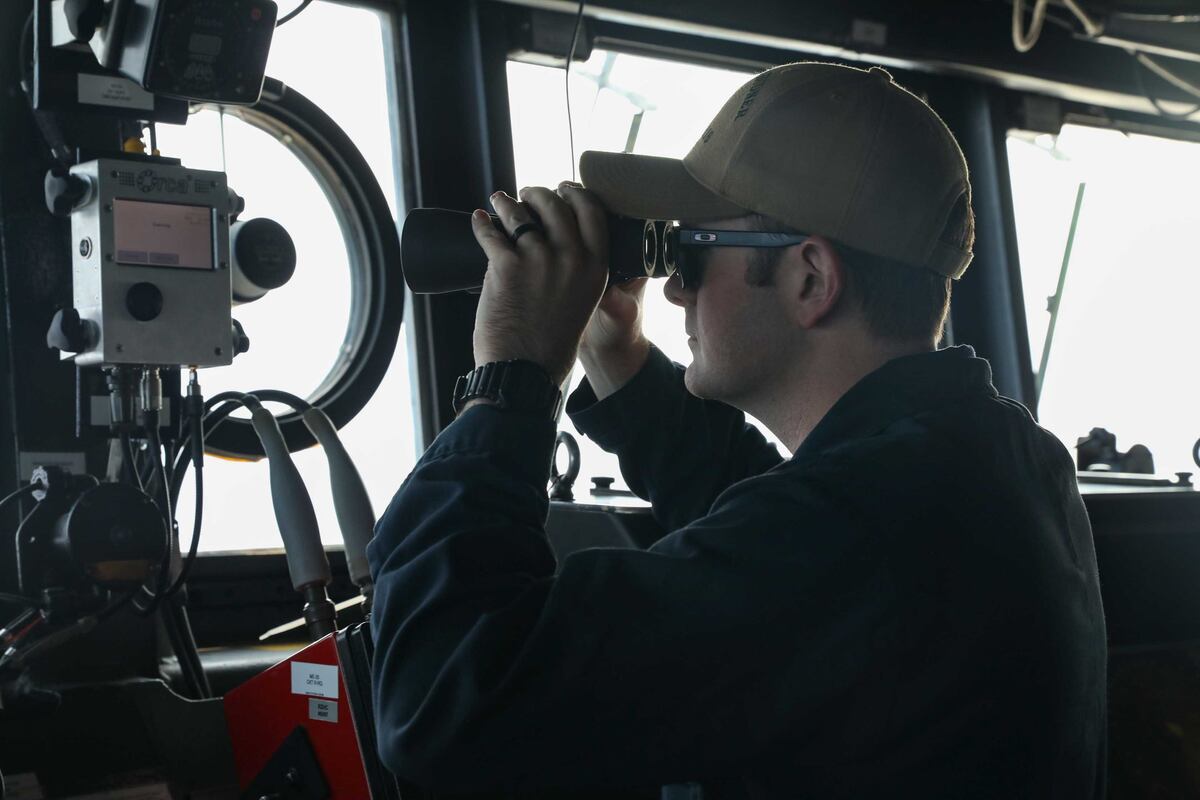
The Iran-backed Houthis in Yemen struck three commercial vessels with missiles in the southern Red Sea on Dec. 3, according to U.S. Central Command . In response, Washington is working to form a maritime task force to ensure the safe passage of ships.
But rather than creating a new task force from scratch, the Biden administration should use the existing Combined Task Force 153 to urgently build a larger international effort to protect commercial vessels sailing near Yemen and to interdict Iranian weapons smuggling to the Houthis. That could help deter and defeat attacks as well as defend freedom of navigation and the unimpeded flow of commerce through one of the world’s most important maritime chokepoints.
To understand why this is the best approach, it is helpful to consider the context.
Here’s what happened on Sunday: The U.S. Navy’s Arleigh-Burke class destroyer Carney responded to distress calls from commercial vessels transiting international shipping lanes in the Red Sea. During the hourslong ordeal, the Unity Explorer, the M/V Number 9 and the M/V Sophie II were struck by missiles launched from Houthi-controlled areas in Yemen. While attempting to assist the commercial vessels, Carney detected and was forced to destroy three UAVs menacing the ships.
“These attacks represent a direct threat to international commerce and maritime security. They have jeopardized the lives of international crews representing multiple countries around the world,” CENTCOM said in a statement on Dec. 3
Unfortunately, this is not the first threat to commercial vessels from the Houthis.
The International Maritime Security Construct issued a warning on Nov. 16 for vessels traveling through the vital Bab el-Mandeb strait and the Red Sea just two days after the Houthis threatened to attack international shipping.
That warning proved prescient.
On Nov. 19, the Houthis hijacked the Galaxy Leader , reportedly a Bahamian-flagged, British-owned, Japanese operated vessel, which had Filipino, Bulgarian, Romanian, Ukrainian and Mexican crew members. On multiple occasions last month, the Houthis used drones and missiles to threaten vessels, forcing U.S. naval vessels to down drones in several instances .
The Galaxy Leader ship is anchored offshore of Yemen on Nov. 28, 2023. A support tender vessel is positioned nearby. The ship was captured by Houthi fighters on Nov. 19, 2023. (Maxar Technologies via AP)
To be clear, Houthi aggression is not solely America’s problem. The three vessels attacked on Dec. 3 were connected to 14 separate nations.
So how are the Houthis able to resource and conduct these attacks? Answer: Iran.
Referring to the Dec. 3 attacks, CENTCOM said it has “every reason to believe that these attacks, while launched by the Houthis in Yemen, are fully enabled by Iran.” The next day, U.S. national security adviser Jake Sullivan was more direct. “The weapons here are being supplied by Iran,” he said. “Iran, we believe, is the ultimate party responsible for this.”
That’s not surprising. Tehran has smuggled weapons and technology for anti-ship ballistic and cruise missiles, UAVs, and other munitions to the Houthis for years .
So what’s to be done?
Sullivan mentioned the need for a “maritime task force of sorts involving the ships from partner nations alongside the United States in ensuring safe passage of ships in the Red Sea.” The good news is that Washington doesn’t need to create a new task force; there is an existing task force within Combined Maritime Forces, namely CTF 153, that can provide a running start.
CTF 153′s existing mission is to “focus on international maritime security and capacity building efforts in the Red Sea, Bab al-Mandeb and Gulf of Aden.” Established in 2022, the task force already includes 15 member nations. Notably, Egypt led the task force for six months, concluding its term in June 2023.
Given their interests in the Red Sea, Egypt, Saudi Arabia and Israel should contribute. The United Arab Emirates and Bahrain are obvious candidates as well, given their relationship with the United States, their interest in unfettered freedom of navigation in the Middle East as well as their CMF membership. Among others, G-7 countries — namely Canada, France, Germany, Italy, Japan and the United Kingdom — should also support the task force, given their economic interests in the region and their membership in CMF.
Such broad participation can lessen the burden for any one country and send the unambiguous message to the Houthis and their patron in Iran that attacks on commercial vessels will not be tolerated.
Washington should also explore whether this newly expanded task force ― or some subset of it ― could also interdict arms Iran is smuggling to Yemen, in addition to ensuring the safe passage of commercial vessels sailing through the Red Sea. After all, if the Houthis continue to enjoy the reliable supply of weapons from Tehran, one can expect such attacks to continue.
The Houthi attacks on commercial vessels in the Red Sea constitute an attack on the regional and global economy as well as any nation that relies on unfettered maritime freedom of navigation to sustain its economy and conduct international trade.
Indeed, Houthi attacks on commercial vessels is a multilateral problem that requires a multilateral solution. An expanded CTF 153 in the Red Sea supported by dozens of nations could help.
Bradley Bowman is the senior director of the Center on Military and Political Power at the Foundation for Defense of Democracies think tank, where Mike Daum is a research analyst.
据美国中央司令部消息,12月3日,伊朗支持的也门胡塞武装在红海南部用导弹袭击了三艘商船。作为回应,华盛顿正着手组建一支海上特遣部队,以确保船舶安全通行。
但拜登政府与其从零开始组建新的特遣部队,不如利用现有的第153联合特遣部队,紧急建立更大规模的国际合作机制,以保护在也门附近航行的商船,并拦截伊朗向胡塞武装走私武器。这有助于威慑和挫败袭击,并捍卫航行自由和确保通过世界最重要的海上咽喉要道之一的商业畅通无阻。
要理解为什么这是最佳方法,考虑一下背景会很有帮助。
周日发生的事情是这样的:美国海军阿利·伯克级驱逐舰“卡尼”号响应了在红海国际航道上航行的商船发出的遇险求救信号。在长达数小时的救援行动中,“团结探索者”号、“9号”货轮和“索菲二号”货轮遭到来自也门胡塞武装控制区的导弹袭击。在试图援助这些商船的过程中,“卡尼”号发现并被迫摧毁了三架威胁船只的无人机。
“这些袭击对国际贸易和海上安全构成直接威胁。它们危及了来自世界各地多个国家的国际船员的生命安全,”美国中央司令部在12月3日的一份声明中表示。
不幸的是,这并非胡塞武装首次对商船构成威胁。
11月16日,国际海事安全组织向途经重要航道曼德海峡和红海的船只发出警告,此前两天,胡塞武装威胁要袭击国际航运。
事实证明,那条警告极具先见之明。
11月19日,胡塞武装劫持了“银河领袖”号(Galaxy Leader)货轮。据报道,该船悬挂巴哈马国旗,由英国所有,日本运营,船员包括菲律宾、保加利亚、罗马尼亚、乌克兰和墨西哥籍船员。上个月,胡塞武装多次使用无人机和导弹威胁船只,迫使美国海军舰艇多次击落无人机。
2023年11月28日,“银河领袖”号(Galaxy Leader)停泊在也门近海。一艘支援舰艇停泊在附近。该舰于2023年11月19日被胡塞武装俘获。(Maxar Technologies via AP)
需要明确的是,胡塞武装的侵略行为并非仅仅是美国的问题。12月3日遭到袭击的三艘船只与14个不同的国家有关。
那么,胡塞武装是如何获得资源并发动这些袭击的呢?答案是:伊朗。
针对12月3日的袭击事件,美国中央司令部表示,“完全有理由相信,这些袭击虽然是由也门胡塞武装发动的,但伊朗却全力支持。”第二天,美国国家安全顾问杰克·沙利文的措辞更加直接。他说:“这里的武器是由伊朗提供的。我们认为,伊朗是这一切的最终责任方。”
这并不奇怪。多年来,德黑兰一直向胡塞武装走私反舰弹道导弹、巡航导弹、无人机和其他弹药等武器和技术。
那么该怎么办呢?
沙利文提到需要组建一支“类似海上特遣部队的组织,由伙伴国家的舰船与美国共同参与,以确保红海船舶的安全通行”。好消息是,华盛顿无需创建新的特遣部队;联合海上部队中已有一支特遣部队,即第153联合特遣部队(CTF 153),可以作为快速启动的先导。
第153联合特遣部队(CTF 153)的现有任务是“重点关注红海、曼德海峡和亚丁湾的国际海上安全和能力建设工作”。该特遣部队成立于2022年,目前已有15个成员国。值得注意的是,埃及曾领导该特遣部队六个月,任期于2023年6月结束。
鉴于埃及、沙特阿拉伯和以色列在红海的利益,它们应该做出贡献。阿联酋和巴林也是显而易见的候选国,因为它们与美国关系密切,都关注中东地区不受限制的航行自由,而且它们都是共同海事论坛(CMF)的成员。此外,七国集团(G7)成员国——即加拿大、法国、德国、意大利、日本和英国——也应该支持该工作组,因为它们在该地区拥有经济利益,而且都是共同海事论坛的成员。
如此广泛的参与可以减轻任何一个国家的负担,并向胡塞武装及其在伊朗的支持者发出明确的信息,即袭击商船是不能容忍的。
华盛顿还应探讨这支新扩充的特遣部队(或其部分成员)除了确保红海商船安全通行外,是否还能拦截伊朗向也门走私武器。毕竟,如果胡塞武装继续从德黑兰获得可靠的武器供应,此类袭击就不可避免地会持续发生。
胡塞武装对红海商船的袭击,是对区域和全球经济的攻击,也是对任何依赖不受限制的海上航行自由来维持经济和开展国际贸易的国家的攻击。
事实上,胡塞武装袭击商船是一个多边问题,需要多边解决方案。在数十个国家的支持下,扩大红海第153联合特遣部队的规模或许有所帮助。
布拉德利·鲍曼是保卫民主基金会智库下属军事和政治权力中心的高级主任,迈克·道姆是该智库的研究分析师。