Norway becomes ninth country to sign up for French nuclear deterrence as trust in US falters随着对美国的信任动摇,挪威成为第九个加入法国核威慑体系的国家。
Meanwhile, Germany will participate in French nuclear exercises as soon as September, joining them in an observer role.
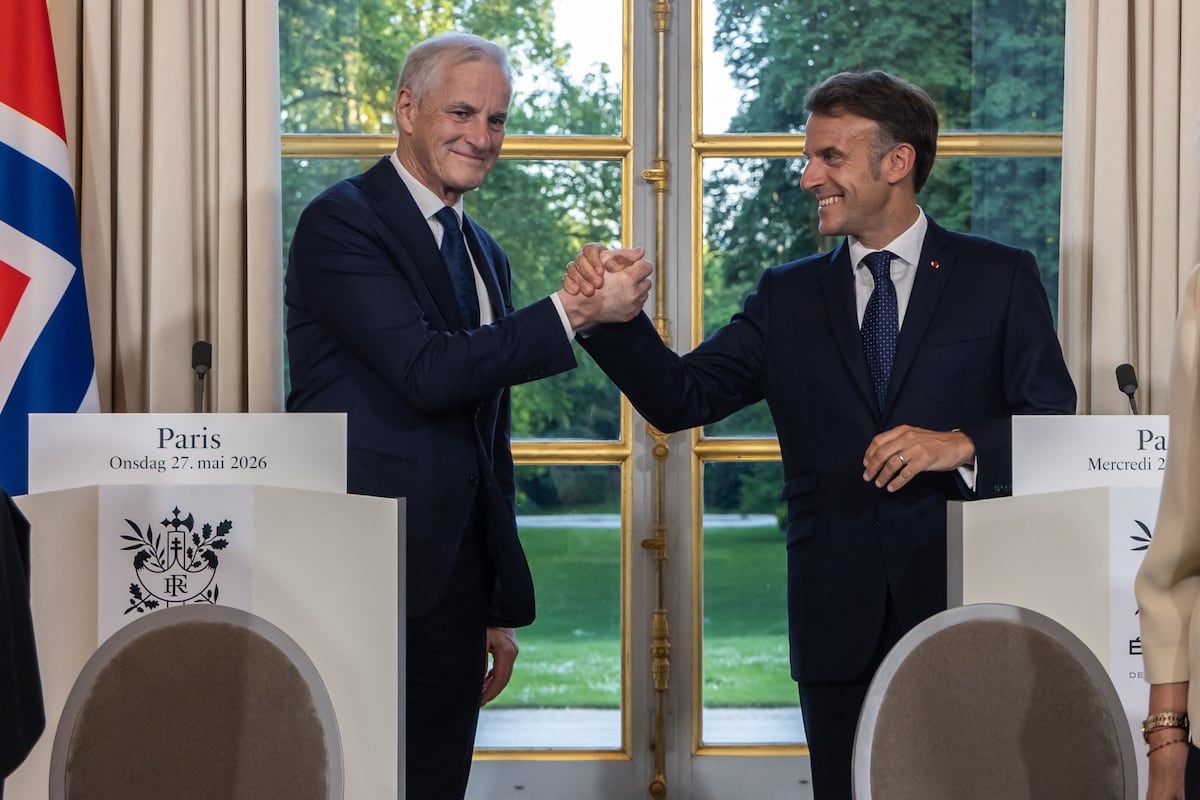
VIENNA — Norway has become the ninth European country to sign up for French nuclear protection in light of heightened alertness vis-à-vis Russia and broadly faltering trust in U.S. reliability.
The announcement came following a visit by the Norwegian prime minister, Jonas Gahr Stoere, to Paris last week. Also present in Paris were delegates from other European countries that had signed up for what France bills as “forward deterrence,” a still nebulous but historically significant redefinition of what France’s nuclear weapons are for.
Norway will not host nuclear weapons in peacetime, Stoere said. But the new French doctrine, which was announced in theatrical fashion by Emmanuel Macron, the country’s president, while standing in front of a nuclear submarine in March, promises to link existential threats to European allies to a French nuclear response even if the U.S. may disengage. All decision-making powers will remain in Paris, as will the control over nuclear weapons. France would, in effect, act as a protective power for Europe.
What this means in practice is still up for definition, and Norway, as the latest newcomer, is still at the beginning of the process of figuring it out. Others are farther along: The discussions in Poland, for example, envision a possible role for forward deployment of French nuclear-capable Rafale aircraft.
The nuclear-deterrence framework is perhaps most mature in Germany : The two countries formed a steering group on the issue earlier this year, promising first concrete steps by the end of 2026.
Germany was also present at the meeting in Paris last week, sending Chancellor Merz’s foreign policy and security advisor, according to reporting by German magazine Der Spiegel. The next steering group meeting is supposed to take place shortly, ahead of the summer break when most of Europe’s bureaucrats are out of office.
Germany will participate in French nuclear exercises as soon as September, joining them in an observer role. Additionally, they will visit and learn about French nuclear weapons facilities and infrastructure. Later, the Bundeswehr may play a more active part, Spiegel reported, though this would be limited to supporting roles that don’t directly interact with nuclear weapons.
The confusion and ambiguity about the specifics of what France is actually offering its European allies may be by design. The French nuclear doctrine is openly “strategically ambiguous,” as has been publicly confirmed by the relevant ministries and policy thinkers in Paris. What does seem clear is that it will be a less participative process than the current U.S.-backed NATO nuclear sharing, which currently has nuclear bombs based in the Netherlands, Belgium, Germany, Italy and Turkey, and provides for German warplanes to drop U.S.-armed and owned nuclear bombs in the event of a war.
Rather, it’s a redefinition of French nuclear doctrine to include a sort of sphere of influence, where the French president may choose to respond to incursions with a nuclear response − or not. Aside from Norway, Germany and Poland, Sweden, Denmark, Greece, the Netherlands, Belgium and the U.K. have also signed up to the new French forward deterrence scheme.
France is one of five countries permitted under international treaties to possess nuclear weapons, and one of nine that actually do. At around 290 warheads, the French nuclear arsenal is the fourth-largest in the world, after China, the U.S. and Russia, and ahead of the U.K.
Linus Höller is Defense News' Europe correspondent and OSINT investigator. He reports on the arms deals, sanctions, and geopolitics shaping Europe and the world. He holds master’s degrees in WMD nonproliferation, terrorism studies, and international relations, and works in four languages: English, German, Russian, and Spanish.
维也纳——鉴于对俄罗斯的警惕性提高以及对美国可靠性的信任普遍动摇,挪威已成为第九个签署法国核保护协议的欧洲国家。
挪威首相约纳斯·加尔·施托雷上周访问巴黎后,法国宣布了这一消息。其他一些签署了法国所谓的“前沿威慑”协议的欧洲国家的代表也出席了巴黎之行。“前沿威慑”是对法国核武器用途的重新定义,虽然目前仍不甚明了,但具有重要的历史意义。
斯托尔表示,挪威在和平时期不会拥有核武器。但法国总统马克龙3月在核潜艇前戏剧性地宣布的新法国核武器战略,承诺将欧洲盟友面临的生存威胁与法国的核反应挂钩,即便美国可能撤出核武库。所有决策权以及核武器控制权都将留在巴黎。实际上,法国将扮演欧洲的保护者角色。
这在实践中究竟意味着什么,目前尚无定论。挪威作为最新加入的成员,仍处于探索这一问题的初期阶段。其他国家则走得更远:例如,波兰的讨论设想了法国可携带核弹头的“阵风”战斗机可能在前沿部署发挥作用。
德国的核威慑框架或许最为成熟:两国于今年早些时候成立了该问题的指导小组,并承诺在 2026 年底前采取初步具体措施。
据德国《明镜周刊》报道,德国也派代表出席了上周在巴黎举行的会议,德国总理默茨的外交政策和安全顾问均已到场。下一次指导小组会议预计将在夏季休会前不久举行,届时欧洲大部分官员都将休假。
德国最早将于9月以观察员身份参与法国的核演习。此外,德国还将参观并了解法国的核武器设施和基础设施。据《明镜周刊》报道,之后德国联邦国防军可能会扮演更积极的角色,但仅限于不直接参与核武器作战的辅助性角色。
法国究竟向其欧洲盟友提供什么,其具体细节上的混乱和模糊或许是刻意为之。法国的核战略公开宣称“战略上含糊不清”,这一点已得到巴黎相关部委和政策专家的公开证实。但可以肯定的是,与目前由美国支持的北约核共享机制相比,法国的核战略参与度会更低。北约目前在荷兰、比利时、德国、意大利和土耳其部署了核武器,并规定一旦发生战争,德国战机可以投放由美国武装和拥有的核武器。
更确切地说,这是对法国核战略的重新定义,纳入了某种势力范围,法国总统可以选择对入侵行为进行核反击,也可以选择不进行核反击。除了挪威、德国和波兰之外,瑞典、丹麦、希腊、荷兰、比利时和英国也加入了法国新的前沿威慑计划。
法国是国际条约允许拥有核武器的五个国家之一,也是实际拥有核武器的九个国家之一。法国拥有约290枚核弹头,核武库规模位居世界第四,仅次于中国、美国和俄罗斯,领先于英国。
林努斯·霍勒是《防务新闻》的欧洲记者和开源情报调查员。他报道影响欧洲乃至全球的军火交易、制裁和地缘政治。他拥有大规模杀伤性武器不扩散、恐怖主义研究和国际关系三个硕士学位,并精通英语、德语、俄语和西班牙语四种语言。