UOB to create 1,000 jobs for fresh grads even as concerns rise over AI’s impact on entry-level roles尽管人们越来越担心人工智能对入门级职位的影响,大华银行仍将为应届毕业生创造1000个就业岗位。
UOB to hire 1,000 young graduates as it expands training and AI workplace programmes Read more at straitstimes.com.
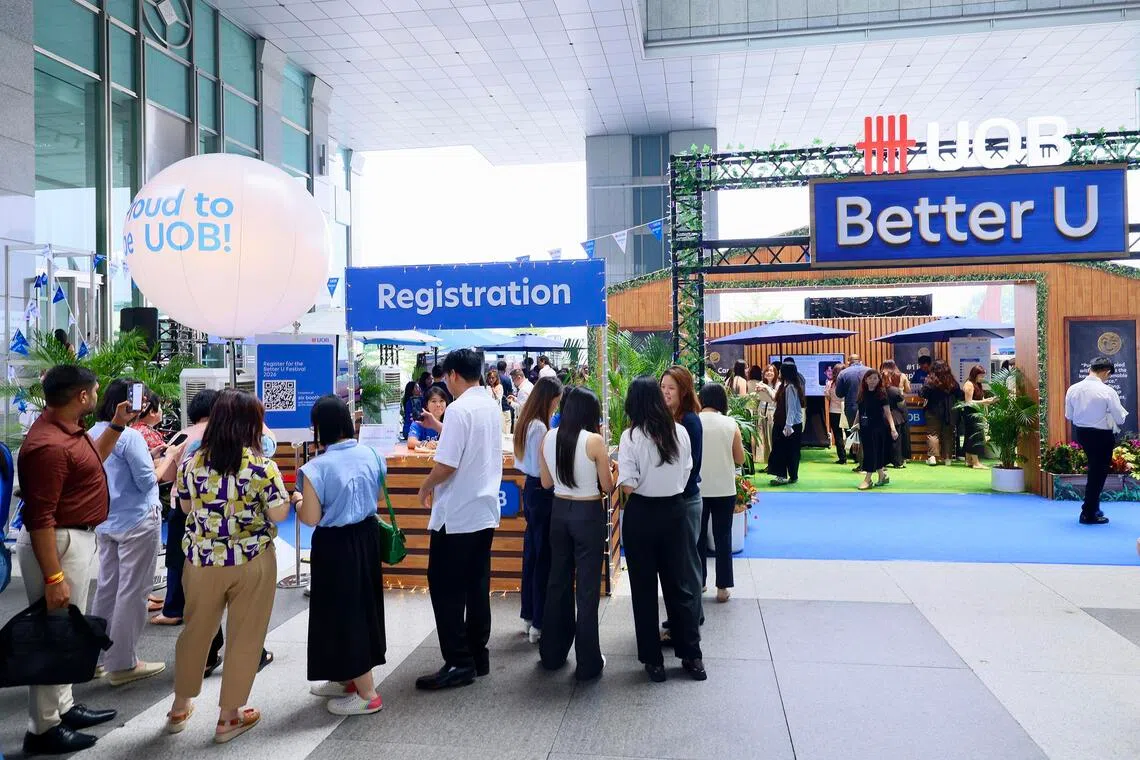
Most of permanent roles will span personal financial services and anti-money laundering roles, as well as early-career opportunities.
Published Oct 08, 2026, 05:25 PM
Updated Oct 08, 2026, 05:45 PM
- UOB plans to hire 1,000 fresh graduates in 12 months, despite fears that AI will reduce entry-level jobs.
- Most jobs will be in personal financial services, anti-money laundering, and training schemes like Future Bankers and Management Associate.
- UOB will also train 5,500 managers by 2027 and expand Gig+U for flexible roles, as Wee Ee Cheong says human judgement still matters.
SINGAPORE – UOB expects to hire 1,000 young graduates over the next 12 months even as concerns swirl over the rapid adoption of artificial intelligence’s impact on hiring for entry-level jobs .
The roles, made up mostly of permanent positions, will span personal financial services and anti-money laundering roles, as well as early-career opportunities through the Future Bankers Programme, Management Associate Programme and internship programmes.
The bank is also equipping 5,500 managers across the region with skills to become better leaders in an AI-enabled workplace by the end of 2027, as well as enhancing its Gig+U programme to allow experienced professionals to contribute their expertise in customer-facing and sales advisory roles.
Announcing these initiatives at UOB’s annual employee festival Better U on Oct 8, chief executive Wee Ee Cheong said that while AI can perform many routine tasks currently done by entry-level staff and fresh graduates, investing in people and human judgement will matter more than ever.
“So, do we stop hiring? No. We will continue to hire because you still need humans to sell, to make decisions. Young people need opportunities to gain experience, build expertise and develop their careers,” Wee said, addressing about 100 staff members at the UOB Employee Clubhouse in Boat Quay.
UOB chief executive Wee Ee Cheong speaking to employees at the bank’s annual employee festival Better U on Oct 8. PHOTO: UOB
UOB chief executive Wee Ee Cheong speaking to employees at the bank’s annual employee festival Better U on Oct 8.
The bank will also train these 1,000 young people as it commits to investing in the next generation, said Wee.
Russell Yong, 25, and Shrutikhaa Katakam, 22, are among the first cohort under the bank’s 2026 Future Bankers programme, a two-year pathway that provides structured training, rotations and hands-on experience in wealth advisory and retail banking.
The programme runs four cohorts with a total of about 100 participants each year, including early-career professionals.
Yong, a Singapore Management University business management graduate, said such programmes are valuable in giving young professionals greater confidence and preparing them for the challenges ahead.
Katakam, who graduated with a computer science degree from Nanyang Technological University, said she found the opportunity to network with the bank’s leaders particularly valuable when she was first invited to hear about the programme.
Shrutikhaa Katakam and Russell Yong are among the first cohort under the bank’s 2026 Future Bankers programme. PHOTO: UOB
Shrutikhaa Katakam and Russell Yong are among the first cohort under the bank’s 2026 Future Bankers programme.
She also had the opportunity to speak with them about their work styles and day-to-day responsibilities. Katakam said that this direct exposure to experienced leaders gave her valuable insights into the industry and helped her better understand what to expect in his own career.
Asked if they are worried as the workforce faces disruptions from AI, both Yong and Katakam said that staying open-minded is increasingly important as fresh graduates.
Katakam said it is important to develop both hard and soft skills as a fresh graduate amid the rise of AI.
Having strong technical knowledge would allow them to assess and verify the accuracy of information generated by AI, while soft skills such as communication and problem-solving remain essential capabilities that AI cannot easily replace.
She added that these skills are particularly relevant in the finance industry, which is highly people-facing, and said that honing these skills was one of the reasons she was interested in joining the programme.
Yong said expectations for fresh graduates have increased, with employers increasingly looking for candidates who already have relevant experience, including internships, before entering the workforce.
He noted that these expectations have continued to evolve over the years, with AI adding another layer of pressure for graduates to demonstrate their value.
As routine tasks become increasingly automated, Yong said fresh graduates may face greater challenges in finding ways to contribute beyond these tasks when they enter the workforce.
The enhanced Gig+U programme, which will be rolled out to UOB employees and external hires by the first quarter of 2027, will also include customer-facing and sales advisory roles. PHOTO: UOB
The enhanced Gig+U programme, which will be rolled out to UOB employees and external hires by the first quarter of 2027, will also include customer-facing and sales advisory roles.
Yong, who uses AI to do tasks such as drafting emails or managing appointments, said it is important to continually keep tabs on how AI is evolving.
He currently aspires to work in private banking, with potential opportunities in sales, portfolio management or fund management, but said he will remain open-minded as he gains more exposure and discovers other opportunities within the industry.
The same goes for Katakam, who finds the rotations particularly insightful and hopes to identify the department that best aligns with her interests by the end of the programme.
On the Better Leader programme that will upskill 5,500 managers, Wee said that even as AI reshapes the workplace, leadership remains fundamentally human.
“Our leaders will help teams adapt, build new capabilities and realise the benefits of AI. They must exercise sound judgment on how technology is used, while building trust, inspiring confidence and bringing out the best in their people,” he said.
Meanwhile, the enhanced Gig+U programme, which will be rolled out to UOB employees and external hires by the first quarter of 2027, will also include customer-facing and sales advisory roles.
The programme allows experienced UOB employees such as those approaching or beyond retirement age, mothers returning to the workforce, and those seeking flexible work options, to contribute their expertise through part-time, flexible or fixed-term opportunities.
The bank expects to form a talent pool of 200 Gig+U participants, who will receive a monthly retainer, insurance coverage and access to assignments based on business needs, with compensation provided for work undertaken.
Banks and financial institutions
Private banking/Wealth management
大多数长期职位将涵盖个人金融服务和反洗钱职位,以及早期职业发展机会。
发布于 2026 年 10 月 8 日下午 5:25
更新于2026年10月8日下午5:45
尽管人们担心人工智能会减少入门级工作岗位,但大华银行计划在 12 个月内招聘 1000 名应届毕业生。
- 大多数工作将涉及个人金融服务、反洗钱以及未来银行家和管理助理等培训计划。
- 大华银行还将在 2027 年前培训 5,500 名经理,并扩大 Gig+U 的灵活岗位,正如 Wee Ee Cheong 所说,人的判断仍然很重要。
新加坡——尽管人们担心人工智能的快速普及会对入门级工作的招聘产生影响,但大华银行预计在未来 12 个月内仍将招聘 1000 名年轻毕业生。
这些职位大多为永久职位,涵盖个人金融服务和反洗钱等领域,同时还通过未来银行家计划、管理助理计划和实习计划提供早期职业发展机会。
该银行还计划到 2027 年底前,为该地区的 5500 名经理提供技能培训,使他们能够在人工智能赋能的工作场所中成为更好的领导者,同时加强其 Gig+U 计划,使经验丰富的专业人士能够在面向客户和销售咨询的角色中贡献他们的专业知识。
10 月 8 日,在 UOB 年度员工盛会 Better U 上,首席执行官 Wee Ee Cheong 宣布了这些举措。他表示,虽然人工智能可以执行许多目前由入门级员工和应届毕业生完成的日常任务,但投资于人才和人类判断将比以往任何时候都更加重要。
“那么,我们会停止招聘吗?不会。我们会继续招聘,因为销售和决策仍然需要人。年轻人需要机会积累经验、培养专业技能并发展职业生涯,”魏先生在驳船码头大华银行员工俱乐部向约100名员工发表讲话时说道。
大华银行首席执行官黄义昌于10月8日在银行年度员工节“Better U”上向员工发表讲话。(图片:大华银行)
大华银行首席执行官黄义昌于 10 月 8 日在银行年度员工节 Better U 上向员工发表讲话。
魏先生表示,该银行还将对这1000名年轻人进行培训,以履行其对下一代的投资承诺。
25 岁的 Russell Yong 和 22 岁的 Shrutikhaa Katakam 是该银行 2026 年未来银行家计划的首批学员之一。该计划为期两年,旨在提供财富咨询和零售银行方面的结构化培训、轮岗和实践经验。
该项目每年开设四期课程,共有约 100 名学员,其中包括职业生涯初期的专业人士。
毕业于新加坡管理大学商业管理专业的Yong表示,此类课程对于增强年轻专业人士的自信心,并帮助他们为未来的挑战做好准备,具有重要价值。
毕业于南洋理工大学计算机科学专业的 Katakam 表示,当她第一次受邀了解该计划时,她发现与银行领导建立联系的机会特别有价值。
Shrutikhaa Katakam 和 Russell Yong 是该银行“2026 未来银行家计划”的首批学员。图片:大华银行
Shrutikhaa Katakam 和 Russell Yong 是该银行 2026 年未来银行家计划的首批学员之一。
她还有机会与他们交流,了解他们的工作方式和日常职责。卡塔卡姆表示,与经验丰富的领导者直接接触,让她对行业有了宝贵的认识,也帮助她更好地了解自己未来的职业发展方向。
当被问及是否担心人工智能对劳动力市场造成的冲击时,Yong 和 Katakam 都表示,作为应届毕业生,保持开放的心态变得越来越重要。
Katakam表示,在人工智能兴起的今天,对于应届毕业生来说,培养硬技能和软技能都非常重要。
拥有扎实的技术知识可以让他们评估和验证人工智能生成的信息的准确性,而沟通和解决问题等软技能仍然是人工智能难以取代的重要能力。
她补充说,这些技能在金融行业尤为重要,因为金融行业需要与人密切接触。她还表示,磨练这些技能是她有兴趣加入该项目的原因之一。
Yong表示,对应届毕业生的期望值有所提高,雇主越来越倾向于寻找在进入职场前就已经拥有相关经验(包括实习经历)的求职者。
他指出,这些期望多年来一直在不断演变,人工智能的出现给毕业生带来了另一层压力,要求他们证明自己的价值。
Yong表示,随着日常工作日益自动化,应届毕业生进入职场后,可能会面临更大的挑战,即如何才能在这些工作之外做出贡献。
升级后的Gig+U计划将于2027年第一季度前推广至大华银行员工和外部招聘人员,该计划还将涵盖客户服务和销售咨询岗位。图片:大华银行
增强版 Gig+U 计划将于 2027 年第一季度向大华银行员工和外部招聘人员推出,该计划还将包括面向客户和销售顾问的职位。
Yong 使用人工智能来完成诸如撰写电子邮件或管理日程等任务,他表示,持续关注人工智能的发展趋势非常重要。
他目前渴望在私人银行业工作,有销售、投资组合管理或基金管理方面的潜在机会,但他表示,随着对行业了解的加深,他会保持开放的心态,探索其他机会。
卡塔卡姆也有同样的感受,她觉得轮岗实习特别有启发性,并希望在项目结束时找到最符合自己兴趣的部门。
Wee在谈到旨在提升5500名经理人技能的“更佳领导者”计划时表示,即使人工智能正在重塑工作场所,领导力本质上仍然是人类的。
他说:“我们的领导者将帮助团队适应变化,构建新的能力,并实现人工智能带来的益处。他们必须在技术应用方面做出合理的判断,同时建立信任,激发信心,并最大限度地发挥员工的潜力。”
与此同时,将于 2027 年第一季度向大华银行员工和外部招聘人员推出的增强版 Gig+U 计划,还将包括面向客户和销售顾问的职位。
该计划允许大华银行经验丰富的员工,例如即将退休或已过退休年龄的员工、重返职场的母亲以及寻求灵活工作选择的员工,通过兼职、灵活或固定期限的工作机会贡献他们的专业知识。
该银行预计将建立一个由 200 名 Gig+U 参与者组成的人才库,他们将获得每月固定津贴、保险保障,并根据业务需求获得工作任务,同时获得已完成工作的报酬。
银行和金融机构
私人银行/财富管理