Budget 2027 aims to sustain growth while protecting households from subsidy reforms and cost pressures2027年预算案旨在维持经济增长,同时保护家庭免受补贴改革和成本压力的影响。
KUALA LUMPUR, Oct 9 — Prime Minister Datuk Seri Anwar Ibrahim, who is also Finance Minister, will table Budget 2027 in the Dewan Rakyat at 3.30pm today, half an hour earlier than...
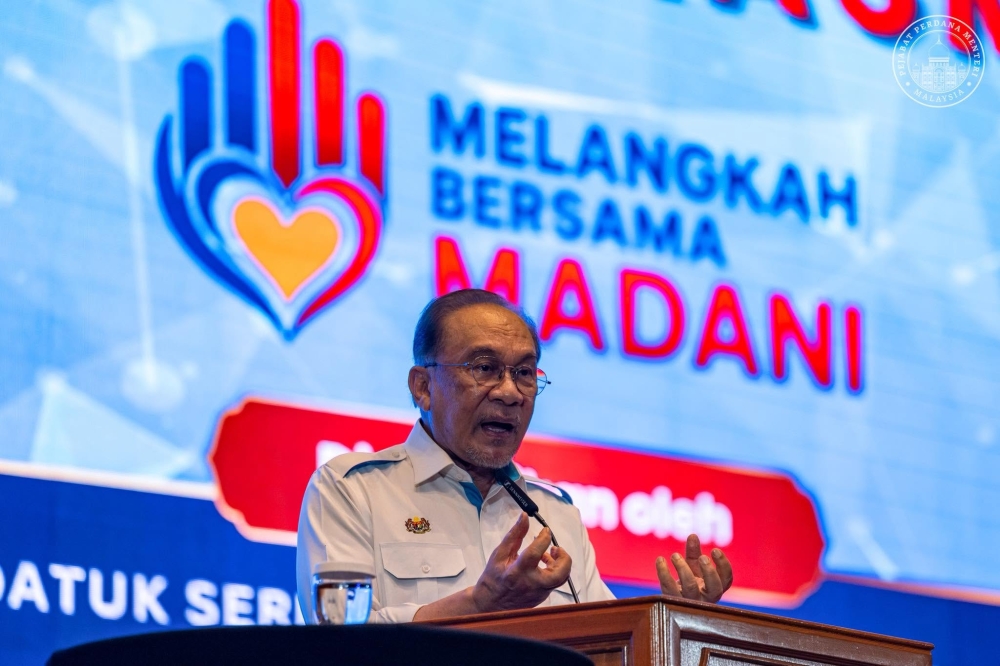
Prime Minister Datuk Seri Anwar Ibrahim, also serving as Finance Minister, will present Malaysia's Budget 2027 as part of the 13th Malaysia Plan, focusing on sustaining economic momentum and strengthening governance.
The Madani Budget emphasizes fiscal consolidation, efficient public spending, and subsidy rationalization to ensure resources are channeled effectively into infrastructure and productive activities.
It also aims to boost investment in high-value economic activities, digitalization, and advanced manufacturing to enhance competitiveness and support small and medium enterprises.
Ultimately, the budget seeks to translate fiscal resources into sustainable growth and employment while maintaining fiscal sustainability.
KUALA LUMPUR, Oct 9 — Prime Minister Datuk Seri Anwar Ibrahim, who is also Finance Minister, will table Budget 2027 in the Dewan Rakyat at 3.30pm today, half an hour earlier than the usual 4pm slot.
The 5th Madani Budget, themed “Malaysia Madani: Menggapai di Langit, Mengakar di Bumi”, is the second Budget under the 13th Malaysia Plan (13MP). The Budget comes at a time when the government seeks to sustain economic momentum while raising the nation’s growth ceiling, improving living standards and strengthening governance.
With the economy on solid ground, the focus leading up to Budget 2027 will be on sustaining this momentum. The economy is projected to grow by 6.0 per cent in the second quarter of 2026, while full-year growth is expected to stay within the government’s forecast range of 4.0 to 5.0 per cent.
Against this backdrop, fiscal policy will remain crucial in supporting economic growth while strengthening fiscal resilience, particularly amid external uncertainties, elevated energy costs and persistent cost pressures.
Efforts to improve public spending efficiency, strengthen revenue mobilisation and reduce leakages are expected to remain part of the government’s fiscal consolidation agenda.
Subsidy rationalisation, one of the key fiscal tools, will remain an important consideration as the government seeks to ensure public resources are channelled more effectively towards targeted assistance and productive economic activities.
The challenge will be to preserve fiscal space while ensuring that subsidy reforms do not undermine household consumption or raise operating costs for businesses.
Development expenditure will continue to be a vital component for supporting economic activity and addressing infrastructure gaps, with spending expected to concentrate on projects that enhance connectivity and productivity.
Water infrastructure, flood mitigation, rural development, utilities and electricity networks, particularly in Sabah and Sarawak and other underserved areas, could remain among the key areas of attention.
On the investment front, Budget 2027 is expected to reinforce Malaysia’s shift towards higher-value economic activities, with greater emphasis on industries capable of generating higher productivity, quality employment and technology transfer.
Continued investment in digitalisation, artificial intelligence, advanced manufacturing and supporting energy, water and digital infrastructure will be integral to strengthening Malaysia’s competitiveness and position in regional supply chains.
For businesses, particularly small and medium enterprises and micro, small and medium enterprises, measures to improve productivity, facilitate technology adoption and strengthen access to financing will be necessary as they navigate higher operating costs and wage pressures.
A stronger domestic business ecosystem would also help ensure that investment and economic expansion generate wider linkages across the economy.
Ultimately, Budget 2027 will be measured not simply by the size of its allocations, but by how effectively fiscal resources are translated into sustainable growth, productive investment, stronger domestic businesses and quality employment, while keeping public finances on a sustainable path.
The challenge is to ensure that Malaysia’s economic resilience is converted into a stronger foundation for the next phase of growth under the Madani Economy framework. — Bernama
‘Clean air not a luxury’: Manufacturers in Malaysia demand Asean accelerate haze-free roadmap
Anwar tables Budget 2027 today, promising resilience, reforms and relief for Malaysians
Nationwide haze disruption: Fadhlina says schools in six states closed, others continue operations
兼任财政部长的首相拿督斯里安华·易卜拉欣将提交马来西亚2027年财政预算案,作为第十三个马来西亚计划的一部分,重点是保持经济增长势头和加强治理。
马达尼预算强调财政整顿、提高公共支出效率和合理化补贴,以确保资源有效投入基础设施和生产性活动。
它还旨在促进对高价值经济活动、数字化和先进制造业的投资,以增强竞争力并支持中小企业。
最终,预算旨在将财政资源转化为可持续增长和就业,同时保持财政可持续性。
吉隆坡,10月9日讯——首相兼财政部长拿督斯里安华·易卜拉欣将于今日下午3点30分在国会下议院提交2027年财政预算案,比通常的下午4点提前半小时。
第五份“真我经济预算案”(Madani Budget)以“真我马来西亚:在天堂拥抱,在土地上成就”为主题,是第十三个马来西亚计划(13MP)下的第二份预算案。该预算案出台之际,政府正寻求在保持经济增长势头的同时,提高国家增长上限,改善人民生活水平,并加强国家治理。
鉴于经济形势稳健,2027年预算案出台前的重点将是保持这一增长势头。预计2026年第二季度经济增长率为6.0%,全年增长率预计将保持在政府预测的4.0%至5.0%的范围内。
在此背景下,财政政策对于支持经济增长和增强财政韧性仍然至关重要,尤其是在外部不确定性、能源成本高企和成本压力持续存在的情况下。
提高公共支出效率、加强财政收入筹集和减少资金流失的努力预计将继续成为政府财政整顿议程的一部分。
补贴合理化是关键的财政工具之一,政府在寻求确保公共资源更有效地用于有针对性的援助和生产性经济活动时,仍将对此予以重要考虑。
挑战在于如何在保持财政空间的同时,确保补贴改革不会削弱家庭消费或增加企业运营成本。
发展支出将继续是支持经济活动和弥补基础设施缺口的重要组成部分,预计支出将集中在增强连通性和生产力的项目上。
水利基础设施、防洪、农村发展、公用事业和电力网络,尤其是在沙巴和砂拉越以及其他服务不足的地区,可能仍是重点关注领域。
在投资方面,预计 2027 年财政预算案将加强马来西亚向高价值经济活动的转型,更加重视能够创造更高生产力、高质量就业和技术转让的产业。
持续投资于数字化、人工智能、先进制造业以及配套的能源、水资源和数字基础设施,对于增强马来西亚在区域供应链中的竞争力和地位至关重要。
对于企业,特别是中小企业和微型、小型、中型企业而言,在应对不断上涨的运营成本和工资压力时,必须采取措施提高生产力、促进技术采用和加强融资渠道。
更强大的国内商业生态系统也有助于确保投资和经济扩张在整个经济领域产生更广泛的联系。
最终,衡量 2027 年预算的标准,不仅仅是拨款的规模,而是财政资源如何有效地转化为可持续增长、生产性投资、更强大的国内企业和高质量就业,同时保持公共财政的可持续发展。
挑战在于如何确保马来西亚的经济韧性转化为“马达尼经济”框架下下一阶段增长的更坚实基础。——马新社
“清洁空气并非奢侈品”:马来西亚制造商呼吁东盟加快制定无雾霾路线图
安华今天提交了2027年财政预算案,承诺增强马来西亚的韧性,进行改革,并为马来西亚人民提供救济。
全国范围内的雾霾导致学校停课:法德利纳表示,六个州的学校停课,其他学校继续上课。