Malaysia’s trade grows 22.4pc in 1h 2026, MOF urges supply chain diversification马来西亚财政部敦促供应链多元化,预计到2026年上半年,马来西亚贸易将增长22.4%。
KUALA LUMPUR, Oct 9 — Malaysia’s trade remained resilient in the first half of 2026 (1H 2026), with total trade rising 22.4 per cent to RM1.795 trillion, but the country needs...
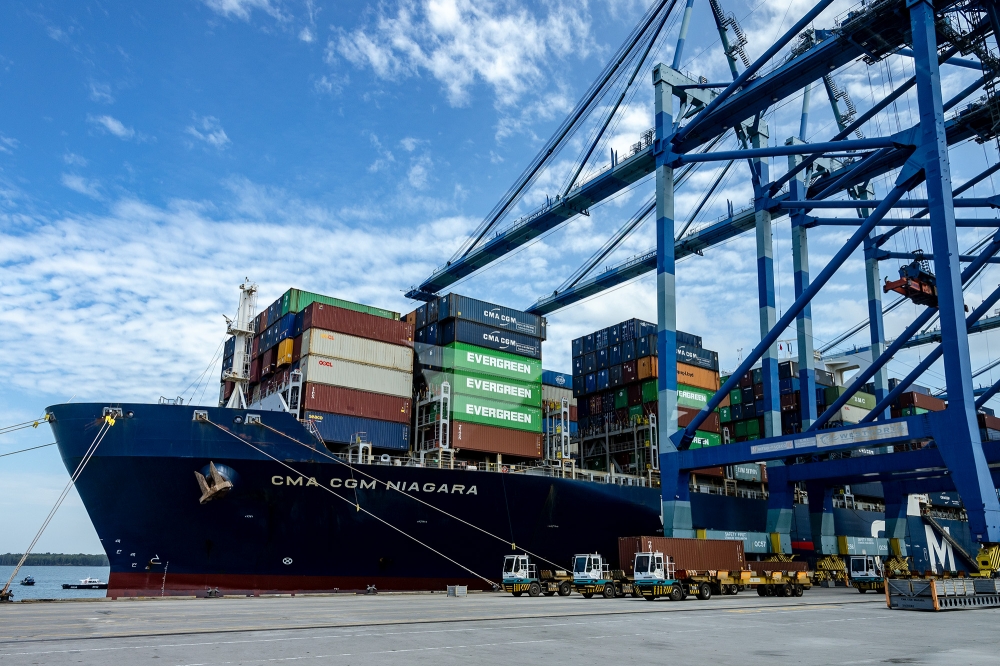
Malaysia's trade increased by 22.4% to RM1.795 trillion in the first half of 2026, but diversification of export markets and import sources is needed to safeguard against external shocks.
The Ministry of Finance emphasises strengthening trade security and resilience through exploring new export markets, reducing reliance on external disruptions and integrating higher value-added supply chains.
Anchored by policies like the National Semiconductor Strategy, Malaysia aims to deepen local manufacturing and attract high-value investments to boost economic complexity and skilled jobs.
KUALA LUMPUR, Oct 9 — Malaysia’s trade remained resilient in the first half of 2026 (1H 2026), with total trade rising 22.4 per cent to RM1.795 trillion, but the country needs to strengthen supply chains and diversify its export markets and import sources to cushion future external shocks, the Ministry of Finance (MoF) said.
MoF said Malaysia should move further up the global value chain and reduce its exposure to disruptions abroad to strengthen its competitiveness and economic resilience.
“It is crucial for Malaysia to strategically strengthen trade security and build national resilience against future global disruptions, including exploring new export markets and import sources,” the ministry said in its Economic Outlook 2027 report released today.
Diversifying import sources would help address immediate supply deficits while also creating a more flexible and resilient supply chain, according to MoF.
Malaysia’s external trade remained resilient during 1H 2026, supported by higher trade with major trading partners, particularly China, which grew 30.6 per cent, followed by the United States at 25.7 per cent, Taiwan (34.7 per cent), Singapore (21.5 per cent) and Hong Kong (45.8 per cent).
Nonetheless, MoF said, it is imperative for Malaysia to build a comprehensive and multi-layered trade resilient strategy to achieve domestic sustainability.
“The government is intensifying efforts to accelerate integration and sophistication with higher value-added supply chains to cushion exposure to external shocks, including through technological advancement and domestic innovation,” it said.
The ministry added that Malaysia is charting the path toward attracting high-growth high-value (HGHV) investments, increasing economic complexity and expanding skilled jobs, as well as strengthening the domestic supply chain.
Anchored by the Madani Economy framework and complemented by the 13th Malaysia Plan, 2026-2030, policies including the National Semiconductor Strategy (NSS), New Industrial Master Plan (NIMP) 2030, New Incentive Framework (NIF), National AI Action Plan (2026 — 2030) and National Energy Transition Roadmap (NETR) were formulated to capture greater global value chain.
“These policies prioritise deepening local manufacturing capabilities, accelerating technological innovation and expanding domestic participation in higher value-added segments, particularly within the advanced electronics and semiconductor ecosystem,” it added. — Bernama
Finance ministry: Malaysia’s fiscal deficit to narrow to 3.3 pc in 2027
Federal govt revenue expected to rise 4.7pc to RM380.8b in 2027, says MOF
Nhaveen murder trial: High Court sets Oct 14 for defence closing submissions after nine‑year wait
Budget 2027 estimated at RM459.8b, up 3.6pc year-on-year, says MOF
2026年上半年,马来西亚贸易额增长22.4%,达到1.795万亿令吉,但需要实现出口市场和进口来源多元化,以抵御外部冲击。
财政部强调,要通过开拓新的出口市场、减少对外部干扰的依赖以及整合更高附加值的供应链来加强贸易安全和韧性。
在国家半导体战略等政策的指导下,马来西亚旨在深化本地制造业发展,吸引高价值投资,以提升经济复杂性并创造高技能就业机会。
吉隆坡,10 月 9 日——马来西亚财政部表示,2026 年上半年(1H 2026)马来西亚贸易保持韧性,贸易总额增长 22.4%,达到 1.795 万亿令吉,但该国需要加强供应链,并使其出口市场和进口来源多元化,以缓冲未来的外部冲击。
财政部表示,马来西亚应进一步提升其在全球价值链中的地位,并减少其受海外干扰的影响,以增强其竞争力和经济韧性。
“马来西亚必须从战略上加强贸易安全,增强国家抵御未来全球冲击的能力,包括探索新的出口市场和进口来源,”该部在今天发布的《2027年经济展望》报告中表示。
财政部表示,进口来源多元化有助于解决眼前的供应短缺问题,同时也能打造更加灵活、更具韧性的供应链。
2026 年上半年,马来西亚的对外贸易保持韧性,这得益于与主要贸易伙伴(特别是中国)贸易额的增长,中国贸易额增长了 30.6%,其次是美国(增长 25.7%)、台湾(增长 34.7%)、新加坡(增长 21.5%)和香港(增长 45.8%)。
不过,财政部表示,马来西亚必须建立全面、多层次的贸易韧性战略,以实现国内可持续发展。
声明称:“政府正加大力度,加快与高附加值供应链的整合和发展,以缓冲外部冲击的影响,包括通过技术进步和国内创新。”
该部补充说,马来西亚正在规划吸引高增长高价值(HGHV)投资、提高经济复杂性、扩大技术岗位以及加强国内供应链的道路。
以马达尼经济框架为基础,并辅以第十三个马来西亚计划(2026-2030 年),制定了包括国家半导体战略(NSS)、2030 年新产业总体规划(NIMP)、新激励框架(NIF)、国家人工智能行动计划(2026-2030 年)和国家能源转型路线图(NETR)在内的政策,以抓住更大的全球价值链。
“这些政策优先考虑深化本地制造业能力,加速技术创新,并扩大国内企业在高附加值领域的参与度,尤其是在先进电子和半导体生态系统中,”声明补充道。——马新社
财政部:马来西亚财政赤字将在2027年收窄至3.3%
财政部表示,预计到2027年,联邦政府收入将增长4.7%,达到3808亿令吉。
纳维恩谋杀案审判:高等法院将辩方结案陈词日期定为10月14日,此前已等待了九年
财政部表示,2027年财政预算案预计为4598亿令吉,同比增长3.6%。