How F-16 Testers Are Evolving The Jet’s New Radar Beyond The Homeland Defense MissionF-16 测试人员如何将战机的新型雷达应用于国土防御任务之外的其他领域
Rapid deployment of a new AESA radar with the Air National Guard is being followed-up with advanced testing for the full suite of F-16 missions.
Updated Nov 27, 2020 6:35 PM EST
The U.S. Air Force is deeply engaged in advanced testing that will help it to exploit the full capabilities of the F-16’s new Northrop Grumman AN/APG-83 Active Electronically Scanned Array, or AESA, radar. It’s part of uncovering the full potential of the radar, and the F-16 for that matter, as it joins more squadrons, firstly in the Air National Guard, followed by active-duty units.
AESA radars offer a massive leap in capabilities over their mechanically scanned array predecessors, both in terms of range, fidelity, fast-scanning ability, reliability, and resistance to being jammed or being fooled by enemy countermeasures, among other advantages. You can read more about AESA arrays in these past War Zone pieces for more background on the topic.
The Air Force recently highlighted the radar and the added capabilities it offers in a media release that detailed how the radar was tested on a first-of-its-kind combined mission with four suitably upgraded F-16s on July 2, 2020. By testing four AESA radars at the same time, the service also assessed whether the aircraft experienced interference and evaluated if the radars’ signals improved or degraded while operating together.
“Now that we have a number of these radars available, especially in operational test, we are going to work our way through all mission sets […] all the way through air-to-air, air-to-ground, Suppression of Enemy Air Defense, Close Air Support, and how we integrate it across all types of other aircraft too,” Air Force Major Joe “Hurt” Viegas told The War Zone . Viegas is the AESA program manager from the 59th Test and Evaluation Squadron (TES) at Nellis Air Force Base, Nevada. That unit is part of the 53rd Wing’s 53rd Test Management Group, which is headquartered at Eglin Air Force Base, Florida.
A view from inside the cockpit during the four-ship F-16 mission from Eglin on July 2., U.S. Air Force/Jack Harman
“What’s somewhat unique about the overall F-16 test enterprise is that the 53rd Wing and the Test and Evaluation Group have been really trying to streamline our efforts in terms of rapidly fielding capabilities,” Viegas added. “Though this is a fielded capability, talking to the APG-83 specifically, this is being [rolled-out] in incremental phases.”
Northrop Grumman developed the AN/APG-83, also known as the Scalable Agile Beam Radar (SABR), as a scalable and tailorable AESA based on its work with the F-22’s AN/APG-77 and the F-35’s AN/APG-81. It is ideally suited as a retrofit solution for the F-16’s mechanically-scanned AN/APG-66/68 radar and is also now available in new-build Vipers. Flight-testing of the radar on the F-16 first commenced at Edwards AFB, California, in November 2009, and Taiwan became the launch customer when it selected the radar for its F-16V upgrade . The radar is now a key part of that upgrade package and it will also be found on new-production F-16C/D Block 70/72 aircraft, which you can read more about here in this previous War Zone piece . SABR is also being assessed for possible USAF bomber upgrades .
Viegas says that the 53rd Wing is now tasked with “stressing” the AESA in a realistic and combat-representative environment, collectively using two Eglin test units , along with the 59th TES at Nellis and the Air National Guard Air Force Reserve Test Center (AATC) in Tucson, Arizona.
Four AESA-equipped F-16Cs prepare for the mission from Eglin on July 2, 2020., U.S. Air Force/MSgt Tristan McIntire
“The Air National Guard has already received this new capability to a certain degree and is already flying it. So, the significance of the most recent flight is that fielding of this capability has been quite a unique experience for the 53rd Wing. The initial task was basic integration of a new capability in the F-16 [for the] Air National Guard units that are protecting our nation from a homeland defense perspective, as quickly as possible,” the major continued. “Now the 53rd Wing has accomplished that task, which is to get capability to the warfighter as quickly as possible, the task is how can we further develop this radar and truly stress the capabilities that we can integrate it into our tactics, techniques, and procedures [TTPs], our three-dash-one [tactics manual],” added Maj Viegas. “Once we have the Guard sufficiently stocked with this capability, the Air Force is going to pivot and start fielding this to active-duty units.”
“The ANG has got it fielded as we are doing testing. The 53rd Wing is passing information to them so they can work effectively with the new capabilities as well as creating our recommendations and TTPs for when the active-duty starts getting the radar,” added Air Force Captain Michael “Echo” Arnold, the AN/APG-83 Tactics Investigation Unit Project Officer for the 85th TES.
While the Nellis element of the 53rd Wing team will start work with upgraded AESA-equipped F-16s this Fall, the current work lies with the Operational Flight Program Combined Test Force (OFP CTF), a combined effort between the 40th Flight Test Squadron (FLTS) and the 85th TES, at Eglin. The same team will take a similarly efficient combined approach when the new F-15EX arrives there next year for initial test work.
A Northrop Grumman AN/APG-83 being installed in an Air National Guard F-16 at Joint Base Andrews., U.S. Air Force
In January 2020, Northrop Grumman said the USAF completed the first installation of the AN/APG-83 radar on ANG F-16s at Joint Base Andrews, Maryland, to meet a U.S. Northern Command Joint Emergent Operational Need (JEON) for homeland defense.
This followed a June 17, 2017, announcement from the USAF that it had selected the AN/APG-83 to upgrade 72 F-16s to meet the JEON. In addition, the USAF plans to retain 350 Block 40/42/50/52 F-16C/Ds in service through at least 2048 and it is putting them through a service-life extension program (SLEP), plus adding new avionics, including the AESA radar.
The new radar enables the F-16 to detect and track targets at greater ranges and with increased precision, especially low flying targets with small radar cross-sections. Cruise missile defense was one of the driving factors in equipping the Guard Vipers that stand watch over Washington, D.C. with the radars. AESA are also more reliable than their mechanically scanned forebearers and they are capable of enhanced air-to-ground mapping.
“This [enhanced air-to-ground mapping] capability allows us to target the northwest corner of a small building or the cockpit of an aircraft [on the ground at an enemy airfield] from several miles away, beyond line-of-sight [beyond visual range],” Jack Harman, a 40th Flight Test Squadron government civilian F-16 test pilot, was quoted by the USAF as saying. “[The radar] improves our ability to identify the threat prior to us being targeted. We no longer have to be inside a threat envelope in order to detect it.”
Upgrading the existing F-16 radars with the new AESA is a major capability jump for the USAF F-16 community, and it also enables greater collaboration in the fighter integration effort with 5th generation assets. “That new hardware and software [in the AESA] is how we’re leveraging lessons learned from the F-22 and F-35 […] and funneling all those lessons into what we are developing in the F-16,” said Major Viegas.
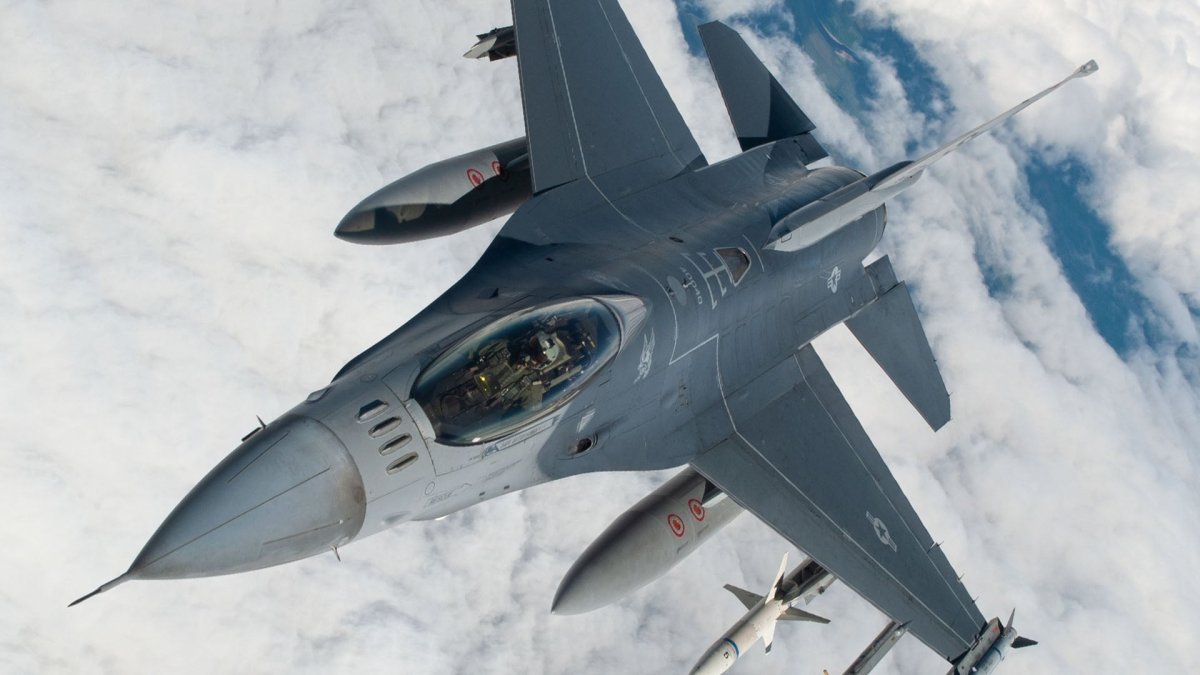
An F-16C from the 85th Test and Evaluation Squadron that is fitted with the new AN/APG-83 AESA radar., U.S. Air Force/MSgt Tristan McIntire
Viegas says the team of F-16 test units will work through all mission sets and assess if the AESA changes any aspects of those and see how the fighter integrates with all types of other aircraft too. “We will be bringing APG-83-equipped aircraft from Eglin out here to [ Nellis to] participate in those Large Force Test Events ,” he adds, saying that all of the work will then be integrated into the USAF Weapons School course.
The new AESA upgrade is a critical part of keeping USAF F-16s credible for the remainder of their service lives . It also brings the F-16 into step with the Air Force’s other front line fighters with a radar technology that has become a benchmark in capability across the international fighter aircraft community.
Contact the author: jamie@thedrive.com
Comments couldn’t be loaded. Please refresh the page.
更新于美国东部时间2020年11月27日下午6:35
美国空军正积极开展先进测试,以充分发挥F-16战斗机新型诺斯罗普·格鲁曼AN/APG-83有源相控阵雷达(AESA)的全部性能。随着F-16战斗机陆续加入更多中队,首先是空中国民警卫队,随后是现役部队,这项测试旨在挖掘该雷达以及F-16战斗机的全部潜力。
与之前的机械扫描阵列雷达相比,AESA雷达在探测距离、精度、扫描速度、可靠性以及抗干扰和抗敌方反制措施等方面都实现了巨大的飞跃。您可以在之前的“战区”文章中了解更多关于AESA阵列雷达的背景信息。
美国空军最近在一份新闻稿中重点介绍了这款雷达及其新增功能,并详细介绍了该雷达于2020年7月2日与四架经过适当升级的F-16战斗机进行的首次联合任务测试。通过同时测试四部AESA雷达,空军还评估了飞机是否受到干扰,并评估了雷达信号在协同工作时是增强还是减弱。
“现在我们已经拥有多部此类雷达,尤其是在作战测试阶段,我们将逐步测试所有任务模式……包括空对空、空对地、压制敌方防空系统、近距离空中支援,以及如何将其集成到所有其他类型的飞机上,”空军少校乔·“赫特”·维加斯告诉《战区》杂志。维加斯是内华达州内利斯空军基地第59测试评估中队(TES)的AESA项目经理。该中队隶属于第53联队第53测试管理大队,该大队总部位于佛罗里达州埃格林空军基地。
这是7月2日从埃格林空军基地起飞的四架F-16战斗机执行任务时,从驾驶舱内拍摄的照片。(美国空军/杰克·哈曼摄)
维加斯补充道:“F-16整体测试体系的独特之处在于,第53联队和测试评估小组一直在努力简化流程,以快速部署相关能力。虽然APG-83本身已经具备部署能力,但它的推广是分阶段进行的。”
诺斯罗普·格鲁曼公司基于其在F-22战斗机AN/APG-77和F-35战斗机AN/APG-81雷达项目上的经验,开发了AN/APG-83雷达,也称为可扩展敏捷波束雷达(SABR)。该雷达是一款可扩展、可定制的有源相控阵雷达(AESA)。它非常适合作为F-16战斗机机械扫描式AN/APG-66/68雷达的升级方案,目前也已应用于新生产的F-16战斗机。该雷达在F-16战斗机上的飞行测试于2009年11月在加利福尼亚州爱德华兹空军基地首次启动,台湾地区成为首个使用该雷达的客户,并为其F-16V升级项目选择了该雷达。该雷达现在是F-16升级套件的关键组成部分,也将应用于新生产的F-16C/D Block 70/72型战斗机上,您可以在之前的“战区”文章中了解更多信息。 SABR也在评估中,有望用于美国空军轰炸机的升级改造。
维加斯表示,第 53 联队现在的任务是在真实且具有战斗代表性的环境中对 AESA 进行“压力测试”,他们将与内利斯空军基地的第 59 测试评估中心和位于亚利桑那州图森的空中国民警卫队空军预备役测试中心 (AATC) 合作,使用埃格林空军基地的两个测试单元进行测试。
2020年7月2日,四架配备AESA雷达的F-16C战斗机在埃格林空军基地准备执行任务。(美国空军/中士特里斯坦·麦金太尔摄)
“空中国民警卫队已经在一定程度上接收并部署了这项新能力。因此,最近一次飞行意义重大,因为这项能力的部署对第53联队来说是一次非常独特的经历。最初的任务是尽快将这项新能力整合到F-16战斗机上,供负责国土防御的空中国民警卫队部队使用,”这位少校继续说道。“现在,第53联队已经完成了这项任务,即尽快将能力交付给作战人员。接下来的任务是如何进一步开发这款雷达,并真正强调将其整合到我们的战术、技术和程序(TTP)以及我们的三段一战术手册中的能力,”维加斯少校补充道。“一旦国民警卫队拥有足够的这项能力,空军将转向并开始将其部署到现役部队。”
“国民警卫队已经部署了这套系统,我们正在进行测试。第53联队正在向他们传递信息,以便他们能够有效地使用新能力,同时我们也正在制定建议和战术、技术和程序,供现役部队开始接收雷达时参考,”空军上尉迈克尔·“回声”·阿诺德补充道,他是第85测试评估中队AN/APG-83战术调查小组的项目官员。
虽然第53联队内利斯分队将于今年秋季开始对升级后的配备AESA雷达的F-16战机进行测试,但目前的工作主要由位于埃格林空军基地的作战飞行计划联合测试部队(OFP CTF)负责,该部队由第40飞行测试中队(FLTS)和第85测试评估中队(TES)联合组成。明年,当新型F-15EX战机抵达埃格林进行初始测试时,该团队将采取类似的联合测试方法。
美国空军安德鲁斯联合基地,一架国民警卫队F-16战斗机正在安装诺斯罗普·格鲁曼公司的AN/APG-83发动机。
2020 年 1 月,诺斯罗普·格鲁曼公司表示,美国空军已在马里兰州安德鲁斯联合基地完成了美国国民警卫队 F-16 战斗机上首次安装 AN/APG-83 雷达,以满足美国北方司令部国土防御联合紧急作战需求 (JEON)。
此前,美国空军于2017年6月17日宣布,已选择AN/APG-83雷达升级72架F-16战斗机,以满足JEON(联合增强作战网络)的要求。此外,美国空军计划至少将350架Block 40/42/50/52型F-16C/D战斗机服役至2048年,并对其进行延寿升级计划(SLEP),同时加装包括AESA雷达在内的新型航空电子设备。
新型雷达使F-16战斗机能够以更高的精度在更远的距离探测和跟踪目标,尤其适用于雷达反射截面积小的低空飞行目标。巡航导弹防御是为驻守华盛顿特区的“卫士蝰蛇”战斗机配备该型雷达的主要驱动因素之一。此外,AESA雷达比其机械扫描式前身更加可靠,并且能够更有效地进行空对地测绘。
美国空军援引第40飞行测试中队政府民用F-16试飞员杰克·哈曼的话说:“这种(增强型空地测绘)能力使我们能够从数英里之外,甚至在视距之外,锁定小型建筑物的西北角或(敌方机场地面)飞机的驾驶舱。(雷达)提高了我们在被攻击之前识别威胁的能力。我们不再需要身处威胁范围内才能探测到它。”
为现有的F-16雷达升级新型AESA雷达,对于美国空军F-16战机而言是一次重大的能力提升,同时也有助于加强与第五代战机的协同作战。“AESA雷达的全新硬件和软件,正是我们借鉴F-22和F-35战机经验,并将这些经验融入到F-16战机研发中的体现,”维加斯少校说道。
一架隶属于第85测试评估中队的F-16C战斗机,配备了新型AN/APG-83有源相控阵雷达。(美国空军/中士特里斯坦·麦金太尔)
维加斯表示,F-16测试团队将完成所有任务,评估AESA雷达是否会对任务的任何方面产生影响,并观察该战斗机与其他各类飞机的协同作战能力。“我们将把配备APG-83雷达的飞机从埃格林空军基地调到这里(内利斯空军基地),参加大规模部队测试活动,”他补充道,并表示所有测试工作都将纳入美国空军武器学校的课程体系。
新的AESA升级对于确保美国空军F-16战斗机在其剩余服役期内保持可靠性至关重要。它也使F-16的雷达技术与空军其他一线战斗机保持一致,而这项雷达技术已成为国际战斗机领域的标杆。
联系作者:jamie@thedrive.com
评论加载失败,请刷新页面。