The half-trillion-ringgit Budget is a testament to PMX’s mercurial shrewdness: Madani is back — Phar Kim Beng这份高达五千亿令吉的预算案证明了马来西亚总理穆罕默德·马达尼(PMX)的精明狡诈:马达尼回来了——法金本
OCTOBER 9 — Prime Minister Datuk Seri Anwar Ibrahim, popularly known as PMX, has demonstrated once again that political survival is not merely about commanding parliamentary...
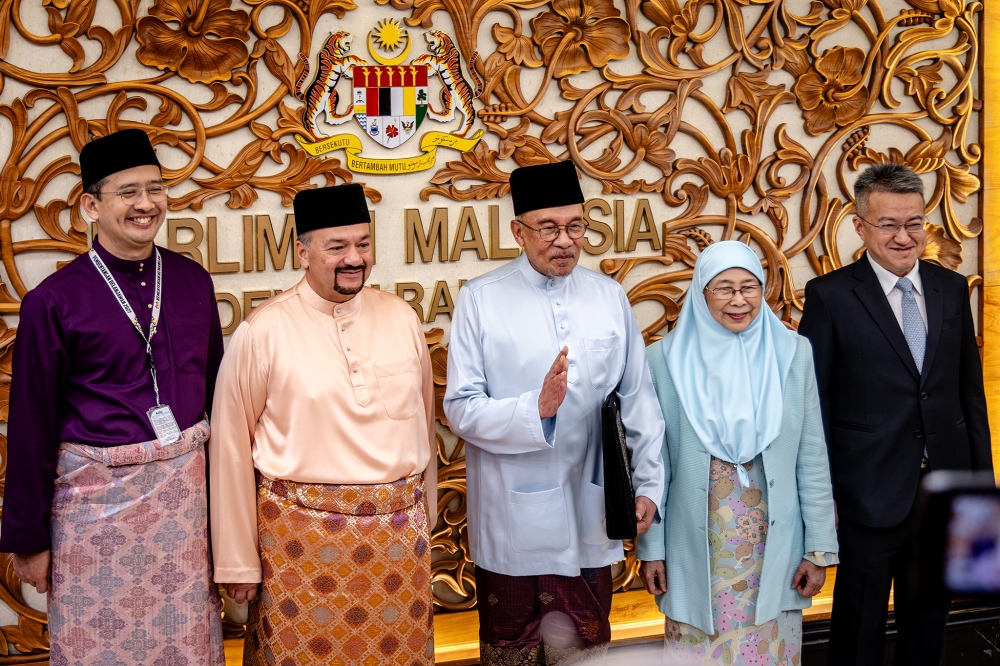
Prime Minister Anwar Ibrahim uses Budget 2027 to boost political confidence by aligning economic relief with national moments, showing his shrewd political adaptability.
The half-trillion-ringgit budget includes financial assistance for civil servants, indicating Anwar's focus on tangible benefits that correlate economic management with political legitimacy.
Anwar's long-term success depends on transforming temporary financial measures into sustainable improvements in Malaysia's economy and governance, with Budget 2027 as a potential pivotal moment.
OCTOBER 9 — Prime Minister Datuk Seri Anwar Ibrahim, popularly known as PMX, has demonstrated once again that political survival is not merely about commanding parliamentary numbers.
It is about understanding the psychology of the electorate, anticipating economic anxieties and converting fiscal instruments into political confidence.
Budget 2027, approaching the half-trillion-ringgit threshold, is a testament to Anwar’s mercurial political shrewdness.
At a time when Malaysia faces an uncertain 16th general election, the Prime Minister has reminded Malaysians that the Unity Government remains capable of delivering tangible benefits.
Not merely as a slogan associated with compassion and good governance, but as a political proposition reconnecting the government with ordinary Malaysians.
The announcement of RM1,500 in special financial assistance to approximately 1.3 million civil servants in Grade Utama B and below, including contract employees, is particularly revealing.
The assistance will be disbursed in two instalments.
The first comes before Hari Raya Aidilfitri, while the second precedes Malaysia’s 70th anniversary of independence in August 2027.
Neither timing is politically insignificant.
Hari Raya is a period when household expenditure increases substantially. Families must contend with travel, food, clothing and social obligations.
The assistance therefore arrives when its immediate economic utility will be appreciated.
The second instalment carries different symbolism.
It associates the government’s recognition of public servants with seven decades of nationhood.
Anwar has combined economic relief with national sentiment.
This is not necessarily cynical politics. Democratic governments must balance fiscal prudence with demonstrating that public institutions remain responsive.
Yet the political sophistication of this arrangement should not be underestimated.
Malaysia’s civil service is more than an administrative apparatus.
It is an institutional network extending from Putrajaya to schools, hospitals, district offices and rural communities.
Its members are also voters, parents, consumers and opinion-makers.
When 1.3 million civil servants receive additional assistance, the effects extend beyond direct recipients.
Their households and local economies benefit from additional spending.
This does not mean financial assistance automatically translates into electoral loyalty.
Malaysian voters have repeatedly demonstrated their capacity to separate immediate economic benefits from broader judgments about governance.
Nevertheless, the announcement provides the government with an opportunity to rebuild confidence when public expectations remain high.
The larger significance of Budget 2027 lies in Anwar’s recognition that economic management and political legitimacy cannot be separated.
A government may announce impressive investments, stronger trade relations and ambitious industrial strategies.
But unless Malaysians experience improvements in their daily lives, such achievements remain distant abstractions.
The cost of living remains the central test.
Malaysia’s middle-income households, younger workers and small businesses continue facing pressures arising from housing affordability, food expenditure and uncertain external economic conditions.
Anwar understands that macroeconomic statistics alone cannot sustain political legitimacy.
National economic performance must translate into household-level improvements.
This is where his political adaptability becomes evident.
Anwar has spent decades navigating political adversity, institutional resistance and shifting alliances.
His career has been marked by reversals that would have ended the ambitions of less resilient leaders.
His present challenge, however, is fundamentally different.
As Prime Minister, he must demonstrate that political resilience can be converted into administrative competence.
Budget 2027 provides another opportunity to make that case.
Yet a budget approaching half a trillion ringgit is not automatically successful.
Its effectiveness must ultimately be judged by fiscal sustainability, expenditure quality and the government’s ability to generate durable economic growth.
Public assistance cannot substitute for productivity improvements, wage growth or institutional reform.
Indeed, the greater the scale of public expenditure, the more important transparency and accountability become.
Malaysia must ensure fiscal commitments are supported by credible revenue assumptions and development allocations produce measurable returns.
Anwar’s shrewdness will therefore be tested not merely by the reception of his announcements but by their implementation.
There is also an important electoral dimension.
With GE16 approaching next year, Malaysia does not possess an obvious government-in-waiting capable of presenting a unified alternative to the Unity Government.
Opposition fragmentation, changing party alignments and uncertainty over political leadership have complicated the electoral landscape.
Anwar appears determined to exploit this strategic opening, not simply by attacking opponents but by strengthening the government’s claim to competence.
Budget 2027 is consequently both an economic document and an instrument of political positioning.
Its message is that the Unity Government remains functional, financially capable and attentive to Malaysians’ pressures.
But Anwar should resist interpreting favourable reactions as guarantees of electoral success.
Malaysian politics remains too fluid for such certainty.
Previous administrations demonstrate that generous public spending cannot permanently compensate for weak governance or declining trust.
For Madani to become politically durable, it must evolve beyond periodic financial assistance into a coherent model of national development.
That means better public services, stronger educational outcomes, competitive industries, improved wages and greater institutional integrity.
The Prime Minister has shown the tactical intelligence to read the political moment.
His next task is demonstrating the strategic patience necessary to transform temporary goodwill into sustained confidence.
Budget 2027 may be remembered as the moment Anwar regained the political initiative.
But the ultimate measure of his leadership will not be the budget’s size.
It will be whether Malaysians emerge more economically secure, institutionally confident and optimistic about their future.
Madani is back. Whether it stays back depends on delivery, not declarations.
* Phar Kim Beng, PhD is the Professor of Asean Studies at International Islamic University of Malaysia and Director of Institute of International and Asean Studies (IINTAS).
** This is the personal opinion of the writer or publication and does not necessarily represent the views of Malay Mail .
Haze must be handled with sheer haste in South-east Asia — Phar Kim Beng
An MB without excos arguably is unconstitutional — Hafiz Hassan
The IMF and World Bank will see a different Thailand after Bangkok’s floods — Phar Kim Beng and Vic Li
Abang Johari appreciates RM16.2b allocation for Sarawak in Budget 2027
Paying a carer for your parents or grandparents? Budget 2027 proposes tax relief even for non-medical care
Haze sees Malaysian respiratory infections rise 10.43pc, conjunctivitis 26.47pc
安瓦尔·易卜拉欣总理利用 2027 年财政预算案,将经济纾困措施与国家大事相结合,提振了政治信心,展现了他精明的政治适应能力。
这项五千亿令吉的预算包括对公务员的财政援助,这表明安华注重将经济管理与政治合法性联系起来的切实利益。
安华的长期成功取决于将临时财政措施转化为马来西亚经济和治理的可持续改善,而 2027 年财政预算案可能是一个关键时刻。
10 月 9 日——首相拿督斯里安华·易卜拉欣(人称 PMX)再次证明,政治生存不仅仅取决于在议会中拥有多少席位。
这关乎了解选民的心理,预测经济焦虑,并将财政手段转化为政治信心。
2027 年财政预算案接近 5000 万亿令吉大关,这证明了安华精明的政治手腕。
在马来西亚面临充满不确定性的第16届全国大选之际,首相提醒马来西亚人民,团结政府仍然有能力带来切实的好处。
这不仅仅是一句与同情心和良好治理相关的口号,更是一项旨在重新连接政府与普通马来西亚民众的政治主张。
政府宣布向约 130 万名 Utama B 级及以下公务员(包括合同工)提供 1500 令吉的特别财政援助,这一举措尤其耐人寻味。
援助款项将分两期发放。
第一个节日是在开斋节之前,第二个节日是在马来西亚独立 70 周年纪念日(2027 年 8 月)之前。
这两个时机都具有重要的政治意义。
开斋节期间,家庭开支会大幅增加。家家户户都要应对旅行、食品、服装和社交活动等方面的开支。
因此,援助会在能够立即发挥其经济效益的时候到来。
第二部分则蕴含着不同的象征意义。
它将政府对公务员的认可与七十年的建国历程联系起来。
安华将经济纾困与民族情怀结合起来。
这未必是玩世不恭的政治手段。民主政府必须在财政审慎与展现公共机构的响应能力之间取得平衡。
然而,这种安排的政治复杂性不容低估。
马来西亚的公务员制度不仅仅是一个行政机构。
这是一个从布城延伸到学校、医院、区办事处和农村社区的机构网络。
其成员还包括选民、家长、消费者和意见领袖。
当 130 万公务员获得额外援助时,其影响将波及到直接受益者之外的群体。
他们的家庭和当地经济都会受益于额外的消费。
但这并不意味着财政援助会自动转化为选举忠诚。
马来西亚选民已经多次证明,他们有能力将眼前的经济利益与对治理的更广泛评价区分开来。
尽管如此,在公众期望依然很高的情况下,这一声明为政府提供了一个重建信心的机会。
2027 年财政预算案的更深层意义在于安华认识到经济管理和政治合法性是不可分割的。
政府可能会宣布令人瞩目的投资计划、更紧密的贸易关系和雄心勃勃的产业战略。
但除非马来西亚人的日常生活得到改善,否则这些成就仍然只是遥远的抽象概念。
生活成本仍然是衡量标准。
马来西亚的中等收入家庭、年轻工人和小企业持续面临住房负担能力、食品支出和不确定的外部经济环境带来的压力。
安华明白,仅靠宏观经济统计数据无法维持政治合法性。
国家经济表现必须转化为家庭层面的改善。
正是在这里,他的政治适应能力显露无疑。
安瓦尔数十年来一直在应对政治逆境、体制阻力和不断变化的联盟关系。
他的职业生涯充满了挫折,这些挫折足以终结意志力较弱的领导者的雄心壮志。
然而,他目前面临的挑战与以往截然不同。
作为总理,他必须证明政治韧性可以转化为行政能力。
2027 年预算案为阐明这一观点提供了又一次机会。
然而,接近五千亿令吉的预算并不一定就能成功。
其有效性最终必须通过财政可持续性、支出质量以及政府创造持久经济增长的能力来评判。
公共援助不能替代生产力提高、工资增长或制度改革。
事实上,公共支出规模越大,透明度和问责制就越重要。
马来西亚必须确保财政承诺有可靠的收入假设支持,并且发展拨款能够产生可衡量的回报。
因此,安华的精明不仅将通过他的声明能否被接受来考验,还将通过这些声明的执行情况来考验。
此外,还存在重要的选举因素。
明年即将举行第16届全国大选,马来西亚目前还没有明显的候任政府能够提出一个统一的替代方案来对抗团结政府。
反对派分裂、政党联盟变化以及政治领导层的不确定性,都使选举形势变得复杂。
安华似乎决心利用这一战略契机,不仅攻击反对派,而且还要加强政府的执政能力。
因此,《2027 年预算案》既是一份经济文件,也是一份政治定位工具。
其传递的信息是,团结政府依然有效运作,财政状况良好,并且关注马来西亚人民的压力。
但安华不应将积极的反应解读为选举成功的保证。
马来西亚政局仍然太过动荡,无法做出这样的确定性决定。
以往的政府经验表明,慷慨的公共支出无法从根本上弥补治理不善或信任度下降的问题。
为了让马达尼在政治上得以持久发展,它必须超越定期财政援助,发展成为一个连贯的国家发展模式。
这意味着更好的公共服务、更强的教育成果、更具竞争力的产业、更高的工资和更强的制度诚信。
首相展现了对当前政治形势的敏锐洞察力。
他的下一个任务是展现出将暂时的善意转化为持久信任所需的战略耐心。
2027 年财政预算案或许会被铭记为安华重新掌握政治主动权的时刻。
但衡量他领导能力的最终标准,并非预算规模。
这将取决于马来西亚人能否在经济上更加安全、在制度上更加自信以及对未来更加乐观。
Madani已经回归。至于它能否继续回归,则取决于实际交付情况,而非申报情况。
* Phar Kim Beng 博士是马来西亚国际伊斯兰大学东盟研究教授,也是国际与东盟研究所 (IINTAS) 所长。
**本文仅代表作者或刊物个人观点,并不一定代表《马来邮报》的立场。
东南亚必须迅速应对雾霾问题——法金本
没有执行委员会的市政委员会可以说是违宪的——哈菲兹·哈桑
曼谷洪灾过后,国际货币基金组织和世界银行将会看到一个不一样的泰国——Phar Kim Beng 和 Vic Li
阿邦佐哈里赞赏2027年预算案中为砂拉越拨款16.2亿令吉
为父母或祖父母支付护理费用?2027 年预算案提议,即使是非医疗护理也能享受税收减免。
雾霾导致马来西亚呼吸道感染病例上升10.43%,结膜炎病例上升26.47%。