The Saga Of The AGM-129 Cruise Missile That Was Basically A Stealth Jet Designed Upside DownAGM-129巡航导弹的传奇故事:它本质上是一架设计反常的隐形喷气式飞机
The Advanced Cruise Missile was too far ahead of its time, so much so that it was eventually succeeded by the missile it was supposed to replace.
新闻视频
Updated Dec 5, 2019 8:20 AM EST
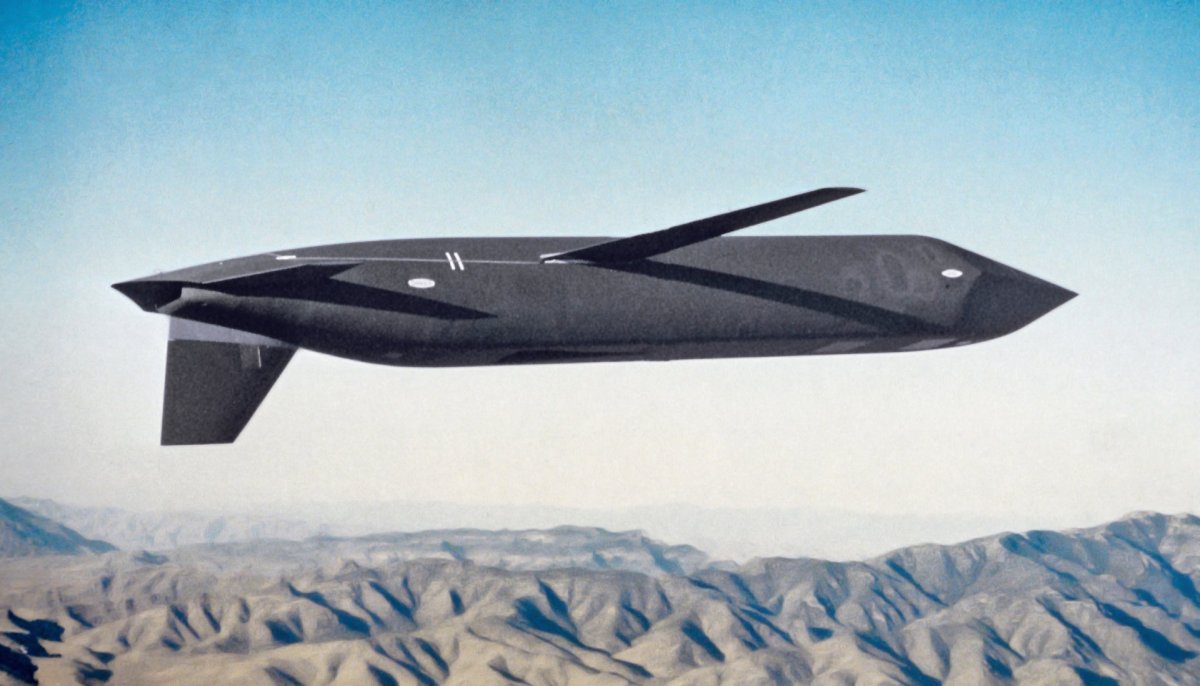
Most people would be surprised to hear that the most advanced nuclear-tipped cruise missile ever put into operation was retired from service while its predecessor, a less survivable missile it was supposed to replace, soldiers on in U.S. Air Force service to this very day. This topsy-turvy reality is somewhat metaphorical of General Dynamics’ AGM-129 Advanced Cruise Missile (ACM) itself. In fact, the AGM-129 could be considered the second stealth aircraft to ever enter production, because that is what it really was, albeit one that was designed upside down, and for good reason.
The origins of the ACM are fairly straightforward. The AGM-86B Air-Launched Cruise Missile (ALCM) entered service in the early 1980s. When it was being designed, and while the non-production AGM-86A was undergoing initial trials, the best way to deliver a nuclear warhead deep inside Soviet airspace by an air-breathing platform was via low-altitude penetration . The AGM-86 was designed exactly for that, to punch through at treetop level using terrain contour matching , terrain-following radar, and inertial navigation to get close enough to a target that the W80 nuclear warhead onboard could do its job successfully.
Later on, the AGM-86C and D would integrate GPS to deliver pinpoint conventional strikes. You can read all about the AGM-86C/D’s capabilities in this recent piece of ours , but the nuclear-armed version of the era had no such accuracy. Regardless, survivability against quickly evolving Soviet air defenses was the most pressing requirement in the Air Force’s air-launched cruise missile portfolio as the 1970s gave way to the 1980s.
AGM-86 being dropped by a B-52 during tests. , USAF
The AGM-86B had a few stealthy characteristics, but it was far from a true low observable design. Just as it came into service, the Air Force realized that the days when being able to beat air defenses via low-flying alone were coming to an end. Airborne early warning and control aircraft and advanced fire control radars with look-down-shoot-down capabilities, like those on Russia’s 4th generation fighter and interceptor fleets (Su-27 and MiG-31, specifically), would decrease the effectiveness of nap-of-the-earth flying tactics. Something far more survivable was needed, and fast.
MiG-31s and Su-27s., Russia MoD
Out of a handful of DARPA initiatives and studies dubbed TEAL DAWN that explored future cruise missile technologies and long-range bomber strategies, it was concluded that the new stealth bomber then in development alone wouldn’t be survivable against the densest Soviet air defenses. Long-range and survivable standoff weapons would be needed in part to mitigate those defenses. Two requirements were established—one stealthy missile that could travel around 1,500 miles or more and another that could travel over 5,000 miles. The latter clearly invalidated much of the need for a stealth bomber in the first place and it was thought that at least a decade would be needed to develop such a long-range weapon. As a result, it was jettisoned to concentrate on the shorter-ranged stealthy cruise missile requirement that could be fielded quickly and equip the Air Force’s new stealth bomber—at least that’s what they hoped. With this in mind, a competition to build such a weapon was quietly launched.
Lockheed, Boeing, and General Dynamics ended up squaring off in secret for this new contract. Lockheed’s Skunk Works leveraged their work on the F-117 program, which was just spinning up in a very secretive operational state at the time , to produce its F-117-shaped cruise missile, known under the code name SENIOR PROM. The details surrounding Boeing’s design remain unclear. General Dynamics’ design was a bit more of a traditional configuration, but one that was clean-sheet and packed with very stealthy features arranged in unique ways to maximize its effectiveness and efficiency. SENIOR PROM, which was a test program before competing for the Advanced Cruise Missile contract, was very stealthy, but it would have been troublesome fitting it into a bomber’s weapons bay. By 1983, General Dynamics clenched the contract and the AGM-129A Advanced Cruise Missile was officially born.
Lockheed’s SENIOR PROM stealth cruise missile based on its still then very secret F-117 Nighthawk design. , Public Domain
General Dynamics’ design, which measured nearly 21 feet long and weighed in at 3,700 pounds, was downright wicked looking. A faceted, stiletto-shaped fuselage with a chined, sharp-tip nose area and forward-swept pop-out wings gave it a sinister, almost Klingon-like look. Not just the wings were backward, all the low observable features were oriented towards defeating detection from above , not below. This resulted in an upside-down-looking airframe of sorts.
The vertical stabilizer-rudder pointed down instead of up. It was made up of composite materials, as were the missile’s horizontal forward-swept stabilizers, to remain nearly invisible to the most threatening radar bands. The vertical stabilizer was also offset to the left side of the fuselage’s centerline.
Semanticscholar.org/USAF
That gas from the missile’s two-dimensional exhaust aperture was blown over a platypus-like defuser structure that shielded its signature from, you guessed it, above, instead of below. The exhaust was also mixed with cold air to help further attenuate its infrared signature. Soviet infrared search and track (IRST) systems were advancing in capability at the time and included on all of Russia’s 4th generation fighter/interceptor designs, so infrared signature reduction was weighted heavily alongside radar cross-section reduction during the competition that led to the AGM-129.
The AGM-129 seen in stowed configuration during climate testing at Eglin AFB. , USAF
The low-observable trapezoidal air inlet sat flush on the bottom of the missile instead of the top of it and fed the engine with air through a serpentine duct, thus eliminating any radar return from the engine fan face. Realizing a flush air inlet on something that flies at transonic speeds comes with major design challenges and it’s not like any stealthy air inlet configuration is easy to design or produce , to begin with. Beyond its underlying radar-evading structures , the AGM-129 was also covered with radar absorbent material and coatings and given an olive drab color to blend in with the terrain it would roar over just before sparking off a nuclear apocalypse.
So, if you think the AGM-129 looks like it is flying inverted, that is by very conscious design. Overall, the missile was designed with a particular weight put on stealth from its upper and forward aspects, where it was most vulnerable. From directly to its side, its radar signature was reduced, but more visible than from other angles. This was deemed a non-issue because the pulse-doppler radars that could threaten it from above are unable to detect low-flying targets hiding in ground clutter while flying at perpendicular angles to the radar antenna as they remain inside the radar’s “doppler notch.” You can read more about this phenomenon and the tactics associated with it here.
Navigation was also innovative. The AGM-129 introduced a laser doppler velocimeter into its navigational suite, which, like the AGM-86, also included inertial navigation and terrain contour matching. This gave it substantially better accuracy over long distances than the AGM-86B, which was designed less than a decade before it.
It also included laser detection and ranging system (LADAR) to aid in low-altitude flight, which further allowed it to fine-tune its endgame attack run down to as accurate as 90 feet according to stated metrics, although the system likely became even more accurate as it matured. Considering it still packed the same W80 variable yield warhead (5kt-150kt) as the AGM-86B, its better accuracy substantially increased its effectiveness, especially against reinforced targets or those that are partially shielded by terrain.
LADAR, as opposed to radar, also allowed the AGM-129 to remain electromagnetically silent, giving off no radio frequency energy when it was most vulnerable and thus making it even harder to detect. There were some tradeoffs though, LADAR could have trouble receiving data against certain surfaces, such as those that were extremely reflective or highly light absorbent. Still, the system was extremely effective and because the missile was so stealthy, it could fly at higher altitudes and in most cases still survive to make it to its target if need be.
ACM during a test. , FAS.ORG
Still, the system was not perfect. During one test over Dugway Proving Ground in 1997, an AGM-129 was flying so low it impacted some trailers belonging to an observatory. Nobody was hurt in the incident and the missile had been flying for three and a half hours before the accident. It turns out the mission planners had no idea the trailers were there and how the missile got so low was unclear to begin with.
The missile was fast, traveling at just under the speed of sound, and it also packed a very long range. It used a far more fuel-efficient engine, the Williams International F112-WR-100 turbofan, than the one found on the AGM-86, which gave it significantly greater range while retaining similar dimensions and the same payload. Officially, ACM could reach out 2,000 miles to its target , but it seems clear that its real range was actually significantly further, especially when flying a more efficient flight profile during more benign portions of its trip to its target area. As noted earlier, the missile’s high degree of stealth meant that it could climb to more efficient altitudes during certain phases of flight and still have a high chance of surviving to complete its horrific task.
Another interesting component of the AGM-129 was its computer system. From how it has been explained to me it used basically one central processor and computing system to run the vast majority of the missile’s functions. For early 1980s military technology, this is an amazing feat. Basically, the computer system and the system designed to used it on the missile was absolutely cutting-edge for its time.
An incredible gathering of 1990s stealth technology, with the AGM-129 in the foreground and the F-117 and B-2 in the background. , USAF
It can’t be stressed enough how advanced the ACM was for its time. It had many elements that hadn’t yet emerged from the classified manned aircraft realm, but was an autonomous system meant to fly thousands of miles to its target without aid and to be built by the hundreds. It was truly a highly sensitive modern marvel of its era.
The first flight test of an AGM-129 occurred in July of 1985, with the first production missiles being delivered two years later, in 1987. It was that year when the program became public, as well. In that sense, it was the first disclosure of a stealth flying machine ever. Still, the program struggled early in its production run. There were technological issues that popped up in flight testing, but the major problems were with building the advanced missiles themselves. Remember, at the time of its first deliveries, no stealth aircraft had even been acknowledged by the Air Force. This wouldn’t occur until two years later when the F-117 was officially disclosed to the public. So, the technologies used in its manufacturing were absolutely cutting-edge in nature.
The missile’s very aggressive concurrent testing and production schedule concept and major labor issues with the International Association of Machinists began to cripple the program and it quickly became a pariah on Capitol Hill and in certain parts of the Pentagon. By the end of the decade, the AGM-129 was being declared a fiasco. Things got so bad with quality control issues that production was halted between 1989 and 1991.
ACMs being manufactured at the General Dynamics plant. , FAS.ORG
Of course, the timing of this setback couldn’t have been worse. The Cold War was ending and the defense budget was set to snap back hard, especially in terms of strategic weaponry. In addition, the B-2 wouldn’t fly until 1989 and still would have a long developmental road ahead of it. The B-1B was also having its own troubles and the missile was never designed to fit in its weapons bays , it was too long, and eventually, the B-1B would lose its nuclear role altogether. So, the weapon that was procured at least in part to be paired with the stealth bomber would be relegated to the B-52.
The confluence of these factors, as well as the START treaty which limited these types of weapons, resulted in a drastic reduction of the programmed buy. The nearly 1,500 missiles needed to replace the AGM-86B in full was slashed down to less than half that, and eventually to a final number of just 460 missiles. Unit cost soared partially as a result of the curtailed order, with each missile costing roughly $4.3 million in 1992 dollars. This is extremely expensive for a cruise missile even by today’s standards. A decade earlier, the AGM-86Bs cost around $1.3 million each. The ACM had truly entered a Pentagon budgetary ‘death spiral’ alongside the plane that was supposed to carry it, the B-2.
President Bush underneath an ACM., FAS.org
Still, they were the most advanced cruise missiles in the world and the truncated force of 460 missiles soldiered on over the next two decades, exclusively equipping the B-52 force. A single B-52 could carry 20 of the missiles at one time. Six on each wing pylon and eight in the jet’s cavernous weapons bay on a rotary launcher.
Two other AGM-129 variants were proposed, but never came to fruition. The AGM-129B was a shadowy initiative to equip a revised design with an axial-flow jet engine, new software, and a different nuclear warhead to take on a specialized role that remains classified. This could have been a GPS-equipped, imaging infrared, or otherwise more precise upgrade of the weapon that would also be equipped with a penetrating nuclear warhead of a lower yield to take on heavily fortified bunkers and more hardened structures. Then again, maybe it was something more exotic, we just don’t know for absolute certain.
ACMs loaded onto a B-52. , USAF
The other proposed variant was a conventional land attack model similar to the AGM-86C/D Conventional Air-Launched Cruise Missiles (CALCM), but far more survivable and with a lot longer reach. GPS would have been necessary for this weapon, just like it was for its CALCM progenitor. An imaging infrared seeker with imaging matching could have been injected into the design for even better accuracy. In retrospect, this would have been a relatively amazing weapon.
The ACMs that were built may have received a GPS upgrade sometime during the decade and a half or so that followed their introduction into service in 1990, although it remains unclear if this actually happened. It would have given the missiles pinpoint accuracy, but GPS connectivity would not be assured during a nuclear war and it may have been cost-prohibitive to integrate a GPS antenna onto the ACM’s stealth airframe. If the upgrade did happen, it would have likely occurred when the missiles were put through a Service Life Extension Program (SLEP) in the early 2000s that would allow them to serve until 2030 and possibly beyond.
Regardless of this life extension program, in 2007, the 17th year of the AGM-129’s operational service, it was decided that the entire ACM force would be drawn down and eliminated from service by the end of 2012. A number of factors contributed to this decision, the first being the post 9/11 focus on counter-insurgency operations instead of preparing for peer state conflicts. The U.S. had two raging wars on its hands that were anything but cheap, and the Russian bear remained largely dormant at the time, while China was just on precipice its economic, geopolitical, and technological rise. The AGM-129 program, with its relatively small fleet made up of super high-tech 1980s technology, meant that sustaining the missiles was far from a cheap or easy task. The AGM-86B, although much less survivable, checked a box for much less money and had commonality with its conventionally armed cousin, the AGM-86C/D, which helped significantly in terms of sustainment scalability.
Beyond fiscal matters, the Strategic Offensive Reductions Treaty (SORT) with Russia also meant more warheads would be pulled off the front lines. So, the Air Force moved forward with not just retiring the AGM-129, but destroying the fleet, a task that was completed as planned by the end of 2012.
During its drawdown period, one highly publicized and unfortunate event occurred with what were historically very shy missiles. On August 30th, 2007 a “Bent Spear” incident occurred with a package of 12 ACMs. A B-52H was set to ferry unarmed ACMs from Minot AFB in North Dakota to Barksdale AFB in Louisiana. The missiles were to be decommissioned at Barksdale, so the mission itself wasn’t necessarily out of the ordinary. What was not normal is that six of the missiles were actually carrying their W-80 thermonuclear warheads.
The nuclear-armed B-52 sat overnight without a proper security detail and other precautions until the crew showed up for the mission the next day. During pre-flight checks, the crew did not inspect both pylons loaded with missiles. They only inspected the one that held six unarmed ACMs, but logged that both pylons full of missiles were indeed checked and that they were unarmed. The crews then flew across the Midwest not knowing they were carrying six nuclear warheads.
A B-52H seen with a ‘package’ of ACMs pre-loaded on their pylon at Minot AFB. , USAF
After arriving at Barksdale, the jet sat for another eight hours without standard precautions associated with nuclear-armed aircraft. It was nearly a day and a half after the Minot AFB personnel blew off normal procedures and loaded the hot ACMs on the B-52 that the fact that the plane was actually carrying live warheads was discovered. The incident was the first of its kind in four decades and sent shockwaves through the Air Force and the Pentagon. A subsequent investigation showed horrible disregard for critical nuclear weapons handling protocols and everyone from four unit commanders down to those directly involved were heavily disciplined or removed from duty. All nuclear weapons handling was suspended at Minot AFB. It also resulted in a new set of procedures that were designed to make sure such a breakdown in procedures doesn’t happen again.
It was a sad end to the troubled development and career of the world’s first stealth cruise missile.
ACMs on a B-52., USAF/Public Domain
In retrospect, the decision not just to retire, but fully destroy the AGM-129 cadre seems like a very poor one. Today, the Air Force is working on developing a new stealthy long-range nuclear-tipped cruise missile, the Long-Range Stand-Off (LRSO) weapon, a program that will cost tens of billions of dollars and won’t produce an operational missile until at least 2030. Raytheon, which owns the AGM-129 design after it bought Hughes Missile Systems, which bought General Dynamics’ missile portfolio prior, is competing with Lockheed for the LRSO contract. In the meantime, the AGM-86B is supposed to remain a viable deterrent even in an era of ever more capable highly integrated air defense systems, ones that now rely on look-down-shoot-down sensors more than they did 35 years ago and that are far more advanced in general than what existed when ACM was conceived. This begs the question, is the AGM-86B really a survivable deterrent at all? The true answer, that we will never officially get, is probably less comforting than we may want to hear.
The truth is, the AGM-129 was way ahead of its time. Today, there are numerous stealthy cruise missiles in production or will be in production soon and they are becoming an extremely sought-after item. The USAF can’t get enough of Lockheed’s JASSM family of missiles , which continues to rapidly grow in capability, while the Navy is procuring the anti-ship LRASM cousin of JASSM, the stealthy Naval Strike Missile , and a powered version of the JSOW. Multiple foreign militaries have their own stealthy cruise missiles , as well. But these are conventionally armed weapons. It will be at least another decade until a nuclear-armed stealth cruise missile hits the USAF’s inventory again. That weapon, the LRSO, will be in many ways the son of AGM-129 and from what we are hearing, it will be absolutely loaded with the latest and greatest technology that will allow it to survive in the most inhospitable of combat environments. It is also meant to equip the USAF’s new stealth bomber, the B-21 Raider.
Somehow this all sounds eerily familiar, doesn’t it?
Contact the author: Tyler@thedrive.com
Comments couldn’t be loaded. Please refresh the page.
更新于美国东部时间2019年12月5日上午8:20
大多数人听到这样的说法都会感到惊讶:有史以来最先进的核弹头巡航导弹已经退役,而它的前身——一款生存能力较差、本应被它取代的导弹——却至今仍在美军空军服役。这种颠倒的现实在某种程度上隐喻了通用动力公司AGM-129先进巡航导弹(ACM)本身。事实上,AGM-129可以被视为第二款投入生产的隐形飞机,因为它本质上就是一架隐形飞机,尽管它的设计理念与传统飞机截然不同,而这背后自有其道理。
空射巡航导弹(ACM)的起源相当简单。AGM-86B空射巡航导弹(ALCM)于20世纪80年代初投入使用。在AGM-86B的设计阶段,以及非量产型AGM-86A进行初步试验期间,利用吸气式平台将核弹头投送至苏联领空深处的最佳方式是低空突防。AGM-86正是为此而设计的,它利用地形轮廓匹配、地形跟踪雷达和惯性导航技术,以树梢高度穿透敌方防空系统,接近目标,从而使其携带的W80核弹头能够成功命中目标。
后来,AGM-86C 和 D 型导弹集成了 GPS 系统,能够进行精确的常规打击。您可以在我们最近的一篇文章中了解 AGM-86C/D 的全部性能,但当时的核弹头版本并不具备这种精度。尽管如此,在 20 世纪 70 年代末到 80 年代初,面对快速发展的苏联防空系统,提高空射巡航导弹的生存能力仍然是美国空军空射巡航导弹组合中最紧迫的需求。
在测试中,一架B-52轰炸机投掷了AGM-86导弹。(美国空军)
AGM-86B导弹具备一定的隐身性能,但远非真正的低可探测性设计。就在它服役之际,空军意识到仅靠低空飞行突破防空系统的时代即将结束。空中预警和控制飞机以及具备下视下射能力的先进火控雷达,例如俄罗斯第四代战斗机和截击机(特别是苏-27和米格-31)所配备的雷达,将大大降低低空飞行战术的有效性。因此,亟需一种生存能力更强的武器。
俄罗斯国防部的米格-31和苏-27战斗机
在代号为“青色黎明”(TEAL DAWN)的几项DARPA计划和研究中,探索了未来的巡航导弹技术和远程轰炸机战略,最终得出结论:当时正在研发的新型隐形轰炸机单凭自身无法抵御苏联最密集的防空系统。远程且生存能力强的防区外武器对于削弱这些防御至关重要。由此确定了两项需求:一种射程在1500英里或以上的隐形导弹,以及另一种射程超过5000英里的导弹。后者显然否定了最初研发隐形轰炸机的必要性,而且当时认为研发这种远程武器至少需要十年时间。因此,隐形轰炸机项目被放弃,转而集中精力研发射程更短、能够快速部署并装备空军新型隐形轰炸机的隐形巡航导弹——至少他们是这么希望的。基于此,一项旨在研制这种武器的竞赛悄然启动。
洛克希德·马丁公司、波音公司和通用动力公司最终秘密展开了这场新合同的争夺。洛克希德·马丁公司的臭鼬工厂利用其在F-117项目上积累的经验(当时F-117项目正处于高度保密的研发阶段),研制出了外形类似F-117的巡航导弹,代号为“高级推进”(SENIOR PROM)。波音公司的设计细节至今仍不为人知。通用动力公司的设计则更为传统,但它是全新设计的,并融入了许多隐身性能极佳的特性,这些特性以独特的方式排列,旨在最大限度地提高导弹的效能和效率。“高级推进”导弹在竞标先进巡航导弹合同之前曾是一个测试项目,其隐身性能非常出色,但将其装入轰炸机的武器舱却十分困难。到1983年,通用动力公司最终赢得了合同,AGM-129A先进巡航导弹正式诞生。
洛克希德公司基于当时仍高度机密的F-117“夜鹰”战斗机设计的“高级舞会”隐形巡航导弹。,公共领域
通用动力公司设计的这款飞机长近21英尺,重3700磅,外形十分凶悍。它拥有棱角分明、匕首状的机身,机头尖锐,前掠式弹出机翼更添几分阴森之感,几乎像极了克林贡战机。不仅机翼方向相反,所有低可观测特征都旨在规避来自上方的侦测,而非下方。这使得整架飞机看起来就像是倒置的。
垂直尾翼向下而非向上。它与导弹的水平前掠尾翼一样,均由复合材料制成,以便在最具威胁的雷达波段几乎不被探测到。此外,垂直尾翼还偏向机身中心线的左侧。
Semanticscholar.org/USAF
导弹二维排气口喷出的气体被吹过一个类似鸭嘴兽的扩散器结构,该结构能够屏蔽来自上方而非下方的探测信号。排气还与冷空气混合,以进一步降低其红外特征。当时苏联的红外搜索与跟踪(IRST)系统性能不断提升,并被应用于俄罗斯所有第四代战斗机/拦截机的设计中,因此在AGM-129导弹的竞标过程中,降低红外特征与降低雷达反射截面同样被列为重要的考量因素。
在埃格林空军基地进行气候测试期间,AGM-129导弹处于收起状态。(美国空军)
这种低可探测性的梯形进气口位于导弹底部而非顶部,并通过蛇形管道为发动机供气,从而消除了发动机风扇表面的任何雷达反射。在以跨音速飞行的导弹上实现这种齐平式进气口设计极具挑战性,而且任何隐身进气口的设计或生产本身就绝非易事。除了其内部的雷达规避结构外,AGM-129导弹还覆盖有雷达吸波材料和涂层,并涂有橄榄绿色,以便与它即将掠过的地形融为一体,最终引爆一场核灾难。
所以,如果你觉得AGM-129看起来像是在倒飞,那是经过精心设计的。总的来说,这款导弹的设计重点在于提升其上方和前方(也是它最脆弱的部位)的隐身性能。从侧面看,它的雷达反射截面积有所降低,但比其他角度更容易被探测到。但这被认为无关紧要,因为那些可能从上方威胁到它的脉冲多普勒雷达无法探测到低空飞行、隐藏在地面杂波中且与雷达天线垂直飞行的目标,因为这些目标始终位于雷达的“多普勒陷波区”内。你可以在这里阅读更多关于这种现象及其相关战术的信息。
导航系统也极具创新性。AGM-129在其导航系统中引入了激光多普勒测速仪,与AGM-86一样,该系统还包括惯性导航和地形轮廓匹配技术。这使得它在远距离上的精度比AGM-86B有了显著提高,而AGM-86B的研发时间比AGM-129早不到十年。
它还配备了激光测距系统(LADAR),以辅助低空飞行,这使得它能够进一步微调其末段攻击的精度,根据官方数据,精度可达90英尺,尽管随着系统的成熟,其精度可能还会更高。考虑到它仍然搭载了与AGM-86B相同的W80可变当量战斗部(5千吨至150千吨),其更高的精度显著提升了其效能,尤其是在打击加固目标或部分被地形遮蔽的目标时。
与雷达不同,激光雷达(LADAR)使AGM-129导弹能够保持电磁静默,在最易受攻击时不会发出任何射频能量,从而更加难以被探测。然而,激光雷达也存在一些不足,例如在某些表面(如高反射率或高吸光率的表面)上,其接收数据可能会遇到困难。尽管如此,该系统仍然非常有效,而且由于导弹本身具有极佳的隐身性能,它可以飞行更高的高度,并且在大多数情况下都能安全抵达目标。
测试期间的 ACM。,FAS.ORG
然而,这套系统并非完美无缺。1997年,在杜格威试验场的一次测试中,一枚AGM-129导弹飞行高度过低,撞上了天文台的一些拖车。事故中无人受伤,导弹在事故发生前已经飞行了三个半小时。事后发现,任务规划人员根本不知道这些拖车在那里,而且导弹为何会飞得如此之低,一开始也并不清楚。
这枚导弹速度极快,飞行速度接近音速,射程也非常远。它采用的威廉姆斯国际公司F112-WR-100涡扇发动机比AGM-86的发动机燃油效率高得多,使其射程显著提升,同时保持了相似的尺寸和相同的有效载荷。官方数据显示,ACM导弹的射程可达2000英里,但显然其实际射程要远得多,尤其是在前往目标区域的相对安全航段采用更高效的飞行剖面时。正如前文所述,该导弹具有极高的隐身性能,这意味着它可以在飞行过程中爬升到更高效的飞行高度,并仍然有很高的概率完成其可怕的任务。
AGM-129导弹的另一个有趣之处在于它的计算机系统。据我了解,它基本上只使用一个中央处理器和计算系统来运行导弹的绝大部分功能。对于20世纪80年代初的军事技术而言,这堪称一项惊人的成就。总而言之,这套计算机系统以及与之配套的导弹系统在当时绝对是尖端科技。
这是一场令人惊叹的20世纪90年代隐形技术盛会,前景是AGM-129导弹,背景是F-117和B-2轰炸机。(美国空军)
无论如何强调ACM在当时的先进程度都不为过。它包含许多当时尚未在有人驾驶飞机领域出现的技术,而且它还是一套自主系统,无需任何辅助即可飞行数千英里到达目标,并可批量生产数百架。它堪称那个时代高度精密的现代奇迹。
AGM-129导弹的首次飞行测试于1985年7月进行,首批生产型导弹于两年后的1987年交付。同年,该项目也正式对外公布。从这个意义上讲,它是史上首次公开的隐形飞行器。然而,该项目在生产初期遇到了不少困难。飞行测试中出现了一些技术问题,但主要问题在于先进导弹本身的制造。要知道,在首批导弹交付之时,美国空军甚至还没有正式承认过隐形飞机的存在。这种情况直到两年后F-117战斗机正式向公众发布才有所改变。因此,AGM-129导弹制造过程中所使用的技术绝对是当时最尖端的。
该导弹激进的同步测试和生产计划,以及与国际机械师协会之间严重的劳工纠纷,开始严重阻碍项目进展,并迅速成为国会山和五角大楼某些部门的眼中钉。到20世纪80年代末,AGM-129导弹项目被公认为彻底失败。质量控制问题严重到1989年至1991年间被迫停产。
通用动力工厂正在生产气化复合材料。,FAS.ORG
当然,这次挫折的时机再糟糕不过了。冷战即将结束,国防预算即将大幅削减,尤其是在战略武器方面。此外,B-2轰炸机要到1989年才能首飞,而且还有很长的研发之路要走。B-1B轰炸机自身也面临着诸多问题,其导弹的设计初衷并非用于装载在B-1B的弹舱内,因为导弹太长,最终B-1B将彻底失去其核打击能力。因此,这款原本至少部分是为了配合隐形轰炸机而采购的武器,最终只能被分配给B-52轰炸机。
这些因素的综合作用,以及限制此类武器的《削减战略武器条约》(START),导致了计划采购数量的大幅削减。原本需要近1500枚导弹来完全取代AGM-86B,但最终数量锐减至不到一半,最终仅为460枚。订单缩减导致单价飙升,每枚导弹的造价约为430万美元(以1992年美元计算)。即使以今天的标准来看,这对于巡航导弹来说也是极其昂贵的。十年前,AGM-86B的单价约为130万美元。AGM-86B及其搭载飞机B-2轰炸机都陷入了五角大楼预算的“死亡螺旋”。
布什总统在ACM下方。,FAS.org
尽管如此,它们仍然是世界上最先进的巡航导弹,这支缩减至460枚的部队在接下来的二十年里继续服役,专门装备于B-52轰炸机部队。一架B-52轰炸机一次最多可携带20枚导弹:每侧机翼挂架上挂6枚,其余8枚则安装在机身巨大的武器舱内,通过旋转发射器携带。
另有两种AGM-129改进型曾被提出,但最终未能实现。AGM-129B是一项秘密计划,旨在为改进型导弹配备轴流式喷气发动机、新软件和不同的核弹头,以执行一项至今仍属机密的特殊任务。这可能是一种配备GPS、红外成像或其他更精确定位功能的升级版武器,同时还将配备当量较低的穿透型核弹头,用于攻击防御工事坚固的掩体和更密集的建筑物。当然,也可能是更奇特的方案,我们目前尚无法完全确定。
装载到B-52轰炸机上的空地导弹。(美国空军)
另一种方案是类似于AGM-86C/D常规空射巡航导弹(CALCM)的常规陆攻型导弹,但生存能力更强,射程更远。与CALCM一样,这种导弹也需要GPS定位系统。此外,还可以加入成像红外导引头和图像匹配技术,以进一步提高精度。现在看来,这将会是一种相当出色的武器。
这些已制造的ACM导弹可能在1990年服役后的大约十五年间进行过GPS升级,但目前尚不清楚是否真的进行过。升级后导弹的定位精度将得到显著提升,但在核战争期间GPS信号无法保证,而且将GPS天线集成到ACM的隐形弹体上成本可能过高。如果确实进行过升级,很可能是在21世纪初导弹进行延寿计划(SLEP)时完成的,该计划旨在延长导弹的服役期限至2030年甚至更久。
尽管有延寿计划,但在2007年,也就是AGM-129导弹服役的第17个年头,美国决定在2012年底前裁减并退役整个AGM-129导弹部队。促成这一决定的因素有很多,首先是9·11事件后,美国将重心转向反叛乱行动,而非备战与势均力敌国家的冲突。当时美国正深陷两场旷日持久且耗资巨大的战争泥潭,而俄罗斯当时基本处于蛰伏状态,中国则正处于经济、地缘政治和科技崛起的风口浪尖。AGM-129导弹项目规模相对较小,且采用的是上世纪80年代的高科技,这意味着维护这些导弹绝非易事,成本也极高。 AGM-86B 虽然生存能力差很多,但它的价格便宜得多,而且与它的常规武装同系产品 AGM-86C/D 具有通用性,这在保障可扩展性方面起到了很大的帮助。
除了财政因素外,与俄罗斯签署的《削减进攻性战略武器条约》(SORT)也意味着更多核弹头将从前线撤出。因此,空军不仅着手退役AGM-129导弹,而且还计划销毁整个导弹机队,这项任务已按计划于2012年底完成。
在退役期间,发生了一起备受瞩目且令人遗憾的事件,而这起事件涉及的正是历史上非常低调的导弹。2007年8月30日,一架B-52H轰炸机执行任务,将12枚空射导弹从北达科他州迈诺特空军基地运送至路易斯安那州巴克斯代尔空军基地,执行名为“弯曲的矛”(Bent Spear)的事件。这些导弹将在巴克斯代尔基地退役,因此任务本身并无异常。然而,不寻常的是,其中六枚导弹实际上携带了W-80型热核弹头。
这架携带核武器的B-52轰炸机在没有适当安保人员和其他预防措施的情况下停放了一夜,直到第二天机组人员抵达执行任务。在飞行前检查中,机组人员没有检查两个挂架上装载的导弹。他们只检查了装有六枚未装弹头的空地导弹的挂架,但却在记录中声称两个挂架都已检查过,并且导弹均未装弹。随后,机组人员在不知情的情况下飞越了美国中西部,而他们当时并不知道自己携带了六枚核弹头。
一架B-52H轰炸机在迈诺特空军基地被发现,其挂架上预装了一包空战导弹。(美国空军)
抵达巴克斯代尔空军基地后,这架喷气式飞机在没有采取核武器飞机应有的标准预防措施的情况下又停留了八个小时。在迈诺特空军基地人员无视正常程序,将高能空地导弹装载到B-52轰炸机上近一天半之后,才发现飞机上实际上携带的是实弹核弹头。这是四十年来首次发生此类事件,震惊了美国空军和五角大楼。随后的调查显示,相关人员严重漠视了关键的核武器操作规程,从四名部队指挥官到直接涉事人员,所有人都受到了严厉的纪律处分或被撤职。迈诺特空军基地暂停了所有核武器操作。此次事件还促成了一套新的操作规程的制定,旨在确保此类程序失误不再发生。
世界首枚隐形巡航导弹坎坷的研发历程和服役生涯最终以悲剧收场。
B-52轰炸机上的空对空导弹系统。(美国空军/公共领域)
现在看来,当初决定不仅要退役AGM-129导弹,还要彻底销毁其装备,实在是一个非常糟糕的决定。如今,美国空军正在研发一种新型隐形远程核巡航导弹——远程防区外导弹(LRSO),该项目耗资数百亿美元,至少要到2030年才能研制出可投入使用的导弹。雷神公司收购了休斯导弹系统公司(该公司此前收购了通用动力公司的导弹业务),从而拥有了AGM-129的设计权,目前正与洛克希德·马丁公司竞标LRSO导弹的合同。与此同时,AGM-86B导弹在当今高度一体化、能力日益强大的防空系统时代,仍然被寄予厚望,继续发挥其威慑作用。如今的防空系统比35年前更加依赖下视下射传感器,整体技术水平也远超AGM-86B导弹诞生之初的水平。这就引出了一个问题:AGM-86B导弹真的具有足够的生存能力来起到威慑作用吗?我们永远无法得到官方的真正答案,而这个答案或许并不像我们希望听到的那样令人安心。
事实上,AGM-129导弹的设计理念远远超前于时代。如今,许多隐形巡航导弹正在生产或即将投产,并且正成为炙手可热的装备。美国空军对洛克希德·马丁公司的JASSM系列导弹趋之若鹜,该系列导弹的性能也在快速提升;而海军则正在采购JASSM的反舰型LRASM导弹、隐形海军打击导弹以及动力版的JSOW导弹。许多外国军队也拥有自己的隐形巡航导弹。但这些都是常规武器。至少在未来十年内,美国空军的装备库中才会再次出现核弹头隐形巡航导弹。这种名为LRSO的武器在很多方面都将是AGM-129的“后继者”,而且据我们所知,它将搭载最先进的技术,使其能够在最恶劣的作战环境中生存。它还将用于装备美国空军的新型隐形轰炸机 B-21“突袭者”。
这一切听起来是不是似曾相识?
联系作者:Tyler@thedrive.com
评论加载失败,请刷新页面。