German Type 212 Sub Has This ‘Propeller Boss Vortex Diffuser’ To Reduce Its Acoustic Signature德国212型潜艇配备了这种“螺旋桨轴涡流扩散器”,以降低其声学特征。
Not much is known about the system, but it's based on similar principals as finned systems commercial ships use to increase efficiency.
Updated Dec 1, 2019 6:44 AM EST
When it comes to submarines, silence is survival, so any way to make a boat quieter is seen as a win and adding technologies that make a submarine both quieter and a more efficient performer is seen as potentially revolutionary. Submarine propulsion is a constantly evolving medium that largely exists in the shadows due to its sensitive nature, but once in a while we get a glimpse of something new. That’s is precisely the case with one of Germany’s Type 212 boats.
In the past two decades, propulsors have taken the place of traditional propellers on some advanced submarines, including America’s Seawolf and Virginia class nuclear fast attack boats, which has been a particularly interesting evolution. But now it seems that some smaller diesel electric subs are also adding something new to their propulsion systems that provides better performance at lower noise levels. Enter the Propeller Boss Vortex Diffuser (PBVD).
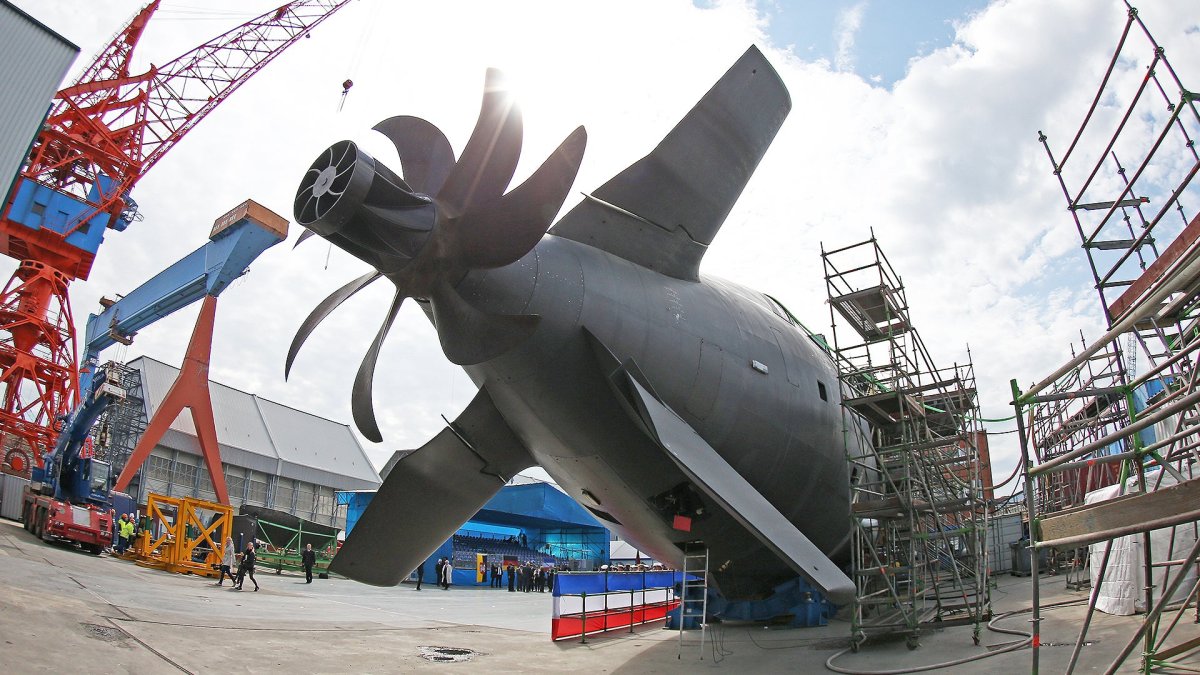
The technology came to my attention when @SSN01, a contact I follow on Twitter, posted a blurb about it. In the images he posted, and others available from the Associated Press and Getty Images , Germany’s Type 212 U36 is shown at its public christening. Oddly enough, the boat’s propeller wasn’t covered during the gathering, a practice that is largely customary any time a military submarine is out of the water.
Generally speaking, the propellers on combat submarines are usually considered quite sensitive for a number of reasons, one of which is that adversaries could supposedly get an idea of the acoustic characteristics of the boat if they have detailed images of the propeller’s geometry. This clearly wasn’t a concern for the German Navy or ThyssenKrupp who builds the Type 212s when U36 was christened in 2013. It is the newest Type 212 in service with the German Navy.
The cylindrical PBVD system sits over the hub of traditional submarine propellers. Its specially machined core works to greatly decrease turbulence and cavitation that emits from the spinning hub. This not only cuts down on the propeller’s audible signature, but it also improves propulsion efficiency and thrust.
Interestingly, the basic concept behind this technology really isn’t secretive or new as it is also used in commercial applications where increased efficiency even in single digit percentages can mean big fuel savings over the life of a vessel. Commonly called Propeller Boss Cap Fins (PBCF) in the commercial world, the technology was developed in the 1980s and it’s in fairly widespread use today with thousands of ships sailing with them installed.
Wärtsilä’s EnergoProFin is one such product that comes with a manufacturer’s claim that it can cut fuel consumption by as much as five percent for large vessels. Marine Propulsion describes the EnergoProFin’s effectiveness as such:
“Weakening the propeller hub vortex behind the propeller decreases propeller resistance and manifests itself as increased thrust. The deflection of the flow aft of the propeller by the optimized profiled fins reduces the propeller torque. In addition to the improved propulsive efficiency, the new Wärtsilä EnergoProFin propeller can also be applied to reduced propeller-induced noise and vibrations.”
Left is a normal boss hub and right is one with the EnergoProFin integrated into it., Wärtsilä
The adaptation of this technology seems to be pretty much a no-brainer for the military submarine industry. Still, its migration to the underwater realm is quite intriguing and the complex cylindrical design of the PBVD seen on U36 is clearly more intricate than the fin systems used on its commercial cousins. This is likely due to the submarine prop’s higher RPM and unique focus on maximum reduction in cavitation and noise production.
mol.co.jp/apmaritime.com
It’s not clear what other submarines have leveraged this technology, or even if all the Type 212s and their derivatives are fitted with it. But if it is greatly effective, maybe it will compete with the propulsor on certain future designs, especially when cost, reliability, and complexity are factored in.
Some simpler finned boss cap extension designs have existed in the past on certain submarines. Russian ones in particular, from the crazy fast Alfa class of the Cold War-era to the latest Kilo class submarines being produced today, use a simple finned design, but the Type 212’s device is far more complex.
The Alfa class had a boss hub extension that helped reduce cavitation around the submarine’s hub., Public Domain
With that in mind, we just don’t know if this is a technological breakthrough from the Germans or not. It is possible and we will keep our eye out to see if a similar system pops up on other submarines.
Regardless, it certainly looks cool!
Contact the author: Tyler@thedrive.com
Comments couldn’t be loaded. Please refresh the page.
更新于美国东部时间2019年12月1日上午6:44
对于潜艇而言,静音即生存,因此任何降低潜艇噪音的方法都被视为一种胜利,而能够同时提升潜艇静音性和效率的技术则被视为潜在的革命性突破。潜艇推进系统是一个不断发展的领域,由于其敏感性,它在很大程度上一直处于幕后,但我们偶尔也能瞥见一些新事物。德国212型潜艇就是一个很好的例子。
过去二十年间,一些先进潜艇,包括美国的“海狼”级和“弗吉尼亚”级核动力快速攻击潜艇,已经用推进器取代了传统的螺旋桨,这一发展历程尤为引人注目。而现在,一些小型柴电潜艇似乎也在为其推进系统增添了新的装置,以在降低噪音的同时提升性能。这就是螺旋桨轴涡流扩散器(PBVD)。
我是在推特上关注了@SSN01,他发布了一条关于这项技术的简短信息后才注意到它的。在他发布的图片以及美联社和盖蒂图片社提供的其他图片中,展示了德国212型潜艇U36的公开下水仪式。奇怪的是,在仪式期间,潜艇的螺旋桨并没有被遮盖起来,而这通常是军用潜艇出水时的惯例。
一般来说,作战潜艇的螺旋桨通常被认为非常敏感,原因有很多,其中之一是,如果敌方获得螺旋桨几何形状的详细图像,就可能了解潜艇的声学特性。但显然,德国海军和蒂森克虏伯公司(212型潜艇的制造商)在U36号潜艇于2013年下水时并未考虑这一点。U36号是德国海军服役的最新型212型潜艇。
圆柱形PBVD系统位于传统潜艇螺旋桨的轮毂上方。其经过特殊加工的核心部件能够显著降低旋转轮毂产生的湍流和空化现象。这不仅能降低螺旋桨的噪音,还能提高推进效率和推力。
有趣的是,这项技术背后的基本原理其实并不神秘或新颖,它也已应用于商业领域。即使效率提升只有个位数百分比,也能在船舶的整个使用寿命周期内节省大量燃料。这项技术在商业领域通常被称为螺旋桨毂盖鳍(PBCF),它于20世纪80年代开发,如今已得到相当广泛的应用,数千艘船舶都安装了这种装置。
瓦锡兰的EnergoProFin就是这样一款产品,制造商声称它可以为大型船舶降低高达5%的燃油消耗。《船舶推进》杂志对EnergoProFin的有效性描述如下:
“减弱螺旋桨后方的轮毂涡流可以降低螺旋桨阻力,从而增加推力。优化设计的翼型偏转螺旋桨后方的气流,可以降低螺旋桨扭矩。除了提高推进效率外,新型瓦锡兰EnergoProFin螺旋桨还有助于降低螺旋桨引起的噪音和振动。”
左边是普通的轮毂轴承座,右边是集成了 EnergoProFin 的轮毂轴承座。瓦锡兰
对于军用潜艇行业而言,采用这项技术似乎是理所当然的。然而,将其应用于水下领域却颇为引人入胜。U36潜艇上PBVD推进器的复杂圆柱形设计,显然比商用潜艇上使用的鳍式推进系统更为精密。这很可能是由于潜艇推进器更高的转速,以及其对最大限度减少空化和噪声产生的独特关注所致。
mol.co.jp/apmaritime.com
目前尚不清楚还有哪些潜艇采用了这项技术,甚至不确定所有212型潜艇及其衍生型号是否都配备了这项技术。但如果这项技术确实非常有效,那么在未来的某些潜艇设计中,它或许会与推进器展开竞争,尤其是在考虑成本、可靠性和复杂性等因素之后。
过去某些潜艇上曾出现过一些结构较为简单的鳍状凸台延伸设计。特别是俄罗斯潜艇,从冷战时期速度惊人的阿尔法级到如今仍在生产的最新基洛级潜艇,都采用了这种简单的鳍状设计,但212型潜艇的装置则要复杂得多。
阿尔法级潜艇的轮毂延伸部分设计有凸台,有助于减少潜艇轮毂周围的空化现象。(公共领域)
鉴于此,我们目前尚不清楚这是否是德国的一项技术突破。这种可能性存在,我们将密切关注其他潜艇是否也配备了类似的系统。
不管怎样,它看起来确实很酷!
联系作者:Tyler@thedrive.com
评论加载失败,请刷新页面。