Obscure 23-Year Old Navy SAM Was So Ahead Of Its Time That It’s Still In High Demand Today这款鲜为人知的23年前的海军SAM(海军陆战队自动瞄准器)设计超前于时代,至今仍备受追捧。
The SM-2 Block IIIB's dual-mode guidance system is still unique among the missiles the Navy's fleet uses to defend against aerial threats.
新闻视频
By Tyler Rogoway and Joseph Trevithick
Updated Feb 13, 2021 1:18 PM EST
Raytheon’s Standard Missile 6, or SM-6, has sucked up most of the public’s attention in recent years as it has become the most versatile surface-to-air and surface-to-surface weapon in the U.S. Navy’s arsenal. Other services are now taking notice , too, and the Navy is already working on building an even more capable version. Still, the older SM-2 branch of the Standard family of missiles, also sometimes referred to collectively in its newer form as the SM-2 Medium Range (SM-2MR), remains the backbone of the Navy’s area air defense capability. These missiles sit in hundreds of vertical launch cells and ships’ magazines around the globe, ready to defend U.S. and allied fleets against a range of aerial threats.
Although few know much about it, of the SM-2 variants that are in service now, as well as those that are planned for the future, the Block IIIB version is particularly notable. It has a dual-mode guidance package, with semi-active radar and infrared homing seekers installed on the same missile. The Block IIIB, which first entered service in 1998, was way ahead of its time and its capabilities will continue to remain very valuable in the coming years as potential adversaries, especially China and Russia, field increasingly advanced electronic warfare systems and other countermeasures , as well as low-observable (stealth) technologies .
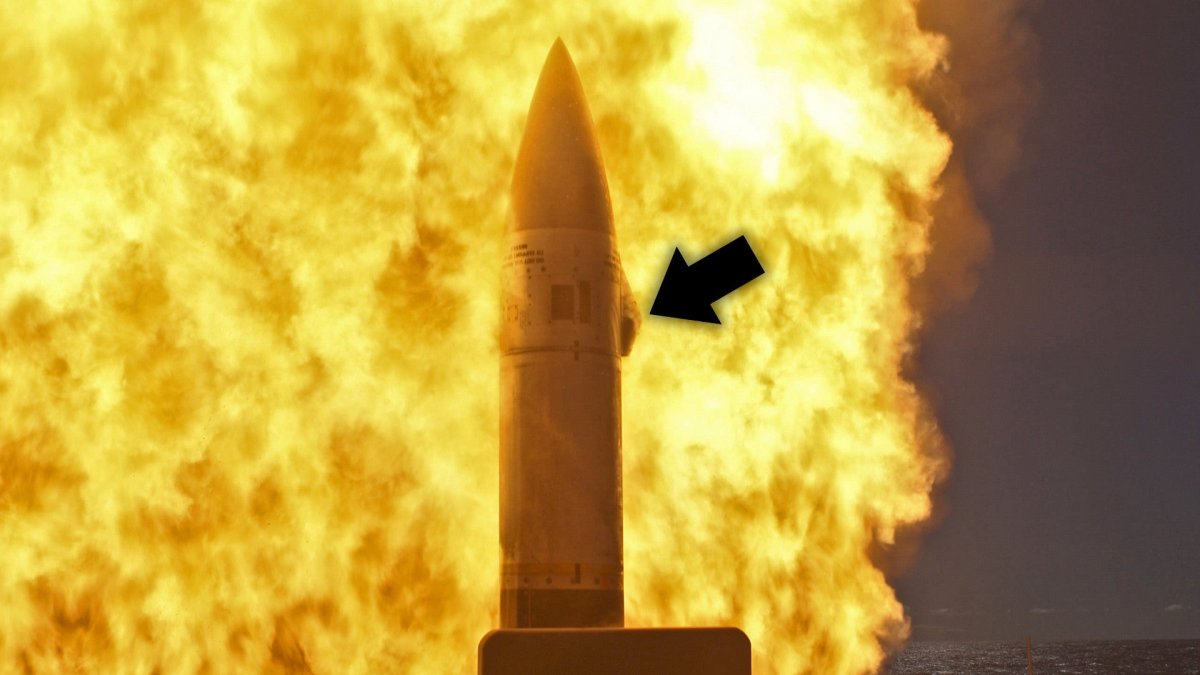
A rare picture of an SM-2 Block IIIB missile launch. The fairing with the infrared seeker is seen on the right side of the missile’s forward body., USN
At the core of the Block IIIB variant is the basic SM-2 Block III missile , production of which had started in 1988. At that time, the Block III represented the apex of the development of the medium-range Standard missile, or RIM-66, which had first begun in 1963 with the aim of replacing older RIM-2 Terrier and RIM-24 Tartar missiles.
The first medium-range Standard, also known as Standard Missile 1 Medium Range (SM-1MR), entered service in 1967. Between then and 1968, four blocks of the SM-1MR were developed, with relatively minor improvements. All of these were designated as subvariants of the RIM-66A. The Navy subsequently acquired a Block V SM-1MR, also designated the RIM-66B, which included much more substantial changes, including a new seeker, autopilot, warhead, and rocket motor. This combined to make the missile more accurate, harder-hitting, and capable of engaging targets at higher altitudes and further away.
The first missile in the SM-2MR series, which are also designated as variants of the RIM-66, was developed primarily to complement the then-new Aegis Combat System in the 1970s. The initial SM-2MR variant, the RIM-66C, was designed to be command-guided to the general target area by an Aegis-equipped ship via a data link and then use semi-active radar homing—where the ship ‘illuminates’ the target with its radar systems and missile’s seeker homes in on the reflected radar energy—in the terminal stage of flight. The SM-2 also had an upgraded semi-active radar homing seeker compared to earlier SM-1 variants.
A Standard-series missile is fired from the deck-mounted arm launcher on a US Navy Oliver-Hazard Perry class frigate., USN
The value of the improvements found on the SM-2MR meant that a subsequent version was developed for non-Aegis ships. This variant, known as the RIM-66D, would be preprogrammed right before launch to head to a designated target area using its inertial navigation system (INS) guidance package alone, before switching over to its semi-active radar seeker to actually find its mark.
Block II SM-2MR variants began arriving in 1983, featuring new warheads and rocket motors, the latter of which expanded their range out to around 90 miles, as well as their ability to engage more maneuverable targets. The Block II subvariants also included the first missile in the series to be designed to be fired from Mk 41 Vertical Launch System (VLS) cells, as well as one for non-VLS equipped ships. At around the same time, a final Block VI version of the SM-1MR, also appeared, subvariants of which progressively incorporated other improvements from the SM-2 series, including new seekers and warheads.
A RIM-66G, an SM-2MR subvariant, is fired from a deck-mounted launcher., USN
The Block III’s main improvement over the earlier SM-2s had been the addition of an upgraded radar proximity fuze. This improved the reliability with which the missile’s warhead detonated during intercepts, especially when engaging targets at low altitudes, such as anti-ship cruise missiles.
As with the Block IIs, the Block III missile came in three subvariants , the RIM-66K, RIM-66L, and RIM-66M. The RIM-66K was the version for non-Aegis ships, while the RIM-66L was the one for vessels with the Aegis Combat System. The RIM-66M was the Aegis-compatible type configured to be fired from the Mk 41 VLS.
In 1991, production then began of the further improved Block IIIA missile, which featured a more powerful blast-fragmentation warhead. Different versions of these weapons were also made that were compatible with the older deck-mounted arm launchers, as well as the newer Mk 41 VLS.
Then came the Block IIIB variant, the focus of this article, which combined the Block IIIA with a guidance package developed under the Missile Homing Improvement Program (MHIP). The complete MHIP guidance system is distinct from that on earlier SM-2s, though it still includes a semi-active radar seeker in the nose. In addition, it has an infrared seeker mounted inside a small streamlined fairing that juts out from the side of the missile’s forward body. You can see this arrangement in the photo at the top of this post.
A graphical chronology of the development of the SM-2 family, as well as its predecessors., John Hopkins University Applied Physics Laboratory
The Navy had developed the MHIP guidance package in part for improved air and surface-launched versions of the Sparrow missile , which were designated AIM-7R and RIM-7R, respectively. The service canceled this improved Sparrow project in 1996 over rising costs. This was done despite the largely successful completion of an operational evaluation and in spite of a plan to save money by converting older Sparrow models to new R variant configuration.
A RIM-7 Sea Sparrow variant with a single-mode guidance system seen right as it is launched., USN
In the end, the MHIP guidance system was only ever used on the Block IIIB variant of the SM-2. Unlike earlier SM-2s, this missile was designed to only be fired from the Mk 41 VLS.
As of 2017, all three Block III subvariants, as well as the extended-range SM-2 Block IV, also known as the RIM-156A, that also first entered service in 1998, were still in use, according to the Navy , providing its ships with a mixture of capabilities. It’s interesting to note that the Navy was also working on a dual-mode RIM-156B variant before canceling that project in 2001. That weapon had been intended to serve as an anti-ballistic missile interceptor. The focus subsequently shifted to the development of the SM-3 and SM-6 variants of the Standard missile for knocking down various types of ballistic missiles at different points of their flight.
A briefing slide laying out the US Navy’s Aegis Ballistic Missile Defense capabilities as of 2012, including details about the SM-3 Block IB and SM-6 interceptors., DOD
The Block IIIB’s unique dual-mode guidance package makes it very capable against a wide array of targets in multiple engagement scenarios. The infrared seeker importantly provides an alternative means of finding the target in the terminal phase of flight even in heavy electronic warfare combat environments. Similarly, if the optics on the infrared part of the guidance system are degraded, blinded, or confused, it still has the semi-active radar homing option.
Most of all, the infrared seeker allows for these missiles to obtain lock when engaging targets flying at very low altitudes that are beyond the line-of-sight of the Mk 82 guided missile radar director’s AN/SPG-62 illuminators, three of which equip each Arleigh Burke class destroyer and four of which are on every Ticonderoga class cruiser . They are used to ‘paint’ or ‘illuminate’ the target during the missile’s endgame terminal phase of flight. This is not possible when engaging very low-flying targets at significant ranges due to the curvature of the earth.
Two of the Arleigh Burke class destroyer USS Wilbur Wright ‘s three AN/SPG-62 illuminators. , Hunini/Wikicommons
Without the infrared component, the SM-2 Block IIIB’s radar seeker is dependent on homing in on reflected radar energy produced by the ship. With the addition of passive infrared homing, it does not have to rely on radar illumination of a target. So, even if the illuminator is in the shadow of the Earth’s curvature, the missile can still make the kill. It also helps when engaging small radar cross-section (stealthy) targets or those with advanced electronic warfare capabilities in any flight profile, as well. The IR seeker is impervious to these countermeasures.
To detail how these missiles work, the SM-2MR leverages data-link networking and inertial navigation to get itself out in an area where it can make its terminal attack run on the target, which can be dozens of miles. The Aegis SPY-1 radar data is sent to the missile—this information can now also come from a third-party asset, such as an E-2 Hawkeye flying overhead—as it flies out toward the target. Prior to its final run on the target, the ship illuminates the target, at which time the missile’s semi-active radar seeker would lock onto the reflected radar energy. In the case of the Block IIIB, the infrared sensor would also lock onto the target, making it extremely hard for the target to survive the missile’s attack. If the target cannot be illuminated, the infrared seeker can still prosecute the target on its own. In the end, the dual-mode seeker setup doesn’t just make certain engagements possible, it offers a better probability of kill overall.
JOHNS HOPKINS APL TECHNICAL DIGEST
The SM-2 Block IIIB’s guidance system makes it stand out from most Western medium-to-long-range surface-to-air missiles, as well as air-to-air weapons in similar classes, the vast majority of which use some kind of radar homing alone. The two newest Block III variants, the Block IIIAZ, developed solely for use on the Navy’s Zumwalt class stealth destroyers , and the still-in-development Block IIIC, have single-mode guidance systems. The Block IIIAZ is a modification of the Block IIIA design to work with the Zumwalt ‘s unique radar and combat system configuration, which you can read more about in this past War Zone piece , while the Block IIIC is an upgrade of older Block III missiles that replacing the semi-active radar guidance system with the much more capable active-radar seeker from the SM-6.
Adding the active seeker will allow these missiles to engage targets without launch platform illumination and, much like the infrared seeker on the Block IIIB, allow them to engage low-flying targets below the radar horizon of the launching vessel. The latest active seekers are very capable and are hard to jam and decoy, but dual-mode seekers still offer some insurance when it comes to either seeker type failing or being confused for whatever reason during the terminal phase of an engagement. The best mix today would be both passive imaging infrared homing and active radar homing on the same missile.
America’s near-peer competitors, such as Russia and China, are well aware of all of this and have made substantial investments in aerial electronic warfare capabilities. Increasingly advanced self-protection jammers for aircraft, as well as other countermeasures systems , are proliferating more and more, even to smaller militaries , too. Cruise missiles themselves are increasingly built with countermeasure capabilities, including small radar cross-section (stealthy) characteristics and more.
The importance, then, of multi-mode guidance systems for surface-to-air and air-to-air missiles is becoming ever more apparent around the world, including within the U.S. military. It seems more likely than not, for instance, that the new AIM-260 long-range air-to-air missile that Lockheed Martin is developing now for the Navy, and, by extension the U.S. Marine Corps, as well as the U.S. Air Force, will have a multi-mode guidance package. Peregrine , a compact air-to-air missile that Raytheon unveiled in 2019, will also feature a “multi-mode autonomous seeker,” according to that company.
The most notable surface-to-air missile that is operational today with this dual-mode capability is Israel’s Stunner. It is the missile used by the David’s Sling air defense system that is currently a major component of Israel’s layered integrated air and missile defense system. It features an active radar and imaging infrared seeker in its unique ‘dolphin’ nosecone. This is widely considered as a ‘best of both worlds’ combination which is thought to make evasion, jamming, or decoying the missile largely impossible. It has been reported that Israel is now working on an air-to-air derivative of its Stunner surface-to-air missile. In many regards, the Stunner is the modern successor of the SM-2 Block IIIB concept. You can read all about the Stunner in this past feature of ours.
Stunner missile being launched. , IDF
Multi-mode guidance systems are also becoming increasingly popular on air-to-ground and ground-launched munitions due to the flexibility they provide when engaging multiple types of targets under diverse conditions. This is especially true for moving targets that are targeted over the horizon.
With all this in mind, it’s no surprise then that the Navy expects to continue fielding the SM-2 Block IIIB through at least 2035 , well after the new Block IIIC missiles are slated to start filling Mk 41 VLS cells on the service’s warships in 2022. The Block IIIB missiles are also set to stay in use for years to come even as other advanced surface-to-air missiles, such as variants of the SM-6, enter more widespread service.
The Arleigh Burke class guided-missile destroyer USS Mustin fires two SM-2 missiles during exercise Valiant Shield 2014., USN
One would imagine that the Navy would not want to give up its SM-2 Block IIIB until it can acquire a suitable replacement, which could also feature multi-mode guidance. The service does say that the Block IIIC missile offers “enhanced capability against electronic attack” since its active radar seeker doesn’t require a ship to illuminate the target with its own SPG-62 Illuminator during its terminal phase of flight. But as we mentioned earlier, it still doesn’t provide the same kind of jam-resistant alternative guidance option that an infrared seeker does.
It’s also worth noting that the SM-2 Block IIIBs represent a lower-cost-per-engagement option compared to the Block IIIC, despite the dual-mode guidance. They’re certainly cheaper than SM-6s, though those missiles are much more capable and are intended for a wider array of targets. The Navy bought its last Block IIIBs in the 2011 Fiscal Year, at which time the unit cost for each missile was approximately $1.138 million, or around $1.316 million in 2020 dollars. In its Fiscal Year 2021 Budget Request, the Navy said it expected to pay $2.349 million for each conversion kit to turn existing older Block III SM-2s into Block IIICs. The stated unit price of the SM-6 in those same documents was just over $4.318 million.
If Block IIIBs are still within this price range, it could make them attractive to foreign countries that field other SM-2 variants or otherwise have ships capable of firing them. In 2020, Raytheon notably restarted the SM-2 production line in order to meet existing demand for Block IIIBs, as well as Block IIIAs and Block IIICs, from various countries.
Australia , Japan , and South Korea are among the customers currently in process of acquiring new-build Block IIIB missiles. Spain also secured approval to buy these weapons in 2018. In addition, the Netherlands has Block IIIA missiles on order , while Taiwan and Chile have recently received approval to buy those missiles. Canada has been approved to buy Block IIICs , as well. This is of no surprise as the threat of ever more advanced anti-ship missiles is ballooning.
While it gets little attention, the U.S. Navy will also continue to make use of the SM-2 Block IIIB missiles, along with the ‘ahead of its time’ capabilities that they offer, for years to come.
Contact the author: joe@thedrive.com
Comments couldn’t be loaded. Please refresh the page.
作者:泰勒·罗戈韦和约瑟夫·特雷维西克
更新于美国东部时间2021年2月13日下午1:18。
近年来,雷神公司的“标准6型”导弹(SM-6)吸引了公众的广泛关注,它已成为美国海军武器库中最通用的地对空和地对地武器。其他军种也开始关注它,海军已经在着手研发性能更强大的改进型。然而,标准导弹系列中较老的SM-2型(有时也统称为SM-2中程型,即SM-2MR)仍然是海军区域防空能力的中坚力量。这些导弹部署在全球数百个垂直发射单元和舰艇弹药库中,随时准备保卫美国及其盟国舰队免受各种空中威胁。
尽管鲜为人知,但在目前服役的以及未来计划研发的SM-2系列导弹中,Block IIIB型尤为引人注目。它采用双模制导系统,在同一枚导弹上同时安装了半主动雷达和红外导引头。Block IIIB型于1998年首次服役,其性能远超时代,随着潜在对手(尤其是中国和俄罗斯)不断部署日益先进的电子战系统和其他对抗措施,以及低可探测性(隐身)技术,其性能在未来几年仍将保持极高的价值。
一张罕见的SM-2 Block IIIB导弹发射照片。图中可以看到导弹弹体前部右侧装有红外导引头的整流罩。(美国海军)
Block IIIB 型的核心是基本的 SM-2 Block III 导弹,该导弹于 1988 年开始生产。当时,Block III 代表了中程标准导弹(RIM-66)发展的顶峰,该导弹于 1963 年首次开始研发,目的是取代较老的 RIM-2 Terrier 和 RIM-24 Tartar 导弹。
第一枚中程标准导弹,也称标准1型中程导弹(SM-1MR),于1967年服役。从那时到1968年,SM-1MR共开发了四个批次,改进幅度相对较小。所有这些批次都被归类为RIM-66A的子型号。海军随后采购了第五批次SM-1MR,也称为RIM-66B,该批次进行了更为重大的改进,包括新的导引头、自动驾驶仪、战斗部和火箭发动机。这些改进使导弹精度更高、威力更大,并且能够攻击更高高度和更远距离的目标。
SM-2MR系列导弹(也被称为RIM-66的衍生型号)的首款产品,主要研发于20世纪70年代,旨在配合当时新研制的宙斯盾作战系统。SM-2MR的初始型号RIM-66C,设计用于由配备宙斯盾系统的舰艇通过数据链进行指令制导,使其大致飞抵目标区域,然后在飞行末段采用半主动雷达制导——即舰艇利用雷达系统照射目标,导弹导引头追踪反射的雷达能量进行定位。与早期的SM-1型号相比,SM-2还升级了半主动雷达制导导引头。
一枚标准系列导弹从美国海军“奥利弗·哈泽德·佩里”级护卫舰的甲板安装式发射器发射。
SM-2MR导弹的改进价值促使后续开发了适用于非宙斯盾舰艇的改进型。该改进型名为RIM-66D,在发射前会预先编程,使其仅依靠惯性导航系统(INS)制导组件飞向指定目标区域,然后再切换到半主动雷达导引头进行实弹攻击。
SM-2MR导弹的Block II型于1983年开始交付,其配备了新型弹头和火箭发动机,后者使其射程扩展至约90英里,并增强了其打击机动性更强目标的能力。Block II型还包括该系列中首款专为Mk 41垂直发射系统(VLS)单元设计的导弹,以及一款适用于未配备VLS舰艇的导弹。大约在同一时期,SM-1MR导弹的最终Block VI型也问世,其子型号逐步融合了SM-2系列的其他改进,包括新型导引头和弹头。
一枚RIM-66G导弹(SM-2MR的子型号)从甲板发射器发射。(美国海军)
Block III 型导弹相比早期的 SM-2 型导弹的主要改进之处在于加装了升级版的雷达近炸引信。这提高了导弹弹头在拦截过程中引爆的可靠性,尤其是在攻击低空目标(例如反舰巡航导弹)时。
与Block II型导弹一样,Block III型导弹也分为三个子型号:RIM-66K、RIM-66L和RIM-66M。RIM-66K型用于非宙斯盾舰艇,RIM-66L型用于配备宙斯盾作战系统的舰艇,而RIM-66M型则是与宙斯盾系统兼容的型号,可从Mk 41垂直发射系统发射。
1991年,进一步改进的Block IIIA导弹开始生产,该导弹配备了威力更大的爆破破片战斗部。这些武器还制造了不同型号,既兼容老式的甲板安装式武器发射器,也兼容新型的Mk 41垂直发射系统。
接下来是Block IIIB型,也就是本文的重点。它结合了Block IIIA型和导弹寻的改进计划(MHIP)下开发的制导组件。完整的MHIP制导系统与早期SM-2导弹上的制导系统截然不同,尽管它仍然在弹头处配备了一个半主动雷达导引头。此外,它还在导弹弹体前部侧面伸出的一个小型流线型整流罩内安装了一个红外导引头。您可以在本文顶部的照片中看到这种结构。
SM-2系列及其前身的发展历程图解,约翰·霍普金斯大学应用物理实验室
海军研发MHIP制导组件的部分目的是为了改进“麻雀”导弹的空射型和水面发射型,分别命名为AIM-7R和RIM-7R。由于成本不断上涨,海军于1996年取消了这项改进型“麻雀”导弹项目。尽管作战评估已基本成功完成,且海军曾计划通过将老款“麻雀”导弹升级为新型R型来节省成本,但最终还是放弃了该项目。
一枚配备单模制导系统的RIM-7“海麻雀”导弹发射瞬间被拍摄到。(美国海军)
最终,MHIP制导系统仅用于SM-2的Block IIIB型。与早期的SM-2不同,该导弹设计为只能从Mk 41垂直发射系统发射。
截至2017年,海军方面表示,所有三种Block III子型号以及1998年首次服役的增程型SM-2 Block IV(又称RIM-156A)仍在服役,为舰艇提供了多种作战能力。值得注意的是,海军在2001年取消项目前,还曾研发过双模RIM-156B型号。该型号原本计划用作反弹道导弹拦截器。此后,海军的研发重点转向了SM-3和SM-6型号的标准导弹,用于在各种弹道导弹飞行的不同阶段将其击落。
一份简报幻灯片,概述了截至2012年美国海军的宙斯盾弹道导弹防御能力,包括SM-3 Block IB和SM-6拦截导弹的详细信息。(美国国防部)
Block IIIB独特的双模制导系统使其在多种交战场景下都能有效打击各种目标。尤其值得一提的是,红外导引头即使在电子战强度极高的作战环境下,也能在飞行末段提供另一种目标搜索手段。此外,即使红外制导系统的光学器件性能下降、被干扰或受到干扰,它仍然具备半主动雷达寻的选项。
最重要的是,红外导引头使这些导弹能够在攻击飞行高度极低、超出Mk 82导弹雷达指挥仪AN/SPG-62照射器视线范围的目标时锁定目标。每艘阿利·伯克级驱逐舰配备三个AN/SPG-62照射器,每艘提康德罗加级巡洋舰配备四个。这些照射器用于在导弹飞行末段“标记”或“照射”目标。由于地球曲率,在远距离攻击超低空目标时,这种方法是行不通的。
阿利·伯克级驱逐舰“威尔伯·赖特”号的三门AN/SPG-62照明炮中的两门。(图片来源:Hunini/Wikicommons)
如果没有红外组件,SM-2 Block IIIB 的雷达导引头只能依靠舰艇反射的雷达波进行制导。而有了被动红外制导,它就无需依赖雷达照射目标。因此,即使目标位于地球曲率的阴影区内,导弹依然能够命中目标。此外,它在任何飞行姿态下,都能有效打击雷达反射截面小(隐身)目标或具备先进电子战能力的目标。红外导引头不受这些对抗措施的影响。
为了详细说明这些导弹的工作原理,SM-2MR导弹利用数据链网络和惯性导航系统,飞抵目标区域,从而对目标进行末端攻击,攻击距离可达数十英里。在导弹飞向目标的过程中,宙斯盾SPY-1雷达的数据会被发送给导弹——现在,这些信息也可以来自第三方资产,例如飞越上空的E-2“鹰眼”预警机。在对目标进行最终攻击之前,舰载机将目标照射到导弹上,此时导弹的半主动雷达导引头会锁定反射的雷达能量。对于Block IIIB型导弹,红外传感器也会锁定目标,这使得目标极难在导弹的攻击下幸存。即使目标无法被照射到,红外导引头仍然可以独立追踪目标。最终,这种双模导引头配置不仅使某些交战成为可能,而且提高了整体的杀伤概率。
约翰·霍普金斯大学应用物理实验室技术文摘
SM-2 Block IIIB 的制导系统使其在大多数西方中远程地空导弹以及同级别的空空导弹中脱颖而出,后者绝大多数仅使用某种雷达制导。最新的两个 Block III 改进型,Block IIIAZ(专为海军“朱姆沃尔特”级隐形驱逐舰研发)和仍在研发中的 Block IIIC,均采用单模制导系统。Block IIIAZ 是在 Block IIIA 的基础上改进而来,以配合“朱姆沃尔特”级独特的雷达和作战系统配置(详见此前“战区”专栏文章),而 Block IIIC 则是对早期 Block III 导弹的升级,用性能更强大的 SM-6 主动雷达导引头取代了半主动雷达制导系统。
加装主动导引头后,这些导弹无需发射平台照明即可攻击目标,并且与Block IIIB导弹上的红外导引头类似,能够攻击发射舰雷达视距以下的低空目标。最新的主动导引头性能优异,难以干扰和诱骗,但双模导引头仍然能够提供一定的保障,以防在末段攻击中任何一种导引头失效或因其他原因出现混淆。目前最佳的组合方案是在同一枚导弹上同时采用被动成像红外制导和主动雷达制导。
美国势均力敌的竞争对手,例如俄罗斯和中国,都非常清楚这一切,并在空中电子战能力方面投入了大量资金。日益先进的飞机自卫干扰器以及其他对抗系统正在不断扩散,甚至一些规模较小的军队也开始使用这些系统。巡航导弹本身也越来越多地配备了对抗能力,包括小雷达反射截面(隐身)特性等等。
因此,多模式制导系统对于地空导弹和空空导弹的重要性在全球范围内,包括美国军方在内,正变得日益凸显。例如,洛克希德·马丁公司目前正在为美国海军(进而也包括美国海军陆战队和美国空军)研发的新型AIM-260远程空空导弹,极有可能配备多模式制导组件。雷神公司于2019年推出的紧凑型空空导弹“游隼”(Peregrine)也将配备“多模式自主导引头”。
目前最引人注目的具备双模作战能力的地对空导弹是以色列的“眩晕”(Stunner)。它是“大卫投石器”(David's Sling)防空系统的制式导弹,而“大卫投石器”目前是以色列多层一体化防空反导系统的重要组成部分。其独特的“海豚”形弹头内集成了主动雷达和成像红外导引头。这种设计被广泛认为是“两全其美”的组合,使得敌方几乎无法规避、干扰或诱骗该导弹。据报道,以色列目前正在研发“眩晕”地对空导弹的衍生型号。在许多方面,“眩晕”都是SM-2 Block IIIB概念的现代升级版。您可以在我们之前的专题报道中了解更多关于“眩晕”的信息。
以色列国防军发射“眩晕”导弹。
多模式制导系统在空对地和地对地弹药上也越来越受欢迎,因为它们在打击各种条件下的多种类型目标时具有很高的灵活性。对于超视距移动目标而言,这一点尤为突出。
考虑到所有这些因素,海军预计至少在2035年之前继续部署SM-2 Block IIIB导弹也就不足为奇了,即便新型Block IIIC导弹计划于2022年开始装载到海军军舰的Mk 41垂直发射系统中。即使其他先进的地对空导弹,例如SM-6的各种型号,开始更广泛地服役,Block IIIB导弹也将继续服役多年。
美国海军“阿利·伯克”级导弹驱逐舰“穆斯汀”号在2014年“勇敢之盾”演习中发射了两枚SM-2导弹。
人们或许会认为,海军在找到合适的替代品之前,不会轻易放弃SM-2 Block IIIB导弹,而合适的替代品也应具备多模式制导能力。海军方面表示,Block IIIC导弹“增强了抗电子攻击能力”,因为其主动雷达导引头无需舰艇在飞行末段使用SPG-62照射器照射目标。但正如我们之前提到的,它仍然无法提供像红外导引头那样抗干扰的替代制导选项。
值得注意的是,尽管SM-2 Block IIIB采用双模制导,但其单次交战成本仍低于Block IIIC。它们的价格当然比SM-6低,尽管SM-6的性能更强,目标范围也更广。海军最后一批Block IIIB导弹于2011财年采购,当时每枚导弹的单价约为113.8万美元,按2020年美元计算约为131.6万美元。在2021财年预算申请中,海军表示预计每套改装套件的价格为234.9万美元,用于将现有的老款Block III SM-2导弹升级为Block IIIC。同一份文件中SM-6导弹的单价略高于431.8万美元。
如果Block IIIB的价格仍然在这个范围内,那么对于已经装备其他SM-2导弹型号或拥有能够发射该导弹的舰艇的外国来说,它们将具有吸引力。值得注意的是,雷神公司在2020年重启了SM-2导弹的生产线,以满足各国对Block IIIB、Block IIIA和Block IIIC的需求。
澳大利亚、日本和韩国目前正在采购新型Block IIIB导弹。西班牙也于2018年获准购买这些武器。此外,荷兰已订购Block IIIA导弹,而台湾和智利最近也获准购买这些导弹。加拿大也已获准购买Block IIIC导弹。鉴于日益先进的反舰导弹的威胁不断扩大,这一切并不令人意外。
虽然鲜为人知,但美国海军仍将在未来几年继续使用SM-2 Block IIIB导弹及其“超前时代”的能力。
联系作者:joe@thedrive.com
评论加载失败,请刷新页面。