Society formed to help public better understand nuclear energy, combat misinformation该协会的成立旨在帮助公众更好地了解核能,打击错误信息。
The Nuclear Learning & Understanding Society is looking to have its first networking event in November. Read more at straitstimes.com.
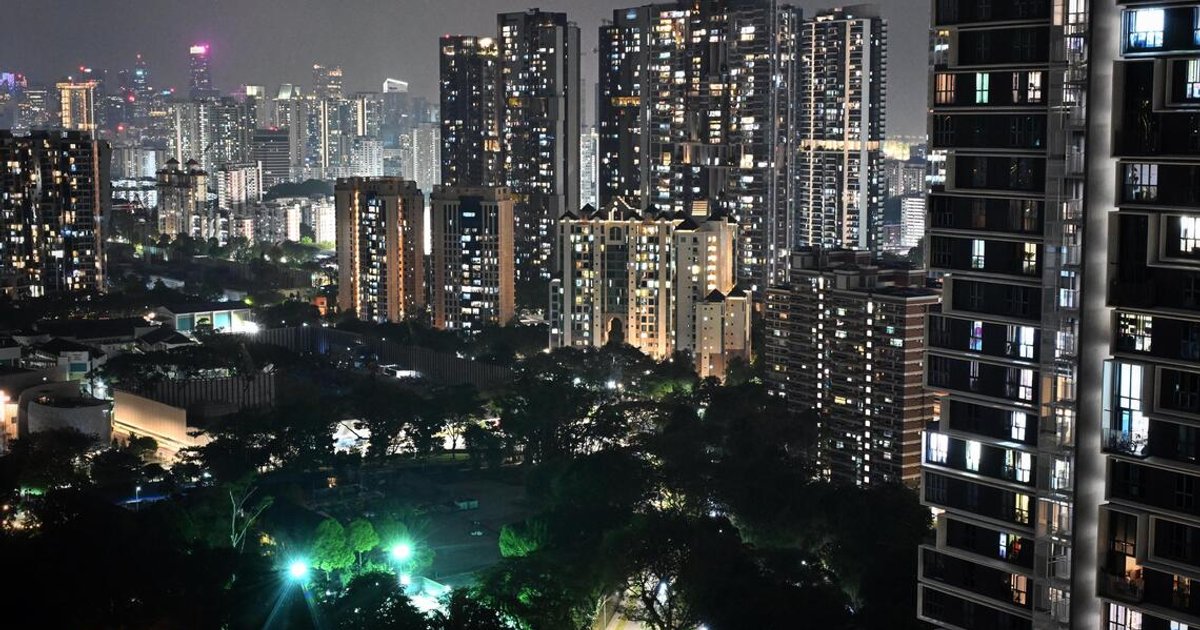
NUCLEUS hopes to share general knowledge about nuclear energy and help people understand why governments consider its adoption.
ST PHOTO: CHONG JUN LIANG
Published Oct 11, 2026, 12:00 PM
Updated Oct 11, 2026, 12:00 PM
SINGAPORE – A new society has been set up to help the public better understand nuclear energy, as the Singapore government is assessing whether to adopt the cleaner energy source , which can be a polarising issue.
Nuclear energy is a socially charged topic marked by a gap in general nuclear knowledge and awareness here regarding the field, said Matthew Chew, president of the Nuclear Learning & Understanding Society (NUCLEUS), which was formed in September.
“For Singapore in particular, nuclear will be a sensitive topic. A lot of people like the idea of nuclear until you ask them how they feel that it’s close to their backyard, and then all of a sudden, everyone’s answers are not really sure,” he said.
One topic that often draws attention is the management nuclear or radioactive waste , added Chew, a consultant who has a master’s degree in nuclear science and engineering from the Massachusetts Institute of Technology.
Contrary to the misconception some people may have that such waste is hard to manage and they may be overly exposed to it, he clarified that there is a proper way to store them , such as through land-based dry casks or deep underground geological storage, to ensure that the radiation does not reach humans and the environment.
According to a 2023 study by the Singapore authorities and a Swedish company, there are no major technical roadblocks for the Republic to store its nuclear waste – possibly deep underground – if the country decides to adopt nuclear energy.
As the finding was based on a desktop study, which does not include on-site investigations, future surveys will need to be done to make a comprehensive assessment.
Other topics that are often raised include nuclear safety, location of a nuclear power plant as well as careers in the nuclear field, Chew added.
NUCLEUS is a ground-up initiative currently with 10 members. It has met twice since its formation to discuss its objective and mission.
The society hopes to host a variety of events for members of the public, including seminars, workshops and networking events, as well as conduct talks in schools.
It is looking to have its first networking event in November.
Through such events, NUCLEUS hopes to share general knowledge about nuclear energy, including its science and engineering, and help people understand why governments consider its adoption and have to take certain steps before committing to deploying it.
Chew said: “It is really to provide the public with a way to learn about nuclear energy and allow them to ask the questions that they have in a non-judgmental space, because there is no wrong question.
“The society is very clear that its role is not to advocate for or advise the government on nuclear as an option for Singapore,” he said.
The other nuclear observers who have joined Chew on the society’s committee are business development manager Brendan Tan; senior scientist Rowinski Marcin, who holds a PhD in nuclear engineering; and automation company managing director Nicola Scarpelli, who has a master’s degree in energy and nuclear engineering.
As the only committee member without a nuclear engineering or science background, Tan hopes to bring to the table his layman perspectives.
“In a room filled with engineers, sometimes the topic can dive too deeply into a rabbit hole, and that’s I think where I try to steer the conversation back to what it means in practice, ” said Tan, who works at an energy technology company.
“I always try to like put myself in the seat of what a member of the public would think and ask. If the society is made up of only engineers, it could end up talking to itself, like an echo chamber.”
With his background in the finance sector, he hopes to help people understand how nuclear plants, especially advanced nuclear technology like small modular reactors (SMRs), can be financed.
SMRs are advanced nuclear reactors that are thought to be more suitable for land-scarce, population-dense Singapore, as they have a lower power capacity, enhanced safety standards and require much smaller buffer zones, compared with conventional reactors.
Tan said: “It’s an evolving space and everybody is learning the commercial and financial aspects of SMRs. So for me, at least, it’s about engaging with people, learning together and hopefully building up an ecosystem that’s ready if Singapore decides to deploy SMRs in future.”
For more information, contact the society at nucleus-sg@outlook.com .
Chin Hui Shan is a journalist covering the environment beat at The Straits Times.
Electricity and power
NUCLEUS 希望分享有关核能的一般知识,并帮助人们了解各国政府为何考虑采用核能。
《海峡时报》照片:梁崇俊
发布于2026年10月11日下午12:00
更新于2026年10月11日中午12:00
新加坡——新加坡政府正在评估是否采用核能这种更清洁的能源,而核能问题可能引发争议。为此,一个新的协会成立,旨在帮助公众更好地了解核能。
核能学习与理解协会(NUCLEUS)主席马修·丘表示,核能是一个具有社会争议性的话题,这里普遍缺乏核能知识和意识。该协会成立于9月。
“对新加坡来说,核能尤其是一个敏感话题。很多人一开始都喜欢核能,但当你问他们核电站离家近有什么感觉时,突然之间,每个人的回答都变得不太确定了。”他说道。
Chew补充道,核废料或放射性废料的管理是一个经常引起人们关注的话题。Chew是一位顾问,拥有麻省理工学院核科学与工程硕士学位。
他澄清说,与一些人可能误解此类废物难以管理且可能过度暴露于其中的观点相反,有适当的方法可以储存这些废物,例如通过陆上干式容器或深层地下地质储存,以确保辐射不会到达人类和环境。
根据新加坡当局和一家瑞典公司在 2023 年进行的一项研究,如果新加坡决定采用核能,那么该国在储存核废料(可能深埋地下)方面不存在重大的技术障碍。
由于该结论是基于案头研究,不包括现场调查,因此需要进行未来的调查以做出全面的评估。
Chew补充说,其他经常被提及的话题包括核安全、核电站的选址以及核领域的职业发展。
NUCLEUS是一个自下而上成立的组织,目前有10名成员。自成立以来,该组织已召开过两次会议,讨论其目标和使命。
该协会希望为公众举办各种活动,包括研讨会、工作坊和社交活动,以及在学校进行讲座。
它计划在11月举办首次交流活动。
通过此类活动,NUCLEUS 希望分享有关核能的一般知识,包括其科学和工程,并帮助人们了解为什么各国政府会考虑采用核能,以及在决定部署核能之前必须采取某些步骤。
周先生说:“这确实是为了向公众提供一种了解核能的方式,让他们可以在一个不受评判的环境中提出自己的问题,因为没有错误的问题。”
他说:“该协会非常明确地表示,其职责不是倡导或建议政府将核能作为新加坡的一个选项。”
与周先生一同加入该协会委员会的其他核能观察员还有:业务发展经理 Brendan Tan;拥有核工程博士学位的资深科学家 Rowinski Marcin;以及拥有能源与核工程硕士学位的自动化公司总经理 Nicola Scarpelli。
作为委员会中唯一一位没有核工程或科学背景的成员,谭希望能够提出他的外行观点。
“在一个满是工程师的房间里,有时话题会深入到无尽的讨论中,而我认为,这就是我试图将谈话引导回其实际意义的地方,”在一家能源技术公司工作的谭说道。
“我总是试着站在普通民众的角度去思考和提问。如果一个社会只由工程师组成,最终可能会变成一个自说自话的回音室。”
凭借其在金融领域的背景,他希望帮助人们了解如何为核电站,特别是像小型模块化反应堆(SMR)这样的先进核技术进行融资。
小型模块化反应堆是先进的核反应堆,与传统反应堆相比,其功率容量较低,安全标准更高,所需的缓冲区也小得多,因此被认为更适合土地稀缺、人口密集的的新加坡。
谭先生表示:“这是一个不断发展的领域,每个人都在学习小型模块化反应堆的商业和财务方面知识。所以至少对我来说,重要的是与大家交流,共同学习,并希望能够建立一个生态系统,以便在新加坡未来决定部署小型模块化反应堆时做好准备。”
如需了解更多信息,请联系该协会,邮箱地址为 nucleus-sg@outlook.com。
Chin Hui Shan是《海峡时报》负责环境报道的记者。
电力