‘Has your existence benefited anyone?’: Gerard Ee on legacy and a life of service“你的存在是否造福过任何人?”:杰拉德·伊谈遗产与奉献人生
With the Singapore resident’s average life expectancy at 83.9 years, at 77, Ee is mindful about the passing of time. Last year, he had to deal with a prostrate cancer diagnosis. Read more at straitstimes.com.
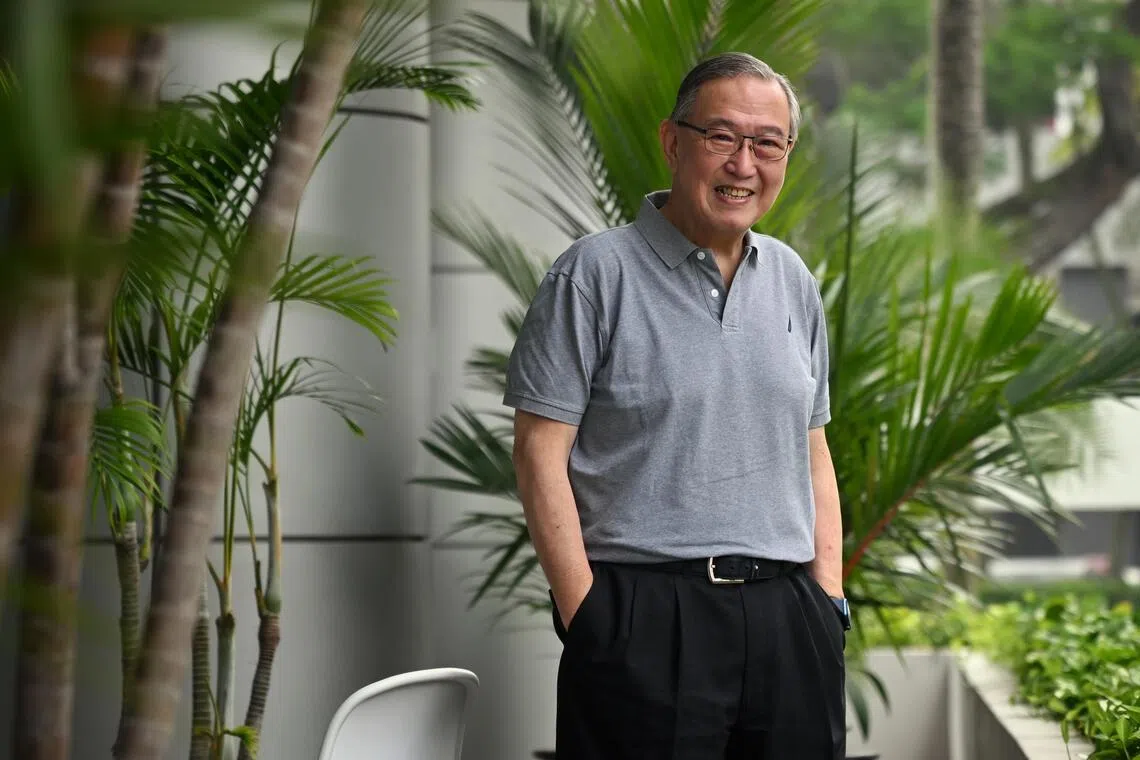
Mr Gerard Ee stepped down as chairman of the Agency for Integrated Care and as a board member of MOH Holdings, closing the chapter on his official commitments.
ST PHOTO: KUA CHEE SIONG
Published Oct 11, 2026, 12:00 PM
Updated Oct 11, 2026, 12:00 PM
- Gerard Ee has retired again after years in key public roles, including National Kidney Foundation (NKF), Public Transport Council and Agency for Integrated Care, after a life time of public service.
- He helped steady the NKF crisis, reviewed ministerial salaries, and faced heavy public pressure. He said his focus was always on how lives improved.
- Ee, now 77, has faced prostate and colon cancer, and he plans to keep sharing his life experiences with others. He says true legacy is whether his life benefited others.
SINGAPORE - Gerard Ee, who has often been dubbed “Mr Fix It” for taking on some of Singapore’s thorniest public roles, has retired for the second time after a lifetime of public service.
On Aug 31, the 77-year-old stepped down as chairman of the Agency for Integrated Care (AIC) and as a board member of MOH Holdings, closing the chapter on his official commitments.
From November, he will also relinquish chairmanship of the Changi General Hospital Health Fund while remaining on its board.
“My CV now only has one line,” quipped the former Nominated Member of Parliament.
It is a far cry from two decades ago, when his three-page resume listed over 20 board and committee appointments.
This retirement comes 21 years after his first in 2005, when the accountant left his professional life as an Ernst & Young partner.
But instead of retreating into a quieter life, he found himself repeatedly called upon to step into the hot seat - and doing so without pay.
Ee said he received director fees only for his roles at the AIC and at MOH Holdings. His other volunteer roles were taken out of a sense of duty to help.
Among them were leading the National Kidney Foundation (NKF) through its biggest crisis, heading a committee to review ministerial salaries and chairing the Public Transport Council, where he had to face public scrutiny over fare hikes.
With the Singapore resident’s average life expectancy at 83.9 years, at 77, Ee is mindful about the passing of time.
In 2025, he faced an early-stage prostate cancer diagnosis and five rounds of radiotherapy.
“It was a very early stage…so it’s not frightening, not horrendous. I nipped it in time,” he said. The cancer was picked up during his regular health checks.
“It (the cancer) is gone already, so I don’t think about it anymore.”
His pragmatic manner, coupled with a healthy sense of humor, extends to his philosophy on ageing.
“Accept that you are ageing, accept that there is an expiry date,” he said. “Do what is necessary to prepare for it so that no one would suffer because of your demise. So make sure you have done your planning, have your will done and your family is cared for.”
Ee has two children in their 30s with his home-maker wife. His son is a property agent and his daughter is involved in supply chain work.
He also draws support from a group of friends from his alma mater St Joseph’s Institution, whom he meets regularly.
Of the 10 of them, seven has some prostrate problem, he said.
Prostate cancer was nothing like his battle with Stage 3 colon cancer about 20 years ago. Then, a tennis-ball-sized tumour came with a sobering 40% five-year survival rate.
The illness was compounded by the stress of managing an unexpected public crisis .
Just 13 days into his 2005 retirement, then-Health Minister Khaw Boon Wan tasked Ee with restoring confidence in the NKF after CEO T.T. Durai and his board resigned amid public outrage.
Durai had sued Singapore Press Holdings over a Straits Times report that he had a gold-plated tap in his office toilet. He withdrew his defamation suit after his lavish salary and perks, questionable use of donations and other damaging details were made public during the trial.
Ee inherited a full-blown crisis: nearly 50,000 donors cancelled their regular donations in a week, the NKF headquarters was vandalised, and anxiety gripped staff and patients.
Overwhelmed on day one, the devout Catholic spent an hour praying in his office.
“I had no idea what to do or what to start with,” Ee recalls. “I never prayed so hard in my life.”
In the months that followed, he steadied the charity by commissioning an independent public audit of its work and set up proper financial controls and other governance measures.
He had to make tough calls, including retrenching over 100 staff, who were mostly in fund-raising, after the charity stopped actively fund-raising for several years.
During his seven years at the helm, he stabilised NKF’s operations and expanded its services to more patients and improved patient care.
Yet t he strain of leading a charity under intense scrutiny took a physical toll.
For example, the skin on his hand began to bleed, which he attributed to stress.
Another high-profile assignment followed when he headed the committee to review ministerial salaries. The public interest i n the matter brought renewed pressure, and his hand bled again.
The committee recommended significant pay cuts after pegging the ministerial pay to a much wider pool of top earners here, and factored in a 40 per cent discount off the market benchmark to reflect the ethos of political service. The Government accepted its recommendations in 2012.
“I can only be myself, for better or for worse”
Ee’s introduction to volunteering came early. As a boy, he was exposed to charity work by his father, the late Ee Peng Liang affectionately known as Singapore’s “father of charity” and founder of the Community Chest.
But it was only in his late 20s, while helping his father with the logistics of a TV fund-raiser where he met many persons with disabilities. That left a lasting impression that sparked his life of service.
He said: “It was the first time I felt touched. Like in spite of their condition, they are so cheerful and positive and it was then that I felt the tug to want to do something more.”
Over the next few decades, Ee championed causes such as accessibility for persons with disabilities, youth rehabilitation and active ageing.
The long list of organisations he chaired include the National Council of Social Service, the Charity Council, the Council for Third Age, Automobile Association of Singapore and the Eastern Health Alliance.
For Ee, success has always been measured in human outcomes.
“I very much believe that when you do good, you must focus on the outcomes and not output. And the easiest way to measure outcomes is the answer to the question: how have peoples’ lives improved because of what you have done to help?”
Ee, the youngest of five children, said he never felt burdened to live up to his father’s reputation. This is even though some people who had once sought his father’s help turned to him after his father’s death.
“I would do my best, but I should not try to imitate my father because I can only be a poor imitation. I can only be myself, for better or for worse,” he said.
In his second retirement, Ee intends to keep sharing his experience with younger people and share insights on ageing and other topics on social media.
Asked what he hoped his legacy would be , he returned to the lesson from his father.
“That my existence has benefitted people. He said at the end of the day, the most important answer is whether your existence has benefitted anyone or not.”
Then, with a chuckle, he added: “And he went on to say even a dog has given much love and happiness to its owner.”
Theresa Tan is the senior social affairs correspondent at The Straits Times. She covers issues that affect families, youth and vulnerable groups.
AIC/Agency for Integrated Care
National Council of Social Service (NCSS)
Gerard Ee 先生卸任综合护理机构主席和卫生部控股公司董事会成员,结束了他的官方职务。
《海峡时报》摄影:郭志雄
发布于2026年10月11日下午12:00
更新于2026年10月11日中午12:00
- Gerard Ee 在担任国家肾脏基金会 (NKF)、公共交通理事会和综合护理机构等重要公共职务多年后再次退休,结束了他毕生的公共服务生涯。
他帮助稳定了肯尼亚肾脏基金会(NKF)的危机,审查了部长级官员的薪酬,并面临着巨大的公众压力。他说,他始终关注的是如何改善人们的生活。
现年77岁的Ee曾罹患前列腺癌和结肠癌,他计划继续与他人分享自己的人生经历。他认为,真正的遗产在于他的人生是否造福了他人。
新加坡——因承担新加坡一些最棘手的公共事务而被誉为“万事通先生”的余嘉德,在毕生致力于公共服务后第二次退休。
8 月 31 日,这位 77 岁的老人卸任了综合护理机构 (AIC) 主席和卫生部控股公司董事会成员的职务,结束了他的官方任期。
从11月起,他将卸任樟宜综合医院健康基金主席一职,但仍将留在该基金董事会。
“我的简历现在只有一行了,”这位前国会议员打趣道。
这与二十年前的情况大相径庭,当时他三页的简历列出了超过 20 个董事会和委员会的任命。
此次退休距离他 2005 年的首次退休已有 21 年之久,当时这位会计师离开了他在安永会计师事务所的合伙人岗位。
但他并没有就此隐退,而是一次又一次地被要求挺身而出,承担重任——而且还是无偿的。
Ee表示,他只因在AIC和MOH Holdings担任董事职务而收取董事费。他担任的其他志愿者职务都是出于乐于助人的责任感。
其中包括带领国家肾脏基金会 (NKF) 度过其最大的危机,领导一个委员会审查部长级薪酬,以及担任公共交通委员会主席,在公共交通委员会中,他不得不面对公众对票价上涨的审查。
新加坡居民的平均预期寿命为 83.9 岁,77 岁的 Ee 深感时光流逝。
2025年,他被诊断出患有早期前列腺癌,并接受了五轮放射治疗。
“当时癌症还处于早期……所以并不可怕,也不至于太糟糕。我及时发现了它,”他说。癌症是在他的例行体检中发现的。
“癌症已经消失了,所以我不再想它了。”
他务实的态度,加上健康的幽默感,也体现在他对衰老的看法上。
“接受自己正在变老的事实,接受生命终有尽头的事实,”他说。“做好必要的准备,以免你的离世给任何人带来痛苦。所以,务必做好规划,立好遗嘱,确保家人得到妥善照顾。”
Ee与家庭主妇妻子育有两个三十多岁的孩子。他的儿子是房地产经纪人,女儿从事供应链工作。
他还从母校圣约瑟夫学院的一群朋友那里获得支持,他经常与他们见面。
他说,这 10 个人中有 7 个人患有前列腺疾病。
前列腺癌与他大约20年前罹患的3期结肠癌截然不同。当时,他患上的是一个网球大小的肿瘤,五年生存率却只有令人沮丧的40%。
突发的公共危机给这场疾病带来了压力,也加剧了病情。
2005 年,时任卫生部长许文远退休仅 13 天后,在首席执行官 TT Durai 及其董事会因公众的强烈抗议而辞职后,他便委派 Ee 恢复公众对 NKF 的信心。
杜莱曾就《海峡时报》一篇报道起诉新加坡报业控股,该报道称他办公室厕所的水龙头是镀金的。庭审期间,他的高薪高福利、可疑的捐款使用情况以及其他不利细节被公之于众,之后他撤回了诽谤诉讼。
Ee接手了一场全面爆发的危机:一周内近5万名捐赠者取消了定期捐赠,NKF总部遭到破坏,员工和患者都感到焦虑不安。
第一天就感到压力巨大,这位虔诚的天主教徒在办公室里祈祷了一个小时。
“我当时完全不知道该怎么办,也不知道从何入手,”伊回忆道。“我这辈子从来没有这么虔诚地祈祷过。”
在接下来的几个月里,他委托对慈善机构的工作进行独立公开审计,并建立了适当的财务控制和其他治理措施,从而稳定了该慈善机构的运作。
由于该慈善机构停止积极筹款数年,他不得不做出艰难的决定,包括裁减 100 多名员工,这些员工大多从事筹款工作。
在他执掌的七年间,他稳定了NKF的运营,扩大了其服务范围,惠及更多患者,并改善了患者护理。
然而,在严格的审查下领导慈善机构的压力,对身体造成了损害。
例如,他手上的皮肤开始出血,他将其归咎于压力。
随后,他又被委以重任,领导部长薪酬审查委员会。公众对此事的关注带来了新的压力,他再次因此受到牵连。
委员会建议大幅削减部长级官员的薪酬,并将部长级官员的薪酬与本地高收入人群的整体水平挂钩,同时考虑到政治服务的理念,建议在市场基准薪酬的基础上降低40%。政府于2012年接受了委员会的建议。
我只能做我自己,无论好坏。
Ee很早就接触到了志愿服务。小时候,他的父亲,已故的Ee Peng Liang,被人们亲切地称为新加坡的“慈善之父”,也是新加坡公益金的创始人,就让他接触到了慈善工作。
但直到他二十多岁的时候,在帮父亲筹办一场电视募捐活动的后勤工作中,他遇到了许多残疾人士。那次经历给他留下了深刻的印象,并由此开启了他服务他人的一生。
他说:“这是我第一次被感动。尽管他们身处困境,却依然如此乐观积极,正是在那时,我感到一种强烈的冲动,想要为他们做更多的事情。”
在接下来的几十年里,伊伊积极倡导残疾人无障碍设施、青少年康复和积极老龄化等事业。
他曾担任主席的机构不胜枚举,其中包括全国社会服务理事会、慈善理事会、老年理事会、新加坡汽车协会和东部健康联盟。
对于Ee来说,成功始终是以人的成果来衡量的。
“我深信,行善时必须关注结果而非产出。衡量结果最简单的方法就是回答这个问题:你所做的帮助,如何改善了人们的生活?”
家中五个孩子中最小的Ee表示,他从未感到有压力要达到父亲的成就。即便在他父亲去世后,一些曾经寻求过他父亲帮助的人也转而向他求助。
“我会尽我所能,但我不应该试图模仿我的父亲,因为我只能拙劣地模仿。我只能做我自己,无论好坏,”他说。
第二次退休后,Ee 打算继续与年轻人分享他的经验,并在社交媒体上分享他对衰老和其他话题的见解。
当被问及希望留下怎样的遗产时,他再次提到了父亲的教诲。
“我的存在是否造福了他人。他说,归根结底,最重要的答案是你的存在是否造福了任何人。”
然后,他笑着补充道:“他还说,即使是狗也能给主人带来很多爱和快乐。”
特蕾莎·谭是《海峡时报》的资深社会事务记者。她主要报道影响家庭、青年和弱势群体的问题。
AIC/综合护理机构
全国社会服务理事会(NCSS)