Bintan wasn’t on my diving bucket list, but I’ve learnt it is home to tiny undiscovered creatures民丹岛原本不在我的潜水愿望清单上,但我了解到那里栖息着许多尚未被发现的微小生物。
But more needs to be done to protect its marine diversity from economic development. Read more at straitstimes.com.
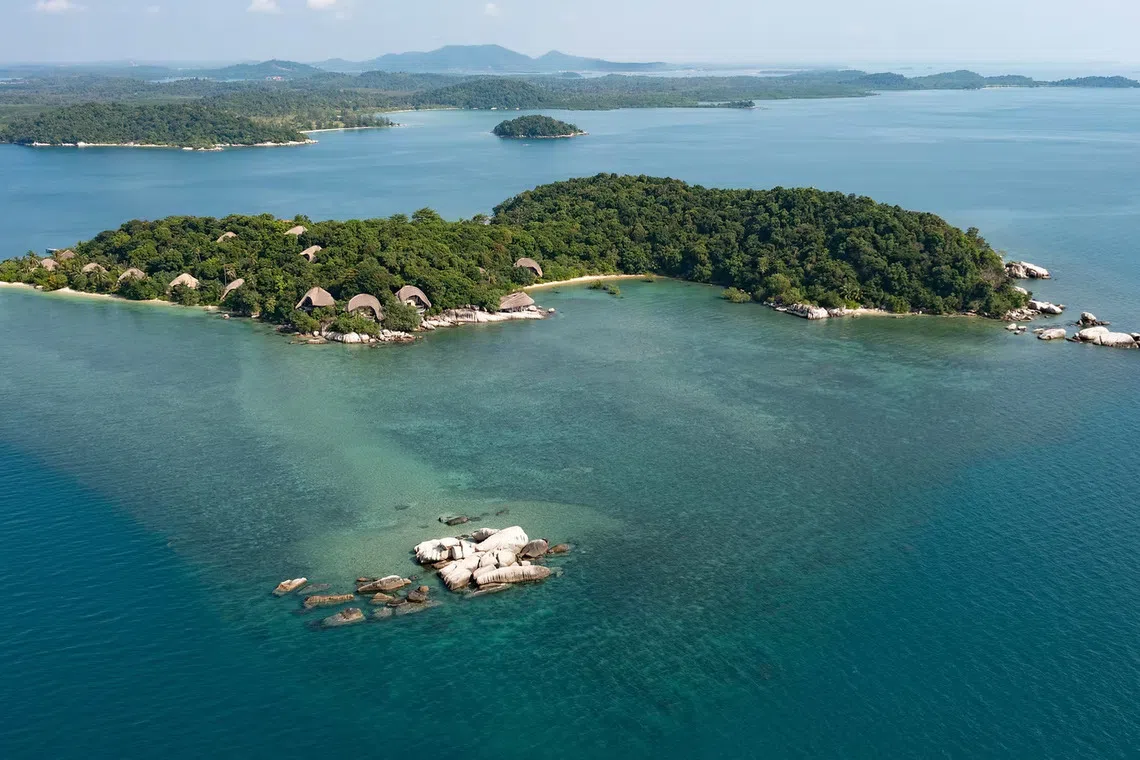
Cempedak Island is a private resort island off the eastern coast of Bintan.
PHOTO: CEMPEDAK ISLAND
Published Oct 12, 2026, 05:00 AM
Updated Oct 12, 2026, 05:00 AM
SINGAPORE – As a new scuba diver, I have big, charismatic animals like whale sharks and manta rays on my bucket list of things to see.
With the richness of the Coral Triangle – South-east Asia’s globally renowned marine biodiversity hot spot – in our backyard, many divers here often flock to popular dive sites like Raja Ampat and Bali in Indonesia for a glimpse of these creatures.
But over four days in April, during a visit to Cempedak Island, a resort off the eastern coast of Bintan, I learnt to appreciate the smaller creatures of the sea.
The private island was hosting two scientists, who were there to document the biodiversity in the area, and invited me to join their expedition.
In 2019, marine biologists Mark Erdmann and Gerald Allen, then with American non-profit Conservation International, had been invited by Cempedak to survey the marine life there as part of a proposal to zone some parts of the waters off Bintan as a marine protected area (MPA).
The East Bintan MPA was established by the Indonesian government in 2022, although Cempedak Island does not fall within its boundaries.
During the 2019 expedition, Erdmann photographed some rare reef fish, including six which he believed had never been identified before nor found anywhere else in the world.
He was back to obtain specimens of them to confirm their identities.
After a delay due to the Covid-19 pandemic, Erdmann and marine biologist Nesha Ichida from Indonesia-based non-profit Thrive Conservation, who was leading the second expedition, managed to coordinate their schedules for the April trip.
Marine scientists Nesha Ichida and Mark Erdmann managed to capture a goby specimen that they believe has not been previously identified. PHOTO: CEMPEDAK ISLAND
Marine scientists Nesha Ichida and Mark Erdmann managed to capture a goby specimen that they believe has not been previously identified.
Their focus was on gobies, sand divers and other small fish whose size can make it extra hard for an untrained eye to find against the messy seabed.
For instance, gobies average about 2cm to 3cm in length.
The beauty of small things
Before this trip, I had thought of Bintan more as a place for weekend getaways, not so much as a biodiversity hot spot.
But during my stay on Cempedak, I realised it could be both.
There was a sense of “wilderness” as I entered my villa, which seemed to be made almost entirely of bamboo and had neither real doors nor windows. A fellow traveller reported being awoken at dawn by a loud hornbill perched on the railing of his bedroom.
There was no air-conditioning at the eco-friendly resort, although ceiling fans were available.
The living room opened to a private pool, which overlooked the trees and the sea.
A private pool at a Cempedak villa that overlooks a lush horizon. ST PHOTO: GOH YAN HAN
A private pool at a Cempedak villa that overlooks a lush horizon.
ST PHOTO: GOH YAN HAN
The expansive view was great, but I later discovered that underwater, too, there was wildlife to be enjoyed.
Erdmann said the waters around Bintan – located an hour’s ferry ride from Singapore – are teeming with life.
In 2019, after spending over 40 hours underwater at 17 dive sites, he managed to identify 425 species of reef fishes.
Erdmann and I chida ’s enthusiasm for the small things was infectious.
During an hour-long briefing on the expedition, Erdmann shared more information about sand gobies that awoke the biology nerd in me.
A selection of specimens collected by marine biologists Nesha Ichida and Mark Erdmann, which they believe have not been identified previously. PHOTO: CEMPEDAK ISLAND
A selection of specimens collected by marine biologists Nesha Ichida and Mark Erdmann, which they believe have not been identified previously.
I was hooked by the way Erdmann described the different types of reef fish, along with their unique behavioural quirks, and was ready to give the island and its reefs a shot.
While on a dive, looking down at a monotonous landscape of sand seems like a waste of precious oxygen, especially if there are colourful coral reefs nearby.
But with the knowledge from the briefing in mind, I managed to spot little fish hiding amid the grains of sand.
These sand gobies usually stand in pairs at the mouth of tiny tunnels, guarding a nearly blind shrimp that shovels away inside. At any sign of danger, they too get to use the tunnels as shelter.
The elusive shrimp, which popped out for a second to shovel out sand, was difficult to capture by my untrained eye and on my underwater camera. ST PHOTO: GOH YAN HAN
The elusive shrimp, which popped out for a second to shovel out sand, was difficult to capture by my untrained eye and on my underwater camera.
Over the four days, I began to see the draw of looking out for the small things amid a vast ocean.
I managed to catch several camouflaged gobies – though not the unnamed ones – standing guard over a burrow at about 12m under the surface and eventually, with a quiet bubble of joy, I also glimpsed the elusive shrimp.
It came out once in a while when its sentinels signalled that the coast was clear, to dump out the sand from its network of tunnels.
Guided by Jaslan Button, Cempedak’s resident nature guide, I also spotted several brightly patterned nudibranchs – sea slugs – and baby coral.
At the end of the expedition, the two veteran divers seemed pleased with what they had found.
Marine biologist Nesha Ichida observing a specimen collected during the expedition. PHOTO: CEMPEDAK ISLAND
Marine biologist Nesha Ichida observing a specimen collected during the expedition.
While looking for the elusive six, they found four, and stumbled upon another seven potentially new species.
Three could be gobies, and the other four triplefins, characterised by their three dorsal fins.
DNA analysis and other work to officially describe the species and induct them into scientific literature are ongoing.
The benefits of protection
During my visit, I had the chance to explore seven dive sites.
The benefits of protection quickly became clear.
Underwater visibility in the reefs around Cempedak, which sits outside the East Bintan MPA, was low.
The small islands and reefs off the mainland have been struggling with sedimentation – the consequence of economic development as the mainland constructs new coastal developments.
As the works stir up the seabed, the sediment is pushed towards the island by the currents, affecting the nature there, said But ton .
But farther away from Cempedak, near its sister island Nikoi, another private resort owned by the same owners, visibility is better.
Nikoi sits within the boundaries of the marine park.
The difference is stark – there are more baby coral and baby fish, and more schools of edible fish, which shows that the protection zone has worked, noted the two ecologists.
The marine park rules prohibit destructive fishing methods, pollution and littering behaviour such as the dumping of waste. In specific zones, all fishing is disallowed.
Cempedak hopes the expedition’s findings help to strengthen the case for long-term protection and active management of the East Bintan MPA, said Lilly Milligan Gilbert, the resort’s marine conservation adviser .
While the designation of the area in 2022 has improved marine life to an extent, the trouble is that enforcement can be spotty.
On my last dive of the trip, we heard a loud boom underwater which flustered both Gilbert and Bu tto n, who were guiding the group.
Worried that it was someone practising bomb fishing – an outlawed practice of detonating explosives underwater to stun or kill large schools of fish for easy collection – they quickly cut the dive short.
The Cempedak staff later found out, after a number of calls were made, that the sound came from bags of lead waste being thrown on an aluminium-bottom boat.
It was a relief, but highlighted their concern that the MPA designation alone would not keep out illegal activity.
Ic hid a and Erdmann hope that their efforts to document the biodiversity raises awareness of the richness of nature and marine life in Bintan, which in turn helps the efforts of those trying to better protect it.
Clownfish, which do not stray far from their anemone home, were the easiest to photograph. ST PHOTO: GOH YAN HAN
Clownfish, which do not stray far from their anemone home, were the easiest to photograph.
The rate of economic development happening is at odds with marine tourism and conservation, and is a challenge that the area is going to face continuously, said Erdmann.
Another mining smelter or refinery – the sector is among Bintan’s top-performing and fastest-growing – could mean more sediment that could kill the reefs and the fish, if they are not built and developed correctly, he added.
The marine scientists said that Bintan could benefit from its marine biodiversity as an engine of growth as well.
There is still a lot that has not been explored in Bintan, Ich ida said. “This is not a massive diver hub, but it could be… It could be a massive tourism asset if done right.”
New species draw attention and excitement, as well as pride for local governments and communities, said Erdmann.
It could lead to enhanced marine conservation – even how the new species are named could play a part in drumming up the hype, he added.
Newly described species are sometimes named after where they are found.
Cempedak’s Gilbert said a follow-up expedition is planned for November.
The resort island hopes to continue supporting long-term marine research and biodiversity monitoring around East Bintan, including hosting follow-up expeditions and contributing to observations of suspected endemic reef fish species, she added.
The Cempedak Island villas, with no real doors or windows, open directly to nature. ST PHOTO: GOH YAN HAN
The Cempedak Island villas, with no real doors or windows, open directly to nature.
An endemic species is one that is uniquely found in a part of the world.
The island also hopes to be able to contribute to the active management of the MPA by supporting governance, enforcement, community engagement and sustainable financing, added Gilbert.
For Cempedak, having clearer waters full of wildlife is clearly to its advantage.
Guests are drawn by its beaches, marine life and sense of wilderness, said Gilbert.
“Protecting these ecosystems isn’t just the right thing to do, but fundamental to who we are as a destination,” she added.
Environmental issues
Conservation/Preservation
尖不达岛是位于民丹岛东海岸附近的一个私人度假岛屿。
照片:尖不达岛
发布于 2026 年 10 月 12 日上午 5:00
更新于2026年10月12日凌晨5:00
新加坡——作为一名新晋潜水员,我人生愿望清单上一直想看到像鲸鲨和蝠鲼这样体型庞大、魅力十足的动物。
珊瑚三角区是东南亚举世闻名的海洋生物多样性热点地区,拥有丰富的海洋生物资源,就在我们家门口。许多潜水员经常涌向印度尼西亚的拉贾安帕特和巴厘岛等热门潜水点,一睹这些生物的风采。
但在四月份的四天里,我游览了民丹岛东海岸附近的度假胜地尖不达岛,学会了欣赏海洋中的小型生物。
这座私人岛屿上住着两位科学家,他们来这里是为了记录该地区的生物多样性,并邀请我加入他们的考察队。
2019 年,海洋生物学家 Mark Erdmann 和 Gerald Allen(当时就职于美国非营利组织 Conservation International)受 Cempedak 的邀请,对那里的海洋生物进行调查,这是将民丹岛附近部分水域划为海洋保护区 (MPA) 的提案的一部分。
东民丹岛海洋保护区由印度尼西亚政府于 2022 年设立,但尖不达岛并不在其边界之内。
在 2019 年的探险中,埃德曼拍摄到了一些罕见的珊瑚礁鱼类,其中包括六种他认为以前从未被识别过,也从未在世界其他任何地方发现过的鱼类。
他回来是为了获取它们的样本,以确认它们的身份。
由于新冠疫情的影响,行程有所延误。埃德曼和来自印度尼西亚非营利组织 Thrive Conservation 的海洋生物学家内莎·伊奇达(她领导了第二次探险)最终协调了他们的日程安排,得以在四月份进行这次旅行。
海洋科学家内莎·伊奇达和马克·厄德曼成功捕获了一条他们认为此前未被发现的虾虎鱼标本。照片:岑佩达克岛
海洋科学家内莎·伊奇达和马克·埃德曼成功捕获了一条他们认为此前未被发现的虾虎鱼标本。
他们的目标是虾虎鱼、沙潜鱼和其他小型鱼类,这些鱼类体型较小,对于未经训练的人来说,在杂乱的海底环境中很难找到它们。
例如,虾虎鱼的平均长度约为 2 厘米至 3 厘米。
小事之美
在这次旅行之前,我一直认为民丹岛是一个适合周末度假的地方,而不是生物多样性热点地区。
但在尖不达岛逗留期间,我意识到它可能两者兼而有之。
走进别墅,一股“荒野”之感油然而生。别墅几乎完全由竹子建成,既没有真正的门也没有窗户。一位旅伴说,他清晨被一只栖息在卧室栏杆上的犀鸟的叫声吵醒。
这家环保度假村没有空调,但提供了吊扇。
客厅通向一个私人泳池,从泳池可以俯瞰树木和大海。
位于尖不达别墅的私人泳池,可俯瞰郁郁葱葱的地平线。(海峡时报摄影:吴彦翰)
位于 Cempedak 的一栋别墅,拥有一个私人泳池,可以俯瞰郁郁葱葱的地平线。
《海峡时报》照片:吴彦翰
开阔的视野固然很棒,但我后来发现,水下也有野生动物可以欣赏。
埃德曼说,民丹岛(距离新加坡仅一小时渡轮航程)周围水域生物丰富。
2019 年,他在 17 个潜水点水下待了 40 多个小时后,成功识别出 425 种珊瑚礁鱼类。
Erdmann 和 Ichida 对小事的热情极具感染力。
在长达一小时的考察简报会上,埃德曼分享了更多关于沙鰕虎鱼的信息,这唤醒了我内心的生物学爱好者。
海洋生物学家内莎·伊奇达和马克·厄德曼采集的部分标本,他们认为这些标本此前未被鉴定过。照片:岑佩达克岛
海洋生物学家内莎·伊奇达和马克·埃德曼收集了一些标本,他们认为这些标本以前从未被鉴定过。
埃德曼对不同种类的珊瑚礁鱼类及其独特的行为怪癖的描述深深吸引了我,我准备去这座岛屿及其珊瑚礁一探究竟。
潜水时,向下望去看到的是单调的沙地,感觉就像是在浪费宝贵的氧气,尤其是在附近有色彩斑斓的珊瑚礁的情况下。
但凭借着简报中学到的知识,我还是发现了藏在沙粒中的小鱼。
这些沙鰕虎鱼通常成对站在细小隧道的入口处,守护着一只几乎失明的虾,这只虾在隧道里辛勤地刨挖。一旦有危险出现,它们也会利用这些隧道作为庇护所。
这只行踪诡秘的虾,偶尔会探出水面铲沙,我这双未经训练的眼睛和我的水下相机都很难捕捉到它的身影。(海峡时报摄影:吴彦翰)
这种难以捉摸的虾,会突然探出水面铲沙子,我这双未经训练的眼睛和我的水下相机都很难捕捉到它的身影。
四天下来,我开始明白在浩瀚的海洋中寻找细微事物的乐趣所在。
我设法捕捉到了几条伪装的虾虎鱼——虽然没有捕捉到那些不知名的虾虎鱼——它们在水面下约 12 米处守卫着一个洞穴,最终,我带着一丝喜悦的平静,也瞥见了难以捉摸的虾。
它偶尔会在哨兵发出安全信号时出来,将隧道网络中的沙子倾泻出来。
在 Cempedak 的常驻自然向导 Jaslan Button 的带领下,我还发现了几种色彩鲜艳的裸鳃类动物(海蛞蝓)和幼小的珊瑚。
探险结束后,这两位经验丰富的潜水员似乎对他们的发现感到满意。
海洋生物学家内莎·伊奇达正在观察考察期间采集的标本。照片:岑佩达克岛
海洋生物学家内莎·伊奇达正在观察考察期间采集的标本。
在寻找那六个难以捉摸的物种时,他们找到了四个,并且偶然发现了另外七个可能是新物种的物种。
其中三条可能是虾虎鱼,另外四条可能是三鳍鱼,它们的特征是有三个背鳍。
目前正在进行DNA分析和其他工作,以正式描述该物种并将其纳入科学文献。
保护的好处
在访问期间,我有机会探索了七个潜水点。
防护措施的好处很快就显现出来了。
位于东民丹岛海洋保护区外的尖不达礁周围的珊瑚礁水下能见度很低。
大陆附近的小岛屿和礁石一直饱受泥沙淤积之苦——这是大陆沿海地区进行经济发展的后果,因为大陆正在建设新的沿海开发项目。
布顿说,由于工程搅动了海底,沉积物被洋流推向岛屿,影响了那里的自然环境。
但距离尖不达岛更远,靠近它的姊妹岛尼科伊岛(另一个由同一业主拥有的私人度假村),视野更好。
尼科伊位于海洋公园的范围内。
两位生态学家指出,区别非常明显——珊瑚幼苗和鱼苗更多了,可食用鱼群也更多了,这表明保护区发挥了作用。
海洋公园规章禁止破坏性捕鱼方法、污染环境和乱扔垃圾等行为。在特定区域,所有捕鱼活动均被禁止。
Cempedak度假村的海洋保护顾问莉莉·米利根·吉尔伯特表示,Cempedak希望此次考察的发现有助于加强对东民丹海洋保护区进行长期保护和积极管理的理由。
虽然 2022 年该区域的划定在一定程度上改善了海洋生物状况,但问题是执法力度可能不够。
在我此行的最后一次潜水中,我们听到水下传来一声巨响,这让带领我们潜水的吉尔伯特和巴顿都感到慌乱。
他们担心这是有人在进行炸弹捕鱼——一种在水下引爆炸药来击晕或杀死大群鱼以便轻松捕获的非法行为——于是迅速结束了潜水。
经过多次电话询问,Cempedak 的工作人员后来发现,声音来自将装满铅废料的袋子扔到一艘铝底船上。
这令人松了一口气,但也凸显了他们的担忧,即仅凭海洋保护区称号并不能阻止非法活动。
Ic hid a 和 Erdmann 希望他们记录生物多样性的努力能够提高人们对民丹岛丰富的自然和海洋生物的认识,从而帮助那些试图更好地保护民丹岛的人们。
小丑鱼很少远离它们的海葵家园,因此最容易拍摄。(海峡时报摄影:吴彦翰)
小丑鱼不会远离它们的海葵家园,因此最容易拍摄。
埃德曼表示,经济发展的速度与海洋旅游和保护相悖,这是该地区将持续面临的挑战。
他补充说,如果采矿冶炼厂或精炼厂的建设和开发不当,可能会造成更多沉积物,从而杀死珊瑚礁和鱼类——采矿冶炼厂或精炼厂是民丹岛表现最佳、增长最快的行业之一。
海洋科学家表示,民丹岛也可以利用其海洋生物多样性作为经济增长的引擎。
伊奇·伊达表示,民丹岛还有很多地方尚未开发。“这里现在还不是一个大型潜水中心,但它有潜力成为……如果开发得当,它将成为一个巨大的旅游资源。”
埃德曼表示,新物种会引起人们的关注和兴奋,也会让当地政府和社区感到自豪。
他还补充说,这可能会促进海洋保护——甚至新物种的命名方式也可能在制造轰动效应中发挥作用。
新发现的物种有时会以其发现地命名。
Cempedak 的 Gilbert 表示,计划在 11 月进行后续考察。
她补充说,该度假岛屿希望继续支持东民丹岛周边地区的长期海洋研究和生物多样性监测,包括举办后续考察和协助观察疑似特有的珊瑚礁鱼类物种。
尖不达岛上的别墅没有真正的门窗,直接与自然融为一体。(海峡时报摄影:吴彦翰)
琴佩达克岛的别墅没有真正的门窗,直接面向大自然。
特有物种是指仅在世界某一地区发现的物种。
吉尔伯特补充说,该岛还希望能够通过支持治理、执法、社区参与和可持续融资,为海洋保护区的积极管理做出贡献。
对于尖不达克岛来说,拥有清澈的海水和丰富的野生动物显然是一大优势。
吉尔伯特说,游客们被这里的海滩、海洋生物和荒野风光所吸引。
她补充说:“保护这些生态系统不仅是正确的做法,而且对我们作为一个旅游目的地而言至关重要。”
环境问题
保护/保存