Singapore moves to accelerate healthcare innovations in push to be regional clinical research hub新加坡加快医疗创新步伐,力争成为区域临床研究中心
Among several moves, Singapore will establish a priority track assessing selected innovative health products, says Health Minister Ong Ye Kung.
Among several moves, Singapore will establish a priority track assessing selected innovative health products, says Health Minister Ong Ye Kung.
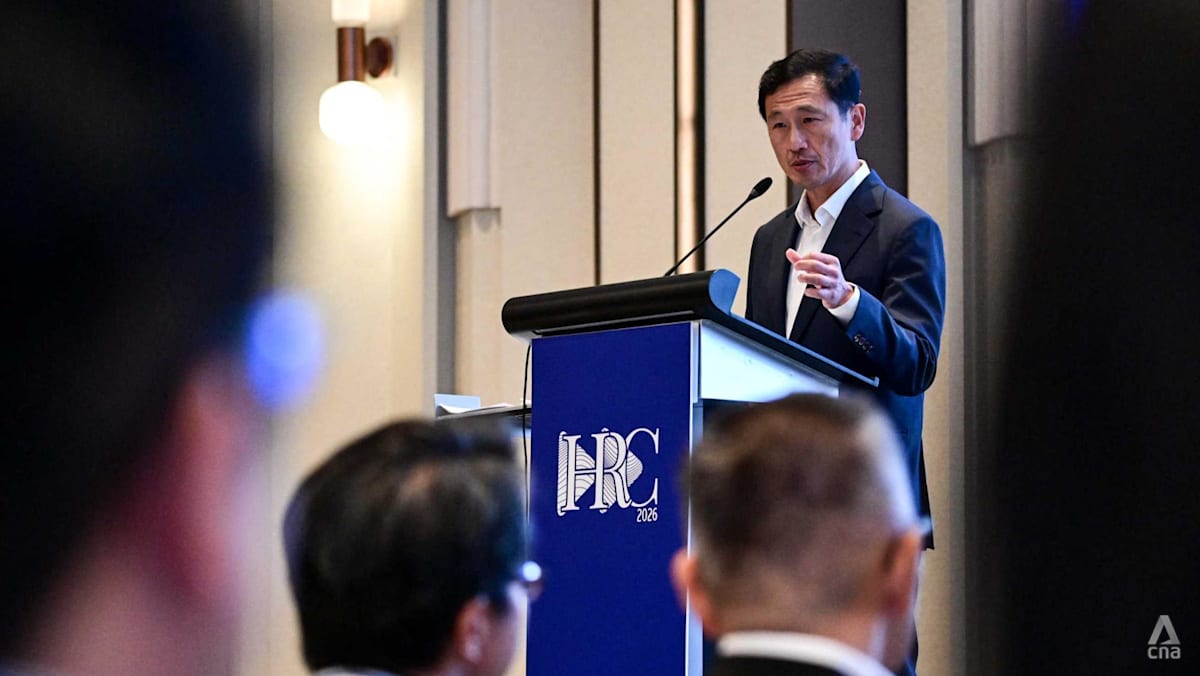
Coordinating Minister for Social Policies and Minister for Health Ong Ye Kung delivers his speech during the Inaugural Health Regulatory Conference at the Grand Copthorne Waterfront on Oct 12, 2026. (Photo: CNA/Wallace Woon)
This audio is generated by an AI tool.
SINGAPORE: Singapore aims to become one of the most trusted and efficient places in the region for clinical research and evidence generation, said Minister for Health Ong Ye Kung on Monday (Oct 12) as he announced several moves to speed up regulatory processes for drug development and trials.
To this end, Mr Ong said the Health Sciences Authority’s (HSA) efforts will span the healthcare value chain, connecting areas such as clinical development, regulation, health technology assessment and patient access.
Among several moves, he announced a new HSA-Agency for Care Effectiveness (ACE) priority track that will allow selected health products to undergo regulatory evaluation and health technology assessment at the same time.
Another initiative involves a collaboration with the United Kingdom for a new "regulatory innovation corridor" to consider breakthrough therapies, including those that use artificial intelligence (AI) in drug development and clinical trials.
CNA Games Guess Word Crack the word, one row at a time Buzzword Create words using the given letters Mini Sudoku Tiny puzzle, mighty brain teaser Mini Crossword Small grid, big challenge Word Search Spot as many words as you can Show More Show Less These initiatives, including HSA's plan to streamline regulatory review processes, could halve approval times for selected lower-risk Phase 3 clinical trials from 30 days to 15 days, as well as shorten the time for the first health technology assessment decision from about one year to between six and nine months after regulatory approval. Mr Ong said that companies currently have to engage multiple government agencies as they move from research to clinical development, regulatory evaluation and patient access. "Each hand-off can add time, cost and uncertainty. We want to simplify and streamline this journey, without compromising the independence or rigour of each regulatory process," he said. Mr Ong, who is also Coordinating Minister for Social Policies, was speaking at the inaugural Health Regulatory Conference at the Grand Copthorne Waterfront Hotel Singapore, organised by the Ministry of Health (MOH) and HSA and supported by the Duke-NUS Centre of Regulatory Excellence. He said HSA's regulatory approach is expanding across three boundaries – geographical, the healthcare value chain and across regulatory domains. To strengthen Singapore's position as a globally trusted regulatory hub, HSA is forming deeper international partnerships and ensuring its regulatory framework is closely connected with international partners. "Singapore, with all these efforts, is not simply a market of six million people. We can serve as a trusted gateway to markets encompassing hundreds of millions of people across other countries and regions," said Mr Ong. Singapore is also working towards the World Health Organization’s (WHO) listed authority status for vaccines, HSA said in a press release. This is the highest level under the WHO’s benchmarking framework for regulators, and such a status could potentially speed up access to vaccines while maintaining high safety standards, said the authority. CONSOLIDATING REGULATORY DOMAINS Key regulatory domains will also be consolidated under HSA to establish a clearer and simpler regulatory system that can assess healthcare innovations. The Health Sciences Authority (Amendment) and Other Matters Bill, which was passed in parliament in September, established HSA as Singapore’s integrated health regulator. The past approach was for MOH to regulate healthcare services, health information, human biomedical research and biosafety. HSA regulates health products such as medicines and medical devices, while the Secretariat of healthcare Professional Boards (SPB) supports the boards and councils overseeing the regulations of medical and allied health professionals. The consolidation will take place over two phases, said HSA. In the first phase, the MOH’s regulatory functions and manpower will be transferred to HSA on Nov 1 this year, while the SPB's functions and manpower will be transferred to HSA by end-2027 in the second phase. As healthcare itself is becoming more integrated, Mr Ong said the traditional boundaries between medicines, devices, services, professionals and health information are "blurring". "Many new models of care no longer fit neatly within a single regulatory domain," said Mr Ong. He pointed to a case in which an AI-driven medical device, an AI-enabled healthcare service and a clinician using AI may each be governed by different rules and legislation. "These categories will remain, but there is value in one authority having oversight of AI applications that cut across them," said Mr Ong. In the case of enforcement, as malpractice cases often involve both the misuse of a health product and misconduct by a professional, fragmented regulation can miss such connections and integrated oversight could consider the whole picture, he added. HSA will also establish a Healthcare Industry Advisory Council by the first half of 2027, which will bring together industry partners to identify emerging opportunities and risks, advise on capabilities needed across the health innovation ecosystem, and bring industry perspectives into policy development. Mr Ong said that healthcare regulation is no longer only about regulating for safety but increasingly shapes how the entire healthcare sector develops. "Because patients seldom see it, we sometimes overlook how rapidly regulation must evolve. Technology, demographic shifts and medical advances continually reshape how care is delivered. Regulation must keep pace, to adapt intelligently to new realities, while upholding standards," said Mr Ong.
These initiatives, including HSA's plan to streamline regulatory review processes, could halve approval times for selected lower-risk Phase 3 clinical trials from 30 days to 15 days, as well as shorten the time for the first health technology assessment decision from about one year to between six and nine months after regulatory approval.
Mr Ong said that companies currently have to engage multiple government agencies as they move from research to clinical development, regulatory evaluation and patient access.
"Each hand-off can add time, cost and uncertainty. We want to simplify and streamline this journey, without compromising the independence or rigour of each regulatory process," he said.
Mr Ong, who is also Coordinating Minister for Social Policies, was speaking at the inaugural Health Regulatory Conference at the Grand Copthorne Waterfront Hotel Singapore, organised by the Ministry of Health (MOH) and HSA and supported by the Duke-NUS Centre of Regulatory Excellence.
He said HSA's regulatory approach is expanding across three boundaries – geographical, the healthcare value chain and across regulatory domains.
To strengthen Singapore's position as a globally trusted regulatory hub, HSA is forming deeper international partnerships and ensuring its regulatory framework is closely connected with international partners.
"Singapore, with all these efforts, is not simply a market of six million people. We can serve as a trusted gateway to markets encompassing hundreds of millions of people across other countries and regions," said Mr Ong.
Singapore is also working towards the World Health Organization’s (WHO) listed authority status for vaccines, HSA said in a press release.
This is the highest level under the WHO’s benchmarking framework for regulators, and such a status could potentially speed up access to vaccines while maintaining high safety standards, said the authority.
CONSOLIDATING REGULATORY DOMAINS
Key regulatory domains will also be consolidated under HSA to establish a clearer and simpler regulatory system that can assess healthcare innovations. The Health Sciences Authority (Amendment) and Other Matters Bill, which was passed in parliament in September, established HSA as Singapore’s integrated health regulator.
The past approach was for MOH to regulate healthcare services, health information, human biomedical research and biosafety.
HSA regulates health products such as medicines and medical devices, while the Secretariat of healthcare Professional Boards (SPB) supports the boards and councils overseeing the regulations of medical and allied health professionals.
The consolidation will take place over two phases, said HSA. In the first phase, the MOH’s regulatory functions and manpower will be transferred to HSA on Nov 1 this year, while the SPB's functions and manpower will be transferred to HSA by end-2027 in the second phase.
As healthcare itself is becoming more integrated, Mr Ong said the traditional boundaries between medicines, devices, services, professionals and health information are "blurring".
"Many new models of care no longer fit neatly within a single regulatory domain," said Mr Ong.
He pointed to a case in which an AI-driven medical device, an AI-enabled healthcare service and a clinician using AI may each be governed by different rules and legislation.
"These categories will remain, but there is value in one authority having oversight of AI applications that cut across them," said Mr Ong.
In the case of enforcement, as malpractice cases often involve both the misuse of a health product and misconduct by a professional, fragmented regulation can miss such connections and integrated oversight could consider the whole picture, he added.
HSA will also establish a Healthcare Industry Advisory Council by the first half of 2027, which will bring together industry partners to identify emerging opportunities and risks, advise on capabilities needed across the health innovation ecosystem, and bring industry perspectives into policy development.
Mr Ong said that healthcare regulation is no longer only about regulating for safety but increasingly shapes how the entire healthcare sector develops.
"Because patients seldom see it, we sometimes overlook how rapidly regulation must evolve. Technology, demographic shifts and medical advances continually reshape how care is delivered. Regulation must keep pace, to adapt intelligently to new realities, while upholding standards," said Mr Ong.
Get our pick of top stories and thought-provoking articles in your inbox
Stay updated with notifications for breaking news and our best stories
Join our channel for the top reads for the day on your preferred chat app
新加坡卫生部长王乙康表示,新加坡将采取多项措施,其中包括设立优先通道,对选定的创新健康产品进行评估。
社会政策统筹部长兼卫生部长王乙康于2026年10月12日在新加坡君乐酒店海滨举行的首届卫生监管会议上发表讲话。(图片:CNA/Wallace Woon)
这段音频由人工智能工具生成。
新加坡:卫生部长王乙康周一(10月12日)宣布了几项加快药物研发和试验监管流程的举措,并表示新加坡的目标是成为该地区临床研究和证据生成方面最值得信赖和最高效的地点之一。
为此,王先生表示,卫生科学局(HSA)的努力将涵盖整个医疗保健价值链,连接临床开发、监管、卫生技术评估和患者就医等领域。
在多项举措中,他宣布了一项新的 HSA-医疗效果评估机构 (ACE) 优先通道,该通道将允许选定的健康产品同时接受监管评估和卫生技术评估。
另一项举措是与英国合作建立一个新的“监管创新走廊”,以考虑突破性疗法,包括在药物开发和临床试验中使用人工智能 (AI) 的疗法。
CNA游戏猜词游戏:逐行破解单词;流行词游戏:用给定的字母组成单词;迷你数独:小巧的谜题,强大的脑力挑战;迷你填字游戏:小方格,大挑战;单词搜索:尽可能多地找出单词。显示更多 显示更少 这些举措,包括新加坡卫生科学局(HSA)简化监管审查流程的计划,可以将部分低风险三期临床试验的审批时间从30天缩短至15天,并将首次卫生技术评估决策的时间从监管批准后的约一年缩短至六至九个月。王先生表示,目前企业在从研究到临床开发、监管评估和患者准入的过程中,需要与多个政府机构打交道。“每一次交接都会增加时间、成本和不确定性。我们希望简化和优化这一流程,同时又不损害每个监管流程的独立性和严谨性。”他说道。兼任社会政策统筹部长的王乙康先生在新加坡君乐酒店举行的首届卫生监管大会上发表讲话。此次大会由卫生部和新加坡卫生科学局(HSA)联合举办,并得到了杜克-新加坡国立大学监管卓越中心的支持。王乙康先生表示,HSA的监管方式正在三个方面不断拓展——地域、医疗价值链以及监管领域。为了巩固新加坡作为全球值得信赖的监管中心的地位,HSA正在深化国际合作,并确保其监管框架与国际伙伴紧密衔接。王乙康先生说:“新加坡通过这些努力,不再仅仅是一个拥有六百万人口的市场。我们可以成为通往其他国家和地区数亿人口市场的可靠门户。” HSA在一份新闻稿中表示,新加坡也在努力争取获得世界卫生组织(WHO)的疫苗权威机构资格。该机构表示,这是世卫组织监管机构基准框架下的最高级别,这一级别有望在保持高安全标准的同时,加快疫苗的获取速度。整合监管领域 卫生科学局(HSA)还将整合关键监管领域,以建立一个更清晰、更简化的监管体系,从而评估医疗保健创新。9月在国会通过的《卫生科学局(修订)及其他事项法案》设立了HSA,使其成为新加坡的综合性卫生监管机构。此前,卫生部(MOH)负责监管医疗保健服务、健康信息、人体生物医学研究和生物安全。HSA负责监管药品和医疗器械等健康产品,而医疗保健专业委员会秘书处(SPB)则为负责监管医疗和辅助医疗专业人员的委员会和理事会提供支持。HSA表示,整合工作将分两个阶段进行。第一阶段,卫生部的监管职能和人员将于今年11月1日移交给卫生科学局(HSA);第二阶段,新加坡公共卫生局(SPB)的职能和人员将于2027年底前移交给卫生科学局。王先生表示,随着医疗保健本身日益一体化,药品、器械、服务、专业人员和健康信息之间的传统界限正在“模糊”。“许多新的医疗模式不再能完全归入单一的监管领域,”王先生说道。他举例说,人工智能驱动的医疗器械、人工智能支持的医疗服务以及使用人工智能的临床医生可能分别受不同的规则和法律管辖。“这些类别仍然存在,但由一个机构对跨越这些类别的人工智能应用进行监管具有重要价值,”王先生说道。他还补充说,在执法方面,由于医疗事故案件通常涉及医疗产品的滥用和专业人员的不当行为,分散的监管可能会忽略这些关联,而一体化的监管则可以考虑全局。新加坡卫生科学局(HSA)将于2027年上半年成立医疗保健行业咨询委员会,该委员会将汇集行业合作伙伴,共同识别新兴机遇和风险,就整个医疗创新生态系统所需的能力提供建议,并将行业视角融入政策制定。王先生表示,医疗保健监管不再仅仅是为了保障安全,而是日益影响着整个医疗保健行业的发展方向。“由于患者很少能直接感受到监管,我们有时会忽略监管必须快速演变。技术、人口结构变化和医疗进步不断重塑着医疗服务的提供方式。监管必须与时俱进,在坚持标准的同时,巧妙地适应新的现实。”王先生说道。
这些举措,包括 HSA 简化监管审查流程的计划,可以将部分低风险 3 期临床试验的审批时间从 30 天缩短至 15 天,并将首次卫生技术评估决定的时间从监管批准后的大约一年缩短至六到九个月。
Ong先生表示,目前企业从研发到临床开发、监管评估和患者准入等各个阶段都需要与多个政府机构打交道。
“每一次交接都会增加时间、成本和不确定性。我们希望简化和优化这一流程,同时又不损害每个监管流程的独立性和严谨性,”他说道。
王乙康先生同时也是社会政策统筹部长,他在新加坡君悦酒店举行的首届卫生监管会议上发表了讲话。此次会议由卫生部和新加坡卫生科学局主办,并得到了杜克-新加坡国立大学监管卓越中心的支持。
他表示,HSA的监管方式正在跨越三个界限——地理范围、医疗保健价值链和监管领域。
为了巩固新加坡作为全球值得信赖的监管中心的地位,新加坡卫生科学局 (HSA) 正在建立更深层次的国际合作伙伴关系,并确保其监管框架与国际合作伙伴紧密相连。
“新加坡经过这些努力,已经不仅仅是一个拥有六百万人口的市场。我们可以成为通往其他国家和地区数亿人口市场的可靠门户,”王先生说。
新加坡卫生科学局在一份新闻稿中表示,新加坡也在努力争取获得世界卫生组织(世卫组织)的疫苗权威认证。
该机构表示,这是世卫组织监管机构基准框架下的最高级别,这种地位有可能在保持高安全标准的同时加快疫苗的获取速度。
整合监管领域
关键监管领域也将整合到卫生科学局(HSA)之下,以建立一个更清晰、更简化的监管体系,从而更好地评估医疗保健创新。9月在国会通过的《卫生科学局(修订)及其他事项法案》正式确立了HSA作为新加坡综合性医疗监管机构的地位。
过去的做法是由卫生部监管医疗保健服务、健康信息、人体生物医学研究和生物安全。
卫生科学局 (HSA) 负责监管药品和医疗器械等健康产品,而医疗保健专业委员会秘书处 (SPB) 则为负责监管医疗和相关卫生专业人员的委员会和理事会提供支持。
新加坡卫生科学局(HSA)表示,整合将分两个阶段进行。第一阶段,卫生部(MOH)的监管职能和人员将于今年11月1日移交给HSA;第二阶段,新加坡养老金委员会(SPB)的职能和人员将于2027年底前移交给HSA。
Ong先生表示,随着医疗保健本身变得越来越一体化,药品、设备、服务、专业人员和健康信息之间的传统界限正在“变得模糊”。
“许多新的护理模式不再能完全纳入单一的监管领域,”翁先生说。
他指出,人工智能驱动的医疗设备、人工智能支持的医疗保健服务和使用人工智能的临床医生可能分别受不同的规则和法律管辖。
“这些类别将会保留,但由一个机构来监管跨越这些类别的 AI 应用是有价值的,”翁先生说。
他补充说,在执法方面,由于医疗事故案件通常既涉及滥用医疗产品,也涉及专业人员的不当行为,因此分散的监管可能会忽略这些联系,而综合监管则可以考虑整体情况。
到 2027 年上半年,HSA 还将成立一个医疗保健行业咨询委员会,该委员会将汇集行业合作伙伴,以确定新兴机遇和风险,就整个健康创新生态系统所需的能力提供建议,并将行业观点带入政策制定中。
王先生表示,医疗保健监管不再仅仅是关于安全监管,而是越来越多地影响着整个医疗保健行业的发展方向。
“由于患者很少注意到监管,我们有时会忽略监管必须如何快速发展。技术、人口结构变化和医学进步不断重塑着医疗服务的提供方式。监管必须与时俱进,在坚持标准的同时,巧妙地适应新的现实,”翁先生说道。
订阅我们的邮件,即可获取精选热点新闻和引人深思的文章。
订阅通知,第一时间获取突发新闻和精彩报道。
加入我们的频道,即可在您常用的聊天应用上获取当日热门文章。