Once-reluctant Germany goes big on one-way attack drones曾经犹豫不决的德国如今大力发展单向攻击无人机
The government is setting up three domestic manufacturers for deals that could reach billions of euros.
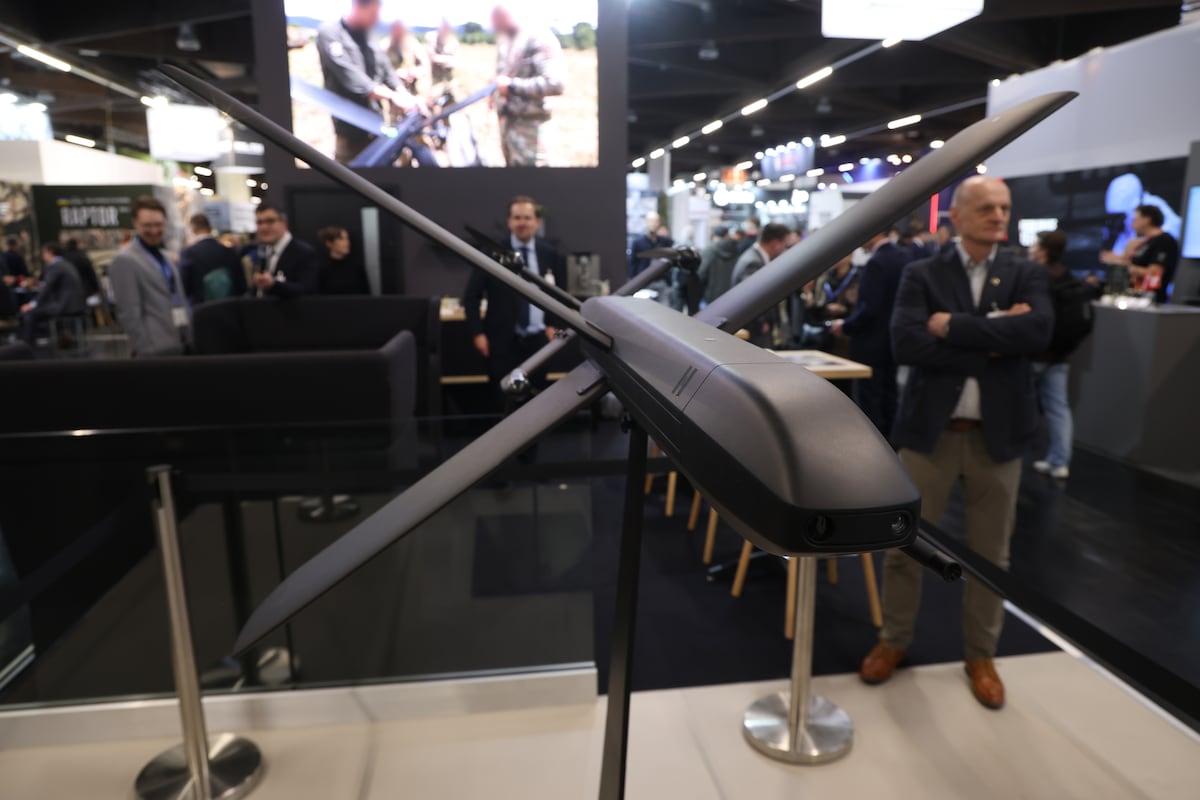
COLOGNE, Germany — The German government plans to equip its military forces with one-way attack drones , setting up three domestic manufacturers for deals that could reach billions of euros.
Lawmakers on the parliamentary budget committee on Feb. 25 approved contracts worth €268 million ($316 million) each for startups Stark Defence and Helsing to supply the Virtus and HX-2 loitering munitions, respectively. Contractual options could add €1 billion to each of the deals, provided the systems prove technologically mature and lawmakers agree to additional purchases.
A third offer by defense giant Rheinmetall is expected for budget committee consideration within weeks and will receive the same spending plan, according to Andreas Schwarz, budget committee member and point man for the Social Democratic Party (SPD) in defense budget matters.
“We want to treat everybody equally,” Schwarz told Defense News.
Rheinmetall announced last week the successful demonstration of its FV-014 loitering munition to a “potential NATO customer” at a range in Germany.
Having three manufacturers on tap means defense leaders and lawmakers are in a position to guide the future flow of money to the most capable offerings, Schwarz said.
Loitering munitions are designed to fly to a general target area, stay airborne above it and automatically propose strike targets to human operators a safe distance away. The target selection process happens by way of on-board sensor data collection and analysis, supported by artificial intelligence.
When cleared for attack, the drones lock on to a target and try to ram their warhead into it.
The deadly technology is so effective in the war in Ukraine that large stretches of the front line are no-go areas for human soldiers.
The German parliament agreeing to spend large sums on these types of weapon is part of a remarkable turnaround for the European country’s military posture since Russia’s full-scale invasion of Ukraine four years ago. Previously, lawmakers, including in the SPD, were wary of allowing the military to install weapons of any kind on drones.
“We have to adapt to the realities that exist in the world,” Schwarz told Defense News.
As a first step, the three German manufacturers’ weapons are destined to equip Germany’s armored brigade in Lithuania in 2027.
Speed in fielding the new weapons is of the essence for German military leaders. Having soldier testing and training happening in parallel rather than sequentially is meant to save time, according to a defense ministry statement.
Such an approach typically increases risk in defense acquisitions, especially when fielding novel technology.
That’s why lawmakers attached reporting requirements to the approved spending plan, designed to keep a close watch on the progress. Cancellation clauses also enable the government to walk away from offerings if manufacturers fail qualification tests.
Meanwhile, manufacturer Stark Defence has managed to assuage lawmakers’ concerns about the involvement of libertarian U.S. investor Peter Thiel in the company.
Thiel’s shares in Stark amount to a one-digit percentage, which means he has no access or insight into the startup’s operative business, Defense Minister Boris Pistorius told reporters on Wednesday.
Pistorius and Schwarz said they were content with have a written commitment to that effect from the company.
Ahead of the budget committee vote, critics said Thiel’s touch could make the Stark deal iffy.
“The fact is that Peter Thiel openly rejects our democracy. We do not know how large his influence at Stark is. And even worse: The federal government cannot explain it,” Greens lawmaker Jeanne Dillschneider was quoted as saying in a Politico report on Tuesday.
Sebastian Sprenger is associate editor for Europe at Defense News, reporting on the state of the defense market in the region, and on U.S.-Europe cooperation and multi-national investments in defense and global security. Previously he served as managing editor for Defense News. He is based in Cologne, Germany.
德国科隆——德国政府计划为其军队配备单向攻击无人机,并与三家国内制造商达成交易,交易金额可能达到数十亿欧元。
2月25日,议会预算委员会批准了分别价值2.68亿欧元(3.16亿美元)的合同,授予初创公司Stark Defence和Helsing,用于供应Virtus和HX-2巡飞弹。合同中包含的增购选项,如果这些系统被证明技术成熟且议员们同意追加采购,则每笔交易的金额可能增加10亿欧元。
据预算委员会成员、社会民主党(SPD)国防预算事务负责人安德烈亚斯·施瓦茨称,国防巨头莱茵金属公司的第三份方案预计将在几周内提交预算委员会审议,并将采用相同的支出计划。
“我们希望平等对待所有人,”施瓦茨告诉《防务新闻》。
莱茵金属公司上周宣布,其FV-014巡飞弹在德国的一个靶场成功向“潜在的北约客户”进行了演示。
施瓦茨表示,有了三家制造商可供选择,国防领导人和立法者就能引导未来的资金流向最有能力的产品。
巡飞弹的设计目的是飞抵目标区域后,在其上空盘旋,并自动向安全距离外的操作人员提供打击目标。目标选择过程通过机载传感器数据采集和分析,并借助人工智能技术完成。
获得攻击许可后,无人机会锁定目标并试图将弹头撞向目标。
这种致命技术在乌克兰战争中非常有效,以至于前线大片区域都成了人类士兵的禁区。
德国议会同意斥巨资购买此类武器,标志着自四年前俄罗斯全面入侵乌克兰以来,德国军事态势发生了显著转变。此前,包括社民党在内的议员们一直对允许军方在无人机上安装任何类型的武器持谨慎态度。
“我们必须适应现实世界,”施瓦茨告诉《防务新闻》。
第一步,这三家德国制造商的武器将于 2027 年装备驻立陶宛的德国装甲旅。
对于德国军方领导人来说,尽快部署新型武器至关重要。国防部在一份声明中表示,士兵测试和训练并行进行而非按顺序进行,旨在节省时间。
这种做法通常会增加国防采购的风险,尤其是在部署新技术时。
因此,立法者在批准的支出计划中附加了报告要求,旨在密切监督进展情况。取消条款还允许政府在制造商未能通过资格测试时终止相关项目。
与此同时,制造商斯塔克防务公司成功消除了立法者对美国自由主义投资者彼得·蒂尔参与该公司投资的担忧。
国防部长鲍里斯·皮斯托里乌斯周三告诉记者,蒂尔在 Stark 的股份只占个位数百分比,这意味着他无法接触或了解这家初创公司的运营业务。
皮斯托瑞斯和施瓦茨表示,他们乐于接受公司就此作出的书面承诺。
在预算委员会投票前,批评人士表示,蒂尔的介入可能会使斯塔克的交易变得不确定。
“事实是,彼得·蒂尔公然否定我们的民主制度。我们不知道他在斯塔克的影响力有多大。更糟糕的是:联邦政府对此也无法解释,”绿党议员珍妮·迪尔施奈德周二在接受Politico采访时表示。
塞巴斯蒂安·斯普伦格是《防务新闻》欧洲版副主编,负责报道该地区的防务市场状况,以及美欧在防务和全球安全领域的合作和多国投资。此前,他曾担任《防务新闻》执行主编。他现居德国科隆。