‘We don’t have infantry’: Ukraine’s war machine evolves into machine war“我们没有步兵”:乌克兰的战争机器演变为机器战争
Outmanned by a nuclear power in the largest land war in Europe since 1945, Ukraine’s front line is increasingly held by machines.
KYIV, Ukraine — The army that stopped Russia’s march on Kyiv four years ago no longer exists.
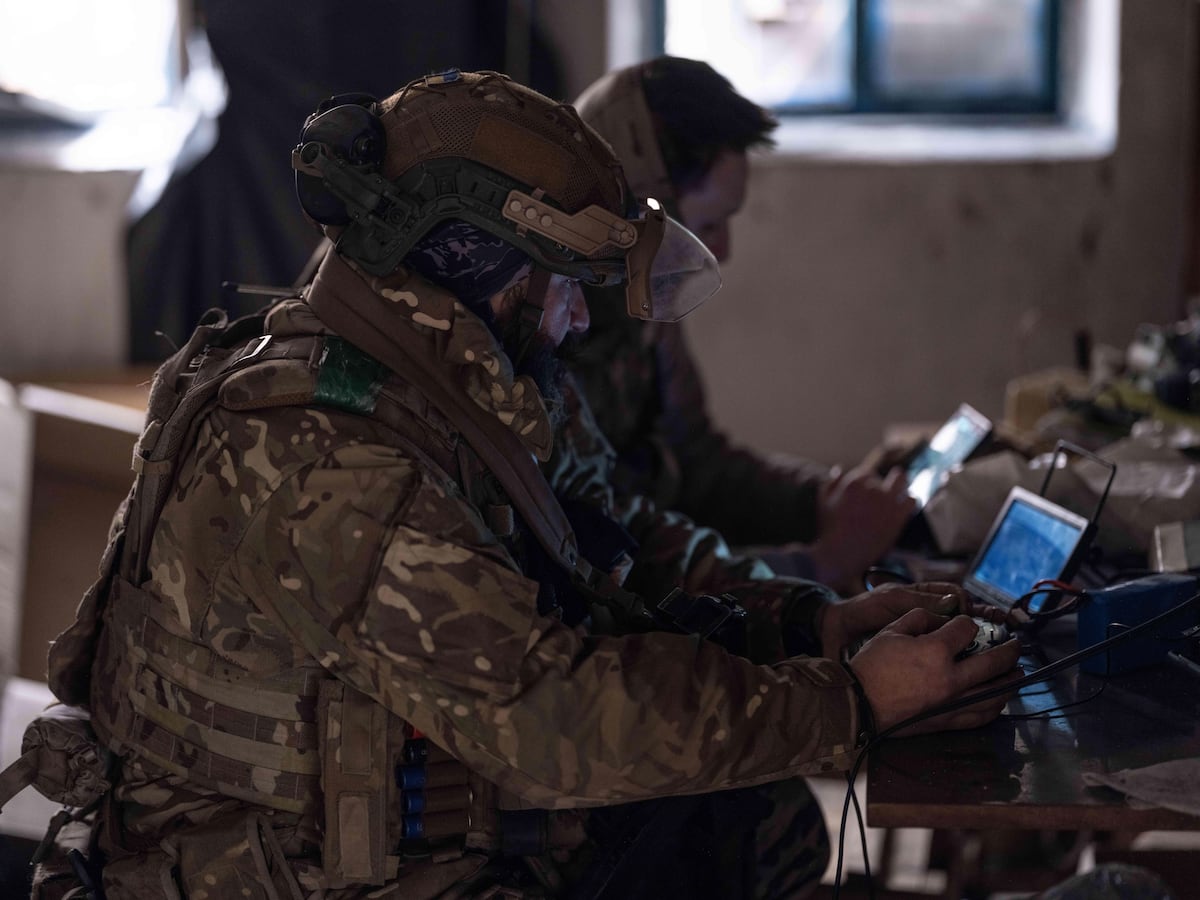
Outmanned and outgunned by a nuclear power in the largest land war in Europe since 1945, Ukraine’s front line is increasingly held not by soldiers , but by machines and the skeleton crews that control them.
Commanders describe brigades hollowed out to half strength or worse. Frontline units often operate at 50% to 60% of authorized manning, some as low as 30%.
In some sectors, a maximum of 12 fighters hold 5 to 10 kilometers of front, far below what Cold War-era NATO planning assumed for high-intensity defense.
The numbers tell the story of an army running out of people. The average frontline soldier is 43 to 45 years old, according to Bloomberg .
Roughly 200,000 troops are absent without leave, and around 2 million men are evading mobilization, Defense Minister Mykhailo Fedorov told CNN in January, with Western and Ukrainian analysts estimating the overall shortfall at 300,000 personnel.
Ukraine is no longer just supplementing its infantry with tech — it is replacing infantry in many cases with drones, ground robots, sensor networks, minefields and artillery cued by unmanned systems.
Soldiers test land drones in Zaporizhzhia region, Ukraine, Jan. 26, 2026. (Andriy Andriyenko/Ukraine's 65th Mechanized Brigade via AP)
The battlefield revolution was not born simply of necessity, but as a war strategy of a smaller nation against a much larger enemy .
In the Donetsk region alone, Russian losses reach 156 soldiers per square kilometer, Fedorov said in an address marking the fourth anniversary of the full-scale invasion.
Ukraine’s benchmark: more than 200 casualties per square kilometer — “a level of losses at which further advance becomes impossible,” Federov told reporters on Monday.
Over the past year, Military Times interviewed dozens of drone operators, robotics engineers and defense officials across Ukraine to understand how the country is bridging its manpower shortage — and what an increasingly unmanned army looks like.
As a correspondent who has covered this war since the first hours of the full-scale invasion, I have never seen the battlefield transform this rapidly.
Inside Lazar’s Group, a National Guard special forces formation that has claimed more than 40,000 targets destroyed since the full-scale invasion, the substitution is already operational architecture.
The roughly 1,700-person drone unit, according to its commanders, stations a ground crew every 10 kilometers along the front, an ISR team every 20, with FPV pilots and interceptor crews filling the gaps.
Commanders say its strike drones now account for 60% to 70% of all hits in its sector.
In practice, that means a single operator hunched over a tablet in a basement can toggle between three FPV feeds while sending one drone into a trench line as two more orbit overhead waiting for targets — one pilot doing the work of a squad.
“More drones, more Russians killed,” “Phoenix,” the operational head of Lazar’s Group, told Military Times at the Kyiv International Cyber Resilience Forum in February.
Ukraine's Security Service officers stand by Sea Baby drones during a demonstration at an undisclosed location in Ukraine, Oct. 17, 2025. (Efrem Lukatsky/AP)
Military Times agreed to refer to all active duty soldiers by their nom de guerre for operational security.
Russia does not face the same constraint — and is not pushed to innovate as quickly or dramatically as a result.
Ukrainian President Volodymyr Zelensky said last year that Moscow was recruiting 40,000 to 45,000 troops per month, compared to Ukraine’s 25,000 to 27,000.
Ukrainian military intelligence data suggests the actual pace is around 30,000 to 35,000 new Russian contract soldiers per month, according to the Kyiv Independent — still enough to outpace Ukraine’s intake by a widening margin.
Deputy Defense Minister Lt. Col. Yuriy Myronenko, a former infantry officer and combat drone unit commander who now helps oversee Ukraine’s unmanned systems strategy, told Military Times, “This is the only chance to win for us. There is no other chance.”
So, the military is adapting.
The 28th Brigade’s newly formed Unmanned Systems Battalion “Flash” is Ukraine’s first international UAV unit — a foreign-heavy drone force where English fluency, not combat experience, is the entry requirement.
“Infantry is dead,” “Scooby,” a Polish Flash operator who had just returned from his first mission with Flash, told Military Times earlier this month.
The 28th Brigade has already shifted 70% of frontline logistics to robotic systems, its commanders told Military Times.
Designed as a replicable model for how Ukraine wants to restructure force composition, the unit runs FPV strikes, drone-on-drone air defense and ground robot operations. The substitution is happening in layers.
His description matches what drone operators across multiple units described to Military Times: units are exponentially increasing their kill rates by investing a majority of their strategic resources on autonomous and unmanned tech.
According to internal Ukrainian estimates and government data published by Reuters , drones accounted for 69% of strikes on Russian troops and 75% on vehicles and equipment in 2024.
By the end of 2025, drones were responsible for more than 80% of all enemy targets destroyed, with 819,737 video-confirmed hits logged that year.
A turret of a destroyed Russian tank sticks out of a swamp in the Ukrainian village of Shandryholove on March 1, 2023. (Anatolii Stepanov/AFP via Getty Images)
Twelve drone operators with enough airframes can now do the work of dozens of infantry — a ratio that inverts the traditional calculus of ground combat.
In the 12th Azov Brigade’s sector, commander “Kil” has described areas where there is “absolutely no Ukrainian infantry” — defense maintained largely through UAV surveillance, artillery strikes and minefields, according to NV .
Drones spot targets, artillery fires on them, mines block movement — and infantry enters only for specific tasks.
“Our battalion is an unmanned systems battalion,” Ash, head of Flash’s medical and MPZ — the unit’s morale and psychological support program — told Military Times. “It means we don’t have infantry.”
After four years of mixed battlefield tactics blending muddy trench warfare with kamikaze drones and ballistic missiles, Russia’s full-scale invasion of Ukraine has already become the drone war of the future — fought almost autonomously from a distance, strength, brute strength and numbers matter less than robotic force multipliers and electronic warfare.
“We do drones. We kill with drones. We save with drones. We liberate with drones.”
Integrating unmanned systems into the core of its military fabric is no longer improvisation in Ukraine. It is doctrine.
After taking office in January, Fedorov outlined a government plan built around what he called “the mathematics of war” — from completing corps-level reform to transforming command systems through data-driven management.
Ukraine’s Unmanned Systems Forces, a standalone military branch established in 2024 and now commanded by Maj. Robert “Magyar” Brovdi, encompasses more than a dozen strike and reconnaissance units, including the 414th “Magyar’s Birds” Brigade, the top performer on the military’s verified combat-rating leaderboard.
These USF units have destroyed thousands of enemy targets each week in February, according to Ukrainian Defense Ministry data.
Brovdi’s philosophy for the force: “People think — machines do the work.”
Ukrainian soldiers strap munitions to a Vampire drone. (Nikoletta Stoyanova)
The Ukrainian military has separately set the goal of establishing a 15-kilometer unmanned “kill zone” along the front lines, a project dubbed the Drone Line.
And the supply chain is catching up to the doctrine.
Alona Zhuzha, director of digitalization at Ukraine’s Defense Procurement Agency, told Military Times that drone delivery times have dropped from two to three months to an average of 10 days — and in some cases, one day from order to frontline delivery.
But the ambitious model still faces challenges.
A historic winter has hammered battery-powered drones. Temperatures across the 1,200-kilometer front line plunged to their lowest of the entire four-year war — hitting minus 20 Celsius — with cameras icing over, batteries dying mid-flight and short-circuits grounding entire fleets, AFP reported.
Troops have resorted to unorthodox solutions for airframe insulation.
“We just put lard on them, and it takes off. I’m laughing, but it’s how it is,” Denys Shtilierman, chief constructor at Fire Point, a company making Ukraine’s first long-range drones, told AFP .
Russia is adapting in parallel, scaling its own FPV production and using heavy electronic warfare to jam and burn down Ukrainian drone swarms.
Robots are still a long way from warring autonomously.
“There’s no such thing as replacing infantry,” Jesse Nuese, a former U.S. Army paratrooper and Afghanistan veteran who co-founded Forward Horizon Group to facilitate reconstruction and technology transfer between the U.S. and Ukraine, told Military Times in Kyiv. “Unmanned systems cannot hold ground alone.”
He may be right — for now.
But on a stretch of front east of Pokrovsk, a tracked robot with a 12.7mm machine gun holds a position for weeks without a crew — and somewhere behind it, a single operator toggles between three feeds, doing the work of a squad.
And battlefield dynamics continue to evolve at lightning speed.
“One pilot, three drones now,” Phoenix said. “It would already be 10 with more funding.”
乌克兰基辅——四年前阻止俄罗斯进军基辅的那支军队已经不复存在了。
在1945年以来欧洲规模最大的陆地战争中,乌克兰在兵力和火力上都处于劣势,被一个核大国压制。如今,乌克兰的前线越来越多地由机器和控制这些机器的少量人员把守,而不是由士兵把守。
指挥官们描述说,有些旅的兵力被削减到一半甚至更低。前线部队通常只有核定编制的50%到60%的人员,有些甚至低至30%。
在某些战区,最多只有 12 架战斗机控制着 5 到 10 公里的战线,远远低于冷战时期北约对高强度防御的规划。
这些数字揭示了军队兵力短缺的现状。据彭博社报道,一线士兵的平均年龄在43岁至45岁之间。
国防部长米哈伊洛·费多罗夫1月份告诉CNN,大约有20万名士兵擅离职守,约200万名士兵逃避动员,西方和乌克兰的分析人士估计,总缺口为30万人。
乌克兰不再只是用技术来补充其步兵——在许多情况下,它正在用无人机、地面机器人、传感器网络、雷区和由无人系统引导的火炮来取代步兵。
2026年1月26日,乌克兰扎波罗热州,士兵们正在测试陆地无人机。(安德烈·安德里延科/乌克兰第65机械化旅,美联社供图)
战场革命并非仅仅出于必要,而是小国对抗大国敌人的战争策略。
费多罗夫在纪念全面入侵四周年之际发表讲话称,仅在顿涅茨克地区,俄军的伤亡就达到了每平方公里 156 名士兵。
乌克兰的基准线是:每平方公里伤亡人数超过 200 人——“伤亡人数达到一定程度,进一步推进就不可能了,”费多罗夫周一告诉记者。
过去一年,《军事时报》采访了乌克兰各地数十名无人机操作员、机器人工程师和国防官员,以了解该国如何弥补人力短缺,以及日益无人化的军队会是什么样子。
作为一名从全面入侵开始就一直报道这场战争的记者,我从未见过战场变化如此之快。
在拉扎尔的部队(一支国民警卫队特种部队,自全面入侵以来已摧毁超过 40,000 个目标)内部,这种替换已经成为可操作的架构。
据指挥官称,这支约有 1700 人的无人机部队,沿前线每隔 10 公里部署一个地面人员,每隔 20 公里部署一个 ISR 小组,FPV 飞行员和拦截人员则填补空缺。
指挥官表示,该部队的攻击无人机目前占其所在区域所有打击次数的 60% 至 70%。
实际上,这意味着一名操作员可以蜷缩在地下室的平板电脑前,在三个 FPV 画面之间切换,同时派遣一架无人机进入战壕,另外两架无人机在空中盘旋等待目标——一名飞行员完成了一个小队的工作。
“无人机越多,被杀的俄罗斯人就越多,”拉扎尔集团的行动负责人“凤凰”在2月份基辅国际网络弹性论坛上告诉《军事时报》。
2025年10月17日,在乌克兰一处未公开地点举行的演示活动中,乌克兰安全局官员站在“海宝贝”无人机旁。(Efrem Lukatsky/AP)
《军事时报》同意出于行动安全考虑,用化名称呼所有现役军人。
俄罗斯没有面临同样的限制——因此,俄罗斯也没有被推动进行如此迅速或剧烈的创新。
乌克兰总统泽连斯基去年表示,莫斯科每月招募 4 万至 4.5 万名士兵,而乌克兰每月招募 2.5 万至 2.7 万名士兵。
据《基辅独立报》报道,乌克兰军事情报数据显示,实际的俄罗斯新兵入伍速度约为每月 3 万至 3.5 万名,仍然远远超过乌克兰的入伍人数。
乌克兰国防部副部长、前步兵军官兼无人机作战部队指挥官尤里·米罗年科中校,目前负责监督乌克兰的无人系统战略,他告诉《军事时报》:“这是我们唯一的获胜机会。别无他法。”
所以,军方正在做出调整。
第 28 旅新成立的无人系统营“闪电”是乌克兰第一支国际无人机部队——一支以外国无人机为主的部队,其入伍要求是英语流利,而不是作战经验。
“步兵已经阵亡了,”一位名叫“Scooby”的波兰籍Flash特工本月初告诉《军事时报》,他刚刚完成了在Flash的第一次任务。
据《军事时报》报道,第28旅的指挥官表示,该旅已将70%的前线后勤保障工作转移到机器人系统。
该部队旨在为乌克兰如何重组部队构成提供一个可复制的模式,其主要任务包括无人机打击、无人机对无人机防空和地面机器人作战。人员替换是分阶段进行的。
他的描述与多个单位的无人机操作员向《军事时报》描述的情况相符:各单位通过将大部分战略资源投入到自主和无人技术上,正在以指数级速度提高击杀率。
根据乌克兰内部估计和路透社公布的政府数据,2024 年,无人机对俄罗斯军队的袭击占 69%,对车辆和装备的袭击占 75%。
到 2025 年底,无人机摧毁了 80% 以上的敌方目标,当年记录在案的击中目标数量为 819,737 个,并有视频确认。
2023年3月1日,在乌克兰尚德里霍洛韦村,一辆被摧毁的俄罗斯坦克的炮塔从沼泽中伸出。(Anatolii Stepanov/AFP via Getty Images)
现在,12 名拥有足够无人机的操作员可以完成数十名步兵的工作——这一比例颠覆了传统的地面作战计算方式。
据NV报道,在第12亚速旅的防区内,“基尔”指挥官描述了“绝对没有乌克兰步兵”的地区——这些地区的防御主要依靠无人机侦察、炮击和雷区。
无人机发现目标,大炮向目标开火,地雷阻挡前进——步兵只在执行特定任务时才会进入。
“我们营是一个无人系统营,”阿什(Ash)告诉《军事时报》,他是“闪电”营医疗和心理支持项目(MPZ,该部队的士气和心理支持项目)的负责人。“这意味着我们没有步兵。”
经过四年泥泞堑壕战与自杀式无人机和弹道导弹相结合的混合战场战术,俄罗斯对乌克兰的全面入侵已经演变成未来的无人机战争——几乎完全自主地从远处进行,力量、蛮力和数量远不如机器人力量倍增器和电子战重要。
“我们用无人机。我们用无人机杀人。我们用无人机救人。我们用无人机解放。”
在乌克兰,将无人系统融入其军事体系的核心不再是临时之举,而是一种既定战略。
费多罗夫于 1 月份上任后,制定了一项以他所谓的“战争数学”为核心的政府计划——从完成军团级改革到通过数据驱动的管理来改造指挥系统。
乌克兰无人系统部队是2024年成立的独立军事部门,现由罗伯特·“马扎尔”·布罗夫迪少校指挥,下辖十几个打击和侦察部队,其中包括第414“马扎尔之鸟”旅,该旅在军方认证的战斗评级排行榜上名列前茅。
根据乌克兰国防部的数据,这些美军部队在2月份每周摧毁数千个敌方目标。
布罗夫迪对这支部队的理念是:“人思考——机器做事。”
乌克兰士兵正在给“吸血鬼”无人机绑弹药。(尼科莱塔·斯托亚诺娃摄)
乌克兰军方另行制定了沿前线建立15公里无人“杀伤区”的目标,该项目被称为“无人机防线”。
供应链也正在跟上这一理念。
乌克兰国防采购局数字化主管阿洛娜·朱扎告诉《军事时报》,无人机交付时间已从两到三个月缩短到平均 10 天,在某些情况下,从下单到前线交付只需一天。
但这一雄心勃勃的模式仍然面临挑战。
历史性的严冬重创了电池驱动的无人机。法新社报道称,长达1200公里的前线气温骤降至四年战争以来的最低点——零下20摄氏度——导致摄像头结冰、电池在飞行途中耗尽以及短路等问题,使得整支无人机队停飞。
部队已采取非常规方法进行机身隔热。
“我们只要在上面涂上猪油,它就能飞起来。我笑了,但事实就是如此,”乌克兰首家远程无人机制造商 Fire Point 的首席设计师 Denys Shtilierman 告诉法新社。
俄罗斯也在同步调整,扩大其 FPV 无人机的生产规模,并利用强大的电子战力量干扰和摧毁乌克兰的无人机群。
机器人距离自主作战还有很长的路要走。
“步兵是无法被取代的,”杰西·纽斯(Jesse Nuese)在基辅接受《军事时报》采访时表示。纽斯曾是美国陆军伞兵,也是阿富汗战争老兵,他与人共同创立了“前瞻地平线集团”(Forward Horizon Group),旨在促进美乌两国之间的重建和技术转让。“无人系统无法独自守住阵地。”
他或许是对的——至少目前是这样。
但在波克罗夫斯克以东的一段战线上,一台配备 12.7 毫米机枪的履带式机器人在没有操作人员的情况下坚守阵地数周——而在它后面的某个地方,一名操作员在三个信号源之间切换,完成了一个班组的工作。
战场局势仍在以惊人的速度不断演变。
“现在有一名飞行员,三架无人机,”菲尼克斯说。“如果资金更充足,早就有十架了。”