NEA tracking haze hotspots and sources as earlier investigations under Transboundary Haze Pollution Act continue国家环境局 (NEA) 继续追踪雾霾热点地区和来源,此前根据《跨境雾霾污染法》开展的调查也在进行中。
The Transboundary Haze Pollution Act allows authorities to take legal action against companies responsible for causing or contributing to haze pollution in Singapore, even if their activities take place overseas.
The Transboundary Haze Pollution Act allows authorities to take legal action against companies responsible for causing or contributing to haze pollution in Singapore, even if their activities take place overseas.
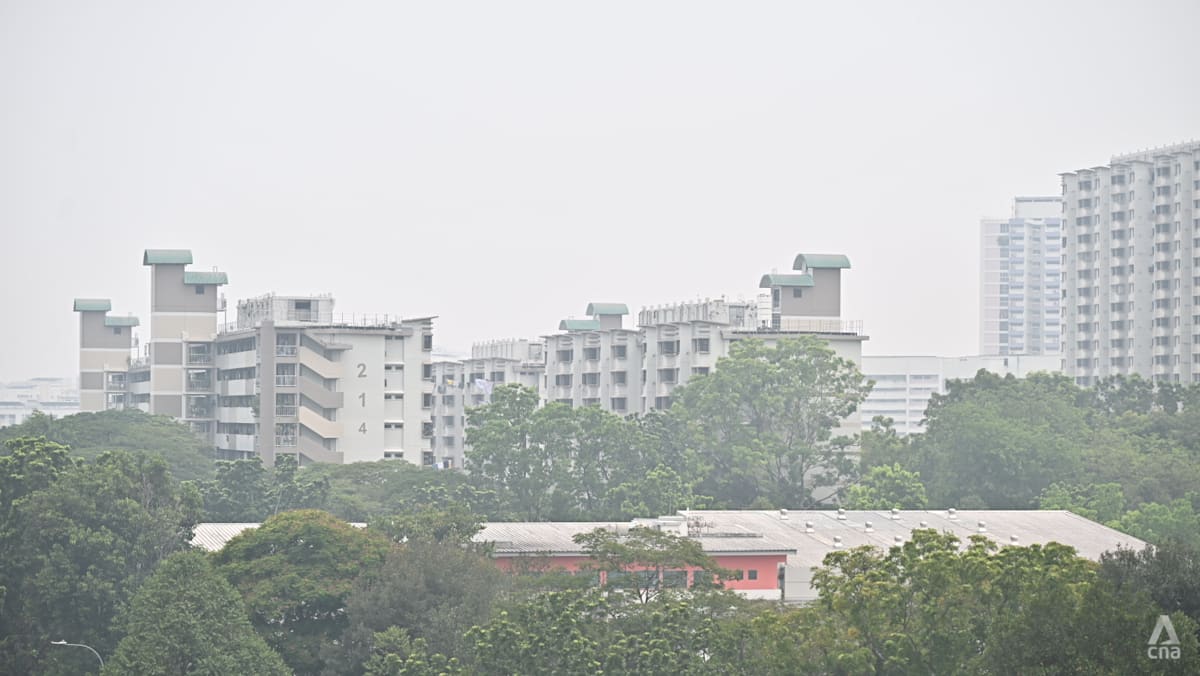
View of the haze in the Boon Lay neighbourhood on Oct 12, 2026. (Photo: CNA/Raydza Rahman)
This audio is generated by an AI tool.
SINGAPORE: The National Environment Agency (NEA) said on Monday (Oct 12) that it is "closely monitoring" the haze situation and gathering information on fire hotspots, their sources and their impact on air quality here.
The agency was responding to CNA's queries on whether action would be taken under Singapore's Transboundary Haze Pollution Act amid the ongoing haze.
NEA did not specify whether it was considering taking action under the law in relation to the current haze situation.
It said that in 2015, it identified fires on concession lands associated with six companies and issued legal notices to all six under the Act.
CNA Games Guess Word Crack the word, one row at a time Buzzword Create words using the given letters Mini Sudoku Tiny puzzle, mighty brain teaser Mini Crossword Small grid, big challenge Word Search Spot as many words as you can Show More Show Less Investigations into four of the Indonesian companies – PT Bumi Andalas Permai, PT Bumi Mekar Hijau, PT Sebangun Bumi Andalas Woods Industries and PT Rimba Hutani Mas – remain ongoing, NEA said on Monday. "As such, NEA is unable to disclose further details," it added. WHAT IS THE TRANSBOUNDARY HAZE POLLUTION ACT? Singapore periodically experiences severe haze caused by forest and peatland fires in neighbouring countries. The Transboundary Haze Pollution Act, which came into force in September 2014, allows authorities to take legal action against companies responsible for causing or contributing to haze pollution in Singapore, even if their activities take place overseas. Under the Act, a poor air quality episode occurs when the 24-hour Pollutant Standards Index (PSI) for PM2.5 reaches 101 or higher in any part of Singapore, and remains at or above that level in the same or another part of Singapore for the next 24 hours or longer. The 24h PSI reported by NEA has been in the unhealthy range in at least one region in Singapore since Oct 5. However, meeting the air quality threshold alone does not automatically establish liability under the Act. Authorities must also establish that an entity caused or contributed to haze pollution in Singapore. Companies found guilty of causing or contributing to transboundary haze pollution can be fined up to S$100,000 (US$78,100) a day, capped at S$2 million. The law applies to entities operating both within and outside Singapore, including those that condone activities resulting in haze pollution here. It also empowers authorities to issue preventive measures notices requiring companies to take steps to prevent, reduce or control haze pollution. Individuals and businesses in Singapore can also pursue civil claims against responsible entities for personal injury, property damage or economic losses arising from haze pollution.
Investigations into four of the Indonesian companies – PT Bumi Andalas Permai, PT Bumi Mekar Hijau, PT Sebangun Bumi Andalas Woods Industries and PT Rimba Hutani Mas – remain ongoing, NEA said on Monday.
"As such, NEA is unable to disclose further details," it added.
WHAT IS THE TRANSBOUNDARY HAZE POLLUTION ACT?
Singapore periodically experiences severe haze caused by forest and peatland fires in neighbouring countries.
The Transboundary Haze Pollution Act, which came into force in September 2014, allows authorities to take legal action against companies responsible for causing or contributing to haze pollution in Singapore, even if their activities take place overseas.
Under the Act, a poor air quality episode occurs when the 24-hour Pollutant Standards Index (PSI) for PM2.5 reaches 101 or higher in any part of Singapore, and remains at or above that level in the same or another part of Singapore for the next 24 hours or longer.
The 24h PSI reported by NEA has been in the unhealthy range in at least one region in Singapore since Oct 5.
However, meeting the air quality threshold alone does not automatically establish liability under the Act. Authorities must also establish that an entity caused or contributed to haze pollution in Singapore.
Companies found guilty of causing or contributing to transboundary haze pollution can be fined up to S$100,000 (US$78,100) a day, capped at S$2 million.
The law applies to entities operating both within and outside Singapore, including those that condone activities resulting in haze pollution here.
It also empowers authorities to issue preventive measures notices requiring companies to take steps to prevent, reduce or control haze pollution.
Individuals and businesses in Singapore can also pursue civil claims against responsible entities for personal injury, property damage or economic losses arising from haze pollution.
However, enforcement can be challenging , particularly when identifying the companies responsible for fires overseas and obtaining evidence across national borders.
Since the Act was enacted, no one has been fined or sued.
Singapore previously invoked the Transboundary Haze Pollution Act following the severe haze episode in 2015.
NEA identified fires on concession lands associated with six Indonesian companies and issued legal notices to them under the Act.
Investigations into two of the companies were subsequently closed after NEA accepted their explanations that they were no longer associated with the affected land when the fires occurred.
Investigations into the remaining four companies are still ongoing, more than a decade after the 2015 haze episode.
Get our pick of top stories and thought-provoking articles in your inbox
Stay updated with notifications for breaking news and our best stories
Join our channel for the top reads for the day on your preferred chat app
《跨境烟霾污染法》允许当局对造成或加剧新加坡烟霾污染的公司采取法律行动,即使这些公司的活动发生在海外。
2026年10月12日,文礼地区笼罩在雾霾之中。(图片:CNA/Raydza Rahman)
这段音频由人工智能工具生成。
新加坡:国家环境局(NEA)周一(10月12日)表示,正在“密切监测”雾霾情况,并收集有关火灾热点、其来源及其对本地空气质量影响的信息。
该机构是在回应亚洲新闻台(CNA)的询问时做出上述表态的,询问有关在持续的雾霾天气下,是否会根据新加坡的《跨境雾霾污染法》采取行动。
国家环境局并未明确表示是否会考虑根据法律对目前的雾霾情况采取行动。
报告称,2015 年,该机构查明了与六家公司相关的特许经营土地上的火灾,并根据该法案向这六家公司发出了法律通知。
CNA游戏 猜词游戏 逐行破解单词 流行词游戏 用给定的字母组成单词 迷你数独 小谜题,脑力挑战 迷你填字游戏 小方格,大挑战 单词搜索 尽可能多地找出单词 显示更多 显示更少 新加坡国家环境局(NEA)周一表示,对四家印尼公司——PT Bumi Andalas Permai、PT Bumi Mekar Hijau、PT Sebangun Bumi Andalas Woods Industries 和 PT Rimba Hutani Mas——的调查仍在进行中。“因此,NEA无法透露更多细节,”NEA补充道。 什么是《跨境烟霾污染法》? 新加坡会周期性地遭受邻国森林和泥炭地火灾造成的严重烟霾。《跨境烟霾污染法》于2014年9月生效,该法允许当局对造成或加剧新加坡烟霾污染的公司采取法律行动,即使这些公司的活动发生在海外。根据该法案,当新加坡任何地区的PM2.5 24小时污染物标准指数(PSI)达到或超过101,并在接下来的24小时或更长时间内,在同一地区或其他地区持续达到或超过该水平时,即构成空气质量不良事件。自10月5日以来,新加坡国家环境局(NEA)报告的24小时PSI在新加坡至少有一个地区处于不健康范围内。然而,仅达到空气质量阈值并不自动构成该法案下的责任。当局还必须证明相关实体造成或促成了新加坡的雾霾污染。被认定造成或促成跨境雾霾污染的公司,每天最高可被处以10万新元(约合7.81万美元)的罚款,最高罚款额为200万新元。该法案适用于在新加坡境内外运营的实体,包括那些纵容造成新加坡雾霾污染活动的实体。该法案还授权当局发出预防措施通知,要求公司采取措施预防、减少或控制雾霾污染。新加坡的个人和企业也可以对因雾霾污染造成的人身伤害、财产损失或经济损失向责任实体提起民事诉讼。
NEA 周一表示,对四家印尼公司(PT Bumi Andalas Permai、PT Bumi Mekar Hijau、PT Sebangun Bumi Andalas Woods Industries 和 PT Rimba Hutani Mas)的调查仍在进行中。
“因此,国家环境局无法透露更多细节,”该机构补充道。
什么是《跨界雾霾污染法》?
新加坡会周期性地遭受邻国森林和泥炭地火灾造成的严重烟霾。
《跨境烟霾污染法》于 2014 年 9 月生效,该法允许当局对造成或加剧新加坡烟霾污染的公司采取法律行动,即使这些公司的活动发生在海外。
根据该法案,当新加坡任何地区的 PM2.5 24 小时污染物标准指数 (PSI) 达到 101 或更高,并且在接下来的 24 小时或更长时间内,新加坡同一地区或其他地区的 PM2.5 浓度保持在 101 或更高水平时,即发生空气质量不良事件。
自 10 月 5 日以来,新加坡国家环境局 (NEA) 报告的 24 小时空气污染指数 (PSI) 在新加坡至少有一个地区处于不健康范围。
然而,仅达到空气质量阈值并不自动构成该法案下的责任。当局还必须证明某个实体造成或促成了新加坡的雾霾污染。
被认定造成或助长跨境烟霾污染的公司,每天最高可被罚款 10 万新元(7.81 万美元),最高罚款额为 200 万新元。
该法律适用于在新加坡境内外运营的实体,包括那些纵容造成新加坡雾霾污染的活动的实体。
它还授权有关部门发布预防措施通知,要求企业采取措施防止、减少或控制雾霾污染。
新加坡的个人和企业也可以对因雾霾污染造成的人身伤害、财产损失或经济损失向责任实体提起民事诉讼。
然而,执法可能会面临挑战,尤其是在确定对海外火灾负有责任的公司以及获取跨国界的证据时。
自该法案颁布以来,还没有人因此被罚款或起诉。
新加坡曾在 2015 年发生严重雾霾事件后援引了《跨境雾霾污染法》。
国家环境局 (NEA) 查明了与六家印尼公司相关的特许经营土地上的火灾,并根据该法案向这些公司发出法律通知。
在国家环境局接受了其中两家公司的解释,即火灾发生时它们已不再与受影响的土地有关之后,对这两家公司的调查随即结束。
距离 2015 年雾霾事件发生已过去十多年,对其余四家公司的调查仍在进行中。
订阅我们的邮件,即可获取精选热点新闻和引人深思的文章。
订阅通知,第一时间获取突发新闻和精彩报道。
加入我们的频道,即可在您常用的聊天应用上获取当日热门文章。