New Coyote Anti-Drone Interceptor Swaps Jet Engine For Rocket Power新型“郊狼”反无人机拦截器用火箭动力取代喷气发动机
The Coyote Block 2 is already combat proven, but more capable kamikaze drones have driven a need to fly faster and farther.
新闻视频
By Joseph Trevithick
Published Oct 12, 2026 12:08 PM EDT
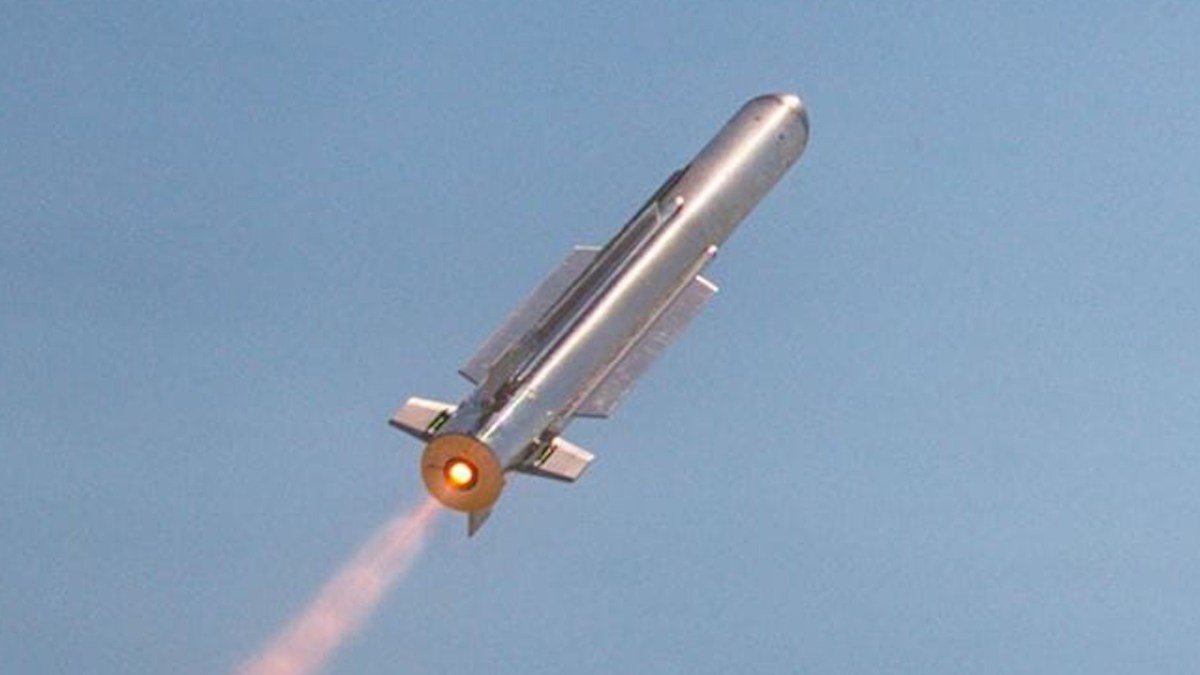
Raytheon is developing a new iteration of its Coyote Block 2 counter-drone interceptor powered by a solid rocket motor rather than a small jet engine. This pushes the Block 2C+RM version, which also comes with a new seeker and warhead, into the surface-to-air missile side of the interceptor spectrum. With a significant boost in speed, range, and terminal intercept performance, it is designed to address evolving one-way-attack drone threats. The Coyote Block 2 series is already a combat-proven system, with more than 600 kills in the course of operational U.S. military deployments to date.
The unveiling of the Coyote Block 2C+RM came today around the start of the Association of the U.S. Army’s (AUSA) main annual convention, at which TWZ is in attendance . The rocket-powered version has been in the works for some 15 months now, and three successful live test launches have been conducted. That followed static test fires of the new rocket motor, which an unnamed subcontractor is supplying, and other testing.
A look at the general design of existing jet-powered Block 2-series Coyote interceptors. Joseph Trevithick
The Pentagon and the U.S. Army have been engaged with Raytheon (now formally RTX) on the development of the Block 2C+RM, but whether there are formal U.S. military contracts to buy this version now is unclear. The U.S. Army is the largest known operator of Coyote Block 2-series interceptors now, with previously stated plans to buy at least 6,000 of them between Fiscal Years 2025 and 2029. We will come back to this later on.
As mentioned, existing versions of Coyote Block 2 are powered by a turbojet engine. A small rocket booster is also used to launch these interceptors, but does not propel them through the entire course of their flight.
A side-by-side comparison of an earlier rocket-boosted, jet-powered Coyote Block 2, at left, and the new Block 2C+RM version, at right. Raytheon
With the rocket motor, “you get upgraded propulsion for faster launch and higher velocity flight,” Tom Laliberty, President of Land & Air Defense Systems at Raytheon, told TWZ and other outlets during a press call last week ahead of today’s announcement. “In terms of range and so forth, I can’t really get into any specifics about that, for obvious reasons.”
“What I would just say is it’s significant in terms of the range difference, and in the [sic] what I call end-game capabilities of the missile, where velocity might come into play,” he added. “Then with the seeker [and] warhead [upgrades], it really gets after the sort of more cutting-edge drone capabilities that we’re seeing from the adversary.”
Laliberty also did not elaborate on the specific improvements to the seeker or warhead. Existing Block 2-series Coyotes use on-board radio frequency seekers to find their targets in the terminal phase of flight after first being cued via radars and other sensors on the ground. They also carry blast-fragmentation warheads .
During last week’s call, Laliberty was asked about whether new faster-flying jet-powered one-way-attack drones, like Iran’s Shahed 238 and Russia’s Geran-4 and -5 derivatives , had prompted Block 2C+RM’s development. He was also queried about Block 2C+RM’s ability to defeat traditional cruise missiles.
A jet-powered Shahed 238 kamikaze drone, or a mockup thereof. Iranian State Media
“Unfortunately, I can’t get into the specific threats, but I can tell you the intention is to have this cover all types of Class 3 drones,” he said in response. “If you think about the Class 3 drone kind of ‘spectrum,’ there’s a pretty good overlap there with the capabilities of cruise missiles, as well, right? So it all depends on the specific[s] of the cruise missile.”
The U.S. military defines Group 3 drones, whether they are weaponized or not, as designs that weigh anywhere from 56 to 1,320 pounds, are able to fly up to an altitude of 18,000 feet, and reach a top speed of no more than 250 knots. The Shahed 238’s combustion engine-powered predecessor, the Shahed 236 , is a prime example of a Group 3 kamikaze drone. The claimed top speeds of the jet-powered derivatives (approximately 270 to 320 knots) actually push the upper boundaries of this broad middle-tier category. TWZ regularly highlights the additional challenges that jet-powered kamikaze drones like the Shahed 238 and Geran-4/5 present. We also routinely note how the line between longer-range one-way-attack drones and cruise missiles has become increasingly blurry . The Block 2C+RM itself also further blurs the definition between a drone-like counter-drone interceptor and a more traditional surface-to-air missile.
RFE/RL takes apart a Russian Geran-4 drone to uncover what makes the jet-powered unmanned aerial vehicle (UAV) faster, harder to intercept, and capable of operating deep inside Ukraine — from its turbojet engine and advanced camera to foreign-made communications and navigation… pic.twitter.com/WGNdlpS9w1 — Radio Free Europe/Radio Liberty (@RFERL) September 25, 2026
RFE/RL takes apart a Russian Geran-4 drone to uncover what makes the jet-powered unmanned aerial vehicle (UAV) faster, harder to intercept, and capable of operating deep inside Ukraine — from its turbojet engine and advanced camera to foreign-made communications and navigation… pic.twitter.com/WGNdlpS9w1
The conflict with Iran , as well as other crises in the Middle East in recent years and the ongoing war in Ukraine , make clear that even slower-flying Group 3 kamikaze drones present real dangers now. Those threats are magnified when these one-way attacks are employed in large volumes and/or in complex attacks mixed in with ballistic and cruise missiles .
As noted, Raytheon has highlighted how Coyote Block 2C+RM also has a faster overall response time compared to its predecessors, offering additional flexibility for engaging incoming waves of drones. The new version also works with all existing four- and eight-cell launchers, which can be variously mounted on vehicles and static positions on the ground , as well as on ships .
As mentioned earlier, the U.S. Army is the primary operator of Coyote Block 2s today, with the interceptors being used in both vehicle-based and palletized versions of its Low, Slow, Unmanned Aircraft Integrated Defeat System (LIDS). The U.S. Air Force has also been at least involved in the operation of fixed-site versions of LIDS at forward-deployed locations. The U.S. Navy has integrated launchers for Coyote Block 2s on several Arleigh Burke class destroyers , as well.
A promotional shot showing the fixed-site version of the LIDS launcher and radar components, as well as a vehicle-based version of LIDS in between. Raytheon A promotional shot showing the FS-LIDS launcher and radar components, as well as an M-LIDS vehicle in the middle. Raytheon
An annotated image showing an eight-cell Coyote anti-drone interceptor launcher on the US Navy’s Arleigh Burke class destroyer USS Carl M. Levin. This is a new type of naval launcher that first emerged earlier this year. USN
It’s also worth noting here that Coyote is generally described as a lower-cost interceptor, with a unit cost reported in the past to be around $100,000 . How the new rocket-powered version will compare to existing types price-wise is unclear, but this is an increasingly important factor for the U.S. military and others, especially when considering the cost curve against the expected target set. As an example, the estimated cost of a Shahed 236 is in the $50,000 range .
To be clear, Coyote Block 2C+RM is still in development, and when it might start to enter operational service with any user remains to be seen.
“We’ve got additional tests scheduled into the first half of next year, and we’re working with the Department of War,” Raytheon’s Laliberty said last week. “We’ve got an ongoing investment from Raytheon, but now essentially received some government sponsorship as it kind of transitions into the program of record, and that’s still kind of ongoing with the Department of War in terms of how all of that is going to be structured. Certainly, in follow-on contracts for Coyote, this can be cut in.”
Raytheon has no plans to stop producing jet-powered Block 2 versions, either, at least for now. Beyond the U.S. military, there are now contractors to supply these interceptors to Qatar and Jordan.
Another picture of a Coyote Block 2-series interceptor being built at Raytheon. Raytheon
The Block 2 series is just one part of the larger and still growing Coyote family of drones. A separate series of Coyote Block 3 drones , which evolved from the original electric motor-driven pusher propeller Block 1 design , is also steadily expanding. This includes versions configured as loitering munitions and as counter-drone interceptors carrying still unidentified “non-kinetic” payloads . The U.S. Army is already in the process of acquiring Block 3 types in addition to Block 2 interceptors.
A pusher-propeller Coyote Block 3NK non-kinetic interceptor seen being launched with the help of a rocket booster.. Raytheon
As an aside, the U.S.-based subsidiary of Germany’s Rheinmetall is currently competing in the Army’s XM30 Mechanized Infantry Combat Vehicle (MICV) competition with a design that will be capable of employing Coyote Block 3. The launchers on American Rheinmetall’s Lynx-based XM30 offering will also be able to fire anti-tank guided missiles like the TOW and Javelin . You can read more about the XM30 competition and the other design in the running, General Dynamics Land Systems’ Wolf, here .
More broadly speaking, Coyote Block 2C+RM will be entering a hugely expanding market space for lower-tier and lower-cost counter-drone interceptors globally. The U.S. Army alone is already pursuing several new lower-tier anti-air interceptors to expand its capabilities against Group 3 drones, as well as other types of uncrewed threats and cruise missiles.
If nothing else, the newly unveiled Coyote Block 2C+RM reflects continued high demand, broadly speaking, for new interceptors, and more of them, to address ever-more capable longer-range kamikaze drones.
Contact the author: joe@twz.com
Comments couldn’t be loaded. Please refresh the page.
作者:约瑟夫·特雷维西克
发布于美国东部时间2026年10月12日下午12:08
雷神公司正在研发新一代“郊狼”(Coyote)Block 2反无人机拦截导弹,该导弹采用固体火箭发动机而非小型喷气发动机作为动力。这使得配备新型导引头和战斗部的Block 2C+RM版本跻身地对空导弹拦截导弹之列。凭借速度、射程和末端拦截性能的显著提升,该导弹旨在应对不断演变的单向攻击无人机威胁。“郊狼”Block 2系列导弹已久经实战考验,迄今为止在美国军事部署中已击落超过600架敌机。
Coyote Block 2C+RM 的发布会今天恰逢美国陆军协会 (AUSA) 年度大会开幕,TWZ 也出席了此次大会。这款火箭动力版本已经研发了大约 15 个月,并成功进行了三次实弹试射。此前,该火箭发动机(由一家未透露名称的承包商提供)已进行了静态点火测试和其他测试。
对现有喷气式Block 2系列“郊狼”拦截机的总体设计进行概述。约瑟夫·特雷维西克
五角大楼和美国陆军一直与雷神公司(现正式更名为RTX)合作开发Block 2C+RM型拦截机,但目前尚不清楚美国军方是否已正式签订采购该型号的合同。美国陆军是目前已知最大的“郊狼”Block 2系列拦截机用户,此前曾宣布计划在2025至2029财年间采购至少6000架。我们稍后会对此进行更详细的讨论。
如前所述,现有的“郊狼”Block 2型拦截器采用涡轮喷气发动机提供动力。虽然也使用小型火箭助推器发射这些拦截器,但助推器并不能推动它们完成整个飞行过程。
左侧为早期采用火箭助推和喷气动力的 Coyote Block 2 型无人机,右侧为新型 Block 2C+RM 版本,两者并排对比。雷神公司
雷神公司陆空防御系统总裁汤姆·拉利伯蒂在上周的新闻发布会上告诉TWZ和其他媒体,有了这款火箭发动机,“就能获得更强劲的推进力,实现更快的发射速度和更高的飞行速度。” 他在今天的发布会前表示,“至于射程等等,出于显而易见的原因,我无法透露任何具体细节。”
他补充道:“我想说的是,就射程差异而言,这意义重大,而且就导弹的最终作战能力而言,速度也可能发挥作用。此外,通过导引头和弹头的升级,它能够真正应对我们从对手那里看到的那些更尖端的无人机能力。”
拉利伯蒂也没有详细说明导引头或弹头的具体改进之处。现有的Block 2系列“郊狼”导弹使用机载射频导引头,在飞行末段通过地面雷达和其他传感器进行引导后搜索目标。它们还携带爆破破片弹头。
在上周的电话会议上,拉利伯蒂被问及,伊朗的“沙赫德-238”和俄罗斯的“格兰-4”及“格兰-5”衍生型等新型高速喷气式单向攻击无人机是否促使了Block 2C+RM的研发。他还被问及Block 2C+RM拦截传统巡航导弹的能力。
一架喷气式动力“沙赫德238”自杀式无人机,或其模型。伊朗国家媒体
“很遗憾,我无法透露具体的威胁,但我可以告诉你,我们的目标是涵盖所有类型的3级无人机,”他回应道。“如果你仔细想想3级无人机的‘范围’,你会发现它与巡航导弹的性能也有相当大的重叠,对吧?所以,一切都取决于巡航导弹的具体情况。”
美国军方将第三类无人机(无论是否配备武器)定义为重量在56至1320磅之间、飞行高度可达18000英尺、最高速度不超过250节的无人机。Shahed 238的前身Shahed 236采用内燃机动力,是第三类自杀式无人机的典型代表。而其喷气动力衍生机型的最高速度(约270至320节)实际上已经突破了这一宽泛的中级无人机类别的上限。TWZ经常强调像Shahed 238和Geran-4/5这样的喷气动力自杀式无人机带来的额外挑战。我们也经常指出,远程单向攻击无人机和巡航导弹之间的界限正变得越来越模糊。 Block 2C+RM 本身也进一步模糊了类似无人机的反无人机拦截器和更传统的地对空导弹之间的定义。
自由欧洲电台/自由电台拆解了一架俄罗斯“格朗-4”无人机,揭示了这款喷气式无人机为何速度更快、更难拦截,并能在乌克兰境内纵深作战——从其涡轮喷气发动机和先进摄像头到外国制造的通信和导航系统…… pic.twitter.com/WGNdlpS9w1 — 自由欧洲电台/自由电台 (@RFERL) 2026年9月25日
自由欧洲电台/自由电台拆解了一架俄罗斯“格朗-4”无人机,揭示了这款喷气式无人机为何速度更快、更难拦截,并能在乌克兰境内纵深作战——从其涡轮喷气发动机和先进摄像头到外国制造的通信和导航系统…… pic.twitter.com/WGNdlpS9w1
与伊朗的冲突,以及近年来中东的其他危机和持续不断的乌克兰战争,都清楚地表明,即使是飞行速度较慢的3级神风特攻无人机,如今也构成了真正的威胁。当这些单向攻击被大量使用,或与弹道导弹和巡航导弹混合使用时,这些威胁会被放大。
正如前文所述,雷神公司强调,与前代产品相比,Coyote Block 2C+RM的整体响应速度更快,在应对来袭无人机群方面提供了更大的灵活性。新版本还兼容所有现有的四单元和八单元发射器,这些发射器可以安装在地面车辆、固定位置以及舰船上。
如前所述,目前美国陆军是“郊狼”Block 2拦截导弹的主要使用者,该导弹被部署在其“低速无人机综合防御系统”(LIDS)的车载版和托盘式版本中。美国空军也至少参与了前沿部署地点固定式LIDS系统的运行。此外,美国海军还在多艘“阿利·伯克”级驱逐舰上集成了“郊狼”Block 2导弹的发射装置。
一张宣传照,展示了LIDS固定式发射器和雷达组件,以及位于两者之间的车载式LIDS。雷神公司。另一张宣传照,展示了FS-LIDS发射器和雷达组件,以及位于中间的M-LIDS车载式LIDS。雷神公司。
这张带注释的图片展示了美国海军“阿利·伯克”级驱逐舰“卡尔·M·莱文”号上的八单元“郊狼”(Coyote)反无人机拦截发射器。这是一种新型海军发射器,于今年早些时候首次亮相。
值得注意的是,Coyote通常被认为是一种低成本拦截机,过去报道的单价约为10万美元。新型火箭动力版本在价格上与现有型号相比如何尚不清楚,但这对于美国军方和其他方面来说是一个日益重要的因素,尤其是在考虑成本曲线与预期目标时。例如,Shahed 236的估计成本在5万美元左右。
需要说明的是,Coyote Block 2C+RM 仍在开发中,何时才能开始为任何用户提供运行服务还有待观察。
雷神公司的拉利伯蒂上周表示:“我们计划在明年上半年进行更多测试,并且正在与美国陆军部合作。雷神公司一直在持续投资,但现在随着项目逐渐过渡到正式项目阶段,我们也获得了政府的部分资助。目前,我们仍在与美国陆军部就整个项目的具体架构进行磋商。当然,在后续的‘郊狼’项目合同中,这部分资金可以纳入预算。”
雷神公司目前也没有停止生产喷气式Block 2型拦截机的计划。除了美国军方之外,现在也有承包商向卡塔尔和约旦供应这些拦截机。
这是雷神公司正在建造的“郊狼”Block 2系列拦截机的另一张照片。
Block 2系列只是规模更大、仍在不断壮大的“郊狼”(Coyote)无人机家族的一部分。另一系列“郊狼”Block 3无人机也在稳步发展,该系列无人机是在最初的电动推进式螺旋桨Block 1设计基础上发展而来。其中包括配置为巡飞弹和反无人机拦截器的版本,后者携带的“非动能”有效载荷尚未明确。美国陆军目前正在采购Block 3型无人机,同时还在采购Block 2型拦截器。
一架采用推进式螺旋桨的“郊狼”Block 3NK型非动能拦截机在火箭助推器的辅助下发射升空。雷神公司
顺便一提,德国莱茵金属公司位于美国的子公司目前正在参与美国陆军XM30机械化步兵战车(MICV)的竞标,其设计方案将能够使用“郊狼”Block 3导弹。莱茵金属公司基于“山猫”装甲车的XM30方案中的发射器还能发射“陶”式和“标枪”式等反坦克导弹。您可以点击此处阅读更多关于XM30竞标以及另一款竞标方案——通用动力陆地系统公司“狼”式战车的信息。
更广泛地说,Coyote Block 2C+RM 将进入全球范围内低端、低成本反无人机拦截器这一蓬勃发展的市场领域。仅美国陆军就已在研发多种新型低端防空拦截器,以增强其对抗第三类无人机以及其他类型无人威胁和巡航导弹的能力。
即便没有其他因素,新推出的 Coyote Block 2C+RM 也反映出,总体而言,人们对新型拦截器以及更多拦截器的需求依然很高,以应对能力越来越强、射程越来越远的自杀式无人机。
联系作者:joe@twz.com
评论加载失败,请刷新页面。