Limited options may force Europe to pay US for security in Ukraine有限的选择可能迫使欧洲向美国支付乌克兰安全费用。
Trump's transactional diplomacy could involve Europe paying up to $90 billion to ensure U.S. assistance to avoid another Russian invasion of Ukraine.
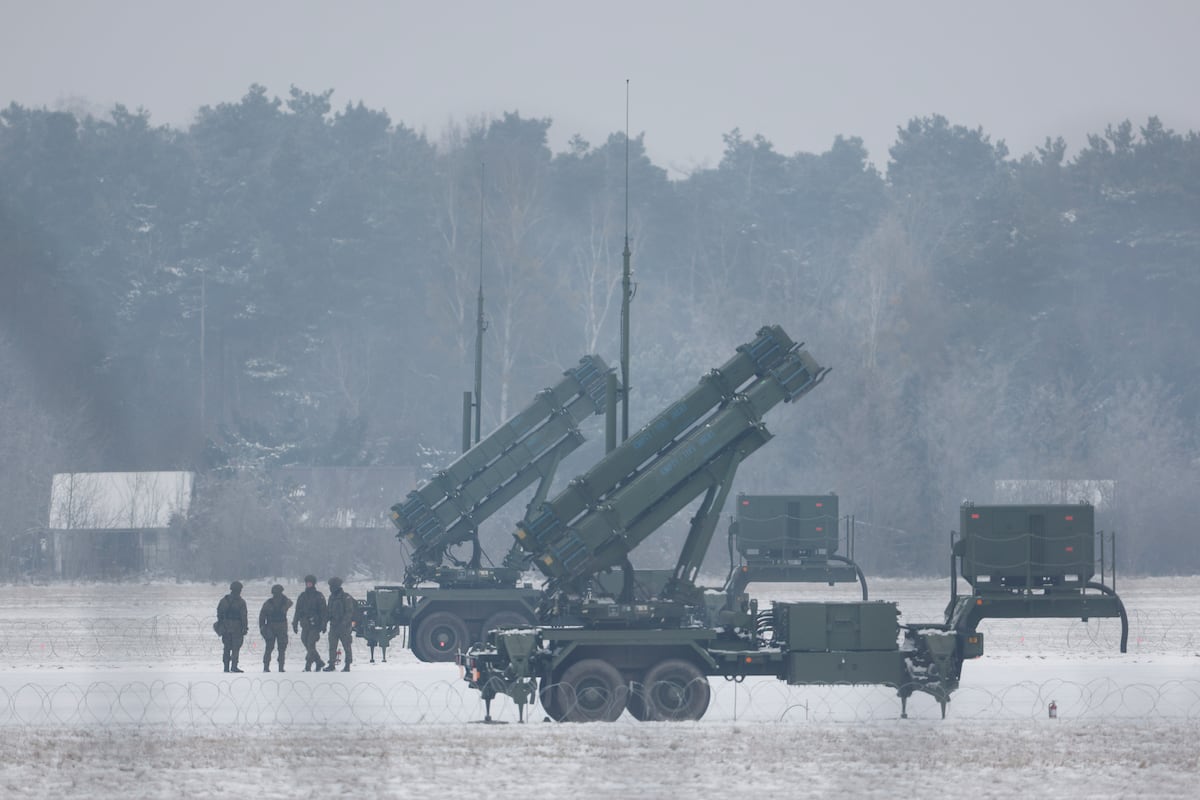
Europe may be weighing spending billions on U.S. arms purchases to ensure America offers security guarantees to Ukraine, yet it has little choice but to pay up, even as it tries to invest in its own defense industries, analysts have told Defense News.
This week, government and military officials on both sides of the Atlantic have discussed how western powers can guarantee Kyiv’s safety from future Russian aggression after a peace deal is reached to end hostilities in Ukraine.
As President Donald Trump talked of the possibility of the U.S. coordinating the effort — an essential element of any guarantee — Ukraine’s President Zelenskyy suggested Ukraine would offer to buy $90 billion in U.S. weaponry to keep the U.S. at the table.
By Wednesday, U.S. Vice President JD Vance was claiming that Europe would be picking up most of the bill for defending Ukraine.
“No matter what form this takes, the Europeans are going to have to take the lion’s share of the burden,” Vance told Fox News. “It’s their continent, its their security and the president has been very clear — they are going to have to step up here.”
The bottom line could therefore involve Europe paying up to $90 billion to ensure U.S. assistance to avoid another Russian invasion of Ukraine — a true reflection of Trump’s concept of “transactional” diplomacy.
Still, none of this may happen. Since talks in Alaska between President Trump and Vladmir Putin on Aug. 15, Russia has opposed the idea of western troops in Ukraine and said it would need to be part of a security guarantee — an obvious non-starter for Kyiv.
But one European leader reacted strongly to the possibility of Europe paying to keep the U.S. on board.
“Even in the worst nightmare, I cannot imagine Slovakia buying some weapons in the United States and then sending them for free to the front in Ukraine,” said Slovakia’s Prime Minister Robert Fico.
One challenge for EU officials is that the U.S. arms purchase could weaken attempts by the bloc to spend more money on its own domestic defense industries, to build up a homegrown military capability and to wean itself off dependence on U.S. weaponry.
The EU’s new SAFE program, which provides €150 billion in loans for member states to spend on defense, prioritizes investments in European products.
A European Commission spokeswoman sidestepped the issue this week when asked about the EU buying U.S. weapons, stating the matter had not come up when European leaders met Trump in Washington on August 18.
“I would not have a specific comment on it,” she said. “In general you know the effort we are bringing forward to maintain support for Ukraine, also military support, and also our SAFE program and how we are trying to integrate our industries and advance defense spending and innovation together with Ukraine.”
Yohann Michel, an analyst with the French IESD think tank, said Europe had no choice but to pay the U.S. in the short term.
“Most of the weaponry needed comes from the U.S., like Patriot. If we don’t produce it, we need to pay,” he said. “We need Ukraine to resist. If it falls, European security is threatened. If the way to avoid that is to pay the U.S., it has to be done in the short term. After all, it is what Europe has been doing for 80 years. Ninety percent of countries buying the F-35 will admit they are buying U.S. security. Now it becomes a more open transaction with Trump.”
Christian Mölling, senior advisor at the European Policy Center, said Europe was avoiding discussion about the billions that could be paid to the U.S.
“My impression is that people are avoiding this debate until we know if the security guarantees are actually put into place,” he said.
Mölling added that Europe would have little choice but to pay.
“There is no alternative to Patriot batteries,” he said. “I don’t think wewould see Brussels handing over a $90 billion check to the U.S., but a number of smaller payments would be made.”
Tom Kington is the Italy correspondent for Defense News.
分析人士告诉《防务新闻》,欧洲可能正在考虑花费数十亿美元从美国购买武器,以确保美国向乌克兰提供安全保障,但即便欧洲也在努力投资自己的国防工业,它也别无选择,只能支付这笔费用。
本周,大西洋两岸的政府和军方官员讨论了在达成结束乌克兰敌对行动的和平协议后,西方国家如何才能保证基辅免受俄罗斯未来的侵略。
当美国总统唐纳德·特朗普谈到美国有可能协调这项努力时——这是任何保证的重要组成部分——乌克兰总统泽连斯基表示,乌克兰将提出购买价值 900 亿美元的美国武器,以确保美国留在谈判桌上。
到了周三,美国副总统万斯声称,欧洲将承担保卫乌克兰的大部分费用。
“无论采取何种形式,欧洲人都必须承担大部分责任,”万斯告诉福克斯新闻。“这是他们的大陆,这是他们的安全,总统已经非常明确地表示——他们必须在这里挺身而出。”
因此,最终结果可能是欧洲支付高达 900 亿美元,以确保美国提供援助,避免俄罗斯再次入侵乌克兰——这真实地反映了特朗普的“交易型”外交理念。
然而,这一切或许都不会发生。自8月15日特朗普总统与普京总统在阿拉斯加会谈以来,俄罗斯一直反对西方军队进驻乌克兰,并表示这必须成为安全保障的一部分——这对基辅来说显然是无法接受的。
但一位欧洲领导人对欧洲可能要花钱留住美国的想法反应强烈。
斯洛伐克总理罗伯特·菲佐表示:“即使在最糟糕的噩梦中,我也无法想象斯洛伐克会从美国购买一些武器,然后免费送到乌克兰前线。”
欧盟官员面临的一个挑战是,美国购买武器可能会削弱欧盟为本国国防工业投入更多资金、建立本土军事能力以及摆脱对美国武器依赖的努力。
欧盟新的 SAFE 计划向成员国提供 1500 亿欧元的贷款,用于国防开支,优先投资欧洲产品。
本周,当被问及欧盟购买美国武器的问题时,欧盟委员会发言人回避了这个问题,称欧洲领导人在 8 月 18 日于华盛顿与特朗普会面时并未提及此事。
“我对此不予置评,”她说。“总的来说,你们都知道我们正在努力维持对乌克兰的支持,包括军事支持,以及我们的SAFE计划,我们正在努力与乌克兰整合产业,共同推进国防开支和创新。”
法国智库IESD的分析师Yohann Michel表示,欧洲别无选择,只能在短期内向美国支付费用。
“我们需要的大部分武器都来自美国,比如爱国者导弹系统。如果我们自己不生产,就得付钱,”他说。“我们需要乌克兰抵抗。如果乌克兰沦陷,欧洲安全将受到威胁。如果避免这种情况的办法是向美国付款,那就必须在短期内完成。毕竟,欧洲过去80年来一直都是这么做的。购买F-35战机的国家中,90%都承认他们购买的是美国的安全保障。现在,在特朗普的领导下,这笔交易变得更加公开透明了。”
欧洲政策中心高级顾问克里斯蒂安·默林表示,欧洲正在回避讨论可能向美国支付的数十亿美元。
他说:“我的感觉是,在安全保障措施真正落实到位之前,人们都在回避这场辩论。”
莫林补充说,欧洲别无选择,只能付出代价。
他说:“爱国者导弹系统没有替代方案。我不认为布鲁塞尔会向美国支付900亿美元的巨款,但会支付一些数额较小的款项。”
汤姆·金顿是《防务新闻》驻意大利记者。