Preschool teachers to get at least 2 hours a week away from teaching duties to plan lessons, engage parents幼儿园教师每周至少应有2小时的空闲时间,用于备课和与家长沟通。
The two hours is not a cap and centres that can offer more are encouraged to do so, says the Early Childhood Development Agency (ECDA).
The two hours is not a cap and centres that can offer more are encouraged to do so, says the Early Childhood Development Agency (ECDA).
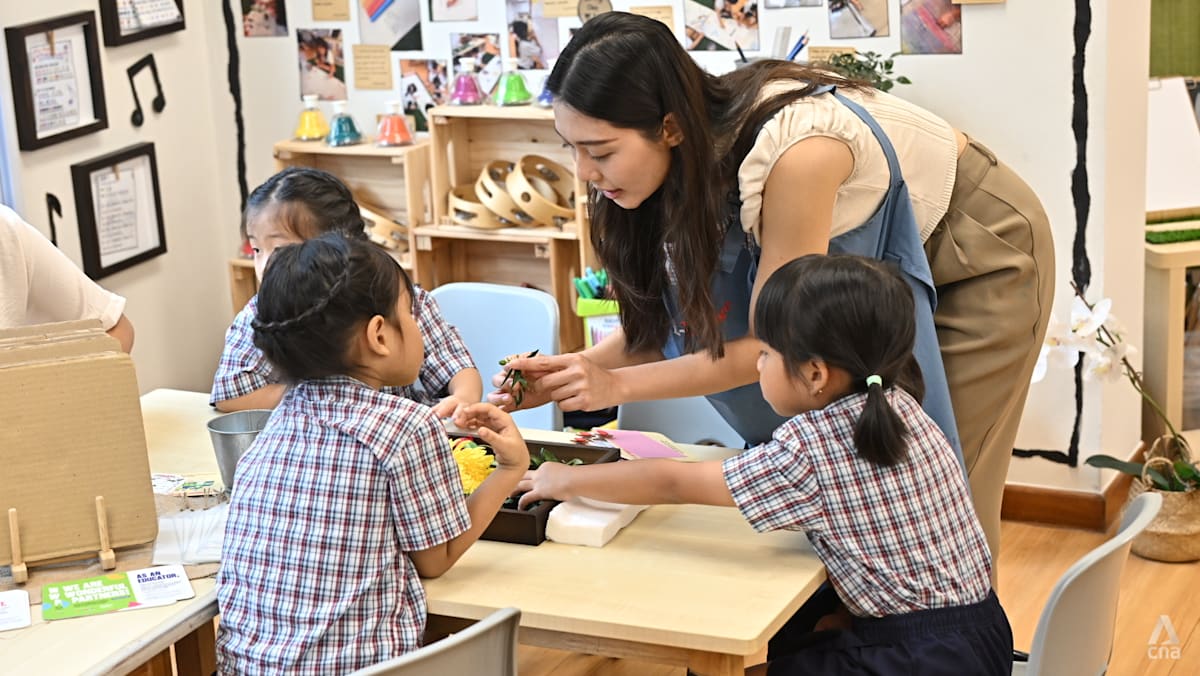
A teacher with her students at an ECDA Teachers' Day Celebration event at E-Bridge Pre-School on Aug 28, 2026. (Photo: CNA/Raydza Rahman)
This audio is generated by an AI tool.
SINGAPORE: Preschool teachers will get at least two hours a week away from teaching and child supervision duties to plan lessons and carry out other work tasks from November 2027, under a new requirement for all centres licensed by the Early Childhood Development Agency (ECDA).
The requirement will apply to full-time certified early childhood educators, with the non-contact time to be set aside during their working hours.
Non-contact time is protected time for educators to carry out professional responsibilities beyond teaching, caring for and supervising children. These include documenting children’s development, preparing learning resources and engaging parents and community partners.
The new requirement was announced by Minister for Social and Family Development Masagos Zulkifli at ECDA’s annual scholarships and training awards presentation on Tuesday (Oct 13).
CNA Games Guess Word Crack the word, one row at a time Buzzword Create words using the given letters Mini Sudoku Tiny puzzle, mighty brain teaser Mini Crossword Small grid, big challenge Word Search Spot as many words as you can Show More Show Less Mr Masagos said the protected time is intended to give educators more time to prepare and reflect on their practice, ultimately improving the quality of preschool education for children. “While some preschools already provide non-contact time, the extent of such support varies across the sector,” he added. “Establishing a common minimum will ensure that every educator has protected time to carry out these essential responsibilities. This will support more purposeful practice and more consistent quality of education for our children.”
Mr Masagos said the protected time is intended to give educators more time to prepare and reflect on their practice, ultimately improving the quality of preschool education for children.
“While some preschools already provide non-contact time, the extent of such support varies across the sector,” he added.
“Establishing a common minimum will ensure that every educator has protected time to carry out these essential responsibilities. This will support more purposeful practice and more consistent quality of education for our children.”
Minister for Social and Family Development Masagos Zulkifli at the ECDA annual scholarships and training awards ceremony on Oct 13, 2026. (Photo: CNA/Ili Mansor)
MORE TIME BEYOND THE CLASSROOM
The change comes after ECDA said earlier this year that it was reviewing educators’ working environment, including how to strengthen the adoption of non-contact time.
There are currently about 28,000 educators across 1,800 preschools in the early childhood sector, ECDA said in response to CNA’s queries about the impact of the new requirement.
Educators have said that they find it difficult completing both teaching and other professional responsibilities during the work day, due to the high demands of teaching.
ECDA said setting aside dedicated time would help educators better manage their workload, and could raise teaching quality, support their well-being and boost staff retention over time.
Centres will have flexibility in scheduling the time based on their operational needs, it added. They can provide it daily, weekly, every two weeks or monthly, but it must be given in blocks of at least one hour.
“Regardless of the arrangement, centres should provide non-contact time regularly and within educators’ working hours, and this should not result in extending their working hours,” the agency said.
The two-hour minimum was developed following consultations with educators and preschool operators, and takes into account existing practices across the sector.
But it is not a cap, and centres that already provide more non-contact time – or are able to do so – are encouraged to continue.
Operators will have about a year to prepare, review their work arrangements and put the necessary support in place, said Mr Masagos. “Those who are able to offer more than the minimum are encouraged to do so.”
The requirement will be included in the Early Childhood Development Centre Code of Practice, and ECDA will work with preschool operators and sector stakeholders during this period to support its adoption.
“The work of an early childhood educator, though, goes beyond the classroom,” said Mr Masagos.
“Educators plan learning experiences, document each child’s development, and work alongside parents. And all this to support our children’s learning and well-being. These responsibilities are integral to delivering quality preschool education.”
The move is part of ECDA’s broader efforts under its Quality Preschools 2030 plan to improve working conditions for early childhood educators.
Over the past five years, the government has invested more than S$75 million in the professional development of early childhood educators, building their skills and competencies at various stages of their careers.
“The needs of our educators, children and families will continue to evolve, and our approach to professional development therefore must evolve accordingly,” Mr Masagos said.
Get our pick of top stories and thought-provoking articles in your inbox
Stay updated with notifications for breaking news and our best stories
Join our channel for the top reads for the day on your preferred chat app
幼儿培育署(ECDA)表示,两小时并非上限,鼓励能够提供更多服务的中心这样做。
2026年8月28日,在E-Bridge幼儿园举行的幼儿培育署教师节庆祝活动上,一位老师和她的学生们合影。(图片:CNA/Raydza Rahman)
这段音频由人工智能工具生成。
新加坡:根据幼儿培育署 (ECDA) 对所有获得许可的幼儿中心的新要求,从 2027 年 11 月起,学前教师每周将至少有 2 小时的时间可以脱离教学和儿童监管职责,用于计划课程和执行其他工作任务。
该要求适用于全职认证的幼儿教育工作者,非教学时间应在其工作时间内预留。
非教学时间是指教师在教学、照护和监管儿童之外,履行其他专业职责的专属时间。这些职责包括记录儿童发展情况、准备学习资源以及与家长和社区伙伴互动。
社会及家庭发展部长马善高在周二(10 月 13 日)幼儿培育署年度奖学金和培训奖颁奖典礼上宣布了这项新要求。
CNA游戏猜词游戏:逐行破解单词;流行词游戏:用给定的字母组成单词;迷你数独:小巧的谜题,强大的脑力挑战;迷你填字游戏:小方格,大挑战;单词搜索:尽可能多地找出单词。显示更多 显示更少 马萨戈斯先生表示,设立保护时间旨在让教育工作者有更多时间备课和反思教学实践,最终提高学前教育的质量。他补充道:“虽然一些幼儿园已经提供非接触式教学时间,但这种支持的程度在各幼儿园之间差异很大。设立一个共同的最低标准将确保每位教育工作者都有保护时间来履行这些必要的职责。这将有助于更有针对性的教学实践,并为我们的孩子提供更稳定的高质量教育。”
马萨戈斯先生表示,保护时间旨在让教育工作者有更多的时间准备和反思他们的实践,最终提高儿童学前教育的质量。
“虽然有些幼儿园已经提供非接触式时间,但这种支持的程度在整个行业之间差异很大,”他补充道。
“设立共同的最低标准将确保每位教育工作者都有充足的时间履行这些必要的职责。这将有助于他们开展更有针对性的教学活动,并为我们的孩子提供更稳定、更高质量的教育。”
社会及家庭发展部长马善高于2026年10月13日出席幼儿培育署年度奖学金及培训颁奖典礼。(图片:CNA/Ili Mansor)
课外时间增多
此前,幼儿培育署 (ECDA) 于今年早些时候表示,正在审查教育工作者的工作环境,包括如何加强非接触时间的采用。
幼儿培育署在回应亚洲新闻台关于新规影响的询问时表示,目前幼儿教育领域约有28000名教育工作者,分布在1800所幼儿园。
教育工作者表示,由于教学工作量大,他们很难在工作日内完成教学和其他专业职责。
幼儿培育署表示,预留专门时间有助于教育工作者更好地管理工作量,并能提高教学质量,维护他们的身心健康,并随着时间的推移提高员工留任率。
声明还补充说,各中心可根据自身运营需要灵活安排时间。他们可以每天、每周、每两周或每月提供一次,但每次至少要提供一小时。
该机构表示:“无论采取何种安排,各中心都应定期在教师的工作时间内提供非接触时间,这不应导致教师延长工作时间。”
两小时最低时长是在与教育工作者和学前教育经营者协商后制定的,并考虑到了整个行业的现有做法。
但这并非上限,鼓励已经提供更多非接触时间(或能够提供更多非接触时间)的中心继续这样做。
马萨戈斯先生表示,运营商将有大约一年的时间来做准备,审查他们的工作安排并落实必要的支持。“我们鼓励那些能够提供高于最低要求的资源的运营商这样做。”
该要求将纳入《幼儿发展中心行为准则》,幼儿培育署将在此期间与学前教育机构和行业利益相关者合作,以支持该要求的采纳。
“然而,幼儿教育工作者的工作远不止于课堂之内,”马萨戈斯先生说。
“教育工作者规划学习活动,记录每个孩子的成长发育情况,并与家长密切合作。所有这些都是为了支持孩子们的学习和身心健康。这些职责是提供高质量学前教育不可或缺的一部分。”
此举是幼儿培育署 (ECDA) 在“优质学前教育 2030”计划下为改善幼儿教育工作者的工作条件而采取的更广泛举措的一部分。
过去五年,政府已投入超过 7500 万新元用于幼儿教育工作者的专业发展,在他们职业生涯的各个阶段培养他们的技能和能力。
马萨戈斯先生表示:“我们的教育工作者、儿童和家庭的需求将不断变化,因此,我们的专业发展方法也必须随之改变。”
订阅我们的邮件,即可获取精选热点新闻和引人深思的文章。
订阅通知,第一时间获取突发新闻和精彩报道。
加入我们的频道,即可在您常用的聊天应用上获取当日热门文章。