‘Modest take-up’: More than 90 families await childminders as pilot faces matching challenge“参与人数不多”:试点项目面临匹配难题,90多个家庭仍在等待儿童照护员。
Having the service more evenly spread across Singapore would give parents options closer to home and reduce travel time, one parent said.
Having the service more evenly spread across Singapore would give parents options closer to home and reduce travel time, one parent said.
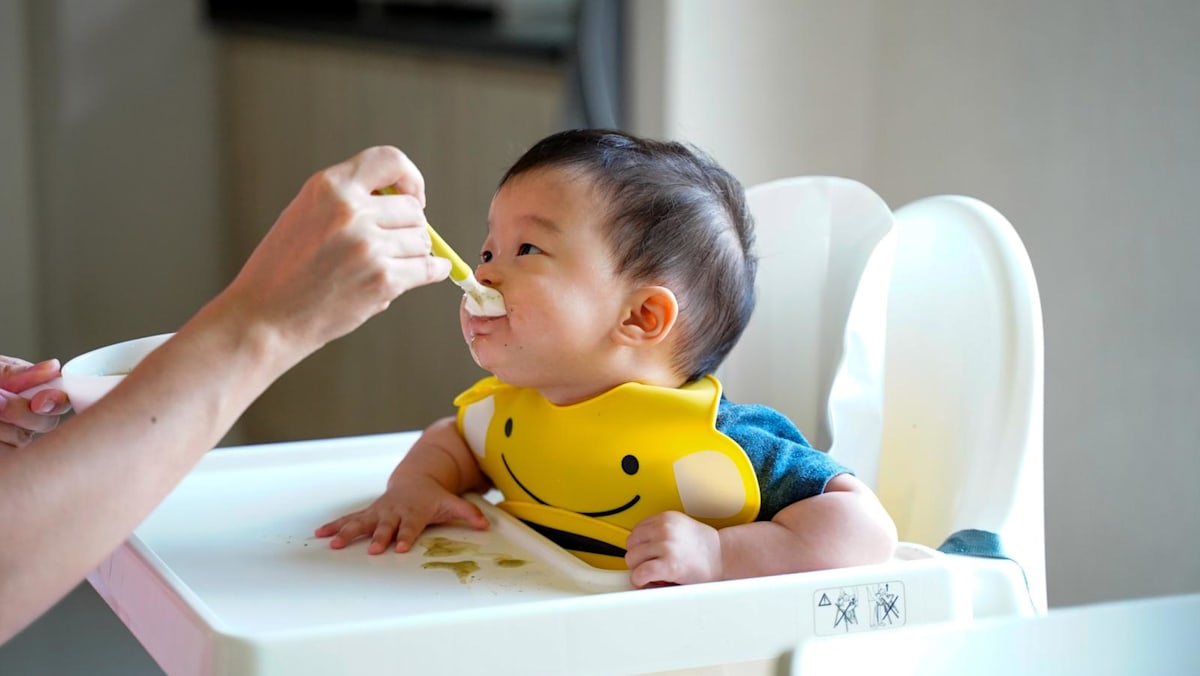
A baby being fed. (File photo: iStock/BbenPhotographer)
This audio is generated by an AI tool.
SINGAPORE: Dozens of families are on a waitlist for a childminder under a government pilot offering home and community-based care for infants.
As of July 2026, more than 110 infants have enrolled in the pilot since it began in December 2024, the Early Childhood Development Agency (ECDA) said in response to CNA’s queries.
Another 95 families are waiting to be matched with a childminder. About 250 active childminders are registered under the pilot.
Some parents who spoke to CNA said they had positive experiences with the childminders they engaged, but others struggled to find one located near their homes.
CNA Games Guess Word Crack the word, one row at a time Buzzword Create words using the given letters Mini Sudoku Tiny puzzle, mighty brain teaser Mini Crossword Small grid, big challenge Word Search Spot as many words as you can Show More Show Less Some childminders also said they had challenges securing a steady stream of enrolments. Operators said that interest does not necessarily translate into enrolments, as parents typically want a childminder close to their home, workplace or daily commute. ECDA told CNA that feedback from participating families has generally been positive, with the majority of parents surveyed indicating they were satisfied with the pilot and would recommend it to others. “At the same time, take-up has been modest. The key difficulty has been in matching available childminders with interested families, typically due to geographical distance. “We are monitoring these and other factors as we assess the pilot, and consider the way forward.” Launched in December 2024, the three-year pilot allows childminders engaged by three operators – EduNanny by Butler, Kidibliss and NannyPro Care – to provide infant care in their homes or at designated community spaces. The pilot is open to Singaporean infants aged between two and 18 months. Each childminder can care for up to three infants at any one time. ECDA conducts background checks on childminders, who must undergo mandatory training including infant first aid and basic infant care before they can work. Services cost S$16.50 (US$12.90) for five hours of half-day care and S$33 for 10 hours of full-day care, before Goods and Services Tax (GST). Parents can use their child’s Child Development Account funds to further offset the cost during subsidised hours between 7am and 7pm from Mondays to Fridays, excluding public holidays. Other nanny and babysitting websites showed that prices can start at around S$25 an hour and go up to about S$50 per hour to care for one baby.
Some childminders also said they had challenges securing a steady stream of enrolments.
Operators said that interest does not necessarily translate into enrolments, as parents typically want a childminder close to their home, workplace or daily commute.
ECDA told CNA that feedback from participating families has generally been positive, with the majority of parents surveyed indicating they were satisfied with the pilot and would recommend it to others.
“At the same time, take-up has been modest. The key difficulty has been in matching available childminders with interested families, typically due to geographical distance.
“We are monitoring these and other factors as we assess the pilot, and consider the way forward.”
Launched in December 2024, the three-year pilot allows childminders engaged by three operators – EduNanny by Butler, Kidibliss and NannyPro Care – to provide infant care in their homes or at designated community spaces.
The pilot is open to Singaporean infants aged between two and 18 months. Each childminder can care for up to three infants at any one time.
ECDA conducts background checks on childminders, who must undergo mandatory training including infant first aid and basic infant care before they can work.
Services cost S$16.50 (US$12.90) for five hours of half-day care and S$33 for 10 hours of full-day care, before Goods and Services Tax (GST).
Parents can use their child’s Child Development Account funds to further offset the cost during subsidised hours between 7am and 7pm from Mondays to Fridays, excluding public holidays.
Other nanny and babysitting websites showed that prices can start at around S$25 an hour and go up to about S$50 per hour to care for one baby.
The postpartum confinement period is a much-needed window of recovery between two intense journeys – the end of pregnancy and the start of motherhood. (Photo: iStock/petesphotography)
LACK OF CHILDMINDERS
Ms Michelle Chua said it was difficult to find a childminder close to her home. She was on a waiting list for infant care and recalled “panicking” before a friend told her about the pilot.
Ms Chua, who works in public service, approached the operators and initially secured a spot, but the childminder pulled out at the last minute.
With no other home-based childminders near her, she eventually placed her baby at the childminding service at Tampines Community Club.
She later moved to Jurong and again looked for a home-based childminder. She was told by an operator there was availability, but it did not materialise as the operator told her the childminder was not ready.
She eventually matched and accepted one in Bukit Panjang, but said the commute was “quite tiring”.
Ms Chua said having more childminders spread across Singapore would give parents more options closer to home.
For Ms Jerrine Khong, who works in social services, proximity was key.
When she was looking for a childminder for her eight-month-old daughter, she was given two options and chose one who lived two bus stops away.
“What I think would help is really having more options. You would want to put your child at a place that is near your house, but there were very limited options.
“I think I was very, very fortunate that the childminder had a slot then. Because if it was already full, then there would be no one to go to,” the 38-year-old said.
Operators also see a gap between interest and take-up.
Mr Poon Da Qian, founder and CEO of Butler, which operates EduNanny, told CNA that as of Sep 15, it had received 451 enquiries from parents, of which 362 were home-based and 89 were centre-based.
But only 58 families engaged it, including 31 for home-based childminding.
“Our experience is that there is demand, but distance and convenience play an important part in parents’ selection. Parents want a trusted childminder within their neighbourhood or conveniently en route to their workplace,” Mr Poon said.
A mother holding her baby's hand. (Photo: iStock)
For some families, childminding also serves as a fix before their infant gets a preschool place.
“Therefore, our challenge has been to ramp up our childminder infant caregivers in the neighbourhoods where parents need them.
“It is not just about having more childminders, but having the right childminders in the right locations,” Mr Poon said.
Ms Becky Eng, director of NannyPro, similarly said take-up has “not been consistent across all periods and childminders”.
Beyond location, she said the pilot's maximum of 10 hours of care a day and affordability could affect whether families eventually take up the service, as working parents may need longer hours.
Operators said greater awareness of childminding could also help boost take-up.
“Many parents are still unfamiliar with childminding as a formal childcare option and may initially view it simply as an alternative to infant care centres,” Ms Eng said.
“Rather than looking only at the number of enquiries, we believe that building greater awareness and garnering childminders to come on board within the community will definitely increase utilisation.”
CHILDMINDERS STRUGGLE TO FIND BABIES
While some parents are waiting for a suitable caregiver, some childminders face the opposite problem – finding enough children.
Ms Jessica Ng, who is with Kidibliss, said she has yet to see a steady stream of enrolments.
She currently cares for three infants, but only managed to get hired to look after a third baby in September, after searching since the start of the year.
“We will have enquiries every now and then, but it has slowed down a lot. The difficulty that I face … is the timing and having three babies all the time, which is the ideal,” she said.
Ms Shirley Kuan, a childminder with EduNanny by Butler, said many parents did not know about the pilot.
“We really need to get more childminders and get more people to know … Advertisements have not been strong enough.”
For the pilot to grow, operators said the task is twofold: raising awareness among parents while building a pool of suitable childminders in neighbourhoods where they are needed.
As Mr Poon put it, the two sides “need to come together within the same neighbourhoods”.
Parents interviewed by CNA pointed to benefits including a smaller caregiving environment, more personalised attention and children falling ill less frequently.
For some, having another care option also made returning to work more manageable.
EduNanny’s Mr Poon said most of the families using its childminding services are dual-income households.
According to the General Household Survey 2025, about 56.6 per cent of married couples in resident households have both spouses employed in 2025, up from 52.5 per cent in 2020.
When English tutor Valerie Yap returned to work for four to five hours a day, leaving her son at home with her husband proved difficult.
Her son would cry for hours while she was away, while her husband struggled with back pain from carrying and pacifying him.
“We didn’t think that it was sustainable. It was incredibly difficult to focus on work,” she said.
After a paediatrician suggested getting “outside help”, Ms Yap said she decided to “take the plunge” and looked for a childminder.
Ms Yap said she appreciated the routines and structure the childminder established, something the couple found difficult to do while juggling housework and other responsibilities.
As her son began eating solid foods, the childminder also took on more of his meal preparation.
The childminder’s setup was catered to the babies’ needs and there were designated areas for babies to play, she said.
Ms Chua said her childminder was experienced in infant nutrition, established a routine for her son and kept her updated with photos throughout the day.
For Ms Khong, the engagement and exposure to different activities helped her daughter’s development.
She noted there was also an older infant who had started walking, and her daughter would try to model that.
Dr Rebecca Chan, a lecturer in psychology and child and human development at the National Institute of Education (NIE), said meaningful relationships and interactions are critical to early brain development, including attachment, language and motor skills.
One way to assess the quality of care is to look at whether caregivers create individualised activities, she added.
“When the caregiver does not feel hurried ... but they have that time to focus on the child, that interaction, that awareness of the child's likes and dislikes, and the child's habits ... all these are very critical,” she said.
Parents said there were gaps that need to be addressed, particularly if the pilot becomes permanent.
For Ms Chua, relying on a single caregiver came with drawbacks, such as when the childminder fell ill.
Although she had been told that an alternative could be arranged, there was no suitable replacement nearby. She also wanted greater visibility into her son's care during the day.
While she received photos and could access CCTV footage of his cot while he slept, she would have preferred cameras covering other areas of the home.
It is currently not mandatory for CCTV cameras to be installed in a childminder’s home.
Ms Khong pointed to the lack of backup care as an issue.
“Unlike in an infant care setting where there’s another teacher to replace … we must make arrangements for our child to be home with us,” she added.
But Ms Khong felt this was an acceptable trade-off, given how frequently her daughter had fallen ill while attending infant care."
“If my child is sick all the time from infant care, the amount of leave I have to take all the time will be more than if my childminder falls sick.”
Fixed pick-up times also posed a challenge for parents, especially when unexpected delays cropped up.
Ms Yap said although her childminder was personally more flexible about occasional delays, the operator imposed late charges after a grace period of about 10 to 15 minutes.
Operators have made changes in response to feedback.
Mr Poon said one of EduNanny’s biggest challenges at the start of the pilot was building its operating system while ensuring that safety and standards were maintained.
“The biggest challenge at the beginning was building the system itself, while ensuring that safety remained non-negotiable and that standards and the care of infants were paramount,” he said.
Feedback from parents has shaped how the service has evolved. For instance, EduNanny introduced CCTV for both its home- and centre-based services.
The operator also introduced a chat system, daily reporting, training modules and safety audits, which Mr Poon said were aimed at making communication and standards of care more consistent.
NIE’s Dr Chan said if childminding becomes a permanent initiative, parents would need assurance over safety and accountability given that care takes place in a home environment.
Even if that does not translate to a CCTV in every home, she suggested using other forms of technology to allow parents to keep track of the child’s heart rate and other indicators that can tell if the child is feeling anxious or unsafe.
“It’s home-based. The only thing that parents need assurance is the safety aspect and accountability,” she added.
Despite the challenges, parents CNA spoke to encouraged others to consider childminding.
Ms Yap advised parents to meet prospective childminders before deciding whether the arrangement was right for their child.
She described finding her son’s childminder as a “huge blessing”, but acknowledged that the relationship ultimately depended on the fit between caregiver, parent and child.
Ms Khong also advised parents to visit prospective childminders' homes.
Entrusting a baby to someone in their home could initially be daunting, she said, but meeting the caregiver helped address some of her concerns.
She said receiving frequent updates and photos and it gave her further assurance.
“This might be something that will appeal to parents,” she said.
Childminders also encouraged parents to take the chance and trust that they would raise their babies in a good environment.
For Ms Ng, caring for other people's infants brings back memories of raising her own children.
“Every baby that comes in, I get flashbacks to taking care of my own babies. You provide the same kind of empathy and love,” she said.
Get our pick of top stories and thought-provoking articles in your inbox
Stay updated with notifications for breaking news and our best stories
Join our channel for the top reads for the day on your preferred chat app
一位家长表示,如果这项服务能在新加坡更均匀地普及,就能让家长们有更多选择,离家更近,从而减少出行时间。
婴儿正在吃奶。(图片来源:iStock/BbenPhotographer)
这段音频由人工智能工具生成。
新加坡:政府推出一项试点计划,为婴幼儿提供居家和社区照护服务,目前已有数十个家庭在等待保姆服务。
幼儿培育署(ECDA)在回复亚洲新闻台(CNA)的询问时表示,截至2026年7月,自2024年12月试点项目启动以来,已有超过110名婴儿报名参加。
另有95个家庭正在等待匹配合适的保姆。目前,试点项目下约有250名活跃的保姆注册在册。
一些接受 CNA 采访的家长表示,他们对聘请的儿童照护员有积极的体验,但也有一些家长很难找到离家近的儿童照护员。
CNA游戏猜词游戏:逐行破解单词;流行词游戏:用给定的字母组成单词;迷你数独:小巧的谜题,强大的脑力挑战;迷你填字游戏:小方格,大挑战;单词搜索:尽可能多地找出单词。显示更多 显示更少 一些托儿所也表示,他们在确保稳定的招生方面面临挑战。经营者表示,兴趣并不一定转化为实际报名,因为家长通常希望托儿所离家、工作地点或日常通勤路线近。幼儿培育署(ECDA)告诉CNA,参与家庭的反馈总体上是积极的,大多数受访家长表示他们对试点项目感到满意,并会推荐给其他人。“与此同时,实际报名人数并不多。主要困难在于如何将合适的托儿所与感兴趣的家庭匹配起来,这通常是由于地理距离造成的。“我们正在评估试点项目,并考虑未来的发展方向,同时监测这些因素和其他因素。”这项为期三年的试点项目于2024年12月启动,允许由三家机构——EduNanny by Butler、Kidibliss和NannyPro Care——聘用的育儿员在其家中或指定的社区场所提供婴儿照护服务。试点项目面向2至18个月大的新加坡籍婴儿。每位育儿员最多可同时照护三名婴儿。幼儿培育署(ECDA)会对育儿员进行背景调查,所有育儿员必须接受包括婴儿急救和基本婴儿护理在内的强制性培训才能上岗。半天照护服务(5小时)的费用为16.50新元(约合12.90美元),全天照护服务(10小时)的费用为33新元(不含消费税)。家长可以使用子女发展账户(CDA)中的资金,在周一至周五上午7点至晚上7点的补贴时段内进一步抵扣费用(公共假期除外)。其他保姆和临时照护网站显示,价格从每小时25新元起,最高可达每小时50新元左右。每小时照顾一个婴儿的费用。
一些儿童照护者也表示,他们在确保稳定的招生方面面临挑战。
运营商表示,人们的兴趣并不一定能转化为实际报名人数,因为家长通常希望保姆离家、工作地点或日常通勤路线近一些。
幼儿培育署告诉亚洲新闻台,参与家庭的反馈总体上是积极的,接受调查的大多数家长表示他们对试点项目感到满意,并会将其推荐给其他人。
“与此同时,实际使用率并不高。主要困难在于如何将合适的儿童照护者与感兴趣的家庭匹配起来,这通常是由于地理距离造成的。
“我们正在评估试点项目,并考虑未来的发展方向,同时密切关注这些因素以及其他相关因素。”
这项为期三年的试点项目于 2024 年 12 月启动,允许由三家运营商(Butler 的 EduNanny、Kidibliss 和 NannyPro Care)聘用的儿童保育员在他们家中或指定的社区场所提供婴儿护理服务。
该试点项目面向新加坡籍2至18个月大的婴儿开放。每位育儿员一次最多可照顾三名婴儿。
幼儿培育署会对保姆进行背景调查,保姆必须接受包括婴儿急救和基本婴儿护理在内的强制性培训才能上岗。
半天托儿服务收费 16.50 新元(12.90 美元),全天托儿服务收费 33 新元(10 小时),以上价格均不含消费税 (GST)。
家长可以使用孩子的儿童发展账户资金,在周一至周五上午 7 点至晚上 7 点的补贴时段内(不包括公众假期)进一步抵消费用。
其他保姆和临时照看婴儿的网站显示,照顾一个婴儿的价格从每小时 25 新元左右起,最高可达每小时 50 新元左右。
产后坐月子期是两次紧张旅程——怀孕结束和初为人母——之间亟需的恢复期。(图片:iStock/petesphotography)
缺乏儿童照护人员
米歇尔·蔡女士表示,在她家附近找到合适的保姆很困难。她一直在等待婴儿照护服务,并回忆说,在朋友告诉她这个试点项目之前,她“非常恐慌”。
在公共服务部门工作的蔡女士联系了托儿机构,最初也成功预定了一个名额,但保姆在最后一刻取消了。
由于附近没有其他家庭式保姆,她最终将孩子送到了淡滨尼民众俱乐部的儿童照护服务处。
后来她搬到了裕廊,再次寻找居家保姆。一位中介告诉她有空位,但最终未能成行,因为中介告诉她保姆还没准备好。
她最终在武吉班让找到了一份工作,并接受了这份工作,但她说通勤“相当累人”。
蔡女士表示,在新加坡各地增设更多儿童照护员,将为家长提供更多离家更近的选择。
对于从事社会服务工作的杰琳·孔女士来说,地理位置的接近至关重要。
当她为八个月大的女儿寻找保姆时,她有两个选择,最终选择了一位住在离家两站公交车远的保姆。
“我认为真正有帮助的是提供更多选择。你会想把孩子送到离家近的地方,但选择非常有限。”
“我觉得我非常非常幸运,当时保姆正好有空位。因为如果已经满了,那就没人可以照顾我了,”这位38岁的女士说道。
运营商也发现兴趣与实际购买之间存在差距。
运营 EduNanny 的 Butler 创始人兼首席执行官潘大谦先生告诉 CNA,截至 9 月 15 日,该公司已收到 451 位家长的咨询,其中 362 位是家庭式保姆,89 位是中心式保姆。
但只有 58 个家庭参与其中,其中 31 个家庭选择在家照看孩子。
潘先生表示:“根据我们的经验,市场对保姆的需求是存在的,但距离和便利性在家长选择保姆时起着重要作用。家长们希望找到一位值得信赖的、住在附近或上班途中方便的保姆。”
一位母亲牵着婴儿的手。(图片:iStock)
对于一些家庭来说,在孩子入读幼儿园之前,托儿服务也可以作为一种临时解决方案。
“因此,我们面临的挑战是在有需要的社区增加儿童保育员和婴儿护理员的数量。”
潘先生说:“这不仅仅是增加保姆数量的问题,而是要在合适的地点配备合适的保姆。”
NannyPro 的主管 Becky Eng 女士也表示,该服务的接受度“在所有时期和所有保姆身上都不稳定”。
除了地点之外,她表示,试点项目每天最多 10 小时的照护时间和费用问题可能会影响家庭最终是否会接受这项服务,因为在职父母可能需要更长的照护时间。
运营商表示,提高人们对儿童照护服务的认识也有助于提高服务普及率。
“许多家长仍然不熟悉儿童照护这种正式的儿童保育方式,最初可能只是将其视为婴儿保育中心的替代方案,”Eng女士说。
“我们认为,与其仅仅关注咨询数量,不如提高公众意识,并吸引更多社区内的儿童保育员加入进来,这样肯定能提高利用率。”
儿童照护者难以找到婴儿
有些家长还在等待合适的照护者,而有些儿童照护者却面临着相反的问题——找不到足够的孩子。
Kidibliss 的 Jessica Ng 女士表示,她还没有看到稳定的报名人数。
她目前照顾着三个婴儿,但直到今年年初开始寻找工作,才在九月份找到照顾第三个婴儿的工作。
“我们偶尔还会接到咨询,但现在已经慢了很多。我面临的困难……是时间安排,以及要一直照顾三个孩子,虽然这才是理想的状态,”她说。
来自 EduNanny by Butler 的育儿员 Shirley Kuan 女士表示,许多家长并不知道这项试点计划。
“我们真的需要更多的儿童照护员,也需要让更多的人知道这一点……广告宣传力度还不够。”
运营方表示,要让试点项目发展壮大,需要完成两项任务:一是提高家长们的意识,二是建立一支在需要保姆的社区中合适的保姆队伍。
正如潘先生所说,双方“需要在同一个社区里走到一起”。
CNA采访的家长指出,这样做的好处包括更小的照护环境、更个性化的关注以及孩子生病的频率降低。
对一些人来说,有另一种照护选择也让他们更容易重返工作岗位。
EduNanny 的潘先生表示,使用其育儿服务的家庭大多是双职工家庭。
根据 2025 年家庭普查,到 2025 年,约有 56.6% 的已婚夫妇(居住在家庭中的夫妇)夫妻双方都有工作,高于 2020 年的 52.5%。
英语家教瓦莱丽·叶恢复工作后,每天要工作四到五个小时,把儿子留在家里和丈夫一起生活,这让她感到很困难。
她不在家的时候,儿子会哭闹好几个小时,而她的丈夫则因为抱着他哄他而腰酸背痛。
“我们认为这种生活方式不可持续。很难集中精力工作,”她说。
在儿科医生建议寻求“外部帮助”后,叶女士表示她决定“放手一搏”,开始寻找保姆。
叶女士表示,她很欣赏保姆建立的日常作息和结构,这对夫妇在兼顾家务和其他责任的同时,很难做到这一点。
随着儿子开始吃辅食,保姆也承担了更多儿子的膳食准备工作。
她说,保姆的布置充分考虑了婴儿的需求,并设有专门的婴儿玩耍区域。
蔡女士说,她的保姆在婴儿营养方面经验丰富,为她的儿子制定了作息时间表,并且整天都用照片向她汇报孩子的情况。
孔女士认为,让女儿参与和接触不同的活动有助于她的成长。
她注意到还有一个年纪稍大的婴儿已经开始走路了,她的女儿会试着模仿。
新加坡国立教育学院 (NIE) 心理学及儿童与人类发展讲师陈丽贝博士表示,有意义的人际关系和互动对早期大脑发育至关重要,包括依恋、语言和运动技能。
她补充说,评估护理质量的一种方法是看护理人员是否制定个性化的活动。
“当照护者不感到匆忙……而是有时间专注于孩子,与孩子互动,了解孩子的喜好和厌恶,以及孩子的习惯……所有这些都非常重要,”她说。
家长们表示,还有一些问题需要解决,特别是如果试点项目成为永久性项目的话。
对于蔡女士来说,依靠单个照护者也存在一些缺点,例如当照护者生病时。
虽然有人告诉她可以安排其他照护人员,但附近并没有合适的替代人选。她也希望白天能更清楚地了解儿子的照护情况。
虽然她收到了他睡觉时婴儿床的照片,并且可以查看监控录像,但她更希望摄像头能够覆盖家里的其他区域。
目前,在儿童照护者的家中安装监控摄像头并非强制性要求。
孔女士指出缺乏备用护理是一个问题。
她补充说:“与婴儿保育机构不同,那里有另一位老师可以顶替……我们必须安排孩子待在家里。”
但孔女士认为,考虑到女儿在托儿所期间经常生病,这是一个可以接受的权衡。
“如果我的孩子因为托儿所而一直生病,我需要请的假也会比保姆生病的情况更多。”
固定的接送时间也给家长带来了挑战,尤其是当出现意外延误时。
叶女士表示,虽然她的保姆个人对偶尔的延误比较宽容,但运营商在给予大约 10 到 15 分钟的宽限期后会收取滞纳金。
运营商已根据反馈意见做出调整。
潘先生表示,EduNanny在试点初期面临的最大挑战之一是在确保安全性和标准得到维持的同时,构建其操作系统。
他说:“一开始最大的挑战是建立系统本身,同时确保安全不容妥协,并将标准和对婴儿的照顾放在首位。”
家长们的反馈影响了这项服务的演变方向。例如,EduNanny 在其家庭式和中心式服务中都引入了闭路电视监控系统。
该运营商还引入了聊天系统、每日报告、培训模块和安全审核,潘先生表示,这些措施旨在使沟通和护理标准更加一致。
新加坡国立教育学院的陈医生表示,如果儿童托管成为一项永久性举措,鉴于托管是在家庭环境中进行的,家长需要对安全性和责任性得到保证。
即使这并不意味着每家每户都要安装闭路电视监控系统,她也建议使用其他形式的技术,让父母能够追踪孩子的心率和其他指标,从而判断孩子是否感到焦虑或不安全。
“这是居家式教育。家长唯一需要保证的就是安全性和责任性,”她补充道。
尽管面临挑战,但 CNA 采访的家长们鼓励其他人考虑从事儿童照护工作。
叶女士建议家长在决定这种安排是否适合自己的孩子之前,先与未来的保姆见面。
她形容找到儿子的保姆是一件“莫大的福气”,但她也承认,这种关系最终取决于保姆、父母和孩子之间的契合度。
孔女士还建议家长们亲自去考察一下未来的保姆家。
她说,把婴儿托付给家里的某个人照顾,起初可能会让人感到害怕,但与照顾者见面后,她的一些顾虑就消除了。
她说,经常收到最新消息和照片让她更加安心。
“这或许会吸引一些家长,”她说。
儿童保姆们也鼓励父母们抓住机会,相信他们会在良好的环境中抚养孩子。
对吴女士来说,照顾别人的婴儿让她想起了自己养育孩子的经历。
“每当一个婴儿进来,我都会想起照顾自己孩子时的情景。你们给予他们的也是同样的同情和爱,”她说。
订阅我们的邮件,即可获取精选热点新闻和引人深思的文章。
订阅通知,第一时间获取突发新闻和精彩报道。
加入我们的频道,即可在您常用的聊天应用上获取当日热门文章。