Electronic warfare in Ukraine informing US playbook乌克兰的电子战为美国战略提供了参考
“Both sides are doing the cat-and-mouse game very, very well,” said Col. Josh Koslov, the commander of the 350th Spectrum Warfare Wing.
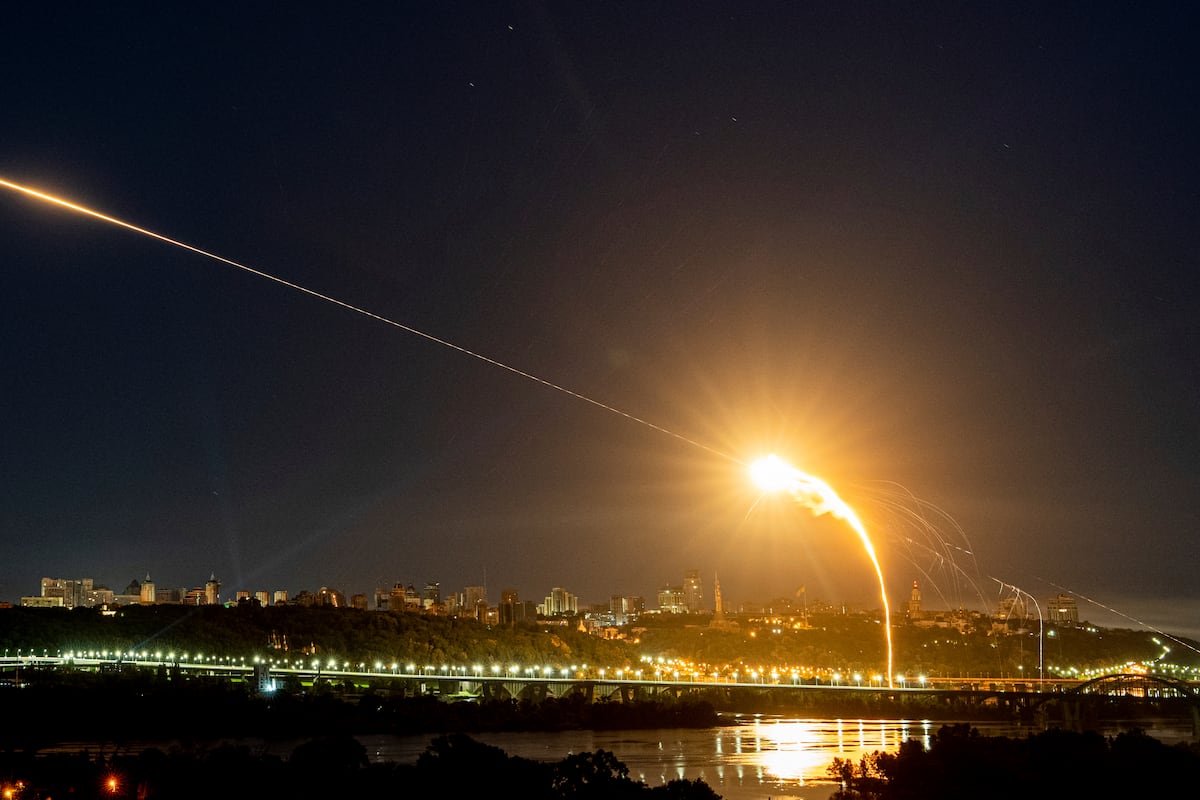
NATIONAL HARBOR, Md. — Ukrainian forces are exploiting gaps in Russian jamming and spoofing capabilities, opening seams in which they make noticeable gains on the battlefield, according to a U.S. Air Force commander.
While the Russian military seeks to break Ukrainian command and control and block access to the electromagnetic spectrum, used for communications and weapons guidance, among other vital tasks, Ukrainians are resilient and resourceful in their application of electronic warfare, said Col. Josh Koslov, the leader of the 350th Spectrum Warfare Wing .
“The agility being displayed by both parties, in the way that they’re executing operations in the spectrum, is awesome,” he told reporters during a discussion at the Air, Space and Cyber Conference in National Harbor, Maryland. “Both sides are doing the cat-and-mouse game very, very well.”
The U.S. is observing the invisible back-and-forth and is taking notes as the Pentagon works to reinvigorate jamming and deception arsenals in preparation for potential conflicts with China or Russia.
The spectrum would be hotly contested in a fight with either.
“In the future, for us, if we do confront a peer, being agile and being rapid is the key to success in the spectrum,” said Koslov, whose team at Eglin Air Force Base in Florida works to quickly upgrade electronic-warfare tools aboard aircraft. “Not having control of spectrum leads to fatalities, leads to getting killed. And we’ve seen that time and time again in that conflict.”
The 350th Spectrum Warfare Wing, established two years ago, is the first of its kind and the outgrowth of an electromagnetic spectrum superiority study.
Air Force Chief of Staff Gen. CQ Brown this year warned Congress the Defense Department was losing its ability to fend off attacks on the electromagnetic spectrum, leaving troops exposed. Prioritization of high-end electronic warfare systems fell off following the Cold War.
Koslov, in an interview last month, told C4ISRNET he agreed with Brown’s assessment and was working to address the issue.
“I think where we have to focus is on the highest-end or most-difficult problems, because I believe in the lesser-included threat, which means if I could do it at the highest end, I should be able to adapt to lower-end threats,” he said at the time.
Colin Demarest was a reporter at C4ISRNET, where he covered military networks, cyber and IT. Colin had previously covered the Department of Energy and its National Nuclear Security Administration — namely Cold War cleanup and nuclear weapons development — for a daily newspaper in South Carolina. Colin is also an award-winning photographer.
马里兰州国家港——据美国空军一名指挥官称,乌克兰军队正在利用俄罗斯干扰和欺骗能力的漏洞,打开战场上的缝隙,从而取得明显的进展。
第350频谱战联队指挥官乔什·科斯洛夫上校表示,尽管俄罗斯军方试图破坏乌克兰的指挥控制系统,并阻止其使用电磁频谱(用于通信和武器制导等重要任务),但乌克兰人在电子战应用方面展现出了韧性和足智多谋。
“双方在频谱领域执行行动所展现出的敏捷性令人惊叹,”他在马里兰州国家港举行的航空航天网络会议上对记者说。“双方都把猫捉老鼠的游戏玩得非常非常出色。”
美国正在观察这种看不见的来回博弈,并做着记录,因为五角大楼正在努力重振干扰和欺骗武器库,以应对与中国或俄罗斯可能发生的冲突。
与任何一方发生冲突,频谱都将是激烈争夺的对象。
科斯洛夫说:“未来,如果我们真的与势均力敌的对手交锋,敏捷快速地控制频谱将是制胜的关键。”他的团队在佛罗里达州埃格林空军基地,致力于快速升级飞机上的电子战设备。“失去频谱控制会导致伤亡,甚至丧命。我们在冲突中已经一次又一次地目睹了这一点。”
第 350 频谱作战联队成立于两年前,是同类部队中的第一个,也是电磁频谱优势研究的成果。
今年,空军参谋长布朗将军警告国会,国防部抵御电磁频谱攻击的能力正在下降,使部队面临风险。冷战结束后,高端电子战系统的优先级别有所降低。
科兹洛夫上个月在接受 C4ISRNET 采访时表示,他同意布朗的评估,并正在努力解决这个问题。
“我认为我们应该关注的是最高级别或最困难的问题,因为我相信较小级别的威胁,这意味着如果我能解决最高级别的问题,我就应该能够适应较低级别的威胁,”他当时说道。
科林·德马雷斯特曾是C4ISRNET的记者,负责报道军事网络、网络安全和信息技术方面的新闻。此前,他曾为南卡罗来纳州的一家日报报道美国能源部及其下属的国家核安全管理局,主要关注冷战后的清理工作和核武器研发。科林还是一位屡获殊荣的摄影师。