Why is everyone saying 'I Am Jane Doe' – and why should you care?为什么每个人都在说“我是简·多伊”——你又为什么要关心这件事?
When internet users tried to uncover the identity of a woman accusing seven Cornell University students of sexual assault, social media users responded with “I Am Jane Doe”. The movement has become a viral stand against victim-blaming, with a message that resonates in Singapore too.
When internet users tried to uncover the identity of a woman accusing seven Cornell University students of sexual assault, social media users responded with “I Am Jane Doe”. The movement has become a viral stand against victim-blaming, with a message that resonates in Singapore too.
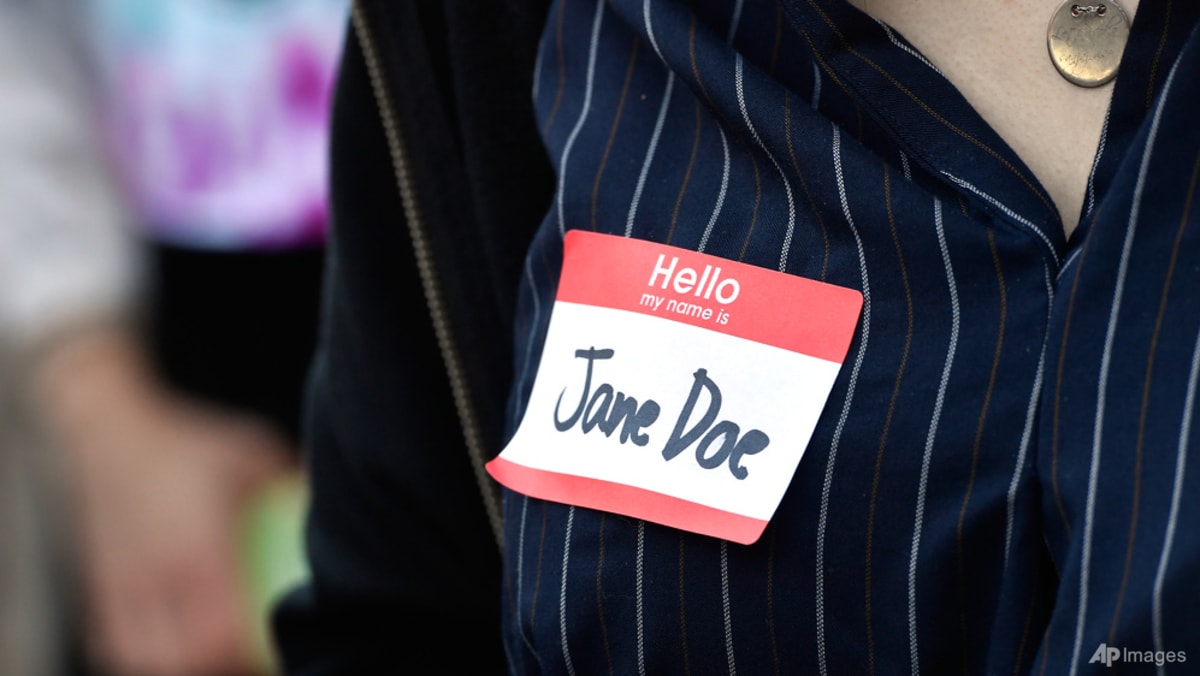
An attendee wears a name tag reading "Jane Doe" during a protest against Cornell University's handling of the 2024 fraternity-house gang rape allegations at the campus on Oct 5, 2026, in Ithaca, New York. (Photo: AP/Adrian Kraus)
This audio is generated by an AI tool.
What are we talking about? The I Am Jane Doe movement.
Who's Jane Doe? Jane Doe is a pseudonym commonly used to protect the identity of women in legal cases, including victims of sexual assault.
It sounds familiar. A 2017 documentary titled I Am Jane Doe followed a group of American mothers seeking justice for their teenage daughters who were trafficked for commercial sex through the now-defunct classifieds website Backpage.com.
So who does this Jane Doe refer to? She is the woman who has accused seven men of sexually assaulting her in 2024, when she was an undergraduate at Cornell University, an Ivy League institution in the United States.
The men were members of the university's Chi Phi fraternity. According to her lawsuit, she was pressured into taking drugs and sexually assaulted while incapacitated.
In September 2026, the former Cornell student filed a civil lawsuit against the seven men, Cornell University, the Chi Phi fraternity and other parties. The allegations have not been proven in court, and no criminal charges have been filed against the seven men – dubbed the Cornell 7 – as of writing. The criminal investigation was reopened in September.
How did the I Am Jane Doe movement start? Disturbingly, some internet users tried to uncover the victim’s identity. Their efforts led to several women being wrongly identified as Jane Doe, and harassed and threatened as a result.
In response, people – mostly women – began declaring “I Am Jane Doe” across social media. Some men joined in too.
Beyond expressing solidarity with the victim, the movement sought to protect Jane Doe’s anonymity by flooding social media with posts, making it harder for those attempting to identify her through online searches.
Some participants also shared their own experiences of sexual assault and harassment in various spaces, including on school campuses and at home.
View this post on Instagram
But this happened in America. What does it have to do with Singapore? Quite a lot, actually. Sexual violence, harassment and the attitudes that excuse them are not uniquely American problems. Singapore has its own uncomfortable history of such incidents.
Like what? Remember the notorious SG Nasi Lemak Telegram group , which had more than 40,000 members and was used to circulate obscene images and videos of girls and women?
Or the Singapore Sports School case in 2024 , when police investigated students creating and circulating deepfake nude images of their female schoolmates?
There were also voyeurism cases involving university students, including the National University of Singapore scandal that prompted a review of the university's disciplinary procedures , and several female private-hire drivers who experienced sexual harassment.
These are different offences with different circumstances. But they touch on similar issues around consent, privacy and the sexual objectification of women and girls – as well as how institutions and communities respond when boundaries are violated.
The SG Nasi Lemak Telegram group had more than 40,000 members when it was still active.
Why do people still excuse or minimise sexual violence? One explanation is what advocates call rape culture – attitudes and behaviour that normalise, trivialise or excuse sexual violence, or shift responsibility onto the victims.
It can appear in familiar questions and remarks: What was she wearing? Was she leading him on? Why was she out so late? Why was she drinking? Why didn't she fight back? Why did she take so long to report the assault? Surely he didn't mean any harm? Do we really need to ruin his future over one mistake?
The conversation shifts from examining the alleged wrongdoing to questioning whether the person reporting it behaved appropriately.
And these attitudes aren't merely hypothetical. Singapore women's rights organisation AWARE has repeatedly highlighted how such misconceptions, also known as rape myths, can discourage survivors from seeking help or reporting sexual assault.
According to AWARE, only three in 10 clients who approached its Sexual Assault Care Centre between 2018 and 2021 had made a police report.
What happens when the hashtag stops trending? Well, the internet will probably find something else to talk about. But the questions raised by the movement remain: Why does the person reporting an alleged sexual assault sometimes end up facing as much scrutiny as the allegation itself?
What can I do if I know someone who has experienced sexual violence? Listen, respect their privacy and avoid pressuring them to disclose details or take steps they're not ready for.
In Singapore, AWARE's Sexual Assault Care Centre provides support and information to survivors of any gender. The National Anti-Violence and Sexual Harassment Helpline is another avenue for help. SG Her Empowerment (SHE) also has a helpline to support victims of sexual deepfakes and other forms of digital harassment.
CNA Women is a section on CNA Lifestyle that seeks to inform, empower and inspire the modern woman. If you have women-related news, issues and ideas to share with us, email CNAWomen [at] mediacorp.com.sg .
A single handpicked story that we think you shouldn't miss. Just one a day.
当网民试图查明一名指控七名康奈尔大学学生性侵的女子身份时,社交媒体用户纷纷回应“我是简·多伊”。这一行动迅速传播开来,成为反对受害者有罪论的有力抗议,其信息在新加坡也引起了共鸣。
2026年10月5日,在纽约州伊萨卡市,一名参加抗议康奈尔大学处理2024年兄弟会轮奸案不力的示威者佩戴着写有“简·多伊”字样的名牌。(图片:美联社/阿德里安·克劳斯)
这段音频是由人工智能工具生成的。
我们在谈论什么?“我是简·多伊”运动。
简·多伊是谁?简·多伊是一个化名,通常用于保护法律案件中女性的身份,包括性侵犯受害者的身份。
听起来很耳熟。2017 年一部名为《我是简·多伊》的纪录片讲述了一群美国母亲为她们被贩卖从事性交易的十几岁女儿寻求正义的故事,这些女儿是通过现已关闭的分类广告网站 Backpage.com 被贩卖的。
那么,这位“简·多伊”指的是谁呢?她指控七名男子在2024年对她进行性侵犯,当时她还是美国常春藤盟校康奈尔大学的一名本科生。
这些男子是该大学Chi Phi兄弟会的成员。根据她的诉讼,她被迫吸毒,并在失去意识的情况下遭到性侵犯。
2026年9月,这位前康奈尔大学学生对七名男子、康奈尔大学、Chi Phi兄弟会及其他相关方提起民事诉讼。截至发稿时,这些指控尚未在法庭上得到证实,也未对这七名被称为“康奈尔七人组”的男子提起刑事诉讼。刑事调查已于9月重启。
“我是简·多伊”运动是如何开始的?令人不安的是,一些网民试图查明受害者的身份。他们的努力导致多名女性被错误地认定为简·多伊,并因此遭受骚扰和威胁。
作为回应,人们——主要是女性——开始在社交媒体上发布“我是简·多伊”的声明。一些男性也加入了这一行列。
除了表达对受害者的声援之外,该运动还试图通过在社交媒体上发布大量帖子来保护简·多伊的匿名身份,使那些试图通过网络搜索识别她的人更加困难。
一些参与者还分享了他们在各种场所(包括校园和家中)遭受性侵犯和性骚扰的经历。
在 Instagram 上查看此帖子
但这事发生在美国。这跟新加坡有什么关系?实际上关系很大。性暴力、性骚扰以及纵容这些行为的态度并非美国独有的问题。新加坡也有着令人不安的此类事件历史。
比如什么?还记得臭名昭著的 SG Nasi Lemak Telegram 群组吗?该群组拥有超过 4 万名成员,并被用来传播女孩和妇女的淫秽图片和视频。
或者像 2024 年新加坡体育学校的案件,当时警方调查了学生制作和传播其女同学的深度伪造裸照?
此外,还有涉及大学生的偷窥案件,包括新加坡国立大学的丑闻,该丑闻促使人们对大学的纪律程序进行审查;以及几名遭遇性骚扰的私家车女司机。
这些罪行性质不同,案情也各异。但它们都触及了类似的议题,例如同意权、隐私权以及对妇女和女孩的性物化——以及当界限被侵犯时,机构和社区应如何应对。
SG Nasi Lemak Telegram 群组在活跃时期拥有超过 40,000 名成员。
为什么人们仍然会为性暴力开脱或轻描淡写?一种解释是倡导者所说的“强奸文化”——这种态度和行为将性暴力正常化、轻视化或为其开脱,或者将责任推卸给受害者。
它可能出现在一些熟悉的问题和评论中:她当时穿了什么?她是不是在勾引他?她为什么这么晚还在外面?她为什么喝酒?她为什么不反抗?她为什么过了这么久才报警?他肯定不是故意的吧?我们真的要因为一次失误就毁了他的前途吗?
谈话内容从审查所谓的违法行为,转向质疑举报人的行为是否恰当。
这些态度并非仅仅是假设。新加坡妇女权益组织AWARE曾多次强调,此类误解(也称为强奸迷思)会阻碍幸存者寻求帮助或举报性侵犯。
据 AWARE 称,在 2018 年至 2021 年间,到访其性侵犯关怀中心的客户中,只有十分之三的人向警方报案。
当话题标签不再流行时会发生什么?嗯,互联网很可能会找到其他话题来讨论。但这场运动提出的问题依然存在:为什么举报性侵的人有时最终会面临与指控本身一样多的审查?
如果我认识的人曾遭受过性暴力,我该怎么办?倾听,尊重他们的隐私,避免强迫他们透露细节或采取他们还没准备好的行动。
在新加坡,AWARE的性侵犯关怀中心为所有性别的幸存者提供支持和信息。全国反暴力和性骚扰热线是另一个求助途径。SG Her Empowerment (SHE) 也设有热线,为性爱深度伪造视频和其他形式网络骚扰的受害者提供支持。
CNA Women是CNA Lifestyle旗下的一个版块,旨在为现代女性提供信息、赋能和灵感。如果您有与女性相关的新闻、议题或想法想要与我们分享,请发送电子邮件至CNAWomen[at]mediacorp.com.sg。
每天一篇,我们精心挑选一篇您不容错过的精彩故事。