Finance Minister Ekniti outlines the government’s economic plan but behind the buzzwords are real risks财政部长埃克尼蒂概述了政府的经济计划,但这些华丽的辞藻背后却隐藏着真正的风险。
Thailand’s economic reset faces an early reality check as Ekniti bets on AI, EVs and clean energy. War drives energy costs higher, Toyota puts fresh… Read More ›
新闻视频
September 6, 2026 at 12:29 pm
in Economy , Living , Politics , Thailand
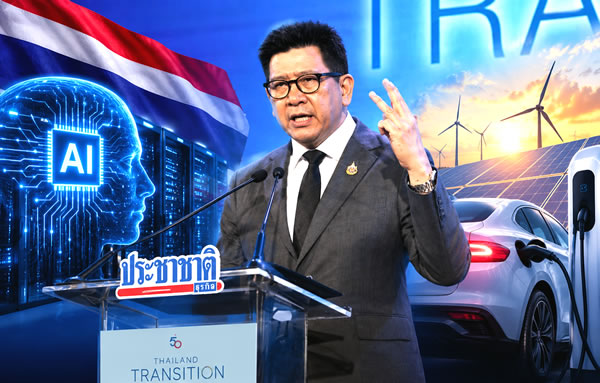
Deputy Prime Minister and Finance Minister Ekniti Nitithanprapas has put AI, electric vehicles and clean energy at the heart of Thailand’s next economic transition. The strategy comes as war drives up energy costs, weak growth forces continued borrowing and regional rivals fight for investment. Thailand has already halted further data centre development while reviewing policy, even as AI becomes a national priority. Meanwhile, Toyota is committing fresh electrified-vehicle investment to Vietnam as Bangkok battles to protect its automotive base. At the same time, the government’s clean-energy push raises hard questions over grid costs, reliability and dependence on Chinese supply chains. Mr Ekniti says investment creates future income. The stakes are high. The risk lies in whether Thailand is investing in the right technologies and pushing the right economic programmes at the right time.
Deputy Prime Minister and Minister of Finance Ekniti Nitithanprapas bets on AI, EVs and clean energy as war drives costs higher, Toyota invests in Vietnam and Thailand halts data centres. ( Source: Matichon )
Deputy Prime Minister and Finance Minister Ekniti Nitithanprapas has set out an ambitious economic programme for Thailand. However, each of its three central industrial priorities carries substantial economic and technological uncertainties. Artificial intelligence, electric vehicles and clean energy will form the core of the government’s planned transition. At the same time, Thailand must support households, contain debt and withstand another severe external shock.
Mr Ekniti unveiled the programme on September 3 at the Beyond ESG Thailand Transition event. He described a global economy undergoing rapid and increasingly disruptive change. In particular, he pointed to war in the Middle East and growing international trade conflict. Both developments are already feeding directly into Thailand’s economic calculations.
The Middle East war has driven energy prices sharply higher. Consequently, Thailand faces renewed pressure because of its heavy dependence on imported fuel. The United States is meanwhile tightening economic pressure on Iran and restricting its economic lifelines. Washington’s actions include measures designed to choke off Iranian oil exports.
Middle East shock hits weak Thai growth as Ekniti turns to relief, borrowing and structural change
For Thailand, the crisis has arrived at a particularly difficult moment. The economy was already struggling to generate convincing domestic growth. Once again, an international shock threatens to weaken activity further. In response, the government is borrowing and supporting spending to prevent a deeper slowdown.
Yet Mr Ekniti wants Thailand to look much further ahead. His programme divides economic policy into three broad pillars. These are “Stabilise Today”, “Transition Now” and “Invest for Tomorrow”. Together, they combine immediate relief with an attempt to reshape Thailand’s economic structure.
“Stabilise Today” provides assistance to households and small businesses facing higher costs. One programme is Thai Helps Thai Plus, aimed partly at street vendors. The scheme addresses increased fuel and operating costs. Separately, it will teach small traders how to expand their businesses online.
The digital element is straightforward. Small operators serving limited local markets will be encouraged to sell nationwide. As part of this, the government wants traders to use online platforms more effectively. The programme therefore mixes short-term financial support with basic commercial adaptation.
Ekniti’s three pillars move from immediate relief towards investment-led economic transformation
“Transition Now” carries a wider objective. It calls for businesses and workers to adjust rapidly to technological and economic change. Mr Ekniti warned that refusing to adapt could ultimately leave people outside viable markets. His K-shaped analogy places successful adapters on the rising side of the economy.
“Invest for Tomorrow” is the most ambitious pillar. It puts major infrastructure and industrial investment at the centre of economic policy. Mr Ekniti was emphatic about the argument. “Consumption is finite, but investment creates future income,” he said.
His broader message was equally clear. Thailand must invest repeatedly if it wants to preserve competitiveness. Nevertheless, that raises the central economic question facing the government. It must decide precisely where scarce capital should go.
That choice is becoming harder, not easier. Thailand is committing resources while industries, technologies and international markets are changing rapidly. Moreover, several recent developments have exposed weaknesses around sectors previously promoted as national priorities. The government is therefore adjusting policy while simultaneously demanding faster investment.
Thailand’s export performance is one example. Headline export figures have been exceptionally strong. However, rampant transshipments linked to exports have become a serious problem. The issue matters more as Washington tightens trade enforcement and protectionist measures.
Investment push collides with export transshipment risks and growing uncertainty over future industries
In parallel, another apparent economic success has produced an abrupt policy reversal. Data centres became a principal driver of private sector investment during the last year. For roughly two years, governments actively promoted the sector as a strategic opportunity. This week, however, further data centre developments were halted while policy is clarified.
The timing is striking. Thailand attracted huge investment before fully resolving the infrastructure and regulatory consequences. As a result, the government is reassessing an industry it had aggressively encouraged. That reversal cuts directly across Mr Ekniti’s first major future industry.
Artificial intelligence and smart electronics are supposed to drive part of Thailand’s next economic phase. Few would dispute that AI is already changing businesses worldwide. However, government attempts to accelerate Thai adoption have encountered immediate difficulties. The TH-AI project suffered disruption this week during its early implementation.
Meanwhile, businesses are already increasingly dependent on established commercial AI systems. That creates a sharp distinction between technological adoption and government-led intervention. Furthermore, AI requires far more than access to software platforms. It demands extensive physical and energy infrastructure.
Data centre reversal exposes policy gaps as Thailand promotes AI while infrastructure strains emerge
Large-scale AI computing requires data centres, advanced telecommunications systems and reliable electricity. Cooling, land, grid capacity and enormous capital expenditure are also necessary. Thailand spent two years courting precisely these investments. Yet the resulting boom has already forced the government to halt and reconsider further development.
This creates an awkward sequence. First, Thailand encouraged the investment as a strategic priority. Then, data centres became a major source of private investment growth. Now, the government is pausing further development while deciding how the sector should proceed.
Mr Ekniti nevertheless views advanced technology investment as unavoidable. Notably, he pointed to Thailand’s earlier investment in 5G telecommunications infrastructure. He said the decision helped attract investment and expand opportunities for online merchants. It also supported creators using platforms such as YouTube and TikTok.
The next stage, he argued, will eventually involve 6G. Without another telecommunications upgrade, Thailand could lose competitiveness. His wider contention is that early infrastructure investment can secure future economic opportunities. The data centre experience, however, demonstrates that such investment can also impose unforeseen demands.
AI ambitions depend on power, data centres and telecoms as Thailand prepares for another technology leap
Mr Ekniti’s second major priority involves an even larger existing industry. Thailand’s automotive sector faces one of the biggest structural changes in its history. For decades, the kingdom built industrial strength around internal combustion engine vehicles. Japanese manufacturers created enormous factories and deep domestic supplier networks.
That success made Thailand one of Southeast Asia’s leading automotive production centres. In turn, vehicles became critical to manufacturing, employment and exports. Electrification is now changing the structure of that industry. Meanwhile, neighbouring economies are competing aggressively for new automotive capital.
Thailand is therefore trying to prevent future investment from drifting elsewhere. Toyota and Honda deny they are abandoning their Thai operations. Their existing manufacturing presence remains substantial. Toyota alone illustrates the scale of what Thailand has to protect.
Toyota’s three Thai plants have a combined annual capacity of about 770,000 vehicles. During 2025, the company produced 564,933 vehicles in Thailand. Of those, 358,135 were exported. In addition, Toyota plans about ฿55 billion of investment to expand Thai hybrid production.
Those figures do not show Toyota leaving Thailand. On the contrary, Thailand remains a major production base for the Japanese company. However, a development in Vietnam this week provides a warning about the next investment cycle. Toyota Motor Vietnam has secured approval for more than US$283 million in new investment.
Thailand fights to defend its automotive base as Toyota stays while regional competition intensifies
That amounts to roughly ฿9.3 billion. The investment will expand Toyota’s operation in Phu Tho. Crucially, the revised project includes assembly and manufacture of electrified vehicles. Registered annual capacity will stand at approximately 52,000 vehicles.
Construction of new stamping and paint facilities is scheduled to begin in May 2027. Operations are then expected to begin during 2029. By comparison, the Vietnamese operation remains far smaller than Toyota’s enormous Thai base. Toyota’s planned ฿55 billion Thai hybrid commitment is also almost six times larger.
Even so, the Vietnamese project carries strategic importance. Vietnam has captured fresh Toyota investment directed at next-generation electrified production. Bangkok is simultaneously rewriting automotive policies to attract precisely that type of investment. The competition is therefore about tomorrow’s factories, not merely today’s production.
Toyota says the Vietnamese expansion will increase localisation and strengthen its supplier network. It also expects employment creation and technology transfer. Toyota Vietnam chief Osamu Hirata linked the project with developing Phu Tho as an automotive manufacturing centre. The ambition therefore extends beyond assembling additional vehicles.
For Thailand, that changes the competitive calculation. Existing factories may remain firmly in place while future incremental investments move elsewhere. Over time, those decisions can reshape supplier networks and technological capacity. Hence, retaining existing production is only part of the task.
Toyota’s Vietnam investment raises stakes in Thailand’s battle for next-generation vehicle production
Mr Ekniti wants tax policy to help defend Thailand’s position. ASEAN free-trade agreements restrict the kingdom’s ability to impose broad import tariffs. Accordingly, the government is preparing to use excise taxation instead. The objective is to prevent finished imports from overwhelming locally produced vehicles.
Another component concerns domestic content. The government wants manufacturers to use more Thai-produced parts. Local-content requirements could rise towards 40% or 50%. In principle, that would deepen domestic supply chains rather than simply encouraging final assembly.
Yet the technological problem remains unresolved. No single automotive technology has conclusively won the long-term global market. Toyota itself provides strong evidence of that uncertainty. Rather than betting solely on battery EVs, it continues pursuing several technologies.
Those options include hybrids, plug-in hybrids, battery EVs, hydrogen and conventional vehicles. Consequently, Thailand faces risks in both directions. Moving too slowly could surrender new investment to Vietnam, Indonesia and other rivals. Moving too aggressively behind one technology carries a different exposure.
Thailand turns to excise taxes and local content as uncertainty hangs over future vehicle technology
Oil prices further complicate the decision. There is no certainty that petroleum will become permanently more expensive. Equally, there is no certainty that global oil demand will soon collapse. The International Energy Agency’s Current Policies Scenario illustrates the range of possible outcomes.
Under that scenario, world oil demand reaches 113 million barrels daily by 2050. Importantly, the scenario reflects policies already in force rather than future promises. That leaves open a far more diverse transport market than some transition plans assume. Toyota’s continuing hybrid strategy is particularly relevant under those conditions.
Mr Ekniti’s third major priority concerns clean energy. Here, the government is responding to an immediate and measurable vulnerability. Thailand remains heavily dependent on natural gas for electricity. According to Mr Ekniti, more than 65% of electricity costs are linked to natural gas dependence.
A substantial proportion of that gas is imported. As a consequence, international energy shocks quickly feed into Thai electricity costs. They can also damage the country’s external accounts. The Middle East conflict has made that weakness more visible.
Mr Ekniti said the current account recorded a deficit exceeding ฿600 billion during 2026’s second quarter. He linked energy security directly with the country’s wider economic resilience. On another front, foreign investors are also increasing their demands for cleaner electricity. Reliable power alone is no longer sufficient for some multinational manufacturers.
Oil demand uncertainty complicates EV policy as Thailand confronts dependence on imported natural gas
The government therefore wants faster investment in solar power. Floating solar systems also form part of the strategy. In addition, households could receive subsidies for rooftop solar installations. Lower-income families could then produce part of their own electricity.
Potentially, households could also sell excess electricity into the grid. Such a system could lower bills and provide supplementary income. However, lower renewable generation costs do not settle the wider economic argument. The cost of generating electricity and delivering reliable electricity are different calculations.
Solar and wind have become dramatically cheaper. The International Energy Agency puts new onshore wind near US$34 per megawatt-hour globally. Solar stands at roughly US$43 per megawatt-hour. On those narrow measures, both technologies are highly competitive.
The problem begins when electricity is needed outside favourable generating conditions. Solar production falls when sunlight disappears. Wind production varies with weather conditions. Factories, hospitals, homes and data centres cannot operate around those limitations.
Accordingly, higher levels of intermittent generation create additional infrastructure requirements. Storage is one major requirement. Transmission is another. Reserve capacity, interconnectors and demand management can also become necessary.
Solar push targets energy security, but falling generation costs do not settle the reliability challenge
Dispatchable generating capacity may still be required as well. The International Energy Agency itself acknowledges these pressures. It says higher wind and solar penetration requires greater grid investment and flexibility. Curtailment has also increased in several electricity markets.
Separately, negative wholesale electricity prices are becoming more frequent in some systems. These periods usually appear when abundant generation coincides with weak demand. Several hours later, power can become much more valuable. Storage can exploit that difference, but storage carries a cost.
The agency also says dispatchable plants and storage will increasingly support secure renewable integration. Therefore, headline generation costs cannot represent the whole electricity-system cost. Grid reinforcement, backup capacity and storage must also be included. This distinction is especially important for Thailand.
Mr Ekniti identified stable electricity as one of Thailand’s competitive advantages. Foreign manufacturers may increasingly demand cleaner power. Nevertheless, they still require uninterrupted supplies whenever their factories operate. Thailand therefore has to deliver cleanliness, reliability and competitive prices simultaneously.
The data centre issue intensifies the challenge. These projects require enormous quantities of electricity. They also became a major source of private investment before the government halted new developments. Thailand therefore wants cleaner electricity while encouraging some of the economy’s most power-intensive investments.
Renewables require storage, grids and backup as Thailand works to preserve reliable power for investors
Nuclear energy adds another dimension to the argument. Nuclear is low-carbon and dispatchable. Unlike solar and wind, reactors can produce electricity regardless of weather conditions. They also operate at high capacity factors.
However, nuclear comes with major financial problems. New reactors require enormous upfront capital. Financing costs can be very high. Construction delays can also push total project costs sharply higher.
Thus, nuclear cannot automatically be declared the cheapest alternative. Neither can renewable generation automatically be declared the cheapest complete electricity system. The final calculation depends on system costs, reliability, financing and construction performance. Thailand would have to evaluate those elements together.
Clean energy also creates supply-chain questions. Renewable technologies reduce some foreign dependencies while potentially increasing others. China controls about 90% of rare-earth refining used for wind-turbine permanent magnets. It also controls roughly 90% of rare-earth magnet production.
In addition, China dominates important sections of solar and battery manufacturing. Thailand could therefore reduce dependence on Middle Eastern fuel while increasing Chinese industrial dependence. The vulnerability changes form rather than necessarily disappearing. That matters to any policy presented as improving energy security.
Nuclear adds a low-carbon option while China’s supply-chain dominance creates new energy dependencies
There are nevertheless measurable benefits from renewable deployment. The International Energy Agency estimates renewables avoided about US$1.3 trillion in fossil-fuel imports since 2010. That figure covers importing economies. It demonstrates a substantial economic case for renewable investment.
Even so, it does not establish one optimal electricity mix for every country. Nor does it eliminate the costs of grids, storage and reserve capacity. Thailand’s policy must therefore deal with complete system economics. Cheap generating technology alone does not answer the question.
The three sectors chosen by Mr Ekniti share a striking feature. All are attracting enormous global investment. Yet each is moving rapidly and remains exposed to technological change. Thailand is therefore trying to pick winners while the races are still being run.
AI is advancing rapidly, but Thailand has already paused part of the infrastructure supporting it. EVs are expanding, but Toyota continues to hedge across several competing technologies. Clean energy is becoming cheaper, yet the supporting system creates substantial additional costs. These are not marginal issues for the government’s plan.
Renewables bring import savings, but Thailand still faces hard choices across AI, EVs and clean energy
The programme also sits beside immediate populist spending. Mr Ekniti says consumption is finite while investment creates future income. However, the Bhumjaithai-led government is simultaneously using cash assistance to sustain economic activity. It is also borrowing during another period of external pressure.
Beyond that, the government is intensifying crackdowns involving foreigners and foreign-controlled businesses. At the same time, it is pursuing ambitious clean-energy and technology objectives promoted internationally. These policies are being implemented while Thailand’s traditional economic strengths face increasing regional competition.
International experience also presents conflicting signals. The United Kingdom pursued increasingly ambitious Net Zero policies under successive governments. At the same time, it faced fierce disputes over electricity costs and industrial competitiveness. Grid investment and transition costs also became major political and economic issues.
The British experience does not establish that renewable energy fails. However, it demonstrates that climate targets do not automatically produce low-cost industrial policy. The economic outcome depends on implementation, infrastructure and the underlying energy system. Those are precisely the questions Thailand now faces.
Populist policies and clean-energy goals collide with UK experience and questions over transition costs
The United States is meanwhile taking a markedly different course. Current American policy places greater weight on domestic energy, strategic trade and industrial protection. Protectionism has returned forcefully to Washington’s economic approach. Mr Ekniti himself acknowledged the breakdown of the previous free-trade environment.
Major powers increasingly shape commercial terms around national interests. As a result, Thailand must pursue its transition inside a harder global trading system. Its historical advantages remain considerable. However, those advantages are no longer enough to guarantee future investment.
Thailand still has major factories, skilled industrial workers and extensive infrastructure. Decades of Japanese investment also created deep domestic supply chains. These assets helped make the kingdom an important Asian manufacturing centre. Yet competitors are building their own capabilities rapidly.
Vietnam is seeking next-generation automotive investment. Indonesia is competing for more regional vehicle production. China dominates key EV and clean-energy supply chains. At the same time, Thailand has paused a data centre boom it spent years encouraging.
US policy shifts towards energy and protectionism as Thailand faces tougher competition for investment
Financing presents another constraint. Public debt cannot expand indefinitely while the government continues supporting weak domestic demand. Mr Ekniti therefore wants capital markets to play a greater role. He specifically cited the Thailand Future Infrastructure Fund as a possible mechanism.
Such financing could reduce reliance on direct government borrowing. However, changing the funding vehicle does not change the economic quality of a project. An investment still needs to create the future income Mr Ekniti expects. Poor investment remains poor investment regardless of how it is financed.
That brings his speech back to its central proposition. “Consumption is finite, but investment creates future income.” The statement captures the logic behind the programme. However, the return depends entirely on what receives the investment.
That decision is now exceptionally difficult. Thailand is confronting technological disruption, trade fragmentation and another Middle East crisis simultaneously. Its export boom faces transshipment concerns. Its data centre boom has already forced a policy rethink.
Meanwhile, the automotive industry faces aggressive competition for its next investment cycle. Energy dependence has again exposed the economy to international price shocks. Public finances must also carry the burden of short-term support. These pressures make the quality of investment more important than the quantity alone.
Financing the transition cannot remove investment risk as Thailand weighs where scarce capital should go
Mr Ekniti’s three-stage response is easy to state. “Stabilise Today” deals with immediate pressure. “Transition Now” demands rapid economic adaptation. “Invest for Tomorrow” seeks to build the next generation of infrastructure and industry.
The execution is considerably harder. AI requires infrastructure that Thailand is already reconsidering. EV policy requires choices, while Toyota itself continues to keep several technologies alive. Clean energy requires much more than installing solar panels or wind turbines.
Furthermore, Thailand must preserve the industrial base it already has. It cannot assume new technology automatically replaces the economic value of established production. Nor can it assume every promoted investment will create durable domestic value. The government’s own localisation policy recognises that problem.
Mr Ekniti wants projects that produce more benefits for Thai workers and suppliers. That means investment volumes alone are no longer enough. Data centres can boost investment statistics while raising major electricity and infrastructure demands. Vehicle assembly can increase production while relying heavily on imported components.
Ekniti’s three-stage plan faces a harder test in execution across AI, vehicles, energy and local industry
Likewise, renewable capacity can expand while imposing additional grid costs. AI adoption can rise without creating a domestic technology industry. These distinctions go directly to the government’s attempt to restructure the economy. Headline investment figures cannot answer them.
Thailand is therefore entering its latest economic transition with little room for error. Another external crisis is already pressing on energy costs. Domestic growth remains weak enough to require continued government support. Meanwhile, industrial competition across ASEAN is becoming sharper.
Mr Ekniti’s answer is investment on a large scale. However, his own chosen sectors demonstrate why that prescription requires closer examination. Each promises substantial opportunities, but each carries equally substantial demands. None offers Thailand a simple or guaranteed route.
The government now has to show that these projects can survive commercial scrutiny. It must also prove they can compete once subsidies and incentives are counted. Infrastructure costs, financing, reliability and supply chains must form part of that calculation.
Thailand has already started the transition Mr Ekniti describes. The question now concerns what the transition actually produces. AI, EVs and clean energy can attract billions in capital. However, investment figures alone will not determine whether Thailand emerges economically stronger.
Paying AI users in Thailand had a nightmare week online just as the government waded into the market
People’s Party firebrand attacks flagship TH AI project launched this week with corruption agency filing of claims
Thais take to government TH AI project on the first day with ChatGPT reporting outages later on Monday
TH AI Passport artificial intelligence to go live on August 28th with strong public demand says Minister
Democrat Party deputy leader renews attacks on the TH-AI passport project as the minister pushes ahead
Thai workers are now World leaders for AI use. More than double the global average. Firms must wise up
Democrat Party Deputy Leader reveals flaws in the TH-AI Passport plan and calls on Minister to abort it
Abhisit Vejjajiva calls for scrutiny of flagship AI project being pursued by Digital Economy ministry
Opposition and Prime Minister highlight corruption which is damaging the kingdom’s credibility abroad
Transport Minister orders report on bribery allegations in the US relating to junkets and Massage Parlours
Supreme Court Chief sets up panel to investigate bribery claims linked to ฿11 billion tax appeal by Toyota
Ministry fails to halt ฿25.4 billion payment order to Hong Kong based firm linked to 1990 contract
Microsoft accepts charges of corrupt payments in Thailand as it makes a deal with US investigators
Provincial agency boss arrested in Mukdahan after trying to extort ฿2 million from a businessman
Joseph Anthony is an expat from Ireland who has lived in Thailand for the last decade. He has worked extensively in the media including editorial positions in Ireland and Thailand. He is focused on economic and business stories in Thailand as well as the expat lifestyle.
All posts by Joseph O' Connor
Cash is the name of game as the US Navy returns to its old Pattaya stomping ground in a 4 day city boost September 3, 2026 Mobile ATMs roll into Pattaya as 5,000 US sailors hit
Thai wife’s nose smelt out her husband’s infidelity and proved it in court to finalise ‘smelly underwear’ case September 2, 2026 Wife sniffs out her husband’s adultery after perfume
Stock market 2026 recovery not built on a sound footing. Depends on foreign capital and one company September 2, 2026 Bangkok’s stock market roared back 26% after three
New visa regime hits Western visitors and expats in Thailand hard with shorter stays and long haul trips September 1, 2026 Thailand’s new visa squeeze halves tourist stays to
Thais take to government TH AI project on the first day with ChatGPT reporting outages later on Monday September 1, 2026 More than 1.36 million Thais register for the TH-AI
Devastating tragedy in Bangkok as pregnant teacher takes her life after paternity fight with boyfriend September 1, 2026 A customer finds a pregnant Bangkok teacher dead
Thailand’s stiff restrictions on small foreign investors a significant problem for its daring OECD aspirations August 31, 2026 Thailand chases OECD membership by 2028 while
Travel Blogger claims he was accosted by cocaine hucksters in broad daylight on Bangkok’s Sukhumvit August 31, 2026 Sukhumvit’s cocaine hucksters approach a travel
Business tenants of Bangkok’s Khlong Thom Centre wiped out after decades of work went up in flames August 31, 2026 Generations of family enterprise go up in flames as
Thailand wins Asian Women’s Volleyball title for the third time in a thrilling win over China on Sunday August 30, 2026 Thailand’s volleyball queens conquer China 3-2 on
PM Anutin raises questions about Tuesday’s Songkhla cabinet meeting after renewed insurgency violence August 30, 2026 Pattani gunmen storm Global House, clear shoppers,
Underage woman ran up 60,000 baht tab at host bar after pursuing a man. Bill paid by shaving her hair August 30, 2026 A Bangkok host-bar manager shaves an 18-year-old
Thai government pushes AI in two programmes one aimed at the public and the other aimed at startups August 29, 2026 Yotsanan brings OpenAI’s first official Asian
Nationalist group meets Minister urging probes into illegal activity linked to foreigners on Koh Samui August 29, 2026 Polpeera receives Thai Mai Thon’s dossier on
Norway’s King Haakon VIII ascends the throne in Oslo after death on Friday of much loved King Harald V August 29, 2026 King Harald V dies peacefully at 89 as Haakon VIII
Israeli Embassy urges the media to be accurate about reporting nationalities after Phuket dine and dash August 29, 2026 Israel’s embassy demands false reports be removed
Police probing Chinese woman’s kidnapping on the trail of human trafficking gang. More victims feared August 28, 2026 Photos of bound Chinese people found on a suspect’s
Former PM Paetongtarn files police complaint over false social media post linking her with Israeli land September 2, 2026
People’s Party firebrand attacks flagship TH AI project launched this week with corruption agency filing of claims September 2, 2026
The boys are back in town. US servicemen return to Pattaya, a town they helped create, for wartime R&R September 2, 2026
Pot shop worker attacks UK man on his motorbike over 29,200 baht fraud on Monday in broad daylight September 1, 2026
Woman in northern Thailand builds thriving concern farming and selling live cockroaches for fishing in nearby rivers September 1, 2026
Pattaya police probe a nightclub shooting on the city’s Southside in the early hours of Monday morning August 31, 2026
Anutin begins week with twin economic headaches as car makers and rail consortium threaten to walk August 31, 2026
American man arrested in Phuket on US state and federal warrants relating to sexual abuse of minors at home August 31, 2026
Bangkok storm’s nightlife charts to be crowned the World’s number one and the most visited city on earth August 30, 2026
Pattaya police operation targets street sex workers ahead of expected arrival of US sailors on Wednesday August 30, 2026
Thailand approaches a seminal moment in politics as Senate collusion case decision set for September 14 August 30, 2026
Thailand’s America’s Got Talent star returned home on Friday ahead of her September date with destiny August 30, 2026
Myanmar authorities remain tight lipped over death of US diplomat in May and his jailed Thai partner August 29, 2026
New face of Thailand’s Tourism Police. Minister visits HQ and speaks of a new era of high tech security August 29, 2026
Police respond within 10 minutes to drunk foreign tourist attacking and breaking into ATM for lost card August 29, 2026
Huge fire in central Bangkok at a major electronics retail centre. Governor Chadchart was on the scene August 29, 2026
Pheu Thai leader Julapun insists coalition government is ‘very strong’ at Government House on Friday August 28, 2026
Police cordon off mountain area to manhunt for man who murdered his lover’s husband after affair ended August 28, 2026
Tourism Authority of Thailand (TAT) turns to railway to boost the appeal of Thailand to foreign tourists August 27, 2026
Koh Samui zoo dispute morphs into wider protest at Israelis and foreigners misbehaving in Thailand August 27, 2026
Tourism chiefs monitor Chinese media after rescue of young woman by Kamphaeng Phet police. 4 arrested August 27, 2026
Central bank holds interest rate steady at 1% as real economy strains and investment targets technology August 26, 2026
© 2026 Thai Examiner. All rights reserved.
2026年9月6日下午12:29
经济、生活、政治、泰国
泰国副总理兼财政部长埃克尼提·尼提坦帕帕斯(Ekniti Nitithanprapas)已将人工智能、电动汽车和清洁能源置于泰国下一阶段经济转型的核心位置。这一战略出台之际,正值战争推高能源成本、经济增长乏力迫使泰国继续举债,以及区域竞争对手争夺投资之时。尽管人工智能已成为国家优先事项,泰国仍在审查相关政策的同时,暂停了数据中心的进一步开发。与此同时,丰田汽车正承诺在越南加大电动汽车投资,而曼谷则努力捍卫其汽车产业基地。与此同时,政府大力推进清洁能源发展,也引发了人们对电网成本、可靠性以及对中国供应链依赖程度的担忧。埃克尼提先生表示,投资创造未来收入。风险巨大。关键在于泰国是否在正确的时间投资了正确的技术,并推行了正确的经济计划。
副总理兼财政部长埃克尼蒂·尼蒂坦帕帕斯(Ekniti Nitithanprapas)押注人工智能、电动汽车和清洁能源,与此同时,战争推高了成本;丰田汽车在越南投资;泰国则暂停了数据中心项目。(来源:Matichon)
泰国副总理兼财政部长埃克尼提·尼提坦帕帕斯制定了一项雄心勃勃的泰国经济计划。然而,该计划的三大核心产业优先领域都存在着巨大的经济和技术不确定性。人工智能、电动汽车和清洁能源将构成政府转型计划的核心。与此同时,泰国还必须扶持家庭、控制债务并抵御另一次严重的外部冲击。
埃克尼蒂先生于9月3日在“超越ESG泰国转型”活动上公布了该计划。他指出,全球经济正经历着快速且日益剧烈的变革。他特别提到了中东战争和日益加剧的国际贸易冲突。这两个因素都已直接影响到泰国的经济考量。
中东战争导致能源价格大幅上涨。因此,严重依赖进口燃料的泰国面临着新的压力。与此同时,美国正在加大对伊朗的经济压力,并限制其经济命脉。华盛顿的行动包括旨在切断伊朗石油出口的措施。
中东动荡冲击疲软的泰国经济增长,泰国政府转向纾困、借贷和结构性改革。
对泰国而言,这场危机来得正是时候。泰国经济原本就难以实现令人信服的国内增长。如今,国际冲击再次威胁到经济活动的进一步下滑。为应对这一局面,泰国政府正通过举债和增加支出来防止经济进一步放缓。
然而,埃克尼提先生希望泰国着眼于更长远的未来。他的方案将经济政策分为三大支柱,分别是“稳定当下”、“转型升级”和“投资未来”。这三大支柱共同致力于在提供短期纾困的同时,重塑泰国的经济结构。
“今日稳定”计划旨在帮助面临成本上涨的家庭和小企业。其中一项名为“泰助泰加强版”的项目,主要面向街头小贩。该计划旨在应对不断上涨的燃油和运营成本。此外,它还将教授小商贩如何拓展线上业务。
数字化部分很简单。政府将鼓励服务于有限本地市场的小型经营者拓展全国销售渠道。为此,政府希望商家更有效地利用线上平台。因此,该计划将短期财政支持与基本的商业转型相结合。
Ekniti的三大支柱从提供紧急救济转向以投资为主导的经济转型。
“立即转型”的目标更为广泛。它呼吁企业和员工迅速适应技术和经济变革。埃克尼蒂先生警告说,拒绝适应最终可能导致人们被排除在可行的市场之外。他提出的“K”形曲线比喻表明,成功适应者将处于经济上升期。
“投资未来”是其中最具雄心的支柱。它将重大基础设施和工业投资置于经济政策的核心。埃克尼蒂先生对此观点强调:“消费是有限的,但投资创造未来的收入。”
他传递的更广泛的信息同样明确:泰国若想保持竞争力,就必须持续投资。然而,这也引出了政府面临的核心经济问题:政府必须精准地决定稀缺资本的流向。
这一选择变得越来越难,而不是越来越容易。泰国投入了大量资源,但与此同时,产业、技术和国际市场都在快速变化。此外,近期的一些发展也暴露出此前被列为国家优先发展领域的薄弱环节。因此,政府在调整政策的同时,也要求加快投资步伐。
泰国的出口表现就是一个例子。尽管出口总额异常强劲,但与出口相关的猖獗转运已成为一个严重的问题。随着华盛顿加强贸易执法和保护主义措施,这个问题显得尤为重要。
投资推动与出口转运风险以及未来产业日益增长的不确定性相冲突
与此同时,另一项看似成功的经济举措却导致了政策的突然转变。数据中心在过去一年中成为私营部门投资的主要驱动力。近两年来,各国政府积极推动该行业发展,将其视为一项战略机遇。然而,本周,在政策明确之前,数据中心的进一步开发项目已被暂停。
时机颇为蹊跷。泰国在基础设施和监管问题尚未完全解决之前,就吸引了巨额投资。结果,政府正在重新评估其曾大力扶持的产业。这一转变直接与埃克尼蒂先生的首要未来产业目标背道而驰。
人工智能和智能电子产品有望成为泰国下一阶段经济发展的驱动力之一。人工智能正在改变全球商业格局,这一点几乎无人否认。然而,泰国政府加快人工智能应用的努力却遭遇了重重阻碍。本周,TH-AI项目在早期实施阶段就遭遇了中断。
与此同时,企业对现有商业人工智能系统的依赖程度日益加深。这使得技术应用与政府主导的干预之间形成了鲜明的对比。此外,人工智能需要的远不止是软件平台,它还需要庞大的物理和能源基础设施。
数据中心转型暴露了政策漏洞:泰国大力推广人工智能,但基础设施压力日益显现。
大规模人工智能计算需要数据中心、先进的电信系统和可靠的电力供应。冷却系统、土地、电网容量和巨额资本支出也必不可少。泰国曾花费两年时间积极吸引这些投资。然而,由此带来的繁荣已经迫使政府暂停并重新考虑进一步的开发计划。
这造成了一种尴尬的局面。首先,泰国将鼓励投资列为战略重点。随后,数据中心成为私人投资增长的主要来源。而现在,政府却暂停了进一步发展,同时权衡该行业未来的发展方向。
尽管如此,埃克尼蒂先生仍然认为对先进技术的投资不可避免。他特别提到了泰国早先对5G电信基础设施的投资。他表示,这一决定有助于吸引投资,并为在线商家拓展商机。同时,它也为YouTube和TikTok等平台上的内容创作者提供了支持。
他认为,下一阶段最终将涉及6G。如果不进行电信升级,泰国可能会失去竞争力。他更广泛的观点是,早期基础设施投资可以确保未来的经济机遇。然而,数据中心的经验表明,此类投资也可能带来意想不到的需求。
泰国正准备迎接又一次技术飞跃,人工智能的雄心壮志离不开电力、数据中心和电信设施的支持。
埃克尼蒂先生的第二个主要任务涉及一个规模更大的现有产业。泰国汽车行业正面临着历史上最大的结构性变革之一。几十年来,泰国的工业实力主要依靠内燃机汽车。日本制造商建立了规模庞大的工厂和庞大的国内供应商网络。
这一成功使泰国成为东南亚领先的汽车生产中心之一。反过来,汽车对制造业、就业和出口都至关重要。如今,电气化正在改变该行业的结构。与此同时,周边经济体正在激烈争夺新的汽车资本。
因此,泰国正试图阻止未来的投资流向其他地方。丰田和本田否认它们将放弃在泰国的业务。它们现有的生产规模仍然相当可观。仅丰田一家就足以说明泰国需要保护的资产规模之大。
丰田在泰国的三个工厂年总产能约为77万辆。2025年,该公司在泰国生产了564,933辆汽车,其中358,135辆出口。此外,丰田计划投资约550亿泰铢,以扩大其在泰国的混合动力汽车产能。
这些数据并未显示丰田撤出泰国。相反,泰国仍然是这家日本公司的主要生产基地。然而,本周在越南发生的一件事,为下一轮投资周期敲响了警钟。丰田汽车越南公司已获准在越南投资超过2.83亿美元。
泰国努力捍卫其汽车产业基础,丰田汽车继续留在泰国,而区域竞争日益加剧。
这笔投资总额约为93亿泰铢。该投资将扩大丰田在富寿的业务。至关重要的是,修订后的项目包括电动汽车的组装和制造。注册年产能将达到约5.2万辆。
新的冲压和喷漆设施计划于2027年5月开工建设,预计将于2029年投入运营。相比之下,丰田在越南的业务规模远小于其在泰国的庞大基地。丰田计划在泰国投资550亿泰铢用于混合动力汽车项目,其规模几乎是越南业务的六倍。
即便如此,越南项目仍具有重要的战略意义。越南已吸引到丰田用于下一代电动汽车生产的新投资。与此同时,曼谷正在重新制定汽车行业政策,以吸引此类投资。因此,这场竞争关乎未来的工厂,而不仅仅是当下的生产。
丰田表示,此次越南扩张将提高本地化率并加强其供应商网络。该公司还期望创造就业机会并进行技术转让。丰田越南总裁平田修将该项目与将富寿打造成为汽车制造中心联系起来。因此,其目标远不止于组装更多车辆。
对泰国而言,这改变了竞争格局。现有工厂可能仍将保留,而未来的增量投资则会转移到其他地方。随着时间的推移,这些决策可能会重塑供应商网络和技术能力。因此,维持现有生产仅仅是挑战的一部分。
丰田在越南的投资提升了泰国在下一代汽车生产领域竞争的筹码
埃克尼蒂先生希望通过税收政策来捍卫泰国的贸易地位。东盟自由贸易协定限制了泰国征收高额进口关税的能力。因此,泰国政府正准备转而征收消费税。其目的是防止成品进口车辆对本地生产的车辆造成过大的冲击。
另一个方面涉及国产化率。政府希望制造商使用更多泰国制造的零部件。国产化率要求可能会提高到40%或50%。原则上,这将深化国内供应链,而不仅仅是鼓励最终组装。
然而,技术难题依然悬而未决。没有任何一种汽车技术能够长期主导全球市场。丰田自身的经历就充分印证了这种不确定性。它并没有仅仅押注于纯电动汽车,而是持续探索多种技术。
这些选项包括混合动力汽车、插电式混合动力汽车、纯电动汽车、氢燃料电池汽车和传统燃油汽车。因此,泰国面临着双向风险。行动过于缓慢可能会将新的投资拱手让给越南、印尼和其他竞争对手。而过于激进地追捧某一项技术则会带来不同的风险。
由于未来汽车技术前景不明朗,泰国转向征收消费税和推行本地化政策。
油价使决策更加复杂。石油价格是否会永久上涨尚无定论。同样,全球石油需求是否会很快崩溃也未可知。国际能源署的“当前政策情景”展示了各种可能的结果。
在这种情况下,到2050年,全球石油需求将达到每日1.13亿桶。重要的是,该情景反映的是现行政策,而非未来承诺。这意味着交通运输市场将比某些转型计划所设想的更加多元化。丰田持续推进混合动力战略在这种背景下尤为重要。
埃克尼蒂先生的第三项主要优先事项是清洁能源。政府正在应对一个迫在眉睫且显而易见的脆弱性。泰国目前仍然严重依赖天然气发电。埃克尼蒂先生表示,超过65%的电力成本与天然气依赖度相关。
泰国天然气供应很大一部分依赖进口。因此,国际能源冲击会迅速反映在泰国的电力成本上,并可能损害该国的对外账户。中东冲突使这一弱点更加凸显。
埃克尼蒂先生表示,2026年第二季度经常账户赤字将超过6000亿泰铢。他将能源安全与国家的整体经济韧性直接联系起来。另一方面,外国投资者对清洁电力的需求也在不断增长。对于一些跨国制造商而言,仅仅提供可靠的电力已远远不够。
石油需求的不确定性使电动汽车政策更加复杂,因为泰国面临着对进口天然气的依赖。
因此,政府希望加快对太阳能发电的投资。漂浮式太阳能系统也是该战略的一部分。此外,家庭安装屋顶太阳能系统可获得补贴。这样,低收入家庭就能自给自足一部分电力。
家庭还可以将多余的电力出售给电网。这样的系统可以降低电费并带来额外收入。然而,可再生能源发电成本的降低并不能解决更广泛的经济问题。发电成本和可靠供电成本是不同的计算方式。
太阳能和风能的成本已大幅下降。国际能源署的数据显示,全球陆上风电的新建成本接近每兆瓦时34美元,太阳能发电的成本约为每兆瓦时43美元。仅从这些方面来看,这两种技术都极具竞争力。
当电力需求超出适宜的发电条件时,问题就出现了。太阳能发电量会随着日照时间的减少而下降。风力发电量也会随天气状况而变化。工厂、医院、住宅和数据中心都无法绕过这些限制正常运转。
因此,间歇性发电水平的提高会带来额外的基础设施需求。储能是一项主要需求,输电是另一项。备用容量、互联线路和需求侧管理也可能变得必不可少。
大力发展太阳能旨在保障能源安全,但发电成本的下降并不能解决可靠性方面的挑战。
可调度发电容量可能仍然必不可少。国际能源署也承认这些压力。该机构表示,风能和太阳能渗透率的提高需要更大的电网投资和灵活性。此外,一些电力市场的弃电现象也有所增加。
此外,在某些电力系统中,负批发电价的出现频率越来越高。这种情况通常发生在发电量充沛而需求疲软之时。几个小时后,电力价格可能会大幅上涨。储能可以利用这种价格差异,但储能本身也需要成本。
该机构还表示,可调度电厂和储能设施将日益支持可再生能源的稳定并网。因此,发电成本不能代表整个电力系统的成本。电网加固、备用容量和储能也必须纳入考量。这一区别对泰国尤为重要。
埃克尼蒂先生指出,稳定的电力供应是泰国的竞争优势之一。外国制造商可能会越来越需要清洁能源。然而,他们仍然需要在工厂运营期间获得不间断的电力供应。因此,泰国必须同时提供清洁、可靠且价格具有竞争力的电力。
数据中心问题加剧了这一挑战。这些项目需要消耗大量电力。在政府叫停新的开发项目之前,数据中心也曾是私人投资的主要来源。因此,泰国既希望获得更清洁的电力,又希望鼓励一些经济领域中耗电量最大的投资项目。
泰国正努力保障投资者的电力供应,可再生能源需要储能、电网和备用电源。
核能为这场争论增添了新的维度。核能是低碳且可调度的。与太阳能和风能不同,核反应堆可以不受天气条件的影响发电。此外,它们的运行功率系数也很高。
然而,核能也存在严重的财务问题。新建反应堆需要巨额的前期资金投入,融资成本可能非常高昂。此外,工期延误也会导致项目总成本大幅上升。
因此,核能不能自动被视为最便宜的替代方案。同样,可再生能源发电也不能自动被视为最便宜的完整电力系统。最终的计算结果取决于系统成本、可靠性、融资和建设性能。泰国需要综合评估这些因素。
清洁能源也带来了供应链方面的问题。可再生能源技术在减少某些对外依赖的同时,也可能增加对其他方面的依赖。中国控制着风力涡轮机永磁体所用稀土提炼的约90%,同时也控制着稀土磁体生产的约90%。
此外,中国在太阳能和电池制造领域占据重要主导地位。因此,泰国可以在减少对中东燃料依赖的同时,增加对中国工业的依赖。这种脆弱性并非必然消失,而是改变了形式。这对任何旨在改善能源安全的政策都至关重要。
核能提供了一种低碳能源选择,而中国供应链的主导地位则带来了新的能源依赖。
尽管如此,可再生能源的部署仍能带来可衡量的益处。国际能源署估计,自2010年以来,可再生能源已避免了约1.3万亿美元的化石燃料进口。这一数字涵盖了进口经济体。这表明,投资可再生能源具有巨大的经济意义。
即便如此,它也无法为每个国家建立最优的电力结构。它也无法消除电网、储能和备用容量的成本。因此,泰国的政策必须考虑完整的系统经济性。仅仅依靠廉价的发电技术并不能解决这个问题。
埃克尼蒂先生选择的这三个行业有一个显著的共同点:它们都吸引了巨额的全球投资。然而,每个行业的发展速度都很快,并且仍然容易受到技术变革的影响。因此,泰国正试图在竞争仍在进行时就挑选出未来的赢家。
人工智能发展迅猛,但泰国已经暂停了部分相关基础设施的建设。电动汽车正在普及,但丰田仍在多种竞争技术之间寻求对冲。清洁能源价格日趋低廉,但配套系统却带来了巨大的额外成本。这些对政府的计划而言并非无关紧要的问题。
可再生能源可以节省进口成本,但泰国在人工智能、电动汽车和清洁能源领域仍面临艰难抉择。
该计划与短期民粹主义支出并行。埃克尼蒂先生表示,消费是有限的,而投资才能创造未来收入。然而,由泰自豪党领导的政府同时也在利用现金援助来维持经济活动。此外,在另一段面临外部压力的时期,政府还在进行借贷。
除此之外,政府正在加大力度打击涉及外国人及外资控股企业的行为。与此同时,政府也在积极推进国际倡导的雄心勃勃的清洁能源和技术目标。这些政策的实施正值泰国传统经济优势面临日益激烈的区域竞争之际。
国际经验也呈现出相互矛盾的信号。英国历届政府都推行了日益雄心勃勃的净零排放政策。与此同时,英国也面临着关于电力成本和产业竞争力的激烈争论。电网投资和转型成本也成为重要的政治和经济问题。
英国的经验并非证明可再生能源注定失败,而是表明气候目标并不会自动带来低成本的产业政策。经济效益取决于政策的实施、基础设施以及现有的能源体系。而这些恰恰是泰国目前面临的问题。
民粹主义政策和清洁能源目标与英国的经验相冲突,并引发了人们对转型成本的质疑。
与此同时,美国采取了截然不同的路线。当前的美国政策更加重视国内能源、战略贸易和产业保护。保护主义已强势回归华盛顿的经济方针。埃克尼蒂先生本人也承认,此前的自由贸易环境已经瓦解。
大国日益围绕国家利益塑造商业条款。因此,泰国必须在更加严格的全球贸易体系中推进转型。其历史优势依然显著,但这些优势已不足以保障未来的投资。
泰国仍然拥有大型工厂、技术娴熟的产业工人以及完善的基础设施。数十年来日本的投资也造就了泰国强大的国内供应链。这些优势使泰国成为亚洲重要的制造业中心。然而,竞争对手正在迅速提升自身的制造能力。
越南正寻求下一代汽车投资。印尼正竞相扩大区域汽车生产规模。中国主导着关键的电动汽车和清洁能源供应链。与此同时,泰国暂停了其多年来大力推动的数据中心建设热潮。
随着泰国面临日益激烈的投资竞争,美国政策转向能源和保护主义。
融资是另一个制约因素。政府不能在继续支撑疲软的国内需求的同时无限扩张公共债务。因此,埃克尼蒂先生希望资本市场发挥更大的作用。他特别提到泰国未来基础设施基金,认为这是一个可行的机制。
这种融资方式可以减少对政府直接借贷的依赖。然而,改变融资渠道并不会改变项目的经济价值。投资仍然需要创造埃克尼蒂先生所期望的未来收益。无论融资方式如何,糟糕的投资依然是糟糕的投资。
这使他的演讲回归到核心论点:“消费是有限的,但投资创造未来收入。” 这句话概括了该计划背后的逻辑。然而,回报完全取决于投资对象。
如今,做出这个决定异常艰难。泰国正同时面临技术变革、贸易碎片化以及另一场中东危机。其出口繁荣也面临着转运方面的担忧。数据中心的蓬勃发展已经迫使泰国重新思考相关政策。
与此同时,汽车行业在下一轮投资周期中面临着激烈的竞争。能源依赖再次使经济暴露于国际价格冲击之下。公共财政也必须承担短期支持的压力。这些压力使得投资质量比单纯的投资数量更为重要。
为转型提供资金并不能消除投资风险,因为泰国正在权衡稀缺资本应该流向哪里。
埃克尼蒂先生提出的三阶段应对方案简明易懂。“稳定当下”应对眼前的压力。“立即转型”要求经济迅速调整。“投资未来”旨在建设下一代基础设施和产业。
执行起来要困难得多。人工智能需要基础设施,而泰国已经在重新考虑这方面的问题。电动汽车政策需要做出选择,而丰田自身也在继续推进多项技术的发展。清洁能源需要的远不止是安装太阳能电池板或风力涡轮机。
此外,泰国必须保护其现有的工业基础。它不能想当然地认为新技术会自动取代现有生产的经济价值,也不能想当然地认为每一项扶持的投资都会创造持久的国内价值。政府自身的本土化政策也认识到了这个问题。
埃克尼蒂先生希望项目能为泰国工人和供应商带来更多利益。这意味着仅仅增加投资规模已经不够了。数据中心可以提升投资额,但同时也会大幅增加电力和基础设施需求。汽车组装项目虽然可以提高产量,但同时也会严重依赖进口零部件。
Ekniti的三阶段计划在人工智能、汽车、能源和本地产业等领域的执行将面临更严峻的考验。
同样,可再生能源装机容量的扩张可能会增加电网成本。人工智能的普及也可能无需催生本土科技产业。这些区别直接关系到政府试图重组经济的努力。仅凭投资总额无法解答这些问题。
因此,泰国正步入新一轮经济转型,容错空间极小。另一场外部危机已对能源成本构成压力。国内经济增长依然疲软,需要政府持续扶持。与此同时,东盟内部的产业竞争日趋激烈。
埃克尼蒂先生的答案是进行大规模投资。然而,他所选择的行业恰恰表明,这一方案需要更深入的审视。每个行业都蕴藏着巨大的机遇,但也同样伴随着巨大的挑战。没有哪个行业能为泰国提供一条简单或有保障的途径。
政府现在必须证明这些项目能够经受住商业审查。它还必须证明,在计入补贴和激励措施后,这些项目仍然具有竞争力。基础设施成本、融资、可靠性和供应链都必须纳入考量范围。
泰国已经开始了埃克尼蒂先生所描述的转型。现在的问题是,这种转型究竟会带来什么。人工智能、电动汽车和清洁能源可以吸引数十亿美元的资本。然而,仅凭投资额并不能决定泰国能否在转型后实现更强劲的经济。
就在泰国政府介入人工智能市场之际,该国的付费人工智能用户经历了噩梦般的一周。
人民党激进派人士抨击本周启动的旗舰人工智能项目TH AI,并向反腐机构提出指控。
泰国民众在首日积极参与政府的TH AI项目,但ChatGPT在周一晚些时候报告出现故障。
泰国人工智能护照将于8月28日正式上线,部长表示,此举是应公众强烈要求。
民主党副党魁再次抨击泰国-人工智能护照项目,与此同时,部长正力推该项目。
泰国工人如今在人工智能应用方面处于世界领先地位,是全球平均水平的两倍多。企业必须提高警惕。
民主党副党魁揭露泰国-印度护照计划的缺陷,并呼吁部长终止该计划。
阿披实·维乍集瓦呼吁对数字经济部正在推进的旗舰人工智能项目进行审查
反对党和首相都强调了腐败问题,认为这正在损害王国在海外的信誉。
交通部长下令就美国有关旅游公款旅行和按摩院的贿赂指控提交报告
最高法院首席大法官成立专案组,调查丰田公司110亿泰铢税务上诉案中的贿赂指控。
财政部未能阻止向一家与1990年合同有关的香港公司支付254亿泰铢的款项
微软承认在泰国存在腐败支付指控,并与美国调查人员达成认罪协议。
一名省级机构负责人因试图向一名商人勒索200万泰铢而在穆达汉被捕。
约瑟夫·安东尼是一位来自爱尔兰的侨民,过去十年一直居住在泰国。他曾在爱尔兰和泰国的媒体行业担任过编辑职务,拥有丰富的媒体从业经验。他主要关注泰国的经济和商业新闻,以及侨民的生活方式。
约瑟夫·奥康纳的所有帖子
2026年9月3日,美国海军重返其位于芭堤雅的老地盘,展开为期四天的城市振兴行动,现金交易成为关键。随着5000名美国海军官兵抵达芭堤雅,移动ATM机也随之投入使用。
泰国妻子凭借嗅觉嗅出丈夫不忠,并在法庭上证明其行为,最终结案“内裤异味案”(2026年9月2日)。妻子通过香水嗅出丈夫的婚外情。
2026年股市复苏并非建立在稳固的基础之上,而是依赖于外资和一家公司。2026年9月2日,曼谷股市在经历了三个月的低迷后强劲反弹,涨幅达26%。
新签证政策对在泰西方游客和外籍人士造成沉重打击,缩短停留时间和增加旅行次数 2026年9月1日 泰国新的签证紧缩政策将游客停留时间减半
泰国民众踊跃参与政府的TH人工智能项目,但ChatGPT在9月1日星期一晚些时候报告出现故障。超过136万泰国人注册了TH-AI项目。
曼谷发生令人痛心的悲剧:一名怀孕女教师因与男友争夺孩子抚养权而自杀身亡(2026年9月1日) 一名顾客发现这名怀孕的曼谷女教师已死亡
泰国对小型外国投资者的严格限制对其雄心勃勃的经合组织入盟目标构成重大障碍 2026年8月31日 泰国力争在2028年加入经合组织
一位旅游博主声称,2026年8月31日,他在曼谷素坤逸路光天化日之下遭到可卡因兜售者的骚扰。
2026年8月31日,曼谷空通中心的一家商户在一场大火中损失惨重,数十年的心血付之一炬。几代人的家族企业化为灰烬。
2026年8月30日星期日,泰国女排在与中国队的比赛中以3比2的比分险胜,第三次夺得亚洲女子排球锦标赛冠军。
2026年8月30日,在叛乱暴力事件再次爆发后,阿努廷总理对周二的宋卡府内阁会议提出质疑。北大年武装分子冲进环球大厦,清空购物者。
2026年8月30日,一名未成年女子在一家男招待酒吧消费6万泰铢,因追求一名男子而被酒吧经理剃光头发以支付账单。
泰国政府推出两项人工智能计划,一项面向公众,另一项面向初创企业。2026年8月29日,Yotsanan 出席了 OpenAI 的首个亚洲官方会议。
民族主义团体会见部长,敦促调查与外国人在苏梅岛有关的非法活动(2026年8月29日);Polpeera收到泰国Mai Thon提交的档案。
挪威国王哈康八世于2026年8月29日星期五在奥斯陆登基,此前深受爱戴的哈拉尔五世国王去世。哈拉尔五世国王安详辞世,享年89岁,哈康八世继位。
以色列大使馆敦促媒体在报道普吉岛“吃霸王餐”事件后准确描述涉事人员的国籍(2026年8月29日)。以色列大使馆要求删除不实报道。
警方正在调查一起中国女子被绑架案,并追踪人口贩卖团伙。担心会有更多受害者。2026年8月28日,在一名嫌疑人身上发现了被捆绑的中国人的照片。
前总理佩通坦就社交媒体上有关她与以色列土地有关联的虚假帖子向警方报案 2026年9月2日
人民党激进派人士抨击本周启动的旗舰人工智能项目TH AI,并向反腐机构提交索赔申请(2026年9月2日)
士兵们回来了。2026年9月2日,美国军人返回他们曾参与创建的芭堤雅城,进行战时休假。
2026年9月1日星期一,光天化日之下,一名大麻店店员因29200泰铢的诈骗案袭击了一名骑摩托车的英国男子。
2026年9月1日,泰国北部一名女子通过养殖和出售活蟑螂供附近河流的渔民捕鱼,建立了一项蓬勃发展的生意。
芭堤雅警方正在调查2026年8月31日星期一凌晨发生在芭堤雅南区一家夜总会的枪击案。
阿努廷本周伊始就面临双重经济难题:汽车制造商和铁路财团威胁要退出合作。2026年8月31日
2026年8月31日,一名美国男子在普吉岛被捕,他因涉嫌在家中性侵未成年人而被美国州和联邦政府通缉。
曼谷夜生活风靡全球,有望在2026年8月30日荣膺世界第一和全球游客最多的城市。
芭堤雅警方在美军预计于2026年8月30日星期三抵达前夕,针对街头性工作者展开行动。
泰国政治即将迎来一个关键时刻,参议院串谋案的判决将于9月14日公布(2026年8月30日)。
这位来自泰国的《美国达人秀》明星于周五返回家乡,准备迎接她9月份的命运之约(2026年8月30日)。
缅甸当局对5月份美国外交官的死亡及其被监禁的泰国同伴的事件(2026年8月29日)保持沉默。
泰国旅游警察迎来新面貌。部长视察总部,谈及高科技安保新时代(2026年8月29日)
2026年8月29日,一名醉酒的外国游客袭击并撬开自动取款机寻找丢失的银行卡,警方在10分钟内赶到现场。
曼谷市中心一家大型电子产品零售中心发生大火。查查特府于2026年8月29日赶赴现场。
为泰党领袖朱拉蓬于2026年8月28日星期五在总理府坚称联合政府“非常强大”。
2026年8月28日,警方封锁山区,追捕一名男子,该男子在与情人分手后谋杀了情人的丈夫。
泰国旅游局(TAT)转向铁路以提升泰国对外国游客的吸引力 2026年8月27日
苏梅岛动物园纠纷演变为针对以色列人和外国人在泰国不当行为的更大规模抗议活动 2026年8月27日
旅游部门负责人密切关注中国媒体,此前甘烹碧府警方解救了一名年轻女子。4人于2026年8月27日被捕。
央行维持利率在1%不变,实体经济承压,投资重点转向科技领域 2026年8月26日
© 2026 Thai Examiner。版权所有。