The State Department’s Armored Vehicle Program Is a Mess美国国务院的装甲车项目一团糟
Contractors dumping broken vehicles into the sea, zombie fleets of unused vehicles, poor maintenance, and drivers without proper training are just a couple signs of major trouble.
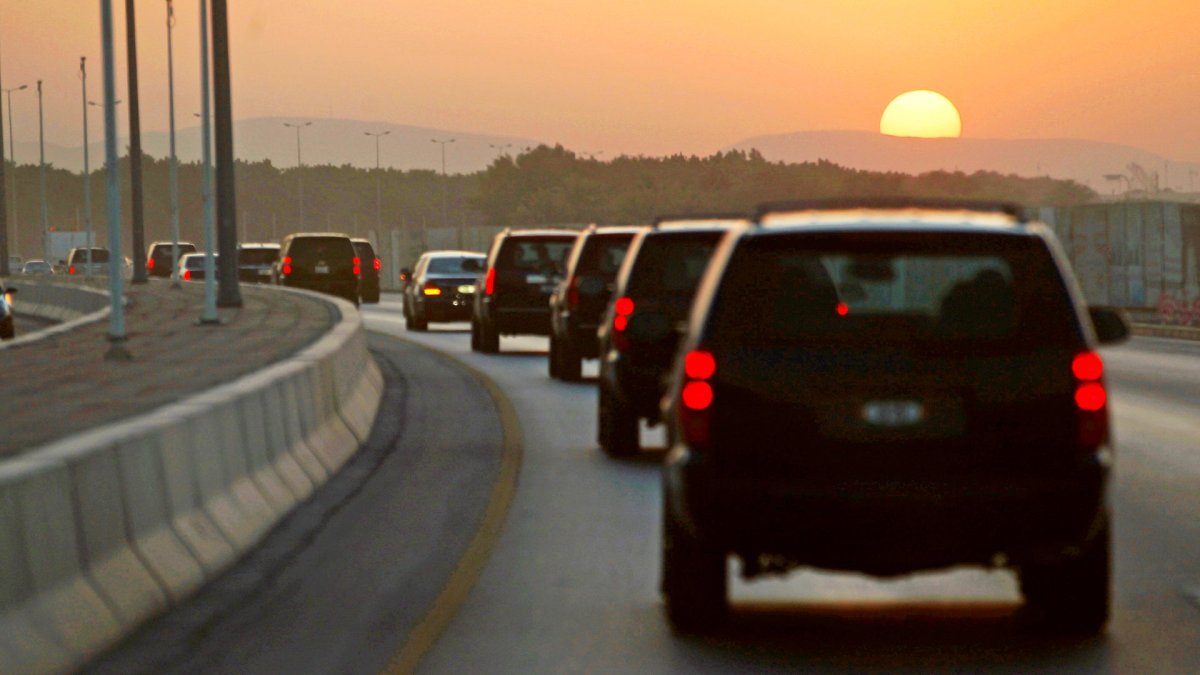
By Joseph Trevithick
Updated Jul 3, 2020 4:13 AM EDT
On Sept. 18, 2010, a ferry belonging to Tarzan Boats left the harbor in Nigeria’s capital Lagos carrying 10 U.S. Department of State armored sport utility vehicles (SUVs). To prevent anyone from selling or salvaging the worn out trucks, the American Embassy in the country hired the private company to dump them into the Gulf of Guinea.
On the way to the disposal area, one of the vehicles broke free from its chains and slammed into the ship’s front loading gate, knocking it off and throwing four people into the water. A fifth person clung helplessly to the SUV’s bumper.
Though State’s mission in Nigeria later reported they had worked with Tarzan Boats in the past without incident, not all of the crew during the accident were wearing life vests, or could swim. One person went missing and presumably drowned. After discussions with American officials in another boat and Nigerian Navy sailors aboard a corvette that rushed to the scene, the remaining crew pushed the other nine vehicles into the ocean and returned home.
Unfortunately, what might otherwise have sounded like a freak accident actually turned out to be part of a pattern of mismanagement. Over the course of more than seven years of investigations, the State Department’s Office of the Inspector General (OIG) found the entire armored vehicle program to be a bit of a mess.
“The armored vehicle program continues to be at significant risk for fraud, waste, and abuse,” State’s top watchdog declared in a wide-ranging February 2017 report . This latest review found vehicles were missing or not fully functional, did not meet official requirements, or were just sitting idle, resulting in a waste of more than $50 million.
When most people think of organizations that own a large number of armored vehicles, their first thought probably isn’t State. But America’s diplomats and supporting staff work in some of the most dangerous places on earth and need protection in order to do their jobs.
A DS agent waves at another driver to move aside in India., AP
The threats are very real. Between 2006 and 2015, the Bureau of Diplomatic Security (DS) recorded dozens of significant attacks on the department’s diplomats and other employees in the Middle East, Africa, Asia, Latin America and Europe. Even before 9/11, there had been a steady need for more security at American diplomatic posts around the world. In 1998, Al Qaeda infamously claimed responsibility for bombings at embassies in Nairobi, Kenya and Dar es Salaam, Tanzania.
In many cases armored vehicles prevented—or could have prevented—deaths or injuries. In December 2015, an unknown individual shot at an embassy vehicle traveling to Bangui M’Poko International Airport in Bangui, Central Africa Republic, hitting a passenger side window, but causing no injuries. On Oct. 11, 2012, Al Qaeda in the Arabian Peninsula terrorists murdered the senior foreign service national investigator for the U.S. Embassy in Yemen as he sat in his car in the country’s capital Sana’a.
As of May 2016, was responsible for a sprawling fleet of more than 4,500 up-armored SUVs, vans and other trucks across the world and in the United States itself. Though the exact base specifications for these up-armored vehicles is classified, the collection of trucks includes modified Chevrolet Suburban and Toyota Land Cruiser SUVs and Chevrolet Express and Ford E-series vans.
But in its broad review, OIG discovered nearly 260 vehicles had gone unused for at least a year and State spent almost $25 million just to store them at sites in the United States. On top of that, the department had given away another 200 armored trucks to other agencies, without getting anything in return, effectively losing over $26 million in the process. The watchdog simply couldn’t find five more trucks, worth over $530,000, that DS listed in its master inventory.
Above and below, workers in Haiti break down a one of the State Department’s up-armored SUVs., State Department
During visits to various embassies, investigators found additional vehicles that did not meet State’s internal standards or had not yet received new upgrades to meet changes in those requirements. At the U.S. Embassy in Bogota, Colombia – the capital of a country struggling to finally end decades of civil war and still battling drug cartels, paramilitaries, and other organized crime groups—more than 20 armored trucks had insufficient armor. The diplomatic post technically operated another 10 vans sitting idle in Front Royal, Virginia waiting to get the necessary modifications.
In certain cases, diplomatic staff relied on vehicles from other agencies that also operated out of embassy compounds, but which did not meet State’s strict guidelines. This included vehicles from Streit, a Canadian firm with offices in the United States, which has made potentially illegal sales to governments in war-torn South Sudan and Libya , as well as reportedly performing work for individuals linked to gangs .
In 2013, the Government Accountability Office (GAO), another federal watchdog, agreed with State’s decision to exclude the company from future armored vehicle contracts over concerns about its basic quality of work. In addition, OIG explained that unauthorized vendors would have extreme difficulty making compliant vehicles, since it only distributes the secret standards to approved companies.
This apparent lack of proper oversight had a negative impact on maintenance, too. OIG’s staff found over 200 vehicles that should have failed their inspections at six different posts in Africa, the Caribbean, and the Middle East. These trips included visits to the U.S. embassies in Israel and Jordan, where security is undoubtedly a major priority.
Some of these problems were relatively minor, such as low tire pressure or improper labeling. However, more than 30 percent of vehicles had problems with one or more of their bullet-proof windows, 16 percent had mismatched tires and 10 percent had broken doors, all of which could be serious deficiencies in an attack.
In the course their work, investigators crafted nearly 40 individual recommendations in total and sent them to DS, as well as other offices and specific embassies and consulates. To be sure, State rushed to fix many of these very serious issues. By the time OIG published its audit, it acknowledged that only eight recommendations remained unresolved.
“The Department has responded to and has already taken steps to resolve the vast majority of the OIG’s recommendations,” a State Department official told The War Zone in an Email. “We intend to prioritize the OIG findings and address the corresponding recommendations accordingly and as quickly as possible.”
But the eight unresolved issues are still significant, as are the disagreements between OIG and DS over how to move forward.
For one, the review explained the State had no clear mechanism for figuring out just how many armored vehicles any particular post might actually need to fulfill its duties. DS officials countered that this was virtually impossible to do because the relevant factors could include anything from terrorist threats to how many parking spots an embassy had available in its lots.
OIG was unconvinced, insisting officials could craft at least some baseline metrics. The report pointed to the fact that security officers already had standardized requirements for diplomatic housing, regardless of where those residences were located.
Contractors, some wearing flip-flops, dismantle a State Department SUV in Nigeria., Department of State
Two additional recommendations stemmed directly from this issue of “right-sizing” the fleet. If State didn’t know how to determine where to send vehicles in the first place, it couldn’t regularly check to make sure it was still meeting those requirements or have regional security offices (RSO) give their own assessments. Again, OIG disagreed with the assertion that these tasks were just too hard to complete.
Beyond that, the watchdog wanted the DS’ leadership to create a single, comprehensive plan for how big the fleet should be and how and where to employ the vehicles in general. Censors redacted the specific reasons why department officials disputed this recommendation. However, OIG highlighted the fact that something needed to be done to prevent unused vehicles from sitting in warehouses, costing tax payers millions.
Elsewhere in the report, security officials did stress that unforeseen crises or changes in priorities made long term planning difficult. “Due to the changes in the Department’s priorities for Afghanistan, Iraq and Pakistan posts, our armored vehicles requirements were reduced, directly resulting in an unforeseen surplus of armored vehicles,” the State Department official added in their Email.
The watchdog also wanted to make sure State wasn’t just giving away vehicles in the future without getting some kind of reimbursement. DS contended that it would actually be illegal to charge other agencies. In turn, OIG pointed out that the relevant regulations only applied to State’s assets inside the United States and its territories, leaving the possibility open to sell off armored vehicles overseas to other law enforcement agencies or the U.S. military. In addition, the rules for transfer of personal property would not preclude the department from using authorities in other statutes or arranging separate quid pro quo agreements to get compensation.
“OIG does not purport to give guidance on precisely how DS could obtain reimbursement, but the high-dollar value of the unused property more than justifies exploring the availability of such options,” the report continued. “The intent of this recommendation is to encourage DS to consider whether reimbursement is available.”
A DS convoy in Amman, Jordan., AP
The watchdog and State’s top security officials disagreed on three more recommendations relating to who was responsible for vehicles in the field and whether certain staff needed additional training. In spite of objections from DS’ management, OIG insisted that RSOs needed to make regular inspections – not something included in their existing duties – and that both those security officers and general services office personnel needed to know how to properly dispose of armored vehicles.
These issues were all indicative of a larger, problematic trend of confusion over responsibilities and a general lack of information and planning. Crises would undoubtedly erupt, but there seemed to be no clear course of action on the part of DS to shift armored vehicles around in response or in the aftermath.
In July 2014, a convoy of armored vehicles took American officials overland from the embassy in Tripoli, Libya to the safety of neighboring Tunisia. Nearly a year later OIG found that this glut of trucks was sitting within the embassy compound in Tunis as officials continued to debate what to do with them.
“All Tripoli vehicles were either placed in-service by Embassy Tunis, remain stored until needed, or were transferred to other USG [U.S. government] agencies,” another State Department official told the author in a separate Email in March 2016. “Most were placed in-service by Department of State, some transferred to other USG agencies and others remain stored waiting registration, assignment, etc.”
Unusued vehicles in an open lot in Front Royal, Virginia,., State Department
As State found out in Nigeria in 2010, just getting rid of unused or broken trucks can be difficult. Since their specifications are secret, embassies and other diplomatic posts can’t just sell them off. As of February 2017, there were five approved methods for disposing of armored vehicles. Contractors could cut them into sections no bigger than two square feet, crush them, burn them, literally blow them up, or bury them, but only on U.S. soil, including within embassy compounds.
In 2012, State stopped allowing hired firms to dump the trucks into the sea under any circumstances. In January 2017 , OIG released a report highlighting continued concerns about the health and safety of State-employed or hired contractors who were still smashing and crushing vehicles in countries such as Haiti and Nigeria.
Investigators had taken striking photographs of workers, often without any protective gear at all, bashing in windows with hand tools or squashing SUV bodies with heavy construction equipment. One image caught two men cutting a section of a vehicle with a blow torch next to a no-smoking sign within the U.S. Embassy compound in Nairobi, Kenya. According to OIG, DS had already adequately responded to the two recommendations in that review by the time it released the much larger report the following month.
The February 2017 report also did not touch on the separate matter of training for DS staff operating the vehicles abroad. With their added armor and gear, the protected trucks didn’t handle like their commercial counterparts. Drivers needed special training to get safely around the often congested streets of lesser-developed countries.
Vehicles from the Libyan evacuation sit inside the U.S. Embassy compound in Tunis, Tunisia., State Department
In April 2016 , a convoy carrying then U.S. Ambassador to the United Nations Samantha Power through a village in Northern Cameroon accidentally hit and killed a seven-year-old boy. An ambulance with the group tried to rush the child to a nearby hospital.
At the time, though Power smartly insisted on apologizing to the family in person and State compensated them with money and other goods, the incident seemed to highlight the inherent conflict in keeping American diplomats safe abroad. These individuals are supposed to be the public face of the United States, but are often insulated from the general public in the countries where they work due to security concerns.
“What can you say?” she said later during an interview on ABC’s “Nightline.” “You come here to help.”
But in 2016, OIG released the results of inspections that suggested these deadly incidents were more likely part of the larger issue of how DS was handling increased security requirements and the expanding armored vehicle program. Investigators found State’s armored vehicles had been involved in more than 770 “mishaps” since 2015 and classified nearly 60 percent of them as “preventable.” In 10 of the 12 instances where the vehicle had killed someone, State cited a lack of driver training as the primary contributing factor.
“The Department provides specialized operator training that includes handling armored vehicle dynamics,” OIG explained in a July 2016 review. “But it is mandatory only for drivers of chiefs of mission/principal officers, none of whom were involved in the 12 fatal mishaps.”
A DS convoy moves through Haiti’s capital Port-au-Prince in 2015., State Department
There had clearly been a negative trend in the management of the armored vehicle program. Though State clearly tried to respond quickly to specific issues as OIG uncovered them, taken together, the reports paint a picture of officials consistently overwhelmed by the sheer scope of their responsibilities and struggling to catch up.
Budget cuts can’t have helped matters. During the 2011 fiscal year, members of congress trimmed nearly $130 million from diplomatic security in President Barack Obama’s proposed budget. In the next fiscal cycle, legislators cut State’s budget as a whole by another $330 million.
In his first budget proposal in March 2017, President Donald Trump suggested the department could do without $11 billion in the next year. If approved, this would amount to a total budget nearly 29 percent smaller compared to one in the previous cycle.
How this would impact the armored vehicle program specifically would depend on a variety of factors. Though DS oversees it as a whole, individual embassies and other diplomatic posts are often responsible for training drivers and otherwise operating and maintaining the individual vehicles. Changes across the budget could impact any plans to resolve the long-standing issues related to the fleet.
Whatever happens, State clearly knows there have been and still are problems in how it manages its armored trucks. Only time will tell if officials find comprehensive ways to truly start getting out in front of the persistent issues.
Contact the author: joe@thedrive.com
Comments couldn’t be loaded. Please refresh the page.
作者:约瑟夫·特雷维西克
更新于美国东部时间2020年7月3日凌晨4:13
2010年9月18日,一艘属于泰山船公司的渡轮从尼日利亚首都拉各斯港口出发,船上载有10辆美国国务院的装甲运动型多用途车(SUV)。为了防止有人出售或拆解这些破旧的卡车,美国驻尼日利亚大使馆雇佣了这家私营公司将它们倾倒进几内亚湾。
在前往处置区的途中,其中一辆车挣脱了链条,撞上了船的前装卸门,将门撞掉,导致四人落水。第五个人无助地抓住SUV的保险杠。
尽管美国国务院驻尼日利亚使团后来报告称,他们过去曾与泰山船艇公司合作,从未发生过事故,但事故发生时,并非所有船员都穿着救生衣或会游泳。一人失踪,据推测溺水身亡。在与另一艘船上的美国官员以及赶赴现场的尼日利亚海军护卫舰上的水兵进行磋商后,剩余的船员将其他九艘船推入海中,然后返回了美国。
不幸的是,原本看似一起偶然事故的事件,实际上却是一系列管理不善问题的体现。经过七年多的调查,美国国务院监察长办公室(OIG)发现整个装甲车项目都存在严重的管理混乱问题。
“装甲车项目仍然存在严重的欺诈、浪费和滥用风险,”国务院最高监督机构在2017年2月的一份内容广泛的报告中指出。最新的审查发现,部分车辆缺失或功能不全,不符合官方要求,或者只是闲置,造成超过5000万美元的浪费。
大多数人想到拥有大量装甲车辆的机构时,首先想到的可能并非美国国务院。但美国的外交官及其工作人员在地球上一些最危险的地方工作,他们需要保护才能履行职责。
美联社报道,在印度,一名DS特工向另一名司机挥手示意他让路。
这些威胁并非虚幻。2006年至2015年间,美国外交安全局(DS)记录了数十起针对该部门驻中东、非洲、亚洲、拉丁美洲和欧洲外交官及其他雇员的重大袭击事件。早在9·11事件之前,美国驻世界各地的外交机构就一直需要加强安保。1998年,基地组织曾宣称对肯尼亚内罗毕和坦桑尼亚达累斯萨拉姆大使馆的爆炸事件负责,此事臭名昭著。
在许多情况下,装甲车阻止了——或者本可以阻止——人员伤亡。2015年12月,一名身份不明的人向一辆前往中非共和国班吉姆波科国际机场的使馆车辆开枪,子弹击中了副驾驶侧车窗,但未造成人员伤亡。2012年10月11日,阿拉伯半岛基地组织恐怖分子在也门首都萨那杀害了美国驻也门大使馆的高级外事调查员,当时他正坐在车里。
截至2016年5月,该公司负责管理一支庞大的车队,旗下拥有超过4500辆装甲SUV、厢式货车和其他卡车,遍布全球及美国本土。虽然这些装甲车辆的具体规格属于机密,但其车队包括改装过的雪佛兰Suburban和丰田兰德酷路泽SUV,以及雪佛兰Express和福特E系列厢式货车。
但监察长办公室在全面审查中发现,近260辆车辆至少闲置了一年,而国务院仅在美国境内的仓库就花费了近2500万美元用于存放这些车辆。此外,国务院还向其他机构赠送了另外200辆装甲车,却没有收到任何回报,实际上损失了超过2600万美元。监察机构始终无法找到国务院在其主库存清单中列出的另外五辆价值超过53万美元的装甲车。
上图和下图,海地的工人们正在拆解美国国务院的一辆装甲SUV。
在走访各使馆期间,调查人员发现还有一些车辆不符合国务院内部标准,或者尚未进行升级改造以满足新的要求。在位于哥伦比亚首都波哥大的美国大使馆——哥伦比亚正努力结束长达数十年的内战,同时仍在与贩毒集团、准军事组织和其他有组织犯罪集团作斗争——有超过20辆装甲车的装甲防护不足。此外,该外交机构还有10辆厢式货车停放在弗吉尼亚州弗兰特罗亚尔,等待进行必要的改装。
在某些情况下,外交人员会使用其他机构的车辆,这些机构也以使馆为基地,但并不符合国务院的严格规定。其中包括Streit公司的车辆。Streit是一家加拿大公司,在美国设有办事处,该公司曾向饱受战争蹂躏的南苏丹和利比亚政府进行过可能非法的车辆销售,据报道,该公司还为与犯罪团伙有关联的个人提供服务。
2013年,另一联邦监督机构——政府问责局(GAO)也同意国务院的决定,将该公司排除在未来的装甲车合同之外,原因是其基本工作质量令人担忧。此外,监察长办公室(OIG)解释说,未经授权的供应商将很难制造出符合标准的车辆,因为OIG只向获准的公司分发保密标准。
这种监管不力的明显缺失也对车辆维护产生了负面影响。监察长办公室的工作人员在非洲、加勒比海和中东的六个不同驻地发现了200多辆本应不合格的车辆。这些行程包括访问美国驻以色列和约旦大使馆,而安全无疑是这两个国家/地区的重中之重。
有些问题相对较小,例如轮胎气压不足或标签错误。然而,超过30%的车辆存在一个或多个防弹玻璃故障,16%的车辆轮胎不匹配,10%的车辆车门破损,所有这些都可能在袭击中造成严重后果。
在调查过程中,调查人员共提出了近40项建议,并分别发送给了国务院安全局以及其他部门和相关使领馆。可以肯定的是,国务院迅速着手解决其中许多非常严重的问题。监察长办公室发布审计报告时承认,仅剩8项建议尚未得到解决。
“国务院已对监察长办公室提出的绝大多数建议作出回应,并已采取措施予以解决,”一位国务院官员在给《战区》的电子邮件中表示。“我们打算优先处理监察长办公室的调查结果,并尽快落实相应的建议。”
但这八个未解决的问题仍然意义重大,OIG 和 DS 之间在如何推进方面也存在分歧。
首先,审查报告解释说,国务院没有明确的机制来确定某个特定使领馆履行职责究竟需要多少辆装甲车。国务院官员则反驳说,这几乎不可能做到,因为相关因素可能包括恐怖威胁到使馆停车场可用车位数量等各种因素。
监察长办公室对此并不认同,坚持认为官员们至少可以制定一些基本指标。报告指出,无论外交官住所位于何处,安保人员对外交官住房的要求早已标准化。
在尼日利亚,一些穿着人字拖的承包商正在拆解一辆美国国务院的SUV。(美国国务院)
另有两项建议直接源于“合理配置”车队规模的问题。如果国务院一开始就不知道如何确定车辆的部署地点,就无法定期检查是否仍然符合相关要求,也无法让区域安全办公室(RSO)进行评估。监察长办公室再次不同意“这些任务太难完成”的说法。
除此之外,监察机构还希望国防部领导层制定一项全面统一的计划,明确车队规模、车辆使用方式和地点。审查人员隐去了部门官员反对这项建议的具体原因。不过,监察长办公室强调,必须采取措施防止闲置车辆停放在仓库,造成纳税人数百万美元的损失。
报告其他部分也提到,安全官员强调,突发危机或优先事项的改变使得长期规划变得困难。“由于国务院调整了对阿富汗、伊拉克和巴基斯坦驻军的优先事项,我们的装甲车需求量减少了,直接导致了装甲车数量意外过剩,”一位国务院官员在电子邮件中补充道。
监督机构还希望确保国务院未来不会在未获得任何补偿的情况下随意赠送车辆。国务院战略情报局(DS)辩称,向其他机构收费实际上是违法的。而监察长办公室(OIG)则指出,相关法规仅适用于国务院在美国及其领土内的资产,这意味着国务院仍有可能将装甲车出售给海外的其他执法机构或美军。此外,个人财产转让规则并不妨碍国务院援引其他法规的授权或另行达成交换条件协议来获得补偿。
报告继续指出:“监察长办公室并非旨在就DS如何获得补偿提供具体指导,但未使用资产的高昂价值足以证明探索此类方案的合理性。此项建议的目的是鼓励DS考虑是否可以获得补偿。”
美联社照片,约旦安曼,DS车队
监察机构和国务院高级安全官员在另外三项建议上存在分歧,这些建议涉及谁负责一线车辆以及某些工作人员是否需要额外培训。尽管国务院安全局管理层提出反对意见,监察长办公室仍坚持认为区域安全官需要进行定期检查——这并非他们现有职责的一部分——并且这些安全官和总务办公室人员都需要知道如何正确处置装甲车辆。
这些问题都表明存在一个更大的问题,即职责划分混乱,以及普遍缺乏信息和计划。危机无疑会爆发,但DS方面似乎没有明确的应对措施来调配装甲车辆以应对危机或危机后的局面。
2014年7月,一支装甲车队将美国官员从利比亚的黎波里大使馆经陆路送往邻国突尼斯的安全地带。近一年后,监察长办公室发现,这批数量庞大的卡车仍然停放在突尼斯大使馆院内,而官员们仍在争论如何处理它们。
“所有的黎波里车辆要么由美国驻突尼斯大使馆投入使用,要么一直存放待用,要么已移交给其他美国政府机构,”另一位国务院官员在2016年3月的另一封电子邮件中告诉作者。“大多数车辆已由国务院投入使用,一些已移交给其他美国政府机构,还有一些仍存放待登记、分配等。”
弗吉尼亚州弗兰特罗亚尔一处露天停车场停放着闲置车辆。(美国国务院)
正如美国国务院在2010年尼日利亚的经历所表明的那样,处理废弃或损坏的卡车并非易事。由于卡车的具体规格属于机密,大使馆和其他外交机构无法随意出售。截至2017年2月,美国批准了五种处置装甲车辆的方法。承包商可以将车辆切割成不超过两平方英尺的部件,将其压碎、焚烧、炸毁或掩埋,但这些操作只能在美国境内进行,包括大使馆院内。
2012年,国务院禁止任何情况下雇用公司将废弃卡车倾倒进海里。2017年1月,监察长办公室发布报告,强调了对受雇于国务院或被其雇佣的承包商的健康和安全持续担忧,这些承包商仍在海地和尼日利亚等国砸毁和碾压车辆。
调查人员拍摄到一些令人震惊的照片,照片显示工人们往往没有任何防护装备,用手工具砸碎窗户,或用重型建筑设备压扁SUV车身。其中一张照片拍到两名男子在肯尼亚内罗毕美国大使馆院内,在禁烟标志旁用喷灯切割车辆的一部分。据监察长办公室称,在次月发布篇幅更长的报告时,DS已经对那次审查中的两项建议做出了充分回应。
2017年2月的报告也没有提及在海外驾驶这些车辆的DS工作人员的培训问题。由于加装了装甲和装备,这些防护卡车的操控性能与普通商用卡车截然不同。驾驶员需要接受专门培训,才能在欠发达国家拥挤的街道上安全行驶。
来自利比亚撤侨行动的车辆停放在美国驻突尼斯大使馆院内。(美国国务院)
2016年4月,载着时任美国驻联合国大使萨曼莎·鲍尔的车队途经喀麦隆北部的一个村庄时,意外撞死了一名七岁男孩。车队中的一辆救护车试图将孩子紧急送往附近医院。
当时,尽管鲍尔明智地坚持亲自向受害者家属道歉,国务院也以金钱和其他物品对他们进行了赔偿,但这一事件似乎凸显了保障美国外交官海外安全方面固有的矛盾。这些外交官本应是美国的公众形象,但由于安全方面的考虑,他们往往与所在国的普通民众隔绝开来。
“还能说什么呢?”她后来在接受美国广播公司“夜线”节目采访时说道,“你来这里就是为了帮忙。”
但2016年,监察长办公室公布的检查结果表明,这些致命事件更有可能是国务院安全局(DS)在应对日益增长的安全需求和不断扩大的装甲车项目方面存在更大问题的一部分。调查人员发现,自2015年以来,国务院的装甲车已卷入770多起“事故”,其中近60%被归类为“可预防的”。在12起造成人员死亡的事故中,国务院将10起事故的主要原因归咎于驾驶员缺乏培训。
“国防部提供包括装甲车辆动力学操作在内的专业操作员培训,”监察长办公室在2016年7月的一份审查报告中解释说。“但这种培训仅对任务负责人/主要官员的驾驶员强制执行,而这12起致命事故中没有一人与这些驾驶员有关。”
2015年,一支DS车队驶过海地首都太子港。(美国国务院)
装甲车项目的管理显然出现了负面趋势。尽管国务院在监察长办公室发现具体问题后都试图迅速做出回应,但总体而言,这些报告描绘出一幅官员们始终不堪重负、疲于奔命的景象。
预算削减无疑雪上加霜。在2011财年,国会议员在奥巴马总统提出的预算案中削减了近1.3亿美元的外交安全预算。在接下来的财政周期中,立法者又将国务院的整体预算削减了3.3亿美元。
在2017年3月的第一份预算提案中,唐纳德·特朗普总统建议该部门在下一年度可以削减110亿美元的预算。如果获得批准,这将使该部门的总预算比上一年度减少近29%。
具体而言,这将如何影响装甲车项目取决于多种因素。虽然国防安全局 (DS) 负责整体监管,但各个大使馆和其他外交机构通常负责培训驾驶员以及车辆的运行和维护。预算的任何变动都可能影响解决该车队长期存在问题的计划。
无论结果如何,国务院显然清楚其装甲车管理方面存在问题,而且这些问题至今依然存在。官员们能否找到全面有效的办法,真正着手解决这些长期存在的问题,只有时间才能给出答案。
联系作者:joe@thedrive.com
评论加载失败,请刷新页面。