‘A soap opera’: How Ukraine’s frontline soldiers view peace talks“一场肥皂剧”:乌克兰前线士兵如何看待和平谈判
"This is the war of exhaustion,” said one Ukrainian soldier at the front. “And we are exhausted. ... [But] I trust the stubbornness of my fellow citizens.”
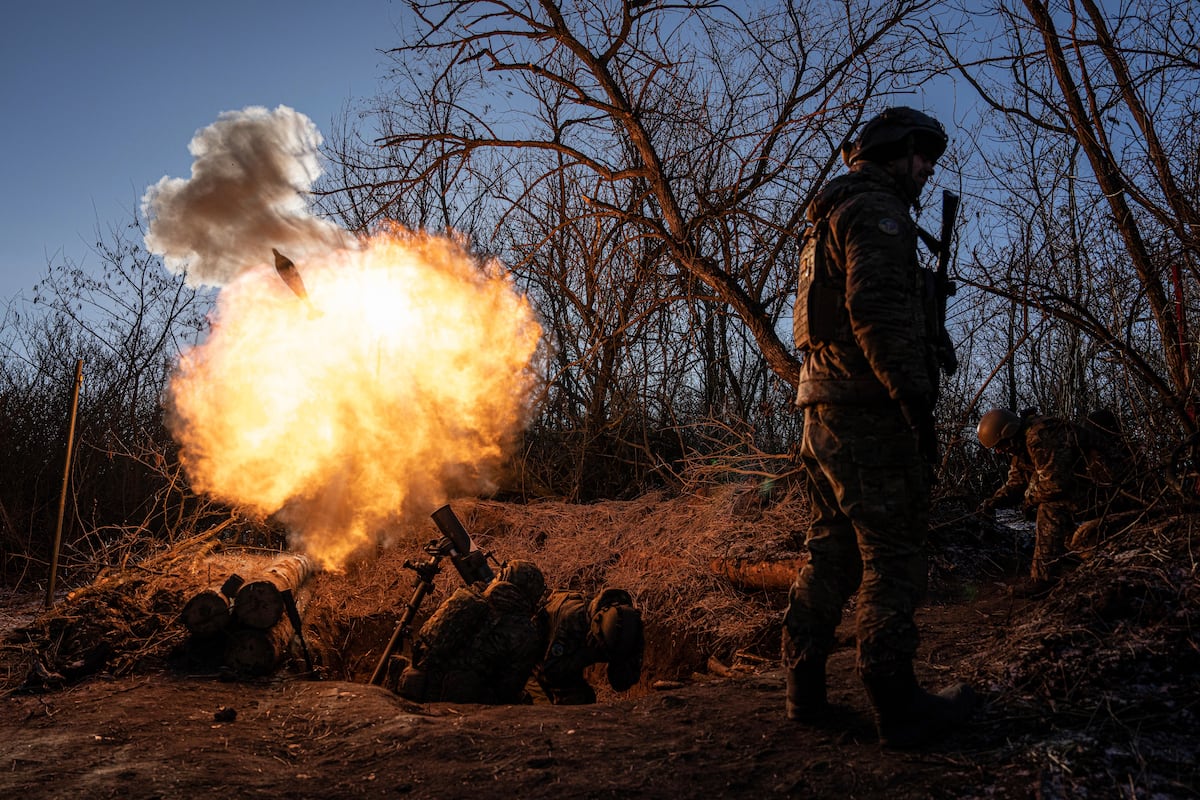
ZHYTOMYR, Ukraine — “These peace talks feel like cognitive dissonance to me,” “Primo” wrote in a message to Military Times while deployed in southern Ukraine’s Zaporizhzhia region, home to Europe’s largest nuclear power plant, which has been under Russian occupation since the early weeks of Russia’s full-scale invasion of Ukraine .
The 42-year-old air reconnaissance squad commander added that the sense among his troops are that the talks are “pointless” and “irrelevant.” Military Times agreed to refer to all active duty soldiers by their nom de guerre for operational security.
Talks that kicked off with a November ultimatum by President Donald Trump have continued this week at the World Economic Forum in Davos, where Putin’s envoy Kirill Dmitriev arrived Monday for direct meetings with U.S. negotiators — the first time a Kremlin representative has attended the forum since the full-scale invasion began, according to The Kyiv Independent .
The attendance also points toward how far the negotiations have moved from back-channel messaging into public, high-level contact.
After days of uncertainty over whether he would attend, Ukrainian President Volodymyr Zelenskyy traveled to Switzerland on Thursday to meet with Trump, where he described feeling like Ukraine was living through a deadly replay of the film “Groundhog’s Day” as uncertainty over America’s role in the world spilled onto the world stage, per BBC .
But for those still enduring the fight at the core of those talks, the peace process has become “a soap opera,” Primo said, which he claimed is based on the “ego of one particular man.”
The talks may be framed as high strategy, but on the front, they’re experienced as something more personal: a question of whether their sacrifice buys true security — or gets traded away for just another pause in the fighting.
That disconnect is sharpened by how undefined the “guarantees” still are. Ukraine is not covered by NATO’s Article 5 collective-defense clause, and proposals circulating around the talks have described various forms of outside security backing — without a clear trigger, timeline or enforcement mechanism.
Understanding what security promises will be cemented in the US-brokered peace plan has been a challenge since it was first leaked to the press in November, and quickly linked to a Russian-authored proposal circulated earlier last year.
A Russian soldier guards an area of the Zaporizhzhia Nuclear Power Station in 2022. (AP Photo)
One 36-year-old platoon commander known as “Prorab” — slang for “Foreman” in English — stated in messages to Military times from the zero line in the Zaporizhzhia sector that the peace talks have felt like an emotional rollercoaster.
“When I hear ‘ceasefire’ or ‘a deal,’ my first thought is: maybe this hell is finally ending,” he said.
He was mobilized in 2022 and “fought in many battles” before taking up his current role in Ukraine’s First Separate Assault Regiment.
“My biggest fear is that after a deal,” he said. “Those bastards will regroup, dig in and start the war all over again.”
A refusal to back a settlement that favors Russia isn’t limited to Ukraine’s trenches.
A January survey by the Kyiv International Institute of Sociology found 69% of Ukrainians would accept a deal that freezes the front lines with security guarantees — as long as occupied territories aren’t formally recognized as Russian.
But 74% reject any framework that requires troop withdrawals or military limits without those guarantees. A clear majority, 62%, say they will keep fighting as long as it takes.
The survey suggests Ukrainians can imagine a freeze — but only if it comes with real security and no legal surrender of occupied land. That’s the same core fear soldiers describe in plainer language: that a “deal” without teeth is just an intermission.
Not every soldier described the talks as abstract or farcical — for some, the dominant feeling was betrayal, especially toward Washington.
At a training site in Zhytomyr, a Georgian-Ukrainian special operations soldier who goes by “Sparrow” told Military Times he feels “confused and betrayed by the recent peace talks. And especially by the U.S.”
He has fought alongside many American veterans in Ukraine since Russia launched its full-scale invasion almost four years ago, he said. Now, he could not believe how quickly Washington went from Kyiv’s most “steadfast ally” to a “wildcard” no one could count on.
“They were our brothers, and now they seem like they’re abandoning us,” he said.
Smoke rises over a sunflower field on the frontline in Donetsk region, Ukraine, 2023. (Libkos/AP)
As negotiators work behind the scenes, Russia continues its aerial campaign against Ukraine’s critical energy infrastructure, sending wave after wave of attacks that have left millions in the dark during the coldest months of the year.
“After all, this is the war of exhaustion,” Primo said. “And we are exhausted.”
Ukraine’s new defense minister, Mykhailo Fedorov, told parliament that around 200,000 soldiers are currently AWOL, and that roughly 2 million Ukrainians are wanted for alleged mobilization violations — a scale-of-force problem that sits underneath every negotiating headline, the Associated Press reported.
October alone saw a record 21,602 desertion cases, per The Kyiv Independent .
Despite the challenges, Primo said he believes in Ukraine’s staying power.
“I trust the stubbornness of my fellow citizens,” he said.
It’s their allies they worry most about. For Foreman, everything about the peace deal hinges on enforcement possibilities from partners. We need “real guarantees,” he said.
“From a country that can actually keep its word.”
Any settlement that touches borders would also collide with political reality inside Ukraine.
Primo said he is convinced Ukraine’s government still has limits.
“I believe that there are certain red lines that any Ukrainian politician is not yet ready to cross.”
Ukrainska Pravda reported last month that Zelenskyy said territorial questions and approval of any comprehensive peace plan must ultimately be decided by Ukrainians through a nationwide vote and parliamentary ratification — making progress towards the war’s real end easier said than done.
The human cost behind those red lines is already immense. More than 400,000 Ukrainian soldiers have been killed or wounded since the full-scale invasion began, U.S. officials estimated over a year ago, per Reuters .
Soldiers who spoke to Military Times said politicians in Kyiv and Washington need to understand what that number means before they sign anything.
“Brothers who gave their lives will never be forgotten or erased,” Sparrow said.
Medics help a wounded Ukrainian soldier at a medical stabilisation point near Bakhmut, Donetsk region, Ukraine, May 2023. (AP/Libkos)
In his view, a deal that rewards conquest would not just redraw borders — it would tell Moscow that brutality pays, and that after enough suffering, the world will still move on.
“We won’t accept a peace deal that hands Russia a prize for its attempted genocide,” he added.
The demand for “justice” has been taken up by the International Criminal Court , which issued an arrest warrant for Putin in 2023 over the unlawful deportation and transfer of Ukrainian children.
Nonetheless, Trump met Putin at Alaska’s Joint Base Elmendorf-Richardson in August — offering a red carpet for the wanted leader that sharpened fears in Kyiv that Russia can continue to bomb Ukraine and still be treated as a great power on an equal diplomatic playing field.
Sparrow framed the danger as precedent: reward Russia for invasion, and it won’t stop with Ukraine.
“There must be justice, and Russia must be stopped from doing this again.”
None of the soldiers interviewed expected the war to end cleanly. They described negotiations as inevitable — but only meaningful if they produce enforceable guarantees and consequences strong enough to keep Russia from returning to finish the job.
Sparrow said he would oppose any settlement that risks locking in another cycle of war for the next generation.
“I won’t vote for any peace deal if it means my children may have to fight the same enemy that me and my father both spent our lives battling against.”
Primo spoke with certainty: “At the moment, accepting Russian demands will mean more war during my lifetime,” he said. “It would mean despair for those who fought, distrust in the government, apathy in the EU.”
Many officials feel similarly. A senior European diplomat told Military Times in December that the American-led peace deal " scares the bejesus out of us " and appeared to benefit Russia more than Western allies.
The public is skeptical, too. KIIS found that only 10% of Ukrainians expect the war to end by the beginning of 2026, with just another 16% expecting it to end in the first half of the year.
For now, negotiators have yet to sign off on a deal with enough enforcement or consequences to convince soldiers that any agreement is more than just a pause.
“Wars don’t end in victories,” Foreman wrote from the frozen front. “They end in agreements.”
乌克兰日托米尔——“这些和平谈判让我感觉像是认知失调,” “普里莫”在部署于乌克兰南部扎波罗热地区时,给《军事时报》发了一条信息。扎波罗热地区是欧洲最大的核电站所在地,自俄罗斯全面入侵乌克兰的最初几周以来,该地区一直处于俄罗斯的占领之下。
这位42岁的空中侦察小队指挥官补充说,他的部队普遍认为这些会谈“毫无意义”且“无关紧要”。《军事时报》同意出于行动安全考虑,使用所有现役军人的化名进行称呼。
据《基辅独立报》报道,自美国总统唐纳德·特朗普 11 月发出最后通牒以来,谈判本周在达沃斯世界经济论坛上继续进行。普京的特使基里尔·德米特里耶夫周一抵达达沃斯,与美国谈判代表举行直接会谈——这是自全面入侵开始以来,克里姆林宫代表首次出席该论坛。
出席人数也表明,谈判已经从幕后沟通转向了公开的高层接触。
在数日关于他是否会出席的不确定性之后,乌克兰总统弗拉基米尔·泽连斯基于周四前往瑞士与特朗普会面。据英国广播公司报道,泽连斯基在会面中表示,随着美国在世界上的角色不确定性蔓延到国际舞台,他感觉乌克兰就像在经历电影《土拨鼠日》的致命重演。
但普里莫表示,对于那些仍在忍受这些谈判核心斗争的人来说,和平进程已经变成了一场“肥皂剧”,他声称这是基于“某个特定人物的自负”。
会谈或许被包装成高层次的战略,但在前线,人们却将其视为更私人的事情:他们的牺牲能否换来真正的安全,还是仅仅换来战斗的又一次暂停。
这种脱节因“保证”内容的模糊不清而更加凸显。乌克兰不在北约第五条集体防御条款的保护范围内,而围绕谈判流传的各种提案描述了各种形式的外部安全支持——但都没有明确的触发条件、时间表或执行机制。
自去年 11 月美国斡旋的和平计划首次泄露给媒体以来,了解其中哪些安全承诺将得到落实一直是一个挑战,而且该计划很快就与去年早些时候流传的一份由俄罗斯撰写的提案联系起来。
2022年,一名俄罗斯士兵在扎波罗热核电站附近执勤。(美联社照片)
一位名叫“Prorab”(英语中“工头”的俚语)的36岁排长在扎波罗热地区的零线向《军事时报》发来消息称,和平谈判感觉就像一场情绪过山车。
“当我听到‘停火’或‘达成协议’时,我的第一反应是:也许这场地狱般的战争终于要结束了,”他说。
他在 2022 年被动员起来,参加了许多战斗,之后在乌克兰第一独立突击团担任目前的职务。
“我最担心的是,达成协议之后,”他说,“那些混蛋会重整旗鼓,顽强抵抗,然后再次发动战争。”
拒绝支持有利于俄罗斯的解决方案,这种行为并不局限于乌克兰战壕。
基辅国际社会学研究所一月份的一项调查发现,69%的乌克兰人会接受一项冻结前线并提供安全保障的协议——只要被占领土不被正式承认为俄罗斯领土。
但74%的人拒绝任何在没有相应保证的情况下要求撤军或限制军事规模的框架。绝大多数人(62%)表示,他们会一直战斗下去,直到胜利到来。
调查显示,乌克兰人可以接受冻结局势,但前提是必须确保真正的安全,并且不涉及合法割让被占领土。这与士兵们用更直白的语言描述的核心担忧不谋而合:没有实际效力的“协议”只不过是权宜之计。
并非所有士兵都认为会谈抽象或荒谬——对一些士兵来说,最主要的感受是背叛,尤其是对华盛顿的背叛。
在日托米尔的一个训练基地,一名绰号“麻雀”的格鲁吉亚裔乌克兰特种作战士兵告诉《军事时报》,他对最近的和平谈判感到“困惑和背叛,尤其是对美国”。
他说,自俄罗斯近四年前发动全面入侵以来,他一直与许多美国退伍军人在乌克兰并肩作战。如今,他简直无法相信华盛顿竟如此迅速地从基辅最“坚定的盟友”变成了谁都无法信任的“变数”。
“他们曾是我们的兄弟,现在他们似乎要抛弃我们了,”他说。
2023年,乌克兰顿涅茨克地区前线,向日葵田上空升起缕缕青烟。(Libkos/AP)
在谈判人员幕后努力之际,俄罗斯继续对乌克兰的关键能源基础设施发动空袭,一波又一波的袭击导致数百万人在一年中最寒冷的月份里陷入黑暗。
“毕竟,这是一场消耗战,”普里莫说。“而我们已经筋疲力尽了。”
据美联社报道,乌克兰新任国防部长米哈伊洛·费多罗夫向议会表示,目前约有 20 万名士兵擅离职守,约有 200 万乌克兰人因涉嫌违反动员令而被通缉——这是一个兵力规模问题,也是每一条谈判头条新闻的背后隐隐问题。
据《基辅独立报》报道,仅 10 月份就发生了创纪录的 21602 起逃兵案件。
尽管面临挑战,普里莫表示他相信乌克兰的持久力。
“我相信我的同胞们的固执,”他说。
他们最担心的是盟友。对福尔曼来说,和平协议能否成功取决于合作伙伴能否切实执行。他说,我们需要“真正的保证”。
“来自一个真正能信守承诺的国家。”
任何涉及边界的协议都会与乌克兰国内的政治现实发生冲突。
普里莫表示,他确信乌克兰政府仍然存在局限性。
“我认为,任何乌克兰政治家都还没有准备好跨越某些红线。”
《乌克兰真理报》上个月报道称,泽连斯基表示,领土问题和任何全面和平计划的批准最终必须由乌克兰人民通过全国投票和议会批准来决定——这使得战争真正结束的进程说起来容易做起来难。
这些红线背后造成的人员伤亡已经非常巨大。据路透社报道,美国官员一年多前估计,自全面入侵开始以来,已有超过40万乌克兰士兵伤亡。
接受《军事时报》采访的士兵表示,基辅和华盛顿的政客们在签署任何文件之前,需要了解这个数字的含义。
“那些献出生命的兄弟们永远不会被遗忘或抹去,”斯帕罗说。
2023年5月,在乌克兰顿涅茨克州巴赫穆特附近的一个医疗救护点,医护人员正在救助一名受伤的乌克兰士兵。(美联社/Libkos)
在他看来,奖励征服的协议不仅会重新划分边界,还会告诉莫斯科,残暴是有回报的,即使遭受了足够的苦难,世界仍然会继续前进。
“我们不会接受一项让俄罗斯因其企图实施种族灭绝而获得奖励的和平协议,”他补充道。
对“正义”的诉求已引起国际刑事法院的关注,该法院于 2023 年对普京发出逮捕令,指控其非法驱逐和转移乌克兰儿童。
尽管如此,特朗普还是在 8 月份于阿拉斯加埃尔门多夫-理查森联合基地会见了普京——为这位备受瞩目的领导人铺设了红毯,这加剧了基辅的担忧,即俄罗斯可以继续轰炸乌克兰,同时仍然在平等的外交环境中被视为大国。
斯帕罗将这种危险描述为先例:奖励俄罗斯的入侵,而这不会止步于乌克兰。
“必须伸张正义,必须阻止俄罗斯再次犯下此类罪行。”
接受采访的士兵中,没有一个人认为战争会干净利落地结束。他们认为谈判不可避免,但只有达成具有约束力的保证和足以阻止俄罗斯卷土重来、完成战争的后果,谈判才有意义。
斯帕罗表示,他将反对任何可能导致下一代陷入新一轮战争的和解方案。
“如果这意味着我的孩子可能不得不与我和我父亲毕生都在与之斗争的同一个敌人作战,那么我不会投票支持任何和平协议。”
普里莫斩钉截铁地说:“目前,接受俄罗斯的要求意味着在我有生之年将面临更多战争,”他说。“这将给参战者带来绝望,给政府带来不信任,给欧盟带来冷漠。”
许多官员也有类似的看法。一位欧洲高级外交官去年12月告诉《军事时报》,美国主导的和平协议“让我们感到非常恐惧”,而且似乎对俄罗斯的益处大于对西方盟友的益处。
公众也持怀疑态度。基辅国际科学研究所(KIIS)的调查发现,只有10%的乌克兰人预计战争会在2026年初结束,另有16%的人预计战争会在2026年上半年结束。
目前,谈判代表尚未签署一项具有足够强制执行力或后果的协议,以说服士兵们相信任何协议都不仅仅是暂时的。
“战争不会以胜利告终,”福尔曼从冰天雪地的前线写道,“而是以协议告终。”