The German bomb: Much ado about very little德国原子弹:小题大做
Opinion: If Berlin were to commit to a national nuclear weapons option, old resentments among Germany’s neighbors could resurface.
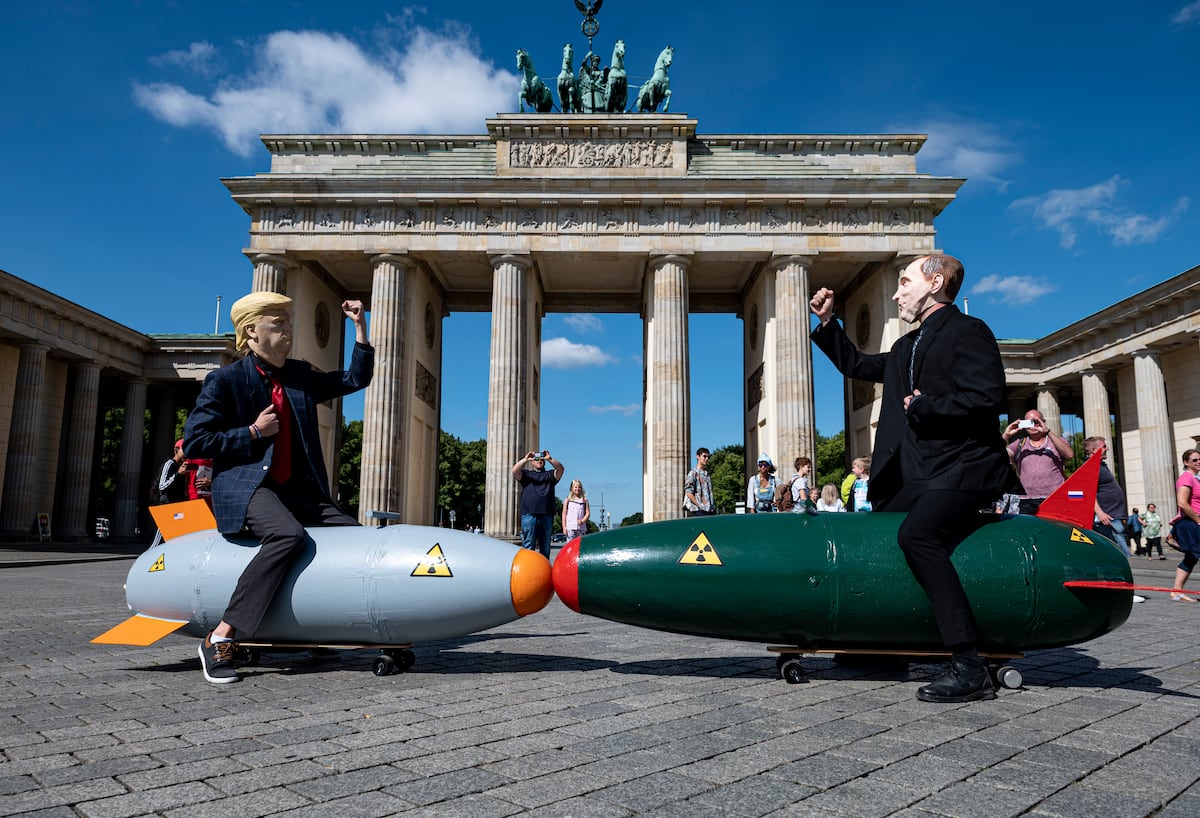
Discussions about a “German bomb” are like Dracula. No sooner has one killed the Transylvanian vampire than he rises again from his coffin. Since the 2016 U.S. presidential campaign, when candidate Donald Trump seemed to indicate that the U.S. might no longer be willing to protect its allies, some German observers have argued that an eventual loss of the U.S. “nuclear umbrella” would make a national nuclear arsenal indispensable.
Back then, the debate quickly died down. President Trump put a lot of pressure on the Europeans to raise defense spending, but he did not question America’s nuclear commitment to Europe. Moreover, most experts agreed that if the U.S. were indeed to disengage from European security, a model based on the British and French nuclear arsenals would be the most plausible “Plan B.”
Although such an arrangement would face numerous challenges, it still appears to be the most reasonable alternative in the event of the loss of the traditional Atlantic option. In particular, it would not encourage the emergence of new nuclear powers.
Alas, the debate about German nuclear weapons is back again. Fueled by transatlantic disagreements, most recently over Greenland, the idea of Germany acquiring its own nukes appears to have again gained salience. Proponents argue that thinking about a German bomb must no longer be a political taboo, since it is the logical consequence of a ruthless realpolitik assessment of the situation. But is it?
The demand for a German bomb is rarely put forward in clear terms. Apart from the bizarre proposal by a German expert that Germany should simply buy 1,000 nuclear warheads from the United States (which would result in the immediate end of the Nuclear Non-Proliferation Treaty), most German commentators remain vague. They refer to the new security situation, which, they argue, was obliging hard-nosed analysts to “think the unthinkable.”
Some maintain that the treaties in which Germany has committed itself to permanently renouncing weapons of mass destruction were created under conditions that no longer apply. Once these outdated legal obstacles were removed, acquiring the bomb would become mainly a question of financial resources and technical know-how. Consequently, like Japan and South Korea, proponents of the bomb argue that Germany should invest in “nuclear latency”, i.e. in maintaining the basic technologies necessary for a national nuclear weapons program.
However, Germany’s exit from nuclear power generation has left the country with very little “nuclear latency.” As the British and French experience shows, the financial costs of a national nuclear program would be staggering. The timeframe for developing a true nuclear option (which must also include command systems, including satellites, and delivery vehicles, such as missiles or submarines) will be 20 years or more, which would seem too long to deter a belligerent Russia.
And there is more. Proponents of a German bomb usually skirt around the question of what would happen if Poland, Italy, and other larger European countries followed Germany’s example and initiated their own nuclear programs. Even if Washington would drop any objections to allied countries acquiring nuclear weapons, a German bid for the bomb could trigger a political earthquake with unforeseeable consequences. If Berlin were to commit to a national nuclear weapons option, old resentments among Germany’s neighbors, which up until now have been contained, would resurface. The European Union might well fracture.
A Germany that withdraws from several major international treaties would cause more fear among many Europeans than Moscow’s nuclear weapons. And although the German public’s attitude toward nuclear weapons remains fickle, the idea of their country building its own bomb would hardly meet with widespread approval. Hence, whatever the reasoning for a German nuclear arsenal, no German government will go down that road. The disadvantages of such a step would far outweigh any tangible security gains.
Even if a German national nuclear option remains unrealistic, however, the debate holds an important lesson: The U.S. “nuclear umbrella” remains far more important than some analysts and politicians on both sides of the Atlantic dare to admit. It spares Europe a destructive debate on a nuclear-driven re-nationalization, and it spares the U.S. the prospect of having to deal with a multi-nuclear Europe.
Hence, both sides of the Atlantic should refrain from loose talk, be it about the diminishing credibility of the U.S. “nuclear umbrella” or about the desirability of new national nuclear options. Before starting to think about the “unthinkable”, one should first try the “thinkable” – and let Dracula rest in his coffin.
Michael Rühle worked for over 30 years in NATO’s International Staff, including as a speechwriter for six secretaries-general, as well as in policy planning, climate and energy security, and hybrid threats.
关于“德国核弹”的讨论就像德古拉伯爵一样,刚一被杀死,他就又从棺材里爬了出来。自2016年美国总统大选以来,候选人唐纳德·特朗普似乎暗示美国可能不再愿意保护其盟友,一些德国观察人士便认为,一旦美国失去“核保护伞”,各国拥有国家核武库将变得不可或缺。
当时,这场争论很快就平息了。特朗普总统向欧洲国家施加了很大压力,要求它们增加国防开支,但他并没有质疑美国对欧洲的核承诺。此外,大多数专家都认为,如果美国真的要退出欧洲安全事务,那么以英法两国核武库为基础的模式将是最可行的“B计划”。
尽管这样的安排会面临诸多挑战,但如果传统的跨大西洋方案失效,它似乎仍然是最合理的替代方案。尤其值得一提的是,它不会助长新兴核大国的出现。
唉,关于德国核武器的争论又回来了。受跨大西洋分歧的影响,尤其是最近围绕格陵兰岛的争端,德国拥有核武器的想法似乎再次成为焦点。支持者认为,思考德国拥有核武器不应再是政治禁忌,因为这是冷酷的现实政治评估的必然结果。但事实果真如此吗?
对德国拥有核弹的需求很少被明确提出。除了德国专家提出的一个离奇建议——德国应该直接从美国购买1000枚核弹头(这将导致《不扩散核武器条约》立即失效)——之外,大多数德国评论员对此都含糊其辞。他们只是提到新的安全形势,并声称这种形势迫使那些原本冷静的分析人士“不得不考虑一些难以想象的事情”。
一些人认为,德国承诺永久放弃大规模杀伤性武器的条约是在如今已不复存在的条件下制定的。一旦这些过时的法律障碍被清除,获得原子弹将主要取决于财政资源和技术诀窍。因此,与日本和韩国一样,原子弹的支持者认为,德国应该投资于“核后备”,即维护国家核武器计划所需的基础技术。
然而,德国退出核电领域后,几乎没有“核能潜伏期”。正如英国和法国的经验所示,建立国家核计划的财政成本将是惊人的。开发一套真正的核选项(其中必须包括指挥系统,例如卫星,以及导弹或潜艇等运载工具)需要20年或更长时间,这对于威慑好战的俄罗斯来说似乎太长了。
还有更多问题。支持德国拥有核武器的人通常会回避这样一个问题:如果波兰、意大利和其他欧洲大国效仿德国,启动各自的核计划,将会发生什么?即便华盛顿放弃对盟国拥有核武器的任何反对意见,德国寻求核武器也可能引发一场政治地震,其后果难以预料。如果柏林真的决定发展本国核武器,德国邻国之间由来已久的积怨——这些积怨此前一直被控制——将会再次浮出水面。欧盟甚至可能因此分裂。
一个退出多项重要国际条约的德国,在许多欧洲人心中引发的恐惧,远胜于莫斯科的核武器。尽管德国民众对核武器的态度依然摇摆不定,但让德国自行研制核弹的想法恐怕难以获得广泛支持。因此,无论德国发展核武库的理由是什么,任何一届德国政府都不会走上这条道路。此举的弊端远远大于任何实际的安全收益。
即便德国拥有国家核武器的选项仍然不切实际,这场辩论也蕴含着一个重要的教训:美国的“核保护伞”远比大西洋两岸的一些分析人士和政治家敢于承认的要重要得多。它使欧洲免于陷入一场关于以核武器为驱动的重新国有化的破坏性辩论,也使美国免于面对一个多核欧洲的局面。
因此,大西洋两岸都应该避免妄加评论,无论是关于美国“核保护伞”可信度的下降,还是关于发展新的国家核选项的必要性。在开始思考“不可思议之事”之前,应该先尝试“可想之事”——让德古拉安息在他的棺材里吧。
Michael Rühle 在北约国际事务部工作了 30 多年,曾担任六位秘书长的演讲稿撰写人,并在政策规划、气候和能源安全以及混合威胁等领域工作。