Hidden chemical weapons sites emerge in Syria amid fragile security transition在叙利亚脆弱的安全过渡时期,隐藏的化学武器设施浮出水面。
Over a decade after Syria agreed to dismantle its arsenal, international inspectors have uncovered scores of previously hidden chemical weapons materials.
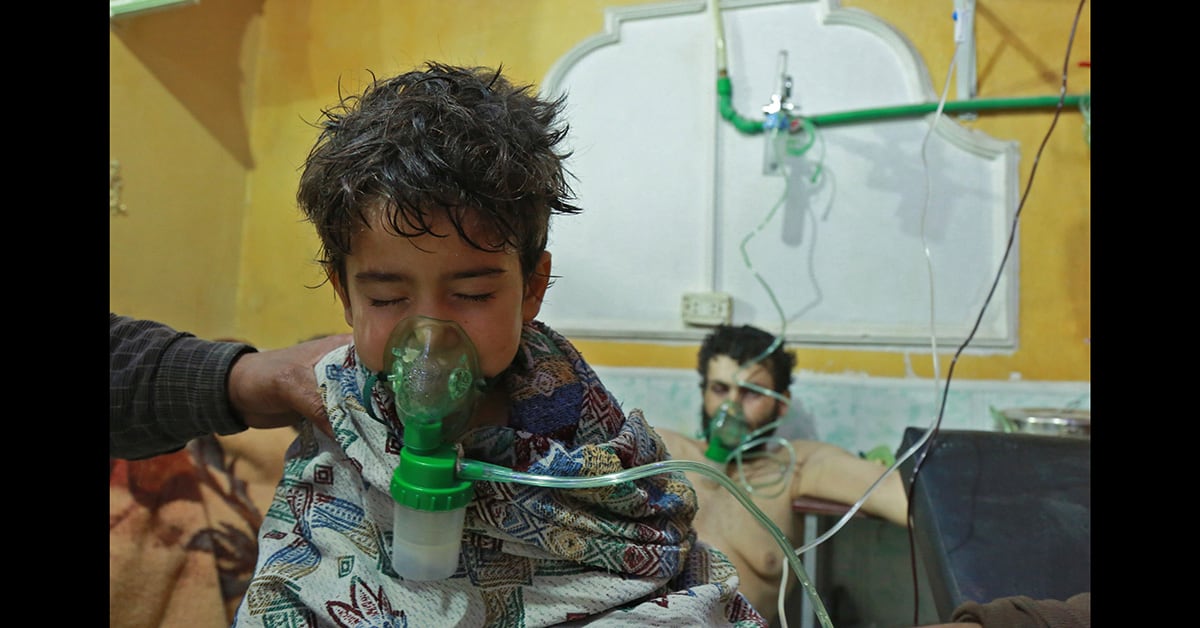
Over a decade after Syria agreed to dismantle its formidable chemical arsenal, international inspectors have uncovered scores of previously hidden chemical weapons materials as the country enters a fragile new phase marked by a shifting security landscape.
The discoveries, announced in a late May report by the Organisation for the Prohibition of Chemical Weapons, or OPCW, include chemical munitions — such as aerial bombs and rockets — as well as production materials and thousands of pages documenting the deadly program under ousted Syrian president Bashar al-Assad.
The findings come amid a nationwide power reshuffle as a patchwork of security players, including the U.S. and allies, struggle to secure a country devastated by years of war wrought by the government and extremist groups.
A recent Pentagon watchdog report described the transition as increasingly unstable, acknowledging that the new Syrian government forces quickly consolidated control over territory once held by the Kurdish-led Syrian Democratic Forces, or SDF, who had been allied with the U.S. military in the region’s fight against the Islamic State .
By mid-April, U.S. troops closed and withdrew from several American bases, handing over control to government forces and ending a 10-year presence in the country.
That same report warned that Syria’s new authorities would likely struggle to exercise control over the nation’s fragmented security apparatus, especially as the SDF — which has controlled and governed much of northern Syria for years — integrates into a national armed force.
Meanwhile, the chaos creates conditions ripe for militant groups like the Islamic State to once again flourish.
A U.S. Marine fires an M777-A2 Howitzer in Syria, June 2017. (Sgt. Matthew Callahan/Marine Corps)
Against that fraught backdrop, OPCW investigators caution that the full extent of Syria’s chemical weapons enterprise may remain unknown.
The agency said information gathered since the December 2024 collapse of the Assad government indicated that more than 100 additional sites may be linked to the administration’s chemical weapons program, a stark increase beyond the 26 locations that were previously known.
The OPCW also found the same variety of aerial bombs used in chemical attacks on the towns of Ltamenah in March 2017 and Khan Shaykhun in April 2017. Earlier investigations found that jets dropped sarin and chlorine in Ltamenah and sarin in Khan Shaykhun.
In addition, investigators discovered the same type of rockets used in the 2013 chemical attack in Ghouta.
The new information adds a layer of uncertainty to the security tribulations already faced by Syria’s new president, Ahmed al-Sharaa, as he seeks regional stability after leading the armed group known as Hayat Tahrir al-Sham to topple Assad.
Since March 2025, inspectors have visited over 20 sites across Syria, many of which were inaccessible during Assad’s administration but have since been opened as military control has shifted.
In addition to questions about where other chemical weapons may be hidden, one expert said the question of exactly who has knowledge of — and access to — where those items are located could be equally troubling.
Randa Slim, the director of the Middle East program at the Stimson Center, said the discovery of previously undeclared sites raises concerns that former Assad-era officials tied to the program may retain access to materials or information.
“There is definitely an economic benefit to them to sell these materials to non-state actors — like Hezbollah or ISIS,” she said, adding that black markets for such items exist and that ISIS had used chemical weapons in the past.
Former Syrian President Bashar Assad, left, speaks to Russian President Vladimir Putin in January 2020. (Alexei Druzhinin / Kremlin Pool via AP)
The combination of military transition, combined with incomplete information about the location of chemical weapons materials, can create a “proliferation risk” given the militant groups still operating in the region.
Though Al-Sharaa’s administration vowed to rid the country of chemical weapons, the country’s transition to a unified military has given way to other security gaps.
The Pentagon watchdog assessment said at least 150 ISIS fighters escaped detention facilities during the now-Syrian government’s offensive as SDF fighters, who were guarding the prisons, redeployed to the front lines as their territorial autonomy was threatened.
The report also described mounting disorder at camps and detention centers that contained families once involved in the terror group’s short-lived caliphate.
The U.S. transferred over 5,700 ISIS detainees to facilities in Iraq but roughly 20,000 people living in al Hol, a camp for displaced persons, which included thousands of ISIS families and partners, left the settlement without any monitoring.
Slim also said that the departure of U.S. forces from Syria earlier this year could complicate efforts to track militant activity and monitor the movement of dangerous materials.
While American troops were largely based in northern Syria, she said the military was able to provide intelligence that helped monitor ISIS and other extremist networks.
“With them out of there, that kind of situational awareness that the U.S. forces could provide — on movement of material, movement of ISIS — is no longer there,” she said.
It remains unclear, Slim cautioned, whether Syria’s transitional authorities can independently maintain that level of monitoring while simultaneously trying to consolidate control over a fractured security apparatus.
Eve Sampson is a reporter and former Army officer. She has covered conflict across the world, writing for The New York Times, The Washington Post and The Associated Press.
在叙利亚同意拆除其强大的化学武器库十多年后,随着该国进入一个以不断变化的安全形势为标志的脆弱新阶段,国际核查人员发现了数十种以前隐藏的化学武器材料。
禁止化学武器组织(OPCW)在 5 月下旬的一份报告中宣布了这些发现,其中包括化学弹药(如航空炸弹和火箭弹)以及生产材料和数千页文件,这些文件记录了被罢黜的叙利亚总统巴沙尔·阿萨德领导下的致命计划。
调查结果出炉之际,正值全国范围内的权力重组,包括美国及其盟友在内的众多安全机构正努力维护这个饱受政府和极端组织多年战争蹂躏的国家的安全。
五角大楼最近的一份监督报告将这一过渡描述为越来越不稳定,并承认叙利亚新政府军迅速巩固了对曾经由库尔德人领导的叙利亚民主力量(SDF)控制的领土的控制权,而SDF曾与美国军队在该地区打击伊斯兰国的战斗中结盟。
到四月中旬,美军关闭并撤离了几个美军基地,将控制权移交给政府军,结束了在该国长达十年的驻军。
同一份报告警告说,叙利亚新当局可能难以控制该国分散的安全机构,尤其是随着多年来控制和统治叙利亚北部大部分地区的叙利亚民主力量 (SDF) 并入国家武装力量。
与此同时,混乱局面为伊斯兰国等极端组织再次崛起创造了有利条件。
2017年6月,一名美国海军陆战队员在叙利亚使用M777-A2榴弹炮进行射击。(马修·卡拉汉中士/海军陆战队)
在这种紧张的背景下,禁止化学武器组织调查人员警告说,叙利亚化学武器活动的全部规模可能仍然未知。
该机构表示,自 2024 年 12 月阿萨德政府垮台以来收集的信息表明,可能有 100 多个地点与该政府的化学武器计划有关,比之前已知的 26 个地点数量大幅增加。
禁止化学武器组织还发现,2017 年 3 月在拉塔米纳镇和 2017 年 4 月在汗谢洪镇发生的化学袭击中使用的航空炸弹种类相同。此前的调查发现,飞机在拉塔米纳镇投掷了沙林和氯气,在汗谢洪镇投掷了沙林。
此外,调查人员还发现了与 2013 年古塔化学袭击事件中使用的火箭弹类型相同的火箭弹。
新的信息给叙利亚新总统艾哈迈德·沙拉(Ahmed al-Sharaa)已经面临的安全困境增添了一层不确定性。沙拉领导名为“沙姆解放组织”(Hayat Tahrir al-Sham)的武装组织推翻了阿萨德政权,并寻求地区稳定。
自 2025 年 3 月以来,检查人员已走访了叙利亚境内 20 多个地点,其中许多地点在阿萨德执政时期无法进入,但随着军事控制权的转移,这些地点后来都已开放。
除了其他化学武器可能藏匿于何处的问题之外,一位专家表示,究竟是谁知道这些物品的存放地点,以及谁能够接触到这些物品,这个问题同样令人担忧。
史汀生中心中东项目主任兰达·斯利姆表示,此前未申报的地点的发现引发了人们的担忧,即与该项目有关的前阿萨德时代官员可能仍然能够接触到相关材料或信息。
“他们向真主党或伊斯兰国等非国家行为体出售这些材料,肯定能从中获得经济利益,”她说道,并补充说,此类物品存在黑市,而且伊斯兰国过去曾使用过化学武器。
2020年1月,叙利亚前总统巴沙尔·阿萨德(左)与俄罗斯总统弗拉基米尔·普京交谈。(Alexei Druzhinin / Kremlin Pool via AP)
军事过渡,加上有关化学武器材料位置的信息不完整,考虑到该地区仍有武装组织活动,可能会造成“扩散风险”。
尽管沙拉政府誓言要清除该国的化学武器,但该国向统一军队的过渡却导致了其他安全漏洞。
五角大楼监督机构的评估称,在叙利亚政府军(现叙利亚政府军)发动攻势期间,至少有 150 名 ISIS 武装分子从拘留设施中逃脱,因为负责守卫监狱的叙利亚民主力量(SDF)战士在领土自治受到威胁的情况下被重新部署到前线。
该报告还描述了曾经参与该恐怖组织短暂的哈里发政权的家庭所在的营地和拘留中心日益混乱的局面。
美国将超过 5700 名 ISIS 被拘留者转移到伊拉克境内的设施,但大约 2 万名居住在流离失所者营地 al Hol 的人(其中包括数千名 ISIS 家庭成员和同伙)在没有任何监督的情况下离开了该营地。
斯利姆还表示,今年早些时候美军撤离叙利亚可能会使追踪武装分子活动和监控危险物品流动的努力变得更加复杂。
她表示,虽然美军主要驻扎在叙利亚北部,但军方能够提供情报,帮助监控ISIS和其他极端主义网络。
她说:“随着他们撤离,美军能够提供的关于物资流动、ISIS动向的那种态势感知能力就不复存在了。”
斯利姆警告说,目前还不清楚叙利亚过渡当局能否在努力巩固对四分五裂的安全机构的控制的同时,独立地维持这种程度的监督。
伊芙·桑普森是一名记者,也是一名前陆军军官。她曾报道过世界各地的冲突,为《纽约时报》、《华盛顿邮报》和美联社撰稿。