This Is The Elite Unit That Raided The Tanker Threatened By Stowaways Off The UK Coast这是突袭英国海岸附近被偷渡者威胁的油轮的精锐部队
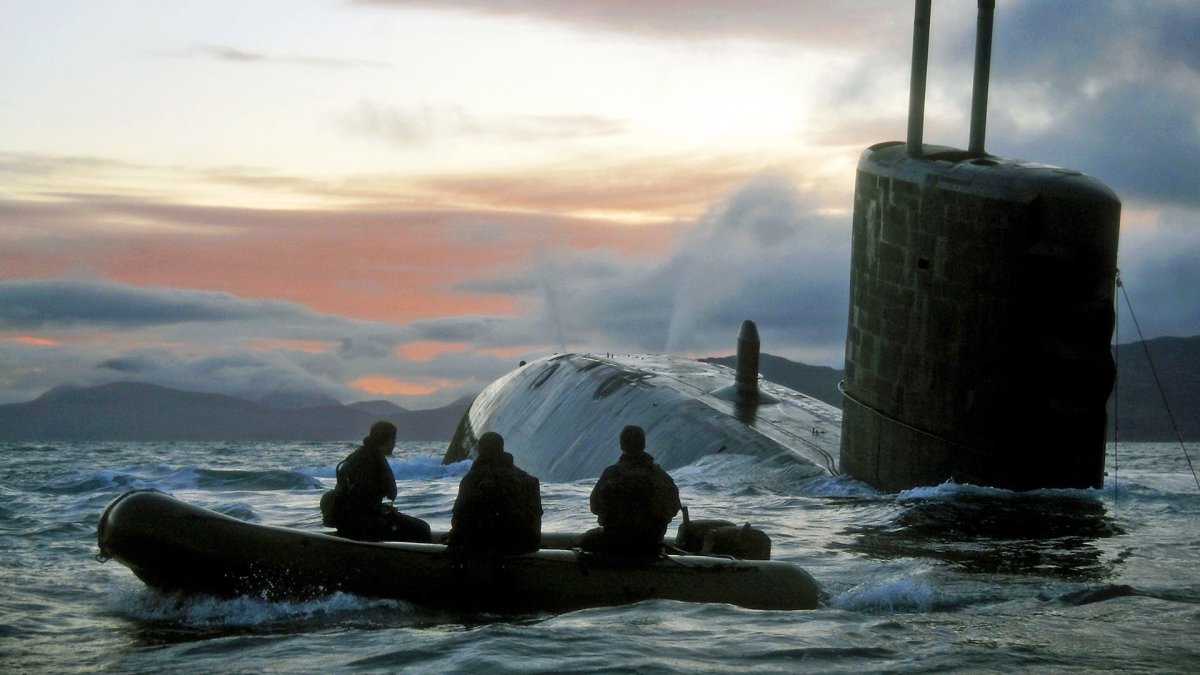
Whether on land or at sea, Britain's secretive Special Boat Service has a history of getting the toughest jobs done.
新闻视频
Updated Nov 27, 2020 6:12 PM EST
British special forces sprung into action yesterday, storming a crude-oil tanker in the English Channel in response to a suspected hijack attempt that led to seven stowaways being detained after a raid that lasted just nine minutes. The secretive Special Boat Service (SBS), a less well-known component of the U.K. special operations community, but one with a storied history, carried out the raid.
Taking down the Nave Andromeda
The Special Boat Service team took control of the 42,000-gross-tonnage Liberian-registered tanker Nave Andromeda as darkness fell on the evening of October 25, 2020, after fast-roping from Royal Navy helicopters onto the deck. Reportedly landing at either end of the tanker in a pincer movement, the soldiers, equipped with night-vision devices, subdued the stowaways after they had made threats towards the crew during what had been a ten-hour standoff.
According to a report in The Times , the captain of the tanker put out the lights while Royal Navy helicopters used “obscurant” tactics — flashing lights in an effort to disorientate the stowaways on board.
Unconfirmed reports suggest that around 16 SBS operators may have been involved in the mission. A Royal Navy Type 23 frigate, HMS Richmond , was reportedly placed on standby nearby if backup was required.
. @HMS_Richmond seen anchored in Tor Bay this afternoon before this evening's excitement #NaveAndromeda via @218goldcoast pic.twitter.com/yzI6MLuqzJ — Navy Lookout (@NavyLookout) October 25, 2020
. @HMS_Richmond seen anchored in Tor Bay this afternoon before this evening's excitement #NaveAndromeda via @218goldcoast pic.twitter.com/yzI6MLuqzJ
The team from the SBS, based in Poole, Dorset, was apparently brought closer to the Nave Andromeda by a Royal Air Force (RAF) Chinook helicopter , which had been noted flying toward Poole earlier the same evening.
UK Boeing CH-47 Chinook heading towards Poole, where the UK Special Boat Service is based. Interesting flight for sure, considering what is going on at the moment off the coast of Isle of Wight. pic.twitter.com/LkQfbkJYOT — doge (@IntelDoge) October 25, 2020
UK Boeing CH-47 Chinook heading towards Poole, where the UK Special Boat Service is based. Interesting flight for sure, considering what is going on at the moment off the coast of Isle of Wight. pic.twitter.com/LkQfbkJYOT
The SBS team was then transferred onto two troop-carrying Royal Navy Merlin helicopters and delivered to the ship, escorted by a pair of Royal Navy Wildcat helicopters. Both of these maritime rotorcraft types are based at Royal Naval Air Station (RNAS) Yeovilton, Somerset, in the west of England.
The two helicopters that were reportedly used in the Nave Andromeda incident: a Wildcat AH1 (left) and a Merlin HC4, during deck operations in the Baltic in 2019., CROWN COPYRIGHT
Yeovilton, home of the Commando Helicopter Force, keeps a handful of helicopters on a few hours’ notice for various missions, including supporting maritime counterterrorist (MCT) tasks in British waters. These typically might involve inserting assault teams from the SBS onto vessels, as was the case in the Nave Andromeda incident, or oil rigs.
“Armed Forces have gained control of the ship and seven individuals have been detained,” confirmed a statement from the Ministry of Defence, soon after the incident had been resolved. “Police investigations will now continue. Initial reports confirm the crew are safe and well.”
“I commend the hard work of the armed forces and police to protect lives and secure the ship,” said U.K. Defence Secretary Ben Wallace. “In dark skies, and worsening weather, we should all be grateful for our brave personnel. People are safe tonight thanks to their efforts.”
The Nave Andromeda had originally sailed from Lagos in Nigeria on October 6, 2020, and was headed to the English port of Southampton, where it was scheduled to arrive on October 25, and where it would then take on a cargo of petroleum. The ship’s owner, Greece-based Navios Tankers Management, said that the stowaways, all reportedly Nigerian , had “illegally boarded” the tanker while it was docked in Lagos. Two subsequent stops were made off the Canary Islands off the coast of North Africa and off the northern French coast.
However, the tanker didn’t arrive in Southampton as planned. Instead, with the vessel close to the Isle of Wight, off the south coast of England, its course started to become erratic, as evidenced by vessel tracking websites.
“Initially, it didn’t look like this was terrorist-related nor involving WMD [weapons of mass destruction], but the erratic behavior [of the ship] was concerning,” explained Tobias Ellwood, chairman of the Commons Defence Committee, the body appointed by the parliament to examine Ministry of Defence expenditure, administration, and policy. “The safety of the crew was important, as is indeed any unauthorized movement towards the coast,” he added.
With the 748-foot tanker around six miles off the coast of Bembridge, on the easternmost tip of the Isle of Wight — only around 60 miles east of the SBS base in Poole — local police were alerted to the situation when concerns were raised about the welfare of the 22 crew onboard the ship.
While the presence of the stowaways had been discovered during the tanker’s transit, they had apparently started to become violent when the crew tried to lock them in a cabin, reportedly after they expressed their desire to leave the vessel. Navios Tankers Management added that the police were informed on Sunday morning when the captain became “concerned for the safety of the crew due to the increasingly hostile behavior of the stowaways.”
By midday Sunday there was a three-mile exclusion zone around the tanker and a temporary restricted area in place over the vessel, prohibiting overflights below an altitude of 5,000 feet, to prevent any conflict with the police and Maritime and Coastguard Agency helicopters already operating around it. At this stage, there were no military helicopters on the scene and the U.K. Ministry of Defence confirmed it was not involved. However, a military response was by now clearly being prepared.
2nd Police Helicopter now arriving at the location of the tanker, probably swapping with the other Police Helicopter pic.twitter.com/GITdtnCCh4 — Air & Sea Intel (@air_intel) October 25, 2020
2nd Police Helicopter now arriving at the location of the tanker, probably swapping with the other Police Helicopter pic.twitter.com/GITdtnCCh4
This year has seen a spike in migrants crossing the English Channel , with reports that 7,000 had arrived in the United Kingdom in small boats by the end of September, a more than threefold increase over the whole of 2019. While most of the vessels involved are far smaller than the Nave Andromeda , it’s a mission that is increasingly seeing involvement from the U.K. Armed Forces .
Early Sunday evening, with concerns for the tanker’s crew growing, police requested assistance from the U.K. Armed Forces and that’s when the Royal Navy’s elite Special Boat Service (SBS) immediately swung into action. The operation will have been formally authorized by both Defence Secretary Ben Wallace, and Home Secretary Priti Patel.
The tanker finally arrived in the port of Southampton on the following morning, October 26.
Lights from one or more helicopters in the sky around the tanker Nave Andromeda. , ISLAND ECHO SCREENCAP
The Ministry of Defence maintains a very tight level of security around the work of the SBS and many of its operations remain classified. The Royal Navy’s website describes the unit very briefly as “Made up of small, highly trained teams, [specialized] in daring undercover raids that exploit the element of surprise.”
As the special forces unit of the Royal Navy, its tasks include, but are not restricted to, handling terrorist and other incidents at sea. While the number of members is a closely guarded secret, estimates suggest the SBS has around 200 to 250 personnel, most of them drawn from the Royal Marines Commandos, the Royal Navy’s amphibious light infantry.
The SBS traces its history back to World War II, and a number of British Armed Forces units that undertook raids, sabotage missions, and reconnaissance from small boats, canoes and submarines. Among these was the Special Boat Section, created in 1940 by Commando officer Captain Roger Courtney . The unit had particular success using folding canoes on raids against railways, port facilities, and airfields in Scandinavia and the Mediterranean. Later in the conflict, their activities would extend to Burma, for operations against the Japanese.
The wartime Special Boat Section also provided beach reconnaissance ahead of amphibious landings, including for landings in North Africa and Italy.
By early 1942, part of the Special Boat Section had been amalgamated with a similar unit, the British Army’s Small Scale Raiding Force, to create the new Special Boat Squadron.
Among the Special Boat Squadron’s notable activities were raids in the Aegean Sea, where they made use of adapted local fishing boats to operate unnoticed among the area’s shipping fleets. They also deployed teams from canoes, dinghies, and submarines. The latter method was used to deliver a team to Crete, where they blew up German aircraft and munitions before fighting their way out.
Two members of the Special Boat Squadron in the Aegean theater during World War II., CROWN COPYRIGHT/WIKIMEDIA COMMONS
In early 1944, the Special Boat Squadron was renamed the Special Boat Service — the name it carries today — although it was disbanded after World War II. Reestablished in 1948 as the Special Boat Section, it underwent yet more name changes during the Cold War, becoming the Special Boat Company, the Special Boat Squadron, and finally the Special Boat Service in 1987. Meanwhile, its wartime activities took it to theaters including Palestine, Korea, and Indonesia.
While maritime work is at the core of the SBS, the unit also operates on land if required and it has seen action on the ground in Northern Ireland and the Falklands and, more recently, has been engaged in Iraq and Afghanistan.
While there is no official word on the composition of the SBS, it’s assumed to include four squadrons each of around 64 soldiers. In the past, different squadrons were responsible for swimmer and canoe operations, operating small boats (including kayaks) and mini-submarines, plus maritime counter-terrorism and ship-boarding. Today, however, it is thought that these roles are rotated through the squadrons.
In addition to being flown into action aboard helicopters, the SBS also trains for “boat drop” operations, in which a Rigid Inflatable Boat (RIB) is delivered from the rear ramp of an RAF C-130J Hercules transport, followed by the SBS team, also descending under parachutes into the water below.
The SBS frogmen can also make use of the Dry Deck Shelter (DDS) that can be fitted to the Roal Navy’s Astute -class nuclear-powered fleet submarines. This allows an SBS team to be inserted or picked up close to a foreign shore. The DDS, combined with a Swimmer Delivery Vehicle (SDV) used to get from the submarine to the shore, allows the SBS to perform its covert infiltration activities almost anywhere around the globe where there is a coastline.
Befitting a special forces outfit, the SBS is known to be provided with a range of bespoke equipment, ranging from stealthy Fast Interceptor Craft (FIC) to, reportedly, Heckler & Koch P11 underwater pistols .
The SBS was at the forefront of U.K. special forces work in Operation Desert Storm in Iraq in 1991. Surveillance and sabotage teams from both the SBS, as well as elements of the British Army’s better-known Special Air Service (SAS) Regiment, were flown by RAF Chinook helicopters surveillance and sabotage teams deep behind Iraqi lines. Another Chinook reportedly flew an SBS team into Kuwait City to retake the British Embassy there.
An RAF Chinook helicopter transports a Royal Marine rigid-inflatable boat (RIB), of the type used by the SBS., CROWN COPYRIGHT
In the wake of the terrorist attacks of September 11, 2001, the SBS found itself engaged in Afghanistan, where a contingent arrived at Bagram Airfield a month later. Again, they worked alongside their SAS counterparts and special forces helicopters from the RAF, including tracking al-Qaeda operatives across the country.
Later in the Afghan campaign, SBS teams formed part of the U.K. Special Forces Task Force at Kandahar Airport in southern Afghanistan, from where they targeted Taliban insurgents, flying into action onboard RAF, British Army, and Royal Navy helicopters.
British media outlets reported that two SBS operators took part in the planning for the 2011 raid on Osama Bin Laden’s compound in Abbottabad, Pakistan. Allegedly a captain and a major from the unit — possibly exchange staff officers — arrived at Bagram Air Base in Afghanistan to work on preparing for and briefing assault teams ahead of the mission.
Meanwhile, the incident off the coast of the Isle of Wight yesterday has parallels with a previous event that took place in British waters.
Royal Marines divers emerge from smoke during a simulated attack. Most SBS operators are drawn from the Royal Marines. , CROWN COPYRIGHT
On the evening of December 21, 2018, stowaways seized the 71,000-gross-tonnage Italian cargo vessel Grande Tema in the Thames estuary, off the east of England. Once again, the military response involved an assault team from the SBS delivered by two Royal Navy Merlin HC4s, escorted by two Wildcat HMA2s. After the ship had been secured by the special forces team, it was brought into nearby Tilbury harbor in Essex where four stowaways were handed over to police.
The SBS is also expected to board vessels during military campaigns too, as was the case during the British campaign to retake the Falkland Islands in the South Atlantic following their invasion by Argentina in 1982. On May 9 that year, SBS soldiers were delivered by Sea King helicopters onto the Argentine intelligence-gathering vessel Narwal , a repurposed fishing trawler, after it had been attacked by Royal Navy Sea Harrier combat jets.
While the full story of most of their missions will perhaps never be told, incidents like the storming of the Nave Andromeda demonstrate that the UK’s special operations community is ready to fulfil these challenging missions at a moment’s notice.
Contact the author: thomas@thedrive.com
Comments couldn’t be loaded. Please refresh the page.
更新于美国东部时间2020年11月27日下午6:12
昨天,英国特种部队迅速行动,突袭了英吉利海峡一艘原油油轮,以应对一起疑似劫持未遂事件。行动仅持续了九分钟,便抓获了七名偷渡者。此次行动由英国特种作战部队中鲜为人知但历史悠久、行事隐秘的特种舟艇部队(SBS)执行。
摧毁仙女座中殿
2020年10月25日晚,夜幕降临之际,英国皇家海军特种舟艇部队(SBS)队员从英国皇家海军直升机上速降至甲板,控制了这艘42000总吨的利比里亚注册油轮“纳维·安德罗梅达”号。据报道,这些配备夜视设备的士兵从油轮两端呈钳形登陆,在与船员对峙长达十个小时后,制服了曾威胁船员的偷渡者。
据《泰晤士报》报道,油轮船长关掉了船上的灯,而皇家海军的直升机则使用了“干扰”战术——闪烁灯光,试图使船上的偷渡者迷失方向。
未经证实的消息称,约有16名SBS队员参与了此次任务。据报道,皇家海军23型护卫舰“里士满”号在附近待命,以备不时之需。
今天下午,@HMS_Richmond 号军舰停泊在托尔湾,为今晚的精彩活动做准备。#NaveAndromeda via @218goldcoast pic.twitter.com/yzI6MLuqzJ — Navy Lookout (@NavyLookout) October 25, 2020
今天下午,@HMS_Richmond 号军舰被拍到停泊在托尔湾,为今晚的精彩活动做准备。#NaveAndromeda via @218goldcoast pic.twitter.com/yzI6MLuqzJ
驻扎在多塞特郡普尔的 SBS 小组显然是被一架英国皇家空军 (RAF) 奇努克直升机带到了仙女座海军基地附近,这架直升机在当天晚上早些时候曾被目击飞往普尔。
英国波音CH-47“支奴干”直升机正飞往普尔,英国特种舟艇部队的基地就在那里。考虑到目前怀特岛海岸附近发生的事情,这趟飞行无疑意义非凡。 pic.twitter.com/LkQfbkJYOT — doge (@IntelDoge) October 25, 2020
英国波音CH-47“支奴干”直升机正飞往普尔,英国特种舟艇部队的基地就在那里。考虑到目前怀特岛海岸附近发生的事情,这无疑是一次有趣的飞行。pic.twitter.com/LkQfbkJYOT
随后,SBS小队成员被转移到两架皇家海军梅林运输直升机上,并在两架皇家海军野猫直升机的护航下抵达军舰。这两种海上旋翼机均驻扎在位于英格兰西部萨默塞特郡约维尔顿的皇家海军航空站(RNAS Yeovilton)。
据报道,在“仙女座”号航母事故中使用的两架直升机分别是:一架野猫AH1(左)和一架梅林HC4,拍摄于2019年波罗的海的甲板作业期间。(版权所有)
约维尔顿是突击队直升机部队的驻地,常备少量直升机,随时待命,可在数小时内执行各种任务,包括支援英国水域的海上反恐行动。这些任务通常涉及将特种舟艇部队(SBS)的突击队部署到船只上,例如在“仙女座”号事件中,或者部署到石油钻井平台上。
事件解决后不久,国防部发表声明证实:“武装部队已控制该船,并拘留了七人。警方调查将继续进行。初步报告显示,船员安全无恙。”
英国国防大臣本·华莱士表示:“我赞扬武装部队和警察为保护生命和确保船只安全所付出的辛勤努力。在夜色昏暗、天气恶劣的情况下,我们都应该感谢我们勇敢的官兵。今晚人们的安全得益于他们的努力。”
“纳维·安德罗梅达”号油轮最初于2020年10月6日从尼日利亚拉各斯港起航,目的地是英国南安普顿港,原计划于10月25日抵达并装载石油货物。该船的船东,总部位于希腊的纳维奥斯油轮管理公司表示,这些偷渡者据称均为尼日利亚人,他们在油轮停靠拉各斯港期间“非法登船”。随后,该船在北非沿岸的加那利群岛附近以及法国北部沿岸各停靠了一次。
然而,这艘油轮并未按计划抵达南安普顿。相反,正如船舶追踪网站所显示的那样,当这艘船靠近英格兰南部海岸的怀特岛时,其航线开始变得不稳定。
“起初,这起事件看起来既不像恐怖袭击,也不涉及大规模杀伤性武器,但(这艘船的)异常行为令人担忧,”下议院国防委员会主席托比亚斯·埃尔伍德解释道。该委员会由议会任命,负责审查国防部的开支、行政管理和政策。“船员的安全至关重要,任何未经授权驶向海岸的行为都同样重要,”他补充道。
这艘 748 英尺长的油轮位于怀特岛最东端的本布里奇海岸约 6 英里处——距离普尔的 SBS 基地仅约 60 英里——当地警方在对船上 22 名船员的福利表示担忧后,立即对这一情况进行了通报。
虽然偷渡者是在油轮航行途中被发现的,但据报道,在船员试图将他们锁在船舱内后,他们开始变得暴力,此前他们曾表示想要离开这艘船。Navios Tankers Management公司补充说,由于偷渡者的行为越来越具有敌意,船长担心船员的安全,因此在周日早上报警。
到周日中午,油轮周围已设立三英里禁区,油轮上空也设立了临时限制区,禁止低于5000英尺的飞行高度,以避免与已在油轮周围作业的警方和海事及海岸警卫队直升机发生冲突。此时,现场没有军用直升机,英国国防部也确认其未参与此次事件。然而,军方显然已在准备应对。
第二架警用直升机现已抵达油罐车所在位置,可能正在与另一架警用直升机进行换乘。pic.twitter.com/GITdtnCCh4 — 空海情报 (@air_intel) 2020年10月25日
第二架警用直升机现已抵达油罐车所在地,可能正在与另一架警用直升机进行换乘。pic.twitter.com/GITdtnCCh4
今年穿越英吉利海峡的移民人数激增,据报道,截至9月底,已有7000人乘坐小船抵达英国,比2019年全年增加了三倍多。虽然大多数涉事船只远小于“仙女座号”潜艇,但英国武装部队越来越多地参与到这项行动中。
周日傍晚,由于对油轮船员的安危日益担忧,警方请求英国武装部队提供援助,皇家海军精锐特种舟艇部队(SBS)随即展开行动。此次行动已获得国防大臣本·华莱士和内政大臣普丽蒂·帕特尔的正式授权。
油轮终于在第二天早上,也就是10月26日抵达南安普顿港。
一架或多架直升机的灯光在油轮“仙女座号”周围的天空中闪烁。(岛屿回声截图)
英国国防部对特种舟艇部队(SBS)的工作实行极其严格的安全措施,其许多行动仍属机密。英国皇家海军的网站对该部队的描述非常简短:“由训练有素的小型团队组成,专门从事利用出其不意优势的大胆秘密突袭行动。”
作为英国皇家海军的特种部队,其任务包括但不限于处理海上恐怖袭击和其他突发事件。虽然成员人数是严格保密的,但据估计,SBS约有200至250名人员,其中大部分来自皇家海军陆战队突击队,即皇家海军的两栖轻步兵部队。
特种舟艇部队(SBS)的历史可以追溯到第二次世界大战时期,当时英国武装部队有多支部队使用小型船只、独木舟和潜艇执行突袭、破坏和侦察任务。其中就包括特种舟艇部队,该部队由突击队军官罗杰·考特尼上尉于1940年创建。这支部队尤其擅长使用折叠式独木舟袭击斯堪的纳维亚半岛和地中海地区的铁路、港口设施和机场,并取得了显著战果。战争后期,他们的行动范围扩展到缅甸,参与了对日作战。
战时特种艇队还为两栖登陆作战提供海滩侦察,包括在北非和意大利的登陆作战。
到 1942 年初,特种艇队的一部分与英国陆军小型突袭部队这一类似单位合并,组建了新的特种艇中队。
特种舟艇部队的著名行动包括在爱琴海的突袭,他们利用改装的当地渔船,在当地船队中悄无声息地执行任务。他们还派遣小队乘坐独木舟、小艇和潜艇。其中一次就是利用潜艇将一支小队送往克里特岛,在那里他们摧毁了德军的飞机和弹药库,然后杀出重围。
二战期间爱琴海战区特种舟艇部队的两名成员。(图片来源:英国皇家版权/维基共享资源)
1944年初,特种舟艇中队更名为特种舟艇服务队(Special Boat Service),沿用至今,但二战结束后便解散了。1948年,该部队以特种舟艇分队(Special Boat Section)的名义重建,并在冷战期间多次更名,先后成为特种舟艇连(Special Boat Company)、特种舟艇中队(Special Boat Squadron),最终于1987年定名为特种舟艇服务队(Special Boat Service)。与此同时,其战时行动遍及巴勒斯坦、朝鲜和印度尼西亚等战区。
虽然海上行动是SBS的核心,但该部队也会在必要时进行陆地行动,曾在北爱尔兰和福克兰群岛参与地面行动,最近还参与了伊拉克和阿富汗的行动。
虽然SBS的具体组成尚未有官方消息,但据推测它由四个中队组成,每个中队约有64名士兵。过去,不同的中队分别负责游泳和皮划艇作战、操作小型船只(包括皮划艇)和小型潜艇,以及海上反恐和登船作战。但如今,这些任务似乎在各个中队之间轮换。
除了乘坐直升机执行任务外,SBS 还接受“快艇投放”行动的训练,即从英国皇家空军 C-130J 大力神运输机的后舱门投放一艘硬壳充气艇 (RIB),然后 SBS 队员们会借助降落伞落入下方的水中。
SBS蛙人还可以利用皇家海军“机敏”级核动力潜艇上可安装的干式甲板掩体(DDS)。这使得SBS小队能够在靠近外国海岸的地方进行部署或撤离。DDS与用于从潜艇前往岸边的蛙人运送艇(SDV)相结合,使SBS能够在几乎全球任何有海岸线的地方执行秘密渗透任务。
作为一支特种部队,SBS 以其一系列定制装备而闻名,从隐形快速拦截艇 (FIC) 到据报道的 Heckler & Koch P11 水下手枪,应有尽有。
1991年,在伊拉克“沙漠风暴”行动中,英国特种舟艇部队(SBS)处于英国特种部队行动的最前沿。SBS的侦察和破坏小组,以及英国陆军更为著名的特种空勤团(SAS)的部分成员,乘坐英国皇家空军的奇努克直升机深入伊拉克战线后方执行侦察和破坏任务。据报道,另一架奇努克直升机还曾将一支SBS小队送往科威特城,夺回英国驻科威特大使馆。
一架英国皇家空军奇努克直升机正在运输一艘皇家海军陆战队的硬壳充气艇(RIB),该艇为特种舟艇部队(SBS)所用类型。(英国皇家版权所有)
2001年9月11日恐怖袭击事件发生后,英国特种舟艇部队(SBS)被派往阿富汗执行任务,一个月后,一支分遣队抵达巴格拉姆空军基地。他们再次与英国特种空勤团(SAS)以及英国皇家空军的特种部队直升机并肩作战,包括在阿富汗境内追踪基地组织成员。
在阿富汗战争后期,SBS 小组成为驻扎在阿富汗南部坎大哈机场的英国特种部队特遣队的一部分,他们从那里以塔利班叛乱分子为目标,乘坐英国皇家空军、英国陆军和皇家海军的直升机投入战斗。
英国媒体报道称,两名英国特种舟艇部队(SBS)队员参与了2011年突袭巴基斯坦阿伯塔巴德本·拉登住所的计划制定。据称,该部队的一名上尉和一名少校——可能是交流参谋人员——抵达阿富汗巴格拉姆空军基地,负责任务前的准备工作和突击队简报。
与此同时,昨天发生在怀特岛海岸附近的事件与之前发生在英国水域的一起事件有相似之处。
在模拟袭击中,皇家海军陆战队潜水员从烟雾中现身。大多数特种舟艇部队(SBS)队员都来自皇家海军陆战队。,版权所有
2018年12月21日晚,偷渡者在英格兰东部泰晤士河口劫持了一艘71000总吨的意大利货轮“格兰德·特马”号。军方再次出动,由英国皇家海军特种舟艇部队(SBS)的突击队执行任务,该突击队由两架皇家海军梅林HC4直升机运送,并由两架野猫HMA2直升机护航。特种部队控制住货轮后,将其拖至附近的埃塞克斯郡蒂尔伯里港,四名偷渡者随后被移交给警方。
预计 SBS 也将在军事行动中登船作战,就像 1982 年英国在南大西洋福克兰群岛被阿根廷入侵后参与的夺回行动一样。当年 5 月 9 日,在遭到英国皇家海军海鹞战斗机攻击后,SBS 士兵乘坐海王直升机登上阿根廷情报收集船“独角鲸”号(一艘改装的渔船)。
虽然他们的大部分任务的完整故事可能永远不会被讲述,但像突袭仙女座海军基地这样的事件表明,英国特种作战部队随时准备完成这些具有挑战性的任务。
联系作者:thomas@thedrive.com
评论加载失败,请刷新页面。