From Gran Turismo 7 to a smartphone with a second screen: How Xiaomi is linking cars, homes and devices从《GT赛车7》到配备第二块屏幕的智能手机:小米如何将汽车、家居和设备连接起来
Xiaomi's Vision GT concept car and upcoming 18 Pro smartphone series form part of an ecosystem designed to work as one Read more at straitstimes.com.
Xiaomi’s Vision GT concept car and upcoming 18 Pro smartphone series form part of an ecosystem designed to work as one
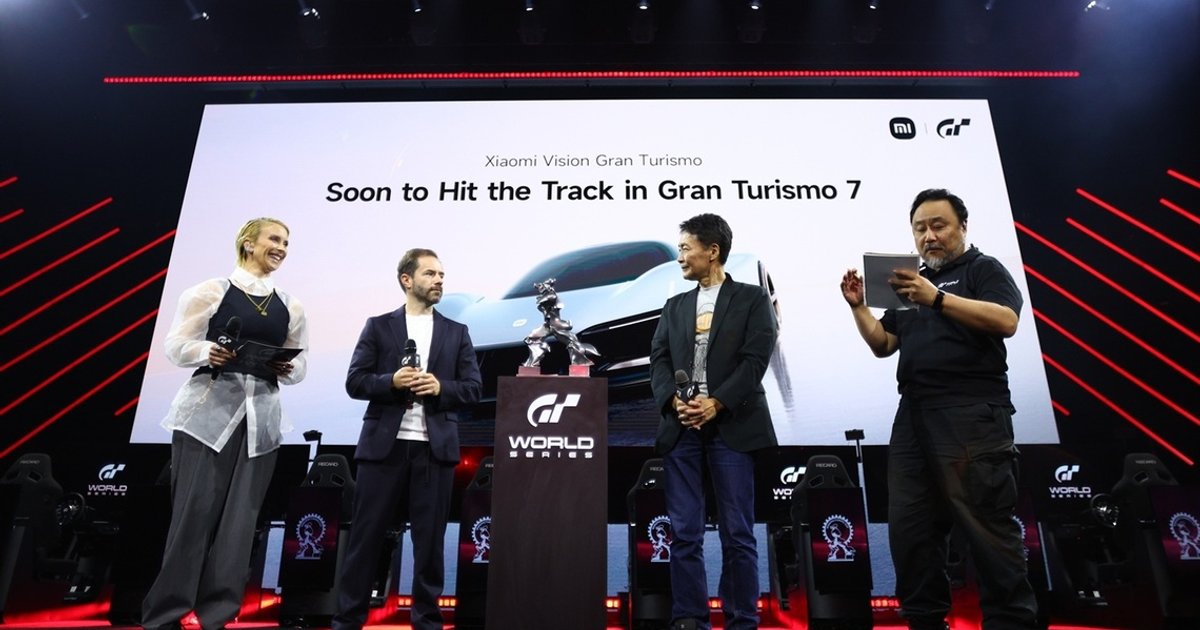
Gran Turismo series producer Kazunori Yamauchi (second from right) and Jean-Arthur Madelaine (second from left), head of design at Xiaomi Auto’s European R&D and Design Centre, showcase in-game footage of the Xiaomi Vision GT in Singapore.
Published Oct 16, 2026, 04:00 AM
In mid-October, the Xiaomi Vision GT will make its debut in the popular racing game Gran Turismo 7 (GT7).
The announcement was made by Gran Turismo series producer Kazunori Yamauchi and Jean-Arthur Madelaine, head of design at Xiaomi Auto’s European Research and Development and Design Centre, during the third round of the Gran Turismo World Series 2026 in Singapore on Oct 3.
GT7 will also introduce EV Experience, an electric vehicle driving programme that lets players experience the acceleration, braking and handling characteristics of high-performance electric cars. The first vehicles featured will include the Xiaomi SU7 Ultra, which is already in production and on sale in China, and the Xiaomi Vision GT concept car.
Launched in 2013, the Vision Gran Turismo project invites carmakers from around the world to create original concept cars that reflect their vision of the future. So far, 50 designs have been developed, with participating brands including Bugatti, Ferrari, Porsche and McLaren.
Xiaomi is the 36th brand to join the project and the first Chinese technology company to do so.
The Xiaomi Vision GT’s entry into GT7 marks a milestone in Xiaomi Auto’s push onto the global stage. By bringing together automotive design, AI and digital experiences, it also offers a glimpse into the company’s wider vision of smart living.
Inside the aerodynamic design of the Xiaomi Vision GT
Designed around the concept of being “sculpted by the wind”, the Xiaomi Vision GT concept car features a floating, teardrop-shaped cockpit. PHOTO: XIAOMI
Designed around the concept of being “sculpted by the wind”, the Xiaomi Vision GT concept car features a floating, teardrop-shaped cockpit.
The Xiaomi Vision GT was designed around a simple idea: letting airflow shape the car.
This approach can be seen in its floating, teardrop-shaped cockpit, cross-shaped headlights that help channel air, ring-shaped taillights with integrated air channels and an active wake-control system.
Some of these design ideas could eventually make their way into production models.
French designer Madelaine says: “Being sculpted by the wind is a direction our team wants to explore. We also hope to bring together comfort and a high-performance driving experience in the future.”
Before arriving in Singapore, Yamauchi had taken the Xiaomi Vision GT for a virtual drive in the game, where he also worked on adjusting its driving soundscape.
“Electric vehicles can deliver a very exciting driving experience too. It’s just a different kind of excitement from what you get with conventional cars,” he says.
Since the first Gran Turismo game was released in 1997, the series has sold more than 100 million copies worldwide. Its international player base gives Xiaomi an opportunity to reach a global audience, including younger consumers.
How Xiaomi is building a connected ecosystem around its users
Moving away from traditional bucket seats found in supercars, the Xiaomi Vision GT features a continuous loop connecting the dashboard, door panels and seats to create a soft yet supportive cocoon-like cockpit. PHOTO: XIAOMI
Moving away from traditional bucket seats found in supercars, the Xiaomi Vision GT features a continuous loop connecting the dashboard, door panels and seats to create a soft yet supportive cocoon-like cockpit.
In October 2023, Xiaomi expanded its corporate strategy to focus on what it calls the “Human × Car × Home” ecosystem .
The idea is to connect personal devices, smart homes and cars to create a more seamless, user-centred experience. It was also one of the reasons Madelaine was drawn to join Xiaomi.
He believes cars should become connected devices in people’s everyday lives, much like smartwatches, computers and televisions.
“We place greater emphasis on putting people first. We’re also more focused on users and how people might use cars in the future,” he says. The Xiaomi Vision GT reflects this thinking.
According to Madelaine, the cockpit’s “sofa racer” concept was inspired by the comfort of sitting on a sofa while playing a racing game.
The cockpit also incorporates artificial intelligence capabilities from Xiaomi Hyper XiaoAi and its MiMo AI model, allowing it to sense and recognise the driver’s intentions while connecting with Xiaomi’s wider Human × Car × Home ecosystem.
He explains: “The steering wheel can work like a smartwatch, sensing the driver’s heartbeat and monitoring their emotional state. It can also interact with the driver like a co-driver.”
Behind these concepts is Xiaomi’s continued investment in technology. Beyond automotive design and engineering, the company is also developing capabilities in chip design, AI, operating systems and smart manufacturing.
Its Xiaomi MiMo models span language, multimodal and speech capabilities, while Xiaomi HyperOS is designed to connect personal devices, cars and homes.
Between 2021 and 2025, Xiaomi invested a total of 105.5 billion yuan (S$20.1 billion) in research and development. It has also been granted more than 47,000 patents worldwide.
The company’s long-term investment in core technologies is aimed at turning innovative concepts into products and experiences that consumers can use in everyday life.
A closer look at the Xiaomi 18 Pro’s rear display and camera features
The Xiaomi 18 Pro’s new customisable rear display lets users check important information without flipping their phone over, display personalised photos and wallpapers, and frame selfies using the rear Leica main camera. PHOTO: XIAOMI
Personal devices are another important part of Xiaomi’s Human × Car × Home ecosystem. The company plans to launch its Xiaomi 18 Pro series in Singapore later this year.
These days, many flagship smartphones are becoming increasingly similar in design and functionality.
Traditionally, the back of a smartphone has largely been home to its cameras. But the Xiaomi 18 Pro takes a different approach, turning that space into an interactive display. Its new versatile rear screen opens up different ways to use the phone.
When the phone is placed face down, users can check important information at a glance without having to keep turning it over.
The rear display can also show photos and personalised wallpapers. And when taking selfies with the rear Leica main camera, users can use the screen as a viewfinder, making it easier to frame their shots.
While it might seem like a simple addition, fitting another display onto a smartphone requires different components to work together.
The screen, camera system, phone structure and software all need to be integrated while balancing considerations such as thickness, power consumption and durability.
For Xiaomi, the goal is to turn technical innovation into practical improvements that make the phone more convenient to use while introducing new ways to interact with it.
Under the hood, the Xiaomi 18 Pro series is powered by Qualcomm’s 2nm Snapdragon 8 Elite Gen 6 processor.
Both the Xiaomi 18 Pro and Pro Max feature a triple-camera Leica system, comprising a 200-megapixel main camera, a 200-megapixel periscope telephoto camera and a 50-megapixel ultra-wide camera.
The phones also introduce several photography features.
AI-assisted composition helps users frame their shots, while the Style Palette feature lets them adjust colours and apply filters to personalise their photos. Another new feature, Essential Moment, is designed to deliver image quality comparable to that of professional cameras, helping users capture memorable moments on the go.
From experimenting with the future of mobility through the Xiaomi Vision GT to rethinking how people interact with their smartphones through the Xiaomi 18 Pro, Xiaomi is bringing its technology into more aspects of everyday life.
The goal is to create an experience where different devices work together around the user.
Beyond expanding its smartphone business, Xiaomi also plans to enter the European electric vehicle market in 2027 and broaden its range of home appliances in South-east Asia.
As its product portfolio grows, the company aims to bring its core technologies into more areas, from transport and connectivity to the home, as it continues to develop its Human × Car × Home ecosystem.
Find out more about Xiaomi’s Human × Car × Home ecosystem here.
Technology and research
小米的 Vision GT 概念车和即将推出的 18 Pro 系列智能手机构成了一个旨在协同运作的生态系统。
Gran Turismo 系列制作人山内一典(右二)和小米汽车欧洲研发设计中心设计主管 Jean-Arthur Madelaine(左二)在新加坡展示了小米 Vision GT 的游戏内画面。
发布于 2026 年 10 月 16 日 上午 4:00
10月中旬,小米Vision GT将在热门赛车游戏《GT赛车7》(GT7)中首次亮相。
该消息由《GT赛车》系列制作人山内一典和小米汽车欧洲研发设计中心设计主管让-亚瑟·马德莱恩于 10 月 3 日在新加坡举行的 2026 年《GT赛车》世界系列赛第三轮比赛中宣布。
GT7还将推出EV体验模式,这是一项电动汽车驾驶项目,让玩家体验高性能电动汽车的加速、制动和操控特性。首批上线车辆包括已在中国量产销售的小米SU7 Ultra以及小米Vision GT概念车。
Vision Gran Turismo项目于2013年启动,旨在邀请全球汽车制造商打造体现其未来愿景的原创概念车。迄今为止,该项目已开发出50款设计方案,参与品牌包括布加迪、法拉利、保时捷和迈凯伦等。
小米是加入该项目的第36个品牌,也是第一家加入该项目的中国科技公司。
小米Vision GT入围GT7大赛,标志着小米汽车进军全球舞台迈出了重要一步。它融合了汽车设计、人工智能和数字化体验,也展现了小米对智慧生活的更广阔愿景。
小米Vision GT的空气动力学设计内部结构
小米Vision GT概念车的设计理念源于“风的雕琢”,其特色在于悬浮式水滴形座舱。图片:小米
小米 Vision GT 概念车的设计理念是“由风雕琢”,其特色在于悬浮式水滴形驾驶舱。
小米 Vision GT 的设计理念很简单:让气流塑造车身。
这种设计理念体现在其悬浮式水滴形驾驶舱、有助于引导气流的十字形前大灯、带有集成式气道的环形尾灯以及主动式尾流控制系统上。
这些设计理念中的一些最终可能会应用到量产车型中。
法国设计师玛德琳表示:“我们团队想要探索的设计方向是让风来塑造车身。我们也希望未来能够将舒适性和高性能的驾驶体验结合起来。”
在抵达新加坡之前,山内曾驾驶小米 Vision GT 在游戏中进行虚拟驾驶,并在游戏中调整了其驾驶音效。
“电动汽车也能带来非常刺激的驾驶体验。只不过,这种刺激感与传统汽车带来的刺激感有所不同,”他说道。
自1997年首款《GT赛车》游戏发布以来,该系列游戏全球销量已超过1亿份。其庞大的国际玩家群体为小米提供了触达全球受众(包括年轻消费者)的机会。
小米如何围绕其用户构建互联生态系统
小米Vision GT摒弃了超级跑车中常见的传统桶形座椅,采用贯穿式设计将仪表盘、车门面板和座椅连接起来,打造出柔软而又支撑性极佳的茧式驾驶舱。图片:小米
小米 Vision GT 摒弃了超级跑车中常见的传统桶形座椅,采用连续环形设计连接仪表板、车门面板和座椅,打造出柔软而又支撑性良好的茧状驾驶舱。
2023年10月,小米扩大了其企业战略,专注于其所谓的“人×车×家”生态系统。
其理念是将个人设备、智能家居和汽车连接起来,打造更加无缝、以用户为中心的体验。这也是 Madelaine 加入小米的原因之一。
他认为汽车应该像智能手表、电脑和电视一样,成为人们日常生活中的互联设备。
“我们更加注重以人为本。我们也更加关注用户,以及人们未来可能如何使用汽车,”他说道。小米Vision GT正是这种理念的体现。
据 Madelaine 称,驾驶舱的“沙发赛车”概念灵感来源于坐在沙发上玩赛车游戏的舒适感。
驾驶舱还融合了小米Hyper XiaoAi及其MiMo AI模型的人工智能功能,使其能够感知和识别驾驶员的意图,同时与小米更广泛的人车家生态系统连接。
他解释说:“方向盘可以像智能手表一样工作,感知驾驶员的心跳并监测其情绪状态。它还可以像副驾驶一样与驾驶员互动。”
这些理念的背后是小米对技术的持续投入。除了汽车设计和工程之外,该公司还在芯片设计、人工智能、操作系统和智能制造等领域不断提升自身能力。
小米 MiMo 型号涵盖语言、多模态和语音功能,而小米 HyperOS 旨在连接个人设备、汽车和家庭。
2021年至2025年间,小米在研发方面累计投入1055亿元人民币(约合201亿新元),并在全球范围内获得了超过47000项专利。
公司对核心技术的长期投资旨在将创新理念转化为消费者在日常生活中使用的产品和体验。
深入了解小米 18 Pro 的后置显示屏和摄像头功能
小米 18 Pro 全新的可定制后置显示屏让用户无需翻转手机即可查看重要信息,显示个性化照片和壁纸,并使用后置徕卡主摄像头进行自拍取景。图片:小米
个人设备是小米“人×车×家”生态系统的另一重要组成部分。该公司计划于今年晚些时候在新加坡发布小米18 Pro系列。
如今,许多旗舰智能手机在设计和功能上变得越来越相似。
传统上,智能手机的背面主要用于放置摄像头。但小米18 Pro另辟蹊径,将这部分空间改造成了一块互动显示屏。其全新的多功能后置屏幕为手机的使用开辟了更多样的方式。
当手机屏幕朝下放置时,用户可以一眼查看重要信息,而无需不断翻转手机。
后置显示屏还可以显示照片和个性化壁纸。使用后置徕卡主摄像头自拍时,用户可以将屏幕用作取景器,从而更轻松地构图。
虽然这看起来像是一个简单的添加操作,但给智能手机加装另一个显示屏需要不同的组件协同工作。
屏幕、摄像头系统、手机结构和软件都需要整合在一起,同时还要兼顾厚度、功耗和耐用性等因素。
对于小米来说,目标是将技术创新转化为实际改进,使手机使用起来更加方便,同时引入与手机交互的新方式。
小米 18 Pro 系列的核心部件是高通骁龙 8 Elite Gen 6 处理器。
小米 18 Pro 和 Pro Max 都配备了徕卡三摄系统,包括一个 2 亿像素主摄像头、一个 2 亿像素潜望式长焦摄像头和一个 5000 万像素超广角摄像头。
这些手机还引入了多项摄影功能。
AI辅助构图功能可帮助用户构图,而风格调色板功能则允许用户调整颜色并应用滤镜,从而个性化照片。另一项新功能“精彩瞬间”旨在提供媲美专业相机的图像质量,帮助用户随时随地捕捉难忘瞬间。
从小米 Vision GT 探索未来出行方式,到小米 18 Pro 重新思考人们与智能手机的互动方式,小米正在将其技术融入日常生活的方方面面。
目标是创造一种不同的设备围绕用户协同工作的体验。
除了拓展智能手机业务外,小米还计划于 2027 年进军欧洲电动汽车市场,并扩大其在东南亚的家用电器产品线。
随着产品组合的不断扩大,该公司致力于将其核心技术拓展到更多领域,从交通运输和互联互通到家庭,并持续发展其“人×车×家”生态系统。
点击这里了解更多关于小米“人×车×家”生态系统的信息。
技术与研究