BNM signals room to act马来西亚国家银行释放行动空间
Malaysia's central bank has greater room to adjust interest rates after changing its policy guidance last month and stands ready to act if inflation pressures intensify as the Middle East conflict keeps energy prices elevated, its governor says.
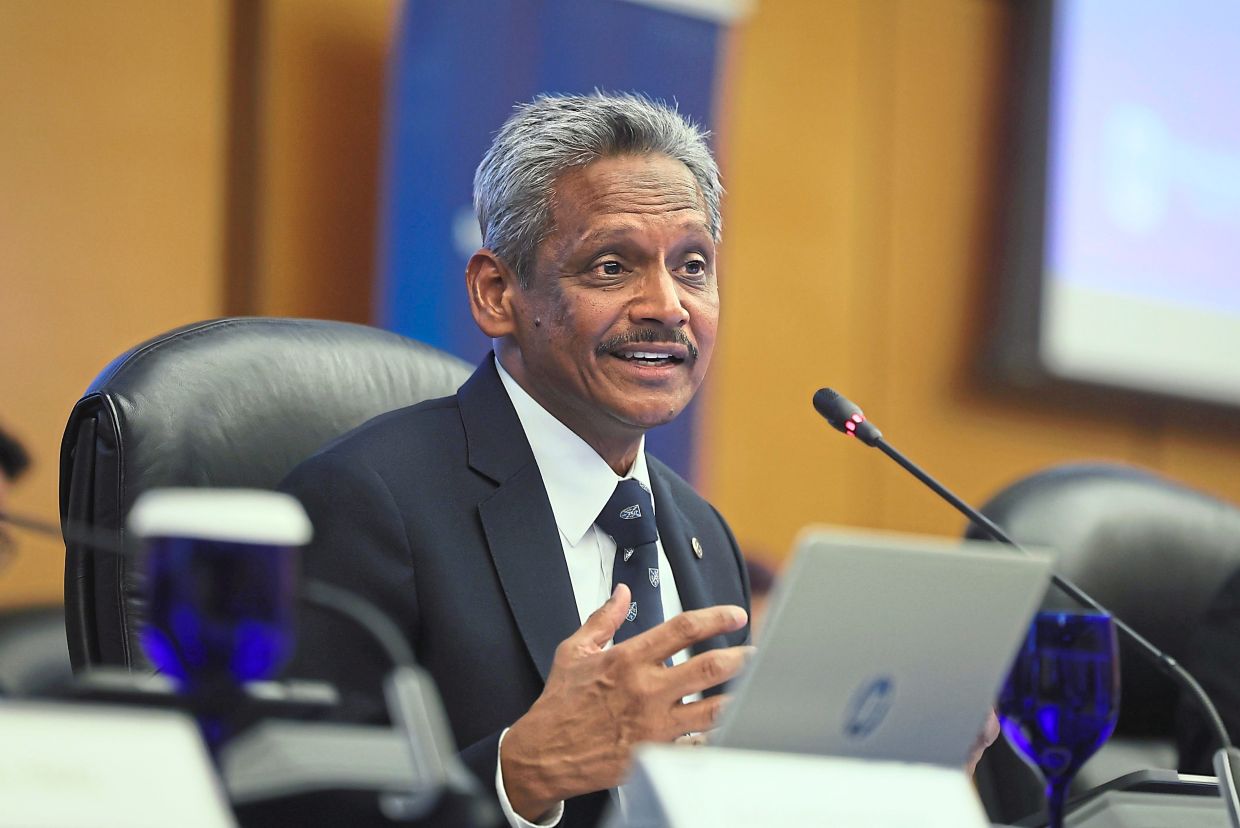
Bank Negara governor Datuk Seri Abdul Rasheed Abdul Ghaffour.
KUALA LUMPUR: Malaysia’s central bank has greater room to adjust interest rates after changing its policy guidance last month and stands ready to act if inflation pressures intensify as the Middle East conflict keeps energy prices elevated, its governor says.
“We are very vigilant in terms of looking at the price increases,” Bank Negara Malaysia (BNM) governor Datuk Seri Abdul Rasheed Ghaffour said in an interview with Bloomberg TV’s Avril Hong yesterday.
“We do have space for us to act accordingly,” if price pressures rise, he said.
BNM kept its benchmark interest rate at 2.75% at its last meeting in September, while dropping its previous description of the policy stance as “appropriate,” a change Abdul Rasheed said gives the central bank greater room to respond if needed.
Investors interpreted the change as opening the door to a potential rate increase. In the swaps market, traders were pricing in yesterday about a 76% probability of a rate hike by BNM within the next six months, according to data compiled by Bloomberg.
“That’s what the market is saying,” Abdul Rasheed said on the sidelines of the International Monetary Fund and World Bank meetings in Bangkok.
“Policy decisions will remain data-dependent, he said, with the monetary policy committee assessing the latest information at each meeting.”
The current rate remains consistent with the outlook for inflation and sustainable economic growth, he added.
Despite a surge in global oil prices fuelled by the Middle East war, inflation in Malaysia has remained moderate, helped in part by government subsidies that keep fuel prices among the lowest in the world.
Malaysia’s position as a net energy exporter, supported by its oil and natural gas reserves, has also helped shield the economy from higher import costs confronting energy-dependent neighbours such as Thailand and the Philippines.
The government expects inflation to average 1.5% to 2.5% this year, after consumer prices rose 1.9% in August from a year earlier. Abdul Rasheed said inflation will hold within the forecast range, but there are risks from a prolonged Middle East conflict and elevated energy prices.
Inflation is expected to pick up in early 2027 as higher energy, food and other input costs feed through to prices, before easing later in the year, according to the government. It forecasts inflation of 1.8% to 2.8% in 2027.
Strong domestic demand and a boom in semiconductor exports have helped cushion Malaysia from disruptions caused by the United States war against Iran, reinforcing expectations that it will remain among South-East Asia’s fastest-growing economies this year.
The government last week raised its 2026 growth forecast to 4.8% to 5.3% from 4% to 5%, as resilient domestic demand and surging exports help offset a challenging global environment. It expects the economy to expand 4.2% to 5.2% next year, supported by sustained domestic demand and investment.
Economic expansion will come in at around 5% this year as Malaysia’s diversified sources of growth will sustain the economy, Abdul Rasheed said.
He acknowledged risks of a slowing artificial intelligence boom but said demand for the nation’s electrical and electronics products would remain strong.
“In our engagement with the businesses, with the multi-national companies that produce these products, you see the order book has grown from about six months, five months ago, to now between 12 to 18 months” he said.
“So that shows that there’s strong demand for these products.”
While Malaysia, as a small and open economy, would be affected by a prolonged conflict in the Middle East, its diverse sources of growth and broad range of trading partners could help cushion the impact.”
The ringgit has remained steady this year even as the Indonesian rupiah and Philippine peso hit record lows.
The Malaysian currency has edged up about 0.6% against the dollar after emerging as the top performer in Asia in 2025, with a gain of 10%.
The currency has remained “resilient,” with a “very healthy two-way flow” in the market, Rasheed said. Abdul Rasheed continues to encourage business, exporters and investors to repatriate and convert their foreign-currency income, he said. — Bloomberg
Thank you for your report!
Economy stays resilient
M'sia needs an integrated Care Economy to cope with ageing population, says Dzulkefly
War, rates and a global economy that won’t break
国家银行行长拿督斯里阿都拉希德阿都加福。
吉隆坡:马来西亚央行行长表示,马来西亚央行在上个月调整政策指引后,有更大的空间来调整利率,如果中东冲突导致能源价格居高不下,通胀压力加剧,央行已准备好采取行动。
马来西亚国家银行(BNM)行长拿督斯里阿卜杜勒·拉希德·加福尔昨天在接受彭博电视台艾薇儿·洪采访时表示:“我们非常关注价格上涨的情况。”
他说:“如果价格压力上升,我们还有采取相应行动的空间。”
马来西亚国家银行在9月份的上一次会议上将基准利率维持在2.75%不变,同时放弃了之前对政策立场“适当”的描述。阿卜杜勒·拉希德表示,这一变化使央行在必要时有更大的应对空间。
投资者将此变化解读为可能加息的信号。彭博社汇编的数据显示,在互换市场,交易员昨日预计马来西亚国家银行在未来六个月内加息的概率约为76%。
“这就是市场的声音,”阿卜杜勒·拉希德在曼谷举行的国际货币基金组织和世界银行会议间隙表示。
他表示,“政策决定仍将取决于数据,货币政策委员会将在每次会议上评估最新信息。”
他补充说,目前的利率水平与通胀前景和可持续经济增长相符。
尽管受中东战争影响,全球油价飙升,但马来西亚的通货膨胀率仍保持温和,这在一定程度上得益于政府补贴,使得燃油价格保持在世界最低水平之列。
马来西亚作为能源净出口国,凭借其石油和天然气储备,也帮助其经济免受泰国和菲律宾等能源依赖型邻国面临的进口成本上涨的影响。
政府预计今年通胀率平均在1.5%至2.5%之间,此前8月份消费者价格指数同比上涨1.9%。阿卜杜勒·拉希德表示,通胀率将保持在预测范围内,但中东冲突持续以及能源价格高企仍存在风险。
政府预计,随着能源、食品和其他投入成本上涨并最终推高物价,通胀将在2027年初加剧,之后在下半年有所缓解。政府预测2027年通胀率将在1.8%至2.8%之间。
强劲的国内需求和半导体出口的繁荣帮助马来西亚抵御了美国对伊朗战争带来的冲击,也强化了人们对马来西亚今年将继续保持东南亚经济增长最快地位的预期。
上周,政府将2026年经济增长预期从4%至5%上调至4.8%至5.3%,理由是强劲的国内需求和出口激增有助于抵消充满挑战的全球经济环境。政府预计,在持续的国内需求和投资支撑下,明年经济增长率将达到4.2%至5.2%。
阿卜杜勒·拉希德表示,马来西亚今年的经济扩张速度将达到5%左右,多元化的增长来源将支撑经济。
他承认人工智能热潮放缓存在风险,但表示对该国电子电气产品的需求将保持强劲。
他说:“在我们与生产这些产品的跨国公司等企业的接触中,你会发现订单量已经从大约六个月、五个月前增长到现在的 12 到 18 个月。”
“这表明市场对这些产品有强劲的需求。”
虽然马来西亚作为一个小型开放经济体,会受到中东长期冲突的影响,但其多元化的增长来源和广泛的贸易伙伴可以帮助缓解这种影响。
今年以来,尽管印尼盾和菲律宾比索均跌至历史新低,但令吉汇率依然保持稳定。
马来西亚货币兑美元汇率小幅上涨约0.6%,此前该货币在2025年成为亚洲表现最佳的货币,涨幅达10%。
拉希德表示,该货币保持了“韧性”,市场“双向流动非常健康”。他还表示,阿卜杜勒·拉希德将继续鼓励企业、出口商和投资者将外汇收入汇回国内并兑换成其他货币。——彭博社
感谢您的报告!
经济保持韧性
祖基菲里表示,马来西亚需要一个综合性的照护经济来应对人口老龄化问题。
战争、利率以及一个不会崩溃的全球经济