Iran’s Supreme Leader Ayatollah Ali Khamenei, who led the Islamic Republic since 1989, is dead at 86伊朗最高领袖阿亚图拉·阿里·哈梅内伊逝世,享年86岁。他自1989年以来一直领导着伊朗伊斯兰共和国。
Iranian state media reported the death early Sunday, after a major attack launched by Israel and the United States.
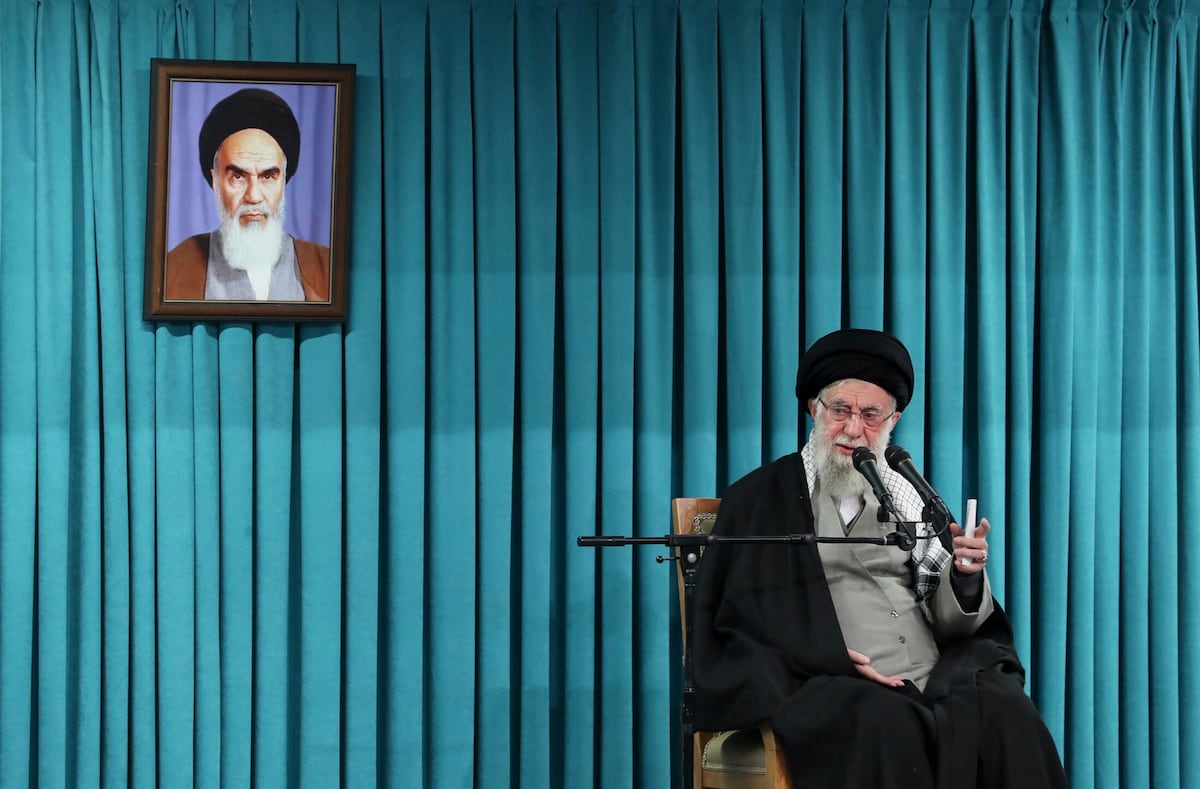
DUBAI, United Arab Emirates — Ayatollah Ali Khamenei , who assembled theocratic power in Iran over the decades as its supreme leader and sought to turn it into a regional powerhouse, bringing it into confrontation with Israel and the United States over its nuclear program while crushing democracy protesters at home, has died. He was 86.
Iranian state media reported the death early Sunday, after a major attack launched by Israel and the United States. U.S. President Donald Trump said hours earlier that Khamenei had been killed in the joint operation.
Khamenei dramatically remolded the Islamic Republic since he took the reins after the death of Ayatollah Ruhollah Khomeini in 1989. Khomeini was the fiery, charismatic ideologue who led the overthrow of the shah and installed rule by Shiite Muslim clerics tasked with spreading religious purity. It fell to Khamenei, a stodgier figure with weaker religious credentials and a leaden demeanor, to turn that revolutionary vision into a state establishment.
He ended up ruling far longer than Khomeini. He greatly expanded the Shiite clerical class and built the paramilitary Revolutionary Guard into the most important body underpinning his rule. The Guard became a military and business behemoth, the country’s most elite force and head of its ballistic missile arsenal, with hands across Iran’s economic sectors.
But the strains became harder to contain. Political repression and the faltering economy fueled successively bigger waves of mass protests. Anger over the 2022 death of Mahsa Amini, detained for not wearing her mandatory headscarf properly, escalated into demonstrations against social restrictions. In early January, hundreds of thousands marched in cities across the country, many chanting, “Death to Khamenei.”
Khamenei responded with the deadliest crackdown seen in nearly 50 years of clerical rule as security forces opened fire on crowds, killing thousands.
At the same time, the Mideast wars sparked by Hamas’ Oct. 7, 2023, attack on Israel set in motion the collapse of the regionwide “Axis of Resistance” built by Khamenei. Israel and Iran attacked each other directly for the first time in 2024. Israel struck Iran again in June 2025, as it and the United States targeted the country’s nuclear program and killed top military officers and nuclear scientists. Iran retaliated by sending missiles and drones at Israel.
Khamenei’s death raises questions about the future of the Islamic Republic.
The 88-seat Assembly of Experts, a group of mostly hard-line clerics, will choose Khamenei’s replacement. But no clear successor is in place.
As he launched the bombing Saturday, U.S. President Donald Trump called on Iranians to “take over your government. It will be yours to take. This will be probably your only chance for generations.” What happens next may depend greatly on bodies like the Revolutionary Guard, which has repeatedly shown its willingness to use overwhelming force to keep power even as many of Iran’s 90 million people grow disenchanted.
“Culturally, the government is bankrupt,” said Mehdi Khalaji, an analyst at the Washington Institute for Near East Policy, said in 2017. “The ideology of the Islamic Republic did not work at all.”
Khamenei’s daughter and son-in-law, a grandchild and a daughter-in-law also were killed in Saturday’s attack, according to the semiofficial Fars news agency, citing unidentified sources.
Iran’s government declared 40 days of public mourning and a seven-day nationwide public holiday to commemorate Khamenei’s death.
From a questioned start to a hard-line grip on Iran
Ali Khamenei was born into a religious family in the northeastern holy city of Mashhad, a hotbed of revolutionary fervor during the struggle against the Western-allied shah, Mohammad Reza Pahlavi.
Like many other Iranian leaders, he studied under Khomeini at the seminary in the holy city of Qom, south of Tehran, in the early 1960s, before Khomeini’s exile to Iraq and France.
Khamenei joined the anti-shah movement, facing time in both prison and in hiding. When Khomeini returned to Iran in triumph in February 1979 and proclaimed the Islamic Republic, Khamenei was appointed to the secretive Revolutionary Council. In 1981, he was elected Iran’s third president; that same year, a bombing by opponents left him with one hand paralyzed.
With his thick, heavy-framed glasses, Khamenei lacked the steely gaze and fiery aura of Khomeini, the father of the Islamic Revolution. He fell far short of Khomeini’s religious scholarship, holding the relatively low rank of “hojatolislam” in the Shiite clerical hierarchy.
After being named supreme leader after Khomeini’s death, he bounded overnight to the level of grand ayatollah, at the top of the hierarchy, and for years had to deal with skepticism over his credentials.
Khamenei acknowledged the doubts with humility. “I am an individual with many faults and shortcomings and truly a minor seminarian,” he said in his first speech in his new post.
Despite his lack of charisma, Khamenei stabilized Iran after the 1980s war with Iraq and governed for over three decades — far longer than Khomeini.
Hard-liners considered him second only to God in his authority. Khamenei created an ever-growing bureaucracy of Shiite clerics and governmental agencies that blurred responsibilities and left him as the ultimate arbiter. As Iran questioned whether to keep the Revolutionary Guard after the war with Iraq, Khamenei came to its rescue and allowed the paramilitary force to gain a powerful grip on Iran’s economy. He also used a system of appointees to undercut the civilian government elected by its people.
The rise and fall of Iran’s proxy forces
Under Khamenei’s reign, Iran shifted fully from conventional warfare to support for proxies, building the so-called Axis of Resistance to advance its interests in the region. The Lebanese militant group Hezbollah, established with Iran’s help in the 1980s, drove Israel from southern Lebanon in 2000 and battled it to a stalemate in the monthlong 2006 war.
Through Hezbollah, Iran perfected a strategy of making local militant groups its allies to project power — often through violence. Iran followed that model when backing Yemen’s Houthi rebels, who in 2014 seized the country’s capital, Sanaa, and held on for over a decade in a stalemated war in the Arab world’s poorest nation — despite facing a Saudi-led coalition and later, U.S.-led airstrikes over their attacks in the Red Sea corridor.
Elsewhere, suspected Iranian-backed militants bombed a Jewish center in Buenos Aires in 1994, killing 85 people. Iran also was allegedly linked to the 1996 bombing of the Khobar Towers housing complex in Saudi Arabia, which killed 19 members of the U.S. military. Iran denied responsibility for both attacks.
Iran emerged as a prime beneficiary of the U.S.-led invasion of Iraq in 2003, which replaced its main regional threat, Saddam Hussein, with a friendly Shiite-led government. Iranian-backed militias waged a brutal insurgency against U.S. forces and embedded themselves within the country’s political landscape.
Khamenei used the Guard’s expeditionary Quds Force most successfully after the Sunni extremists of the Islamic State group seized large swaths of Iraq and Syria in 2014. Guard troops advised Shiite militias, the best fighters in Iraq, and gave crucial support to President Bashar al-Assad in Syria’s civil war.
That secured Assad for a decade, until the chaos sparked by Hamas’ attack on Israel in 2023. Israel devastated the Gaza Strip and launched airstrikes and ground operations pulverizing Hamas, which Iran had armed and funded for years. Israel is widely believed to have killed Hamas leader Ismail Haniyeh in an operation in Tehran in 2024, further embarrassing the Islamic Republic.
Hezbollah found its ranks targeted by exploding pagers and an Israeli campaign killed its longtime leader Hassan Nasrallah. Then, in December 2024, rebel fighters toppled Assad in an offensive in Syria, ending a half-century of his family’s autocratic rule.
Nuclear program advances to near-weapons-grade levels
The supreme leader remained deeply suspicious of the U.S., referring to it as the “Great Satan” even after President Barack Obama came into office in 2009, offering dialogue and a fresh start.
He shrugged off U.N. sanctions and pushed ahead with Iran’s nuclear program, which the U.S. and its allies say hid a secret project to build a nuclear weapon up until 2003. Khamenei issued a verbal fatwa, or religious ruling, that nuclear weapons are un-Islamic, but vowed the country would never give up its right to develop what he called a peaceful nuclear energy program.
Under Iran’s 2015 nuclear deal with world powers, Tehran agreed to drastically reduce its stockpile and enrichment of uranium in exchange for the lifting of economic sanctions. But only three years later, Trump in his first term unilaterally withdrew Washington from the accord, arguing it didn’t go far enough.
Iran has since broken all the limits of the nuclear deal and accumulated a stockpile of uranium enriched to nearly weapons-grade levels, now large enough to pursue several nuclear weapons if it chose to do so. Diplomatic efforts to restore the deal under President Joe Biden stalled.
In a March 2011 speech, Khamenei used toppled Libyan dictator Moammar Gadhafi, who had given up his own nuclear program years earlier, as an example of why Iran’s nuclear program remained so important in the wake of the Arab Spring upheavals in the Middle East.
“Just the way you give a lollipop to a child, Westerners gave ‘incentives’ to them and they gave up everything,” Khamenei said.
Protests and demands for change intensified
Khamenei’s first major challenge came in 1997, when pro-reform politicians gained control of parliament and cleric Mohammad Khatami was elected president by a landslide, riding a large youth vote. The reformists demanded a loosening of the strict social rules imposed by the revolution and called for improved ties with the outside world, including the U.S.
Khamenei-backed hard-liners moved to contain the liberal movement, fearing it would eventually call for an end to clerical rule. Khamenei stopped parliament from loosening restrictions on the media in an unusually overt intervention. Clerical bodies blocked other key liberal legislation and banned many reformist lawmakers from running for reelection, ensuring a return of hard-liner control in the 2004 elections.
That set the stage for the election of hard-line President Mahmoud Ahmadinejad in 2005 and his disputed reelection in 2009 amid charges of vote-rigging. Mass protests broke out, posing the greatest threat in decades to Iran’s clerical leadership. The Revolutionary Guard, Basij militia and police unleashed a crackdown in which dozens were killed and hundreds arrested.
The turmoil, and reports of protesters being tortured to death or raped in prison, dealt a severe blow to Khamenei’s prestige.
As sanctions bit further, popular unrest rose. Economic protests broke out in 2017 and demonstrations escalated in 2019 over a rise in government-set gasoline prices. A bloody crackdown that followed killed over 300 people, according to activists.
Although Khamenei struggled to preserve the ideological purity of the Islamic Revolution, Iran’s government has largely failed to rid the country of Western influence. Satellite dishes, banned in theory, crowd Tehran’s rooftops. Banned social media sites are widely used, even by some prominent politicians, despite being blocked.
Protests erupted again in 2022 over the death of Amini, a young woman detained for not wearing her hijab, or headscarf, to the liking of authorities. More than 500 people were killed and tens of thousands arrested when security forces crushed the demonstrations again.
In late December 2025, new economic protests erupted and would grow into what appeared to be the biggest protest movement ever. Hundreds of thousands across the country took to the streets, overtly demanding an end to the Islamic Republic. Some even chanted for the return of the shah’s son, living in exile since 1979. The ferocity of the crackdown stunned Iranians.
Confrontation with US
With U.S. President Donald Trump, Khamenei faced a more aggressive and unpredictable American drive to stop Iran’s nuclear program. Trump unilaterally withdrew America from Iran’s nuclear deal with world powers in 2018, bringing a return of sanctions.
The two sides came close to war with the United States after an American drone strike killed Revolutionary Guard Gen. Qassem Soleimani in January 2020. At Soleimani’s mass funeral that drew millions to the streets, Khamenei wept over the casket of the man he once called a “living martyr.” Two days later, the Guard mistakenly shot down a Ukrainian airliner after its takeoff from Tehran, killing all 176 people aboard.
Iran ramped uranium enrichment back up, reaching 60% purity — a short, technical step away from weapons-grade levels of 90%. Still, when Trump returned to the White House in January 2025, Khamenei resumed talks, underscoring the deep toll the sanctions had taken. Iran’s long-ailing economy entered a freefall, worsening domestic unrest.
But a deal remained elusive. In June, Israel and the U.S. bombed Iranian nuclear facilities, inflicting heavy damage. How far back it set the program remained unclear.
During the crackdown on nationwide protests in January, Trump renewed threats to strike, demanding Iran make major concessions at the negotiating table. Then came three rounds of indirect talks. Then came Saturday.
Former Associated Press writer Brian Murphy contributed.
阿联酋迪拜——伊朗最高领袖阿亚图拉·阿里·哈梅内伊逝世,享年86岁。他数十年来在伊朗巩固神权统治,并试图将伊朗打造成为地区强国。他曾因伊朗核计划与以色列和美国发生冲突,同时在国内镇压民主抗议活动。
伊朗国家媒体周日清晨报道了这一消息,此前以色列和美国发动了一次大规模袭击。美国总统特朗普数小时前曾表示,哈梅内伊在联合行动中丧生。
自1989年阿亚图拉·鲁霍拉·霍梅尼去世后,哈梅内伊接管政权以来,他对伊斯兰共和国进行了大刀阔斧的改革。霍梅尼是一位充满激情、极具魅力的思想家,他领导推翻了沙阿政权,建立了由什叶派穆斯林神职人员统治的政权,旨在传播宗教纯洁。而将这一革命愿景转化为国家政权的重任,则落到了哈梅内伊身上,他是一位性格较为保守、宗教资历较弱、举止沉稳的人物。
他的统治时间远超霍梅尼。他极大地扩张了什叶派神职人员阶层,并将准军事组织革命卫队打造成为支撑其统治的最重要力量。革命卫队发展成为军事和商业巨头,是伊朗最精锐的部队,也是弹道导弹武库的掌控者,其触角遍及伊朗的各个经济领域。
但局势日趋紧张,难以控制。政治镇压和经济衰退引发了一波又一波规模更大的民众抗议。2022年,玛莎·阿米尼因未正确佩戴强制性头巾而被拘留致死,引发的愤怒情绪升级为反对社会限制的示威游行。1月初,数十万人走上全国各地城市的街头,许多人高喊“哈梅内伊去死”。
哈梅内伊随即展开了近50年来最残酷的镇压,安全部队向人群开火,造成数千人死亡。
与此同时,哈马斯于2023年10月7日袭击以色列,引发中东战争,并导致哈梅内伊建立的覆盖整个地区的“抵抗轴心”瓦解。以色列和伊朗于2024年首次直接交战。2025年6月,以色列再次打击伊朗,并与美国联手攻击伊朗的核计划,导致伊朗高级军官和核科学家丧生。伊朗随即向以色列发射导弹和无人机进行报复。
哈梅内伊的去世引发了人们对伊斯兰共和国未来的担忧。
由88名成员组成的专家会议(成员大多为强硬派神职人员)将选出哈梅内伊的继任者。但目前还没有明确的继任人选。
美国总统唐纳德·特朗普周六发动轰炸时,呼吁伊朗人民“夺回你们的政府。这将是你们的权力。这可能是你们几代人唯一的机会。”接下来的局势发展可能很大程度上取决于像伊朗革命卫队这样的机构。尽管伊朗9000万民众中许多人对政府日益不满,但革命卫队已多次展现出动用压倒性武力维护政权的意愿。
“从文化角度来看,政府已经破产了,”华盛顿近东政策研究所分析师迈赫迪·哈拉吉在2017年表示。“伊斯兰共和国的意识形态完全行不通。”
据半官方的法尔斯通讯社援引未具名消息人士报道,哈梅内伊的女儿和女婿、一个孙子和一个儿媳也在周六的袭击中丧生。
伊朗政府宣布全国哀悼 40 天,并放假 7 天,以纪念哈梅内伊逝世。
从备受质疑的开端到对伊朗采取强硬路线
阿里·哈梅内伊出生于东北部圣城马什哈德的一个宗教家庭,马什哈德是反对亲西方的沙阿穆罕默德·礼萨·巴列维的革命热情的温床。
像许多其他伊朗领导人一样,他在 20 世纪 60 年代初曾在德黑兰以南的圣城库姆的神学院跟随霍梅尼学习,当时霍梅尼尚未流亡到伊拉克和法国。
哈梅内伊加入了反国王运动,曾多次入狱和被迫躲藏。1979年2月,霍梅尼凯旋返回伊朗,宣布成立伊斯兰共和国,哈梅内伊被任命为秘密的革命委员会成员。1981年,他当选为伊朗第三任总统;同年,反对派发动的一次爆炸袭击导致他一只手瘫痪。
哈梅内伊戴着厚重的眼镜框,与伊斯兰革命之父霍梅尼那钢铁般的目光和炽热的气场相比,显得黯然失色。他的宗教学识也远不及霍梅尼,在什叶派神职人员等级中仅位列“伊斯兰教士”这一相对较低的职位。
在霍梅尼去世后被任命为最高领袖后,他一夜之间晋升为最高领袖,成为最高阿亚图拉,并多年来一直面临着对其资历的质疑。
哈梅内伊谦逊地承认了这些质疑。他在就任新职后的首次讲话中说:“我是一个有很多缺点和不足的人,我其实只是个小神学院学生。”
尽管哈梅内伊缺乏个人魅力,但他在 20 世纪 80 年代两伊战争后稳定了伊朗局势,并统治了三十多年——远远超过霍梅尼的统治时间。
强硬派认为他的权威仅次于真主。哈梅内伊建立了一个日益庞大的什叶派神职人员和政府机构组成的官僚体系,模糊了职责界限,使他成为最终的仲裁者。在两伊战争结束后,伊朗曾质疑是否应该保留革命卫队,哈梅内伊出手相助,使这支准军事部队牢牢掌控了伊朗的经济。他还利用委任制削弱了人民选举产生的文官政府。
伊朗代理势力的兴衰
在哈梅内伊统治时期,伊朗彻底放弃了常规战争,转而支持代理人,建立了所谓的“抵抗轴心”,以推进其在该地区的利益。黎巴嫩真主党武装组织在20世纪80年代在伊朗的帮助下成立,于2000年将以色列逐出黎巴嫩南部,并在2006年持续一个月的战争中与以色列陷入僵局。
伊朗通过真主党完善了一种战略,即利用地方武装组织作为盟友来投射自身力量——通常通过暴力手段。伊朗在支持也门胡塞武装时也沿用了这一模式。2014年,胡塞武装占领了也门首都萨那,并在阿拉伯世界最贫穷的国家之一的也门,在长达十余年的僵持战争中坚守阵地——尽管他们面临着沙特领导的联军,以及后来美国领导的空袭,这些空袭都是由于他们在红海走廊发动的袭击造成的。
此外,1994年,疑似受伊朗支持的武装分子在布宜诺斯艾利斯炸毁了一座犹太人中心,造成85人死亡。伊朗还被指控与1996年沙特阿拉伯胡拜尔塔楼住宅区爆炸案有关,该爆炸案造成19名美军人员丧生。伊朗否认对这两起袭击事件负责。
2003年,美国领导的入侵伊拉克战争使伊朗成为主要受益者。这场战争推翻了其在地区内的主要威胁萨达姆·侯赛因政权,扶植了一个友好的什叶派政府。伊朗支持的民兵组织对美军发动了残酷的叛乱,并逐渐融入了伊拉克的政治格局。
2014年,逊尼派极端组织“伊斯兰国”占领伊拉克和叙利亚大片领土后,哈梅内伊最成功地利用了伊斯兰革命卫队的远征部队——圣城旅。伊斯兰革命卫队为伊拉克最精锐的什叶派民兵提供建议,并在叙利亚内战中为巴沙尔·阿萨德总统提供了至关重要的支持。
这确保了阿萨德政权长达十年,直到2023年哈马斯袭击以色列引发混乱。以色列摧毁了加沙地带,并发动空袭和地面行动,重创了伊朗多年来武装和资助的哈马斯。人们普遍认为,以色列在2024年于德黑兰的一次行动中击毙了哈马斯领导人伊斯梅尔·哈尼亚,这进一步令伊朗伊斯兰共和国颜面尽失。
真主党成员遭到爆炸寻呼机袭击,以色列的军事行动导致其长期领导人哈桑·纳斯鲁拉身亡。随后,在2024年12月,反叛武装在叙利亚发动攻势,推翻了阿萨德政权,结束了其家族长达半个世纪的独裁统治。
核计划进展到接近武器级水平
最高领导人对美国仍然抱有深深的怀疑,即使在巴拉克·奥巴马总统于 2009 年上任,提出对话和重新开始之后,他仍然称美国为“大撒旦”。
他无视联合国制裁,继续推进伊朗的核计划。美国及其盟友称,伊朗直到2003年才公开其秘密核武器研发项目。哈梅内伊曾发布口头教令(宗教裁决),称核武器不符合伊斯兰教义,但他誓言伊朗永远不会放弃发展他所谓的和平利用核能计划的权利。
根据伊朗与世界大国于2015年达成的核协议,德黑兰同意大幅削减其铀库存和浓缩活动,以换取经济制裁的解除。但仅仅三年后,特朗普在其第一任期内单方面宣布美国退出该协议,理由是协议力度不够。
伊朗此后违反了核协议的所有限制,并积累了大量浓缩铀,其数量已接近武器级,足以使其有能力制造多枚核武器。在乔·拜登总统的领导下,旨在恢复该协议的外交努力陷入停滞。
2011 年 3 月,哈梅内伊在一次演讲中以被推翻的利比亚独裁者穆阿迈尔·卡扎菲为例,说明了为什么在阿拉伯之春中东动荡之后,伊朗的核计划仍然如此重要。卡扎菲几年前就放弃了自己的核计划。
哈梅内伊说:“就像给孩子棒棒糖一样,西方人给了他们‘奖励’,他们就放弃了一切。”
抗议和变革诉求加剧
哈梅内伊面临的第一个重大挑战出现在1997年,当时支持改革的政治家控制了议会,而宗教人士穆罕默德·哈塔米凭借大量青年选民的支持,以压倒性优势当选总统。改革派要求放松革命后建立的严格社会规则,并呼吁改善与包括美国在内的外部世界的关系。
哈梅内伊支持的强硬派采取行动遏制自由主义运动,担心该运动最终会要求结束神权统治。哈梅内伊以罕见的公开干预阻止议会放松对媒体的限制。神权机构阻挠其他关键的自由主义立法,并禁止许多改革派议员竞选连任,从而确保强硬派在2004年大选中重新掌控政权。
这为强硬派总统马哈茂德·艾哈迈迪内贾德在2005年当选以及他在2009年因舞弊指控而备受争议的连任埋下了伏笔。大规模抗议活动爆发,对伊朗神职人员领导层构成了数十年来最大的威胁。革命卫队、巴斯基民兵和警察展开镇压,造成数十人死亡,数百人被捕。
这场动乱,以及有关抗议者在监狱中被酷刑致死或被强奸的报道,严重打击了哈梅内伊的威望。
随着制裁力度加大,民众不满情绪日益高涨。2017年爆发了经济抗议活动,2019年,由于政府提高汽油价格,示威活动进一步升级。据活动人士称,随后发生的血腥镇压造成300多人死亡。
尽管哈梅内伊竭力维护伊斯兰革命的意识形态纯洁性,但伊朗政府在很大程度上未能清除西方的影响。理论上被禁止的卫星天线,在德黑兰的屋顶上随处可见。被禁的社交媒体网站,即便被屏蔽,也仍然被广泛使用,甚至一些知名政治人物也在使用。
2022年,年轻女子阿米尼因未按当局要求佩戴头巾而被拘留,其死亡引发了新的抗议活动。安全部队再次镇压示威活动,导致500多人死亡,数万人被捕。
2025年12月下旬,新一轮经济抗议爆发,并逐渐演变成史上规模最大的抗议运动。全国各地数十万人走上街头,公开要求结束伊斯兰共和国的统治。一些人甚至高呼让自1979年以来一直流亡海外的国王之子回国。当局的残酷镇压令伊朗民众震惊。
与美国的对抗
在美国总统唐纳德·特朗普的领导下,哈梅内伊面临着美国更加咄咄逼人且难以预测的阻止伊朗核计划的行动。2018年,特朗普单方面退出了美国与世界大国达成的伊朗核协议,导致制裁恢复。
2020年1月,美国无人机袭击炸死了伊朗革命卫队将军卡西姆·苏莱曼尼,此后双方一度濒临与美国开战。在苏莱曼尼的大型葬礼上,数百万民众走上街头悼念,哈梅内伊在灵柩前痛哭流涕,他曾称苏莱曼尼为“活着的烈士”。两天后,革命卫队误击落了一架从德黑兰起飞的乌克兰客机,机上176人全部遇难。
伊朗重新提高了铀浓缩水平,纯度达到60%——距离武器级90%的纯度仅一步之遥。然而,当特朗普于2025年1月重返白宫时,哈梅内伊恢复了谈判,这凸显了制裁造成的严重后果。伊朗长期疲软的经济陷入自由落体式的下滑,加剧了国内动荡。
但达成协议仍然遥遥无期。6月,以色列和美国轰炸了伊朗核设施,造成严重破坏。此次轰炸究竟将伊朗核计划推迟了多久,目前尚不清楚。
1月份镇压全国抗议活动期间,特朗普再次威胁要对伊朗发动打击,要求伊朗在谈判桌上做出重大让步。随后进行了三轮间接会谈。然后,就到了周六。
前美联社记者布莱恩·墨菲对此文亦有贡献。