After separation and divorce, we kept raising our children under one roof. Here's what it's been like分居离婚后,我们仍然让孩子们在同一个屋檐下共同生活。以下是我们的生活现状。
For Ms Pauline Pang, co-parenting means making sure her children never feel they have to choose sides or manage their divorced parents' emotions.
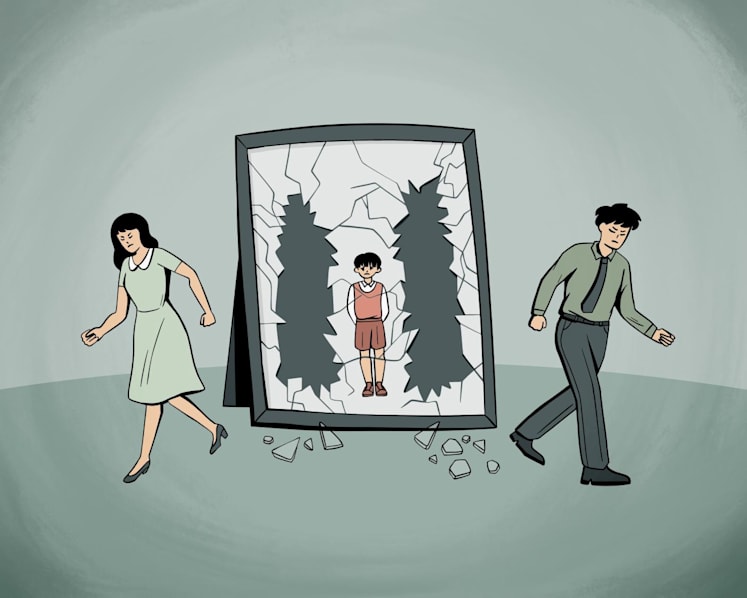
For Ms Pauline Pang, co-parenting means making sure her children never feel they have to choose sides or manage their divorced parents' emotions.
Ms Pauline Pang on a family holiday with her ex-husband and three children. Even after ending their marriage, both parents make it a point to spend time together as a family. (Photo: Pauline Pang)
This audio is generated by an AI tool.
My ex-husband and I have been separated for three years. In August, we finalised our divorce.
If you were to look at us from the outside, however, it might seem like nothing has changed.
We're still living under the same roof, just in different rooms. We still have family outings. We celebrate our children's milestones, such as preschool graduations, and even go on holidays together.
Some people find it strange. Others assume we must still be together. Then, there are those who ask us: "If you're divorced, why are you still going out together?"
My response is usually: "Why can't we? Does being divorced mean we must hate each other?"
CNA Games Guess Word Crack the word, one row at a time Buzzword Create words using the given letters Mini Sudoku Tiny puzzle, mighty brain teaser Mini Crossword Small grid, big challenge Word Search Spot as many words as you can Show More Show Less
To us, ending our marriage does not mean we have to stop being a family to our children and dismantle every aspect of our relationship with each other.
There is no longer a romantic relationship between us, but what remains is a family we both want to show up for.
We are still parents to our two boys, aged nine and eight, and our six-year-old daughter.
THE LEAD-UP TO THE DIVORCE
My ex-husband and I spent many years together building a family and creating memories. Even though our marriage has ended, those years still matter, and our children will always connect us.
We met through a dating application in 2013 and got married about three years later.
There wasn't one single moment when everything broke down, but over time, my trust in the marriage was affected by issues I prefer to keep private out of respect for him and our family,
I chose to forgive him, but the hurt didn't disappear.
Tensions between him and my family also made living with my parents more difficult. After we had children, much of my attention went towards raising them, and we gradually drifted apart.
Divorce wasn't an overnight decision.
I spent a long time asking myself whether I still wanted the marriage, or whether I was afraid of what ending it would mean for our children , for our family and for how others would see us.
I was also afraid because I didn't know how he would react. After all, he loves the kids as much as I do. What if he wanted to fight for custody ?
To my surprise, when I brought up the topic, he was calm and open to discussing it. That gave us room to talk about the children and how we would move forward.
Eventually, we agreed to proceed with an uncontested divorce.
While my parents were understanding because they had known about our difficulties for a long time, my in-laws were more concerned. They were hoping that we could salvage the marriage for the children. I remember them urging, " Stay for the children ".
I understood why they would say this, but I also had to think about what staying would look like.
What would our children learn from watching us? I want them to grow up understanding love, respect and healthy boundaries, instead of seeing their parents remain in an unhappy marriage.
For us, ending the marriage meant accepting that we could no longer make it work as a couple, without walking away from our responsibilities as parents.
In the end, I explained to my in-laws that we would continue raising the children together.
They came to understand our decision, and I still speak with them on the phone from time to time. We have maintained a good relationship because they are still the children's grandparents, and that connection matters to me.
CO-PARENTING UNDER ONE ROOF
My ex-husband and I now live in the same flat at a public housing estate, but in separate rooms.
When his new home is ready next March, we have agreed that the children can stay with him on Friday and Saturday nights.
He told me that I'm welcome at his new place whenever the children are there.
He also said that he wants to remain actively involved in the children's lives , and we plan to continue making space for shared family time.
Our marriage has ended, but our job as their parents has not.
Our arrangement works because we're both comfortable with it and feel safe living this way.
I know that it would not be appropriate, or even possible, for every separated couple.
We hope to keep being there together for the events that matter as our children grow up. At these events, I want them to look into the audience and see both of us cheering them on.
I don't want them to feel that they have to manage our feelings just because both parents are still in the same home.
For now, the kids get to decide which parent's room they're sleeping in for the night; they know that they can come to either of us.
And when all three want to sleep with one parent, the other parent gets the night off.
Sometimes, they'll say, "Today, I'll sleep with Mama. Tomorrow, I'll sleep with you, okay, Papa?"
Once the children are asleep, we usually spend the night separately in our own rooms.
We'll text each other about the children's arrangements the next day: who's taking them out, what's planned and who's handling what.
Outside of parenting, we give each other privacy. Like friends, we share what we are comfortable sharing and respect what the other chooses to keep private.
This might be surprise some people, but I don't find it difficult to see my ex-husband constantly.
After living together for 13 years, we still a friendship.
The romantic relationship has ended, but that does not mean all care disappears. I still want him to be well, and I sometimes wonder how he will adjust when he moves out and starts living alone.
During our separation these past few years, the children naturally noticed that we slept in different rooms, so I introduced the subject of divorce gradually.
I remember telling my oldest son that if Mama and Papa were no longer together one day, we would still love him just as much.
He immediately asked whether I meant divorce. I was surprised by how much he knew. He said that he didn't understand relationships, but that it was our decision and he was okay with us making it.
His response touched me, although I knew it wasn't his responsibility to approve our decision.
My daughter even asked, "Mummy, if you get married again, will you invite me?"
That made me laugh, but it touched me, too. Of course I would.
Her question reminded me that children can see things differently from adults. What mattered to her in that moment was knowing that she would still be included in my life.
Fortunately, despite some adjustments to routines such as bedtime, the children are still very much themselves.
They play, laugh, and argue as siblings do, and they continue doing well in school.
We reassure them through everyday routines, including spending time together as a family, helping them with homework, and celebrating their milestones.
The kids' reactions have shown me that they understand more than I expected. Still, I don't assume that they will always feel the same way.
Their feelings may change as they grow older or when their father moves out.
I want them to know that they can ask questions or tell us if something feels difficult. Whatever changes, they will always have a place in both our lives.
Yet, keeping this arrangement doesn't mean that everything has been easy.
These past few years, I've come to realise that co-parenting requires us to put our egos aside repeatedly. We still have to communicate, make plans, keep our promises and respect each other's time.
I've also learnt that I can acknowledge the hurt in our marriage and still recognise the good he does as a father.
Being friendly doesn't erase the past. But it allows us to make decisions about the children without dragging every old disagreement into the conversation.
The biggest lesson is that our children experience co-parenting less through what we tell them and more through our everyday actions.
They notice whether we show up, how we speak to each other and whether they can talk freely about one parent in front of the other.
More than presenting a united front, I want to make sure they never feel caught between us. They shouldn't have to choose sides, carry messages between their parents or worry about keeping either of us happy.
A FUTURE AFTER DIVORCE
For a long time, I thought mainly about what everyone else needed and how divorce would affect them.
One of the hardest lessons was accepting that my own well-being and feelings mattered, too.
Choosing to end my marriage did not mean choosing myself over my children.
I could want a different future for myself while continuing to work with their father to give them love and stability.
My children are a big source of strength, and they give me a real sense of purpose and fulfilment.
Ms Pauline Pang with her three children. Co-parenting after a divorce has meant putting old hurt aside so that the children do not feel caught between their parents, she said. (Photo: Pauline Pang)
There are still difficult days, but I try to seek support from other adults rather than place that emotional weight on my children. They shouldn't feel responsible for making either parent okay.
I've also learnt that other people may have strong opinions but, at the end of the day, my children and I are the ones living with my decisions every day.
Some separated parents continue spending time together as a family . Others need far more distance.
Neither arrangement should be treated as the model everyone has to follow.
What matters is finding something safe, respectful and workable for the people involved, especially the children.
Divorce is still something many families find difficult to talk about openly, but I think greater openness can help people feel less alone.
When we share these experiences honestly, we give people a fuller picture of life after divorce. That includes the awkward adjustments and difficult days, as well as the happy moments.
I hope my sharing helps other parents feel less alone and reminds children that nothing is embarrassing about having a family that looks different from someone else's.
Our marriage has ended, but our job as their parents has not. We still want to show up for our children – together when we can, and separately when we need to.
Pauline Pang is a mum of three. She posts about her divorce and co-parenting experiences on Instagram under the handle @itspaulynn.
If you have an experience to share or know someone who wishes to contribute to this series, write to voices [at] mediacorp.com.sg ( voices[at]mediacorp[dot]com[dot]sg ) with your full name, address and phone number.
Get our pick of top stories and thought-provoking articles in your inbox
Stay updated with notifications for breaking news and our best stories
Join our channel for the top reads for the day on your preferred chat app
对于庞宝琳女士来说,共同抚养子女意味着确保她的孩子永远不会感到自己必须选边站队或处理离异父母的情绪。
宝琳·庞女士与前夫及三个孩子一起度假。即使婚姻破裂,这对父母仍然努力抽出时间陪伴家人。(照片:宝琳·庞)
这段音频由人工智能工具生成。
我和前夫已经分居三年了。今年八月,我们正式离婚。
但如果你从外部观察我们,可能会觉得一切都没有改变。
我们仍然住在同一屋檐下,只是住在不同的房间。我们仍然会一起外出。我们会庆祝孩子们的人生里程碑,比如幼儿园毕业典礼,甚至还会一起度假。
有些人觉得很奇怪。有些人则认为我们肯定还在一起。还有些人会问我们:“你们既然离婚了,为什么还要一起出去玩?”
我的回答通常是:“为什么我们不能?离婚就意味着我们必须互相憎恨吗?”
CNA游戏 猜词游戏 逐行破解单词 流行词游戏 用给定的字母组成单词 迷你数独 小小谜题,挑战你的大脑 迷你填字游戏 小方格,大挑战 单词搜索 尽可能多地找出单词 显示更多 显示更少
对我们来说,结束婚姻并不意味着我们必须停止做孩子的家人,也不意味着我们必须彻底摧毁彼此关系的方方面面。
我们之间不再有恋爱关系,但我们都想为这个家庭尽一份力。
我们仍然是两个儿子(分别九岁和八岁)和一个六岁女儿的父母。
离婚的前因后果
我和前夫一起度过了许多年,共同组建家庭,创造了许多美好回忆。虽然我们的婚姻已经结束,但那些岁月依然弥足珍贵,我们的孩子也将永远把我们联系在一起。
我们于 2013 年通过约会软件相识,大约三年后结婚。
并非是某个瞬间所有事情都彻底崩溃了,而是随着时间的推移,我对婚姻的信任受到了一些问题的侵蚀,出于对他和我们家庭的尊重,我选择不公开这些问题。
我选择原谅他,但伤痛并没有消失。
他和我家人之间的紧张关系也使我与父母同住变得更加困难。有了孩子之后,我的大部分精力都投入到抚养孩子上,我们逐渐疏远了。
离婚并非一时冲动的决定。
我花了很长时间问自己,我是否还想要这段婚姻,或者我是否害怕这段婚姻的结束会给我们的孩子、我们的家庭以及别人如何看待我们带来什么后果。
我也很害怕,因为我不知道他会作何反应。毕竟,他和我一样爱孩子们。万一他想争夺抚养权怎么办?
令我惊讶的是,当我提起这个话题时,他很平静,也愿意讨论。这让我们有时间谈论孩子以及我们未来的计划。
最终,我们同意进行协议离婚。
虽然我的父母很理解,因为他们早就知道我们的困境,但我的公婆却更加担忧。他们希望我们能为了孩子挽救这段婚姻。我记得他们劝道:“为了孩子,留下来吧。”
我理解他们为什么会这么说,但我也必须思考留下来意味着什么。
我们的孩子会从我们身上学到什么?我希望他们长大后懂得爱、尊重和健康的界限,而不是看到他们的父母继续待在不幸的婚姻中。
对我们来说,结束婚姻意味着接受我们无法再作为夫妻共同生活的事实,但同时也要履行我们作为父母的责任。
最后,我向我的岳父岳母解释说,我们会继续共同抚养孩子。
他们最终理解了我们的决定,我至今仍会时不时地和他们通电话。我们一直保持着良好的关系,因为他们毕竟是孩子们的祖父母,这份情谊对我来说弥足珍贵。
共同抚养孩子
我和前夫现在住在同一个公共住房区的公寓里,但我们住在不同的房间里。
明年三月他的新家准备就绪后,我们商定孩子们可以在周五和周六晚上和他一起住。
他告诉我,只要孩子们在,我随时都欢迎去他新家。
他还表示,他希望继续积极参与孩子们的成长,我们也计划继续为家人共度时光腾出空间。
我们的婚姻结束了,但我们作为父母的责任还没有结束。
我们这种安排之所以行得通,是因为我们双方都觉得这样很舒服,也很有安全感。
我知道对于每一对分居的夫妇来说,这样做并不合适,甚至可能。
我们希望在孩子们成长过程中,能够继续陪伴他们经历那些重要的时刻。在这些场合,我希望他们能看向观众席,看到我们俩都在为他们加油助威。
我不希望他们觉得,仅仅因为父母双方仍然住在一起,他们就必须去处理我们的情绪。
目前,孩子们可以自己决定晚上睡在父母哪一方的房间里;他们知道他们可以来我们任何一方的房间。
如果三个孩子都想和其中一位家长睡,那么另一位家长就可以休息一晚。
有时他们会说:“今天我和妈妈一起睡。明天我和你一起睡,好吗,爸爸?”
孩子们睡着后,我们通常会各自在自己的房间里过夜。
第二天我们会互相发短信商量孩子们的安排:谁带他们出去,有什么计划,谁负责什么。
除了育儿之外,我们彼此尊重对方的隐私。就像朋友一样,我们分享彼此愿意分享的内容,也尊重对方选择保密的事情。
这或许会让一些人感到惊讶,但我并不觉得经常见到前夫有什么不方便。
共同生活了13年,我们依然是朋友。
恋爱关系虽然结束了,但这并不意味着我对他的关心就此消失。我仍然希望他一切安好,有时我会想,他搬出去独自生活后会如何适应。
在我们分居的这几年里,孩子们自然而然地注意到我们睡在不同的房间,所以我逐渐向他们介绍了离婚的话题。
我记得我曾告诉我的大儿子,如果有一天爸爸妈妈不再在一起了,我们依然会像以前一样爱他。
他立刻问我是不是指离婚。他懂得那么多,让我很惊讶。他说他不懂感情,但这是我们俩的决定,他也不反对。
他的反应让我很感动,尽管我知道批准我们的决定并不是他的责任。
我女儿甚至问:“妈妈,如果你再婚,你会邀请我吗?”
这让我笑了,但也让我很感动。我当然会感动。
她的问题让我意识到,孩子看待事物的方式与成人不同。在那一刻,她最在意的是知道自己依然会是我生命中的一部分。
幸运的是,尽管作息时间等日常习惯有所调整,孩子们仍然保持着他们原本的性格。
他们像兄弟姐妹一样玩耍、欢笑、争吵,而且在学校里也继续表现出色。
我们通过日常活动来安抚他们,包括全家一起度过时光、帮助他们做作业、庆祝他们的里程碑。
孩子们的反应让我意识到,他们比我预想的更能理解。不过,我并不认为他们会一直这样想。
随着年龄增长或父亲搬出去后,他们的感受可能会发生变化。
我想让他们知道,如果遇到困难,他们可以随时提问或告诉我们。无论发生什么变化,他们永远都会在我们生活中占有一席之地。
然而,维持这种安排并不意味着一切都很容易。
过去几年,我逐渐意识到,共同抚养孩子需要我们反复放下自我。我们仍然需要沟通、制定计划、信守承诺并尊重彼此的时间。
我也明白,我可以承认婚姻中的伤痛,同时也能认可他作为父亲所做的贡献。
友善并不能抹去过去,但它可以让我们在做关于孩子的决定时,不必把过去的每一次分歧都带入到讨论中。
最重要的教训是,孩子们更多地是通过我们的日常行为,而不是通过我们告诉他们的,来体验共同抚养子女的过程。
他们会注意到我们是否到场,我们如何交谈,以及他们是否可以在一位家长面前自由地谈论另一位家长。
比起展现团结一致的姿态,我更希望确保孩子们永远不会感到夹在我们中间左右为难。他们不应该被迫选边站队,不应该在父母之间传递信息,也不应该担心如何才能让我们任何一方满意。
离婚后的未来
很长一段时间里,我主要想的是其他人需要什么,以及离婚会对他们产生什么影响。
最难的一课就是接受自己的幸福和感受也很重要。
选择结束婚姻并不意味着我选择牺牲孩子而选择自己。
我可能希望自己拥有不同的未来,同时继续与他们的父亲一起努力,给予他们爱和稳定。
我的孩子们给了我很大的力量,他们让我感受到真正的目标感和成就感。
庞宝琳女士和她的三个孩子。她说,离婚后共同抚养孩子意味着要放下过去的伤痛,这样孩子们才不会感到夹在父母之间左右为难。(照片:庞宝琳)
虽然偶尔也会遇到困难,但我尽量寻求其他成年人的支持,而不是把这种情感负担转嫁给孩子。他们不应该觉得自己有责任让父母中的任何一方过得好。
我也明白了,其他人可能持有强烈的观点,但归根结底,每天都要承受我所做决定后果的,是我和我的孩子们。
有些分居的父母仍然会像家人一样相处一段时间。而另一些父母则需要保持更大的距离。
这两种安排都不应被视为所有人必须遵循的模式。
重要的是找到对相关人员,特别是儿童来说安全、尊重且可行的方案。
离婚仍然是许多家庭难以公开谈论的话题,但我认为,更加坦诚地谈论离婚可以帮助人们减少孤独感。
当我们坦诚地分享这些经历时,就能让人们更全面地了解离婚后的生活。这其中既包括尴尬的适应期和艰难的日子,也包括幸福的时刻。
我希望我的分享能帮助其他父母感到不那么孤单,并提醒孩子们,拥有一个与别人不同的家庭并没有什么可尴尬的。
我们的婚姻结束了,但我们作为父母的责任并没有结束。我们仍然想尽到为人父母的责任——尽可能一起陪伴孩子,必要时则各自行动。
Pauline Pang是三个孩子的妈妈。她在Instagram上以@itspaulynn的账号分享她的离婚和共同抚养孩子的经历。
如果您有经验想要分享,或者认识有人想要为本系列做出贡献,请将您的全名、地址和电话号码写信至 voices [at] mediacorp.com.sg ( voices[at]mediacorp[dot]com[dot]sg )。
订阅我们的邮件,即可获取精选热点新闻和引人深思的文章。
订阅通知,第一时间获取突发新闻和精彩报道。
加入我们的频道,即可在您常用的聊天应用上获取当日热门文章。