Ukraine’s defense AI chief predicts ‘new paradigm’ of warfare乌克兰国防人工智能负责人预测战争的“新范式”
“The system that possesses more data and better understands that data, proposes solutions — that system will gain the advantage over the other."
KYIV — Warfare in Ukraine and beyond faces a paradigm shift in the coming years as artificial intelligence systems integrate into unified networks that speed up decisions on the battlefield, a senior Ukrainian official said.
Ukraine, in the fifth year of fighting a full-scale Russian invasion, is already using AI for a plethora of battlefield functions, from flying drones at targets to helping plan combat operations and crunching data on Russian missile attacks.
“AI will form a new paradigm of warfare. It’s already actively doing so,” Danylo Tsvok, the head of the defense ministry’s AI center, told Reuters.
He predicted AI systems would eventually be unified into a single network overseeing the battlefield, leading to a “war of operating systems” with Russia in the next three to five years, if the conflict continues.
“The system that possesses more data and better understands that data, proposes solutions — that system will gain the advantage over the other," he said.
The center was founded in March as Defense Minister Mykhailo Fedorov seeks to put AI and data-driven decision-making at the heart of Ukraine’s defenses.
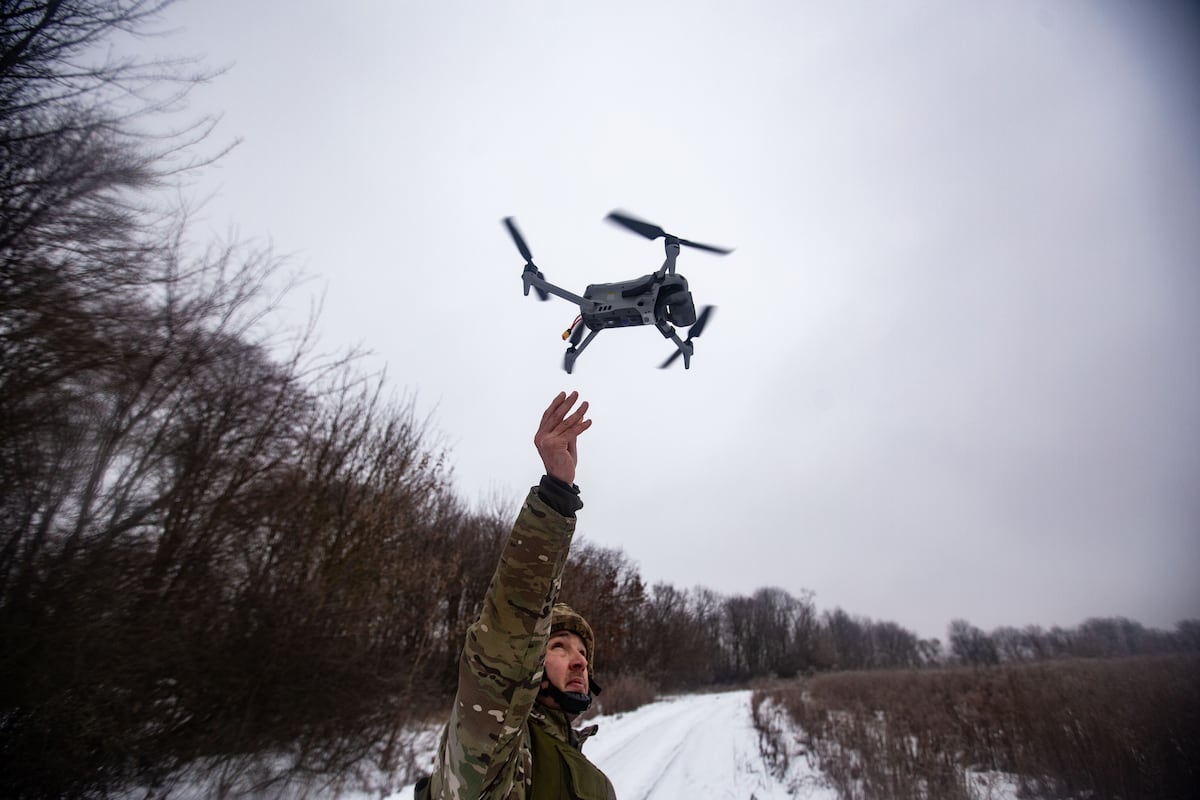
Drones, still mostly flown by pilots, have already upended the way the war is being fought.
Ukrainian and Russian troops launch thousands of unmanned aerial vehicles (UAVs) a day at each other. Kyiv is also trying to solve its frontline troop shortage with ground robots.
The ability of drones to constantly surveil the battlefield and hit targets with precision has accelerated the “kill chain” – the process of planning and executing a strike on the enemy. AI decision-making would speed this up even more, Tsvok said.
Technological arms race
Ukraine, whose military numbers around a million personnel, is already using AI tools in its command systems.
But Tsvok said the goal was to create a single operating system to recommend battlefield decisions all the way up from individual frontline units to strategic command.
This would significantly speed up the analysis of data from the 1,200-kilometer (750-mile) front line to allow recommendations to human commanders, he said.
The aim, Tsvok said, is to unite weapons and data systems into “one single living organism that can operate in a coordinated manner.”
The technological arms race launched by Europe’s largest war since World War Two, which lasted from 1939 to 1945, has attracted interest from foreign AI companies hungry for combat data to train their models and the opportunity to test their systems.
Some, such as U.S. company Palantir, have provided Ukraine with their systems. Kyiv has created Brave1 Dataroom, a project to share battlefield data with allied countries for training their software.
“This is the place where you can understand whether your system works,” said Tsvok, wearing a black T-shirt and jeans.
Moscow is also developing its artificial intelligence capabilities. A senior Ukrainian air defense commander told Reuters in April he was concerned by Russia’s increasing use of AI in planning drone and missile attacks on cities, which could significantly reduce the planning time for each strike.
“The question is,” Tsvok said, “how quickly we build our solutions and how practically we apply them and achieve the primary impact on the battlefield from our side.”
He added that the defense ministry was developing an AI-driven recruitment and HR system as part of Fedorov’s push for data-driven reform of the vast government department.
Ukraine operates on the principle of having a human in the loop on combat decisions, but Tsvok said AI systems could eventually outrun humans, whose presence would then slow decisions down.
“Then the question arises: how do we keep up with making decisions that autonomous systems propose?” he said.
基辅——一位乌克兰高级官员表示,随着人工智能系统融入统一网络,加快战场决策速度,未来几年乌克兰及其他地区的战争将面临范式转变。
乌克兰与俄罗斯全面入侵的战争已进入第五年,该国已将人工智能应用于战场上的诸多功能,从操控无人机攻击目标到协助规划作战行动,再到处理俄罗斯导弹袭击的数据。
“人工智能将形成一种新的战争范式。它已经在积极地这样做了,”国防部人工智能中心负责人丹尼洛·茨沃克告诉路透社。
他预测,如果冲突继续下去,人工智能系统最终将统一到一个监控战场的单一网络中,从而在未来三到五年内与俄罗斯爆发一场“操作系统之战”。
他说:“拥有更多数据并能更好地理解这些数据、提出解决方案的系统,将比其他系统更具优势。”
该中心于 3 月成立,国防部长米哈伊洛·费多罗夫希望将人工智能和数据驱动的决策置于乌克兰国防的核心地位。
无人机目前仍主要由飞行员操控,但它们已经彻底改变了战争的进行方式。
乌克兰和俄罗斯军队每天都会互相发射数千架无人机。基辅方面也在尝试用地面机器人来解决前线兵力短缺的问题。
无人机能够持续监视战场并精确打击目标,这加速了“杀伤链”——即计划和执行对敌打击行动的过程。茨沃克表示,人工智能决策将进一步加快这一进程。
技术军备竞赛
乌克兰军队人数约有百万,目前已在其指挥系统中使用人工智能工具。
但茨沃克表示,目标是创建一个单一的操作系统,为从前线部队到战略指挥部的所有战场决策提供建议。
他说,这将大大加快对 1200 公里(750 英里)前线数据的分析速度,以便向人类指挥官提出建议。
茨沃克表示,其目标是将武器和数据系统统一到一个“能够以协调方式运作的单一生命体”中。
二战以来欧洲规模最大的战争(1939 年至 1945 年)引发了一场技术军备竞赛,吸引了众多渴望获得作战数据来训练模型并测试系统的外国人工智能公司的兴趣。
一些公司,例如美国公司Palantir,已经向乌克兰提供了他们的系统。基辅方面创建了Brave1数据室项目,旨在与盟国共享战场数据,用于训练其软件。
“在这里,你可以了解你的系统是否有效,”身穿黑色T恤和牛仔裤的茨沃克说道。
莫斯科也在发展其人工智能能力。今年4月,一位乌克兰高级防空指挥官告诉路透社,他对俄罗斯越来越多地使用人工智能来规划针对城市的无人机和导弹袭击感到担忧,因为这可能会大幅缩短每次袭击的计划时间。
茨沃克说:“问题在于,我们如何快速构建解决方案,如何切实应用这些解决方案,以及我们如何从自身角度在战场上取得主要影响。”
他还补充说,作为费多罗夫推动对这个庞大的政府部门进行数据驱动改革的一部分,国防部正在开发人工智能驱动的招聘和人力资源系统。
乌克兰奉行的原则是让人类参与作战决策,但茨沃克表示,人工智能系统最终可能会超越人类,届时人类的存在反而会减慢决策速度。
“那么问题就来了:我们如何才能跟上自主系统提出的决策步伐?”他说道。