As Singapore moves to ease academic pressure, why are parents more stressed than ever?新加坡正努力减轻学生的压力,为什么家长们反而比以往任何时候都更加焦虑?
Singapore parents feel growing pressure as education reforms shift competition beyond exam results to tuition, enrichment and school choice. Read more at straitstimes.com.
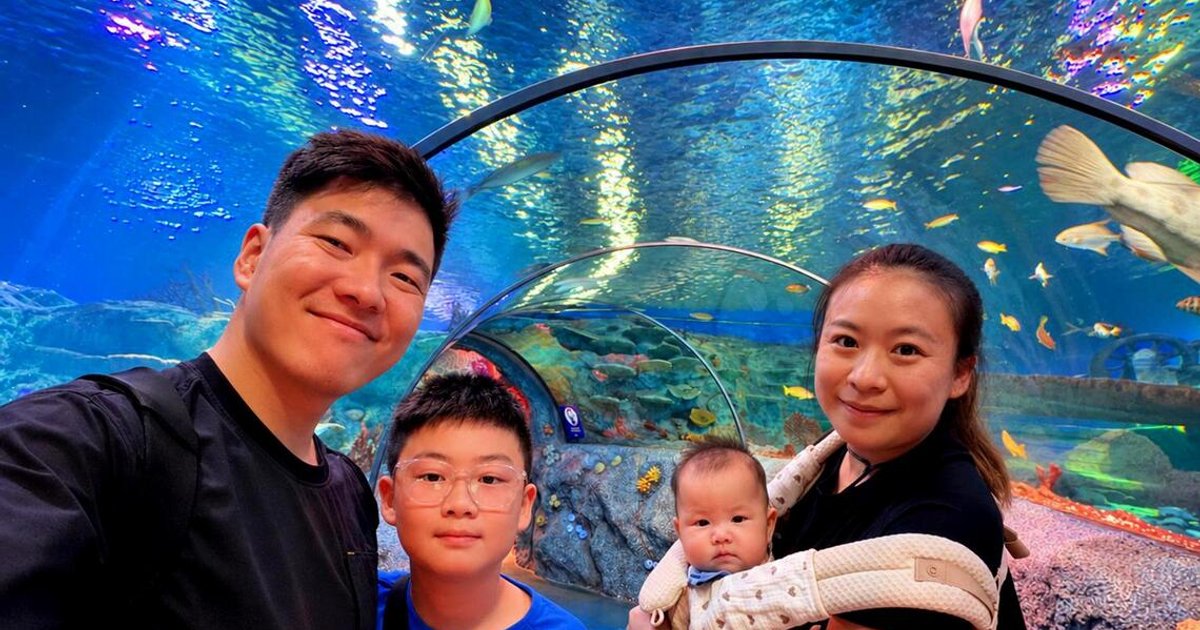
Ken Tay was concerned about social media exposing his children – a boy aged nine and a girl of six months – to harmful content and people.
PHOTO: COURTESY OF KEN TAY
Vanessa Paige Chelvan
Published Oct 17, 2026, 12:00 PM
Updated Oct 17, 2026, 12:00 PM
Singapore has eased exams and grades, but parents still feel intense pressure to keep children competitive and ready for an uncertain future.
IPS found more parents plan to spend on tuition and enrichment, even though nearly nine in 10 think children do too much of it.
Parents now compete through school choice, DSA and non-academic skills, while rising costs, AI fears and social media add to stress.
SINGAPORE – For years, Evonne Chia resisted the idea of sending her daughter for tuition or enrichment.
While her friends enrolled their pre-school kids in extra classes, Chia, a 48-year-old property agent, and her husband chose to let their daughter play after school every day.
This changed when her daughter entered Primary 1. The seven-year-old struggled with her subjects, often crying over spelling despite her parents’ best efforts to help.
Watching her fall behind, Chia began to worry. “My kid felt very stressed. I also started feeling the stress,” she said. “So I started her on tuition and enrichment as much as I didn’t want to.”
Like Chia, more parents in Singapore are feeling more anxious than ever, despite the system’s reforms to reduce the focus on grades and examinations.
A 2026 study by the Institute of Policy Studies (IPS) found that more parents are worried about whether their primary school-going children will fall behind in the long run.
Seven in 10 said they would spend more on tuition and enrichment , with about half citing peer pressure as a reason for sending their children for extra classes. Yet nearly nine in 10 agree that children here spend too much time on such activities.
Over the past decade, Singapore has replaced precise numeric PSLE scores with broader achievement bands and removed mid-year examinations, among changes to move away from an over-obsession with academic performance.
But the competition has not disappeared. Instead, it may have taken on new forms, extending beyond examination results to the pursuit of non-academic talents.
Behind this lies a more fundamental anxiety: In a rapidly changing world, how can parents be sure they are doing enough to prepare their children for the future?
Rising affluence coupled with economic uncertainty have a part to play.
Sharon Koh, deputy director and principal therapist of non-profit organisation Counselling and Care Centre, said parental stress can increase with affluence, as parents feel pressure to do more and exercise more control.
Affluence can create more options, but more options can also lead to more anxiety, said Theresa Pong, founder and counselling director of The Relationship Room.
“When there are many possible pathways and resources available, parents can feel that they should be making the ‘right’ choices at every stage,” she said, adding that the abundance of information also makes it easier for parents to compare with others.
Koh said AI disruptions and resulting retrenchments can cause parents to worry about job stability.
Parents are preparing their children for a future that they themselves cannot fully predict, said Pong.
“This can lead to what I sometimes see as anxiety-driven parenting – not necessarily because parents are overly ambitious, but because they are afraid their child may be left behind,” she said.
Social media also adds to the demands of modern parenting.
Property agent Ken Tay, 40, fears that his nine-year-old son and six-month-old daughter will be exposed to harmful content, online scrutiny and body image pressures on social media.
Tay also does not want his son to become a “phone zombie”.
Even the recent reforms intended to make school life less stressful can make some parents uneasy.
With hardly any homework and no examinations until Primary 3, Chia fears that the lower primary years do not build strong enough foundations to prepare children for the demands of the PSLE.
“I would rather the child be stretched a little bit more every year, than suddenly being thrown into the deep end,” she said.
Strategic account manager Jolene Pang, 39, said the uncertainties that come with the changes in the school system, coupled with what she perceives to be a more challenging primary school syllabus, are her main causes of stress.
“When parents put up exam questions on social media for others to help with, many are so challenging even for adults to answer,” said the mother of two . “It seems like the exam questions involve wordplay rather than logic.”
The pressure has also shaped where her family lives. She moved her family from Queenstown to a rented home in one-north for two years , bringing them within a primary school in Dover she had her eyes on for her older child.
She values the school’s affiliation with a secondary school, which she hopes could give her children a “head start” and potentially allow them to grow up with the same friends.
Competition spreading beyond grades
The IPS study researchers – principal research fellow Mathew Mathews, research fellow Melvin Tay and senior research fellow Teo Kay Key – said the removal of certain assessments may have eased some immediate pressures, but parents are still managing a wider set of concerns.
These include whether children are keeping up, developing holistically, building relevant skills and remaining competitive for the future.
“In this sense, educational competition may have diversified rather than disappeared, moving into tuition, enrichment, school choice and alternative admissions routes,” the researchers said in their report.
This comes with a hefty price tag for some families.
In 2026, Carolyn Ang, 41, who works in the banking industry, spent about $6,800 a month on tuition and enrichment for her two sons.
About $4,100 of that was for English, Chinese, mathematics and science tuition for her older son, 12, who sat the PSLE in 2026. Roughly $2,700 went towards sports, music and tuition for her younger son, 10.
“It’s not easy for them to (follow) the syllabus, so I think they need extra help… We just outsource,” said Ang, who considers tuition necessary given the demanding curriculum, especially with both parents working full-time.
She had never tallied her spending until recently. “That’s when I realised it was a bit shocking. I didn’t realise I spent that much,” she said.
Ang hopes her children can perform “above average” to enter a better secondary school, and seeing his friends attend tuition prompted her older son to ask for more lessons.
“Regardless of the price of tuition... So long as it helps, we will want our kid to be there. We want our kid to get the best,” she said.
Yet Ang said she does not worry excessively about their future, knowing that much of it is beyond her control. Instead, she and her husband focus on working hard so they can financially support whatever paths their sons choose, including studying overseas.
In 2026, financial executive Carolyn Ang spent about $6,800 a month on tuition and enrichment for her two sons. PHOTO: COURTESY OF CAROLYN ANG
In 2026, financial executive Carolyn Ang spent about $6,800 a month on tuition and enrichment for her two sons.
PHOTO: COURTESY OF CAROLYN ANG
The Direct Schools Admission (DSA) exercise is also an area of competition, said Pang. The scheme, which was introduced in 2004, is meant to recognise students’ non-academic talents as a pathway to secondary schools.
She has heard of parents identifying external coaches in performing arts like ballet or sports like gymnastics, who also sit on the DSA selection panel for some top secondary schools , and enrolling their children in private centres to be trained by these coaches.
Even the early schooling years are not spared, with parents comparing enrichment programmes by government-funded pre-schools with those offered by more expensive private pre-schools, while places at some tuition centres can be difficult to secure.
“There’s a queue to get into competitive centres like Berries,” said Pang.
Preparing children for an uncertain future
Mathews, the IPS study’s lead researcher, said parents’ anxieties are shaped not only by what happens in schools, but also by broader uncertainties about their children’s future in a competitive economy.
Pang said she worries about the impact AI and technology will have on her children’s jobs in the future.
“With AI, everybody’s job is at risk. Parents feel it now, what more for their children,” she said.
She enrolled her son and daughter in a robotics trial class in 2026 as they were keen, but did not continue because of the complex curriculum and high cost – $1,080 for 12 sessions a child.
This left her thinking about the gap between families with the means and resources and those who cannot afford such opportunities.
Quah Saw Han, principal clinical psychologist at Community Psychology Hub, advises parents to focus on protecting their relationship with their children, and focus on what matters most.
Apart from academic outcomes, she encouraged parents to recognise children’s strengths and weaknesses, and give them room to fail and learn.
“It’s not about needing to get to the destination in the quickest possible time,” said Quah. “I’m all for having expectations, but do we need to get there in a hurry?”
With Chinese tuition now, Chia’s eight-year-old girl no longer cries over ting xie (Chinese spelling). Still, Chia hopes not to measure success with exam results.
She wants her daughter to develop critical thinking and problem-solving skills. “I don’t have an expected result for her. As long as she does her best, she doesn’t give up, she perseveres, I’m happy.”
Elisha Tushara is a correspondent at The Straits Times, specialising in Singapore’s education landscape.
Vanessa Paige Chelvan is an education correspondent at The Straits Times. She also writes the occasional commentary on parenthood, work and family life.
Shermaine Ang is a journalist at The Straits Times, covering social issues in Singapore.
Ken Tay担心社交媒体会让他的孩子——一个九岁的男孩和一个六个月大的女孩——接触到有害的内容和人。
照片:由 Ken Tay 提供
凡妮莎·佩奇·切尔万
发布于2026年10月17日下午12:00
更新于2026年10月17日中午12:00
新加坡放宽了考试和评分标准,但家长们仍然感到巨大的压力,希望保持孩子的竞争力,为不确定的未来做好准备。
IPS发现,尽管近90%的家长认为孩子在课外辅导和课外活动方面投入过多,但仍有更多家长计划在孩子身上花钱。
如今,家长们通过择校、DSA(直接入学补贴)和非学术技能展开竞争,而不断上涨的成本、对人工智能的担忧以及社交媒体都加剧了这种竞争带来的压力。
新加坡——多年来,伊冯·谢一直反对送女儿去补习或参加课外活动。
当她的朋友们都给学龄前儿童报了课外辅导班时,48岁的房地产经纪人Chia和她的丈夫选择让女儿每天放学后自己玩耍。
这种情况在她女儿进入小学一年级后发生了改变。尽管父母尽了最大努力帮助她,但这位七岁的小女孩在学习上遇到了困难,经常因为拼写错误而哭泣。
眼看着女儿的学习进度落后,Chia开始担心起来。“孩子压力很大,我也跟着焦虑起来,”她说,“所以我不情愿地让她去上补习班和课外辅导班。”
与 Chia 一样,尽管新加坡的教育体系进行了改革,减少了对成绩和考试的重视,但越来越多的家长仍然感到比以往任何时候都更加焦虑。
政策研究所 (IPS) 2026 年的一项研究发现,越来越多的家长担心他们的小学生子女从长远来看是否会落后。
十分之七的受访者表示愿意增加学费和课外辅导方面的支出,其中约一半人表示同伴压力是送孩子参加额外课程的原因。然而,近十分之九的受访者认为,这里的孩子在这些活动上花费的时间太多了。
过去十年,新加坡做出了一系列改变,包括用更广泛的成绩等级取代精确的数字式小学离校考试 (PSLE) 分数,并取消了年中考试,以摆脱对学业成绩的过度痴迷。
但竞争并未消失。相反,它可能以新的形式出现,不再局限于考试成绩,而是扩展到对非学术人才的追求。
这背后隐藏着一个更根本的焦虑:在一个快速变化的世界里,父母如何才能确定自己已经为孩子的未来做了足够的准备?
财富增长和经济不确定性都起到了一定作用。
非营利机构辅导与关怀中心副主任兼首席治疗师 Sharon Koh 表示,随着经济条件的改善,父母的压力也会增加,因为他们会感到压力,需要做更多的事,行使更多的控制权。
“富裕可以创造更多选择,但更多选择也可能导致更多焦虑,”关系咨询中心“关系室”的创始人兼咨询主任特蕾莎·庞说道。
“当有很多可能的途径和资源可供选择时,父母会觉得他们应该在每个阶段都做出‘正确’的选择,”她说道,并补充说,信息的丰富也使父母更容易与其他父母进行比较。
Koh表示,人工智能带来的变革和由此导致的裁员可能会让家长们担心员工的就业稳定性。
庞说,父母们正在为孩子们的未来做准备,而他们自己也无法完全预测未来。
“这有时会导致我所看到的焦虑型育儿方式——不一定是因为父母野心过大,而是因为他们害怕自己的孩子可能会落后,”她说。
社交媒体也增加了现代父母的负担。
40岁的房地产经纪人Ken Tay担心他9岁的儿子和6个月大的女儿会在社交媒体上接触到有害内容、网络审查和身材焦虑。
Tay也不希望他的儿子变成“手机僵尸”。
即使是最近旨在减轻学校生活压力的改革,也让一些家长感到不安。
由于小学三年级之前几乎没有家庭作业和考试,Chia担心小学低年级阶段没有为孩子们打下足够坚实的基础,使他们无法应对小学离校考试(PSLE)的要求。
“我宁愿孩子每年都多接触一些事物,也不愿他突然被扔进深水区,”她说。
39岁的战略客户经理Jolene Pang表示,学校系统变革带来的不确定性,加上她认为更具挑战性的小学课程,是她压力的主要来源。
这位有两个孩子的母亲说:“有些家长在社交媒体上发布考试题让大家帮忙解答,但很多题目即使对成年人来说也很难回答。这些考试题似乎更注重文字游戏,而不是逻辑推理。”
压力也影响了她一家人的居住地。她带着家人从皇后镇搬到北区租了一套房子住了两年,这样他们就能离她心仪已久的位于多佛的一所小学更近一些,因为她的大孩子在那所小学就读。
她很看重这所学校与中学的合作关系,她希望这能让她的孩子“赢在起跑线上”,并有可能让他们和同一群朋友一起长大。
竞争已蔓延至成绩之外
IPS 研究的研究人员——首席研究员 Mathew Mathews、研究员 Melvin Tay 和高级研究员 Teo Kay Key——表示,取消某些评估可能缓解了一些眼前的压力,但家长们仍然面临着更广泛的担忧。
其中包括孩子是否跟上学习进度、全面发展、培养相关技能以及在未来保持竞争力。
研究人员在报告中表示:“从这个意义上讲,教育竞争可能已经多样化,而不是消失,而是转向了学费、课外活动、择校和替代入学途径。”
对于一些家庭来说,这会是一笔不小的开支。
2026 年,41 岁的 Carolyn Ang 在银行业工作,每月花费约 6800 美元用于两个儿子的学费和课外活动。
其中约 4100 美元用于支付她 12 岁大儿子的英语、中文、数学和科学补习费用,他将于 2026 年参加小学离校考试 (PSLE)。约 2700 美元用于支付她 10 岁小儿子的体育、音乐和补习费用。
“他们很难跟上教学大纲,所以我认为他们需要额外的帮助……我们只是外包了辅导,”Ang说道。考虑到课程要求很高,尤其是父母双方都要全职工作,他认为补习是必要的。
直到最近,她才开始计算自己的开销。“那时我才意识到,这有点吓人。我没想到自己花了这么多钱,”她说。
Ang希望她的孩子们能够取得“高于平均水平”的成绩,从而进入更好的中学。看到朋友们去上补习班,促使她的大儿子也要求上更多的课。
“无论学费多少……只要有帮助,我们都希望孩子在那里读书。我们希望孩子接受最好的教育,”她说。
然而,Ang表示她并不过度担忧儿子们的未来,因为她知道很多事情并非她所能掌控。相反,她和丈夫专注于努力工作,以便为儿子们未来的任何选择提供经济支持,包括出国留学。
2026年,金融高管卡罗琳·昂每月花费约6800美元用于两个儿子的学费和课外活动。照片:由卡罗琳·昂提供
2026年,金融高管卡罗琳·昂每月在两个儿子的学费和课外活动上花费约6800美元。
照片:由 Carolyn Ang 提供
庞先生表示,直接入学计划(DSA)也是竞争的领域之一。该计划于2004年推出,旨在认可学生的非学术才能,以此作为进入中学的途径。
她听说有些家长会寻找一些顶尖中学的直接入学计划(DSA)选拔委员会成员,这些教练擅长芭蕾舞等表演艺术或体操等体育运动,然后把孩子送到私立中心接受这些教练的训练。
就连早期教育阶段也未能幸免,家长们会将政府资助的学前班提供的课外辅导课程与价格更高的私立学前班提供的课程进行比较,而一些补习中心的学位也很难获得。
庞说:“像Berries这样的热门购物中心,现在都需要排队才能进入。”
让孩子们为充满不确定性的未来做好准备
IPS 研究的主要研究员马修斯表示,家长们的焦虑不仅受到学校里发生的事情的影响,还受到竞争激烈的经济环境下,孩子们未来发展前景的不确定性的影响。
庞女士表示,她担心人工智能和科技未来会对孩子们的就业产生影响。
“人工智能让每个人的工作都面临风险。现在父母都感受到了这一点,他们的孩子更是如此,”她说。
2026 年,她给儿子和女儿报读了机器人试听课,因为他们很感兴趣,但由于课程复杂且费用高昂(每个孩子 12 节课 1080 美元),他们没有继续学习。
这让她开始思考有经济能力和资源的家庭与那些无法获得此类机会的家庭之间的差距。
社区心理中心首席临床心理学家 Quah Saw Han 建议家长们专注于保护与孩子的关系,并专注于最重要的事情。
除了学业成绩之外,她还鼓励家长认识到孩子的优势和劣势,并给他们失败和学习的空间。
“关键不在于以最快的速度到达目的地,”夸说道。“我完全赞成有期望,但我们真的需要急于求成吗?”
自从上了中文补习班,Chia八岁的女儿就不再因为“婷谢”(中文拼写)而哭闹了。不过,Chia希望不要用考试成绩来衡量成功。
她希望女儿培养批判性思维和解决问题的能力。“我对她没有期望的结果。只要她尽力而为,不放弃,坚持不懈,我就很开心。”
Elisha Tushara 是《海峡时报》的记者,专门报道新加坡的教育领域。
Vanessa Paige Chelvan是《海峡时报》的教育记者。她偶尔也会撰写一些关于育儿、工作和家庭生活的评论文章。
Shermaine Ang是《海峡时报》的记者,负责报道新加坡的社会问题。