New safety standard in the works as Singapore’s skyrise greenery booms随着新加坡摩天大楼绿化蓬勃发展,新的安全标准正在制定中
Two plots of about 0.6ha, each along Neo Tiew Road, will be used for the pilot. Read more at straitstimes.com.
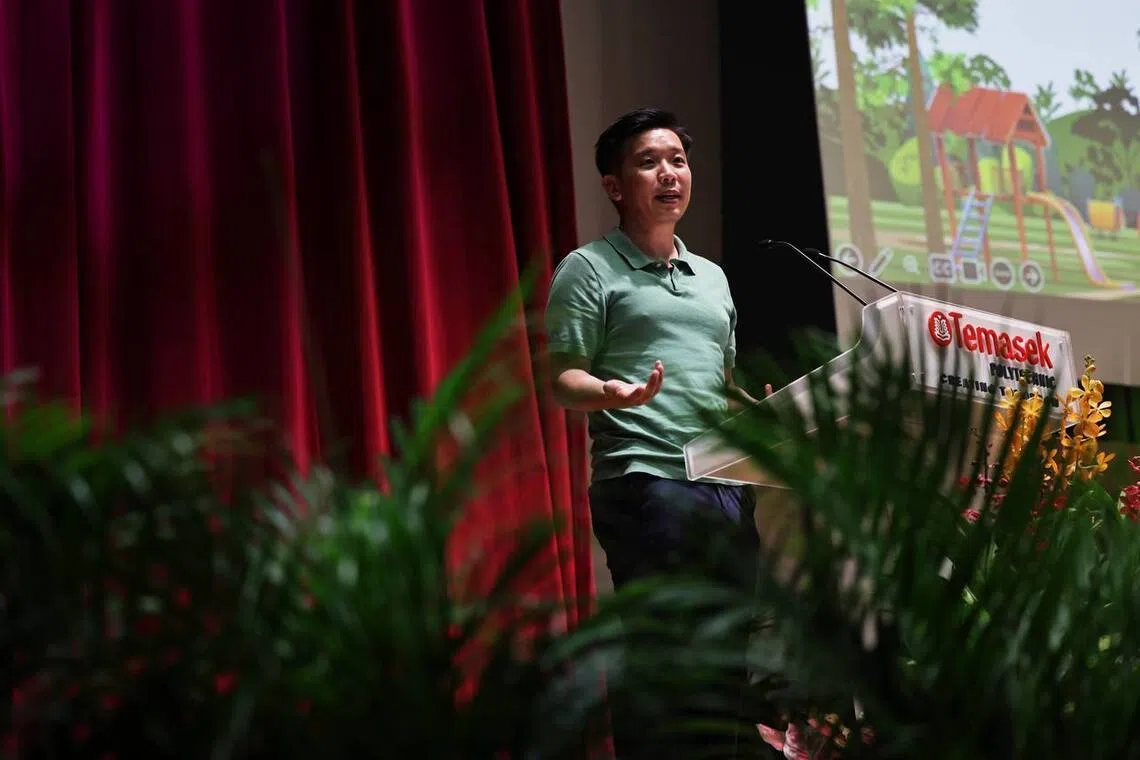
Minister of State for National Development Alvin Tan at Temasek Polytechnic on Oct 17, announcing two new initiatives.
ST PHOTO: KELVIN CHNG
Published Oct 17, 2026, 03:49 PM
Updated Oct 17, 2026, 03:49 PM
SINGAPORE - A new industry standard is being developed to improve the safety and maintenance of plants on buildings as the extent of rooftop and vertical greenery has grown substantially over time.
The Singapore Standard on the Design for Safety and Maintanability of Skyrise Greenery will cover rooftop gardens, landscaped balconies and green walls.
In announcing the move on Oct 17, Minister of State for National Development Alvin Tan said: “A common set of standards will give practitioners, businesses, and clients a clear understanding of what good skyrise greenery should achieve.”
This comes as Singapore has exceeded its original target of having 200ha of skyrise greenery by 2030. As at end 2025, there were over 255ha of rooftop and vertical greenery across the island.
He was speaking at Green Thumbs 2026, a three-day landscape industry event organised by the Landscape Industry Association (Singapore) to celebrate its 25th anniversary, at Temasek Polytechnic.
The nation first started its Skyrise Greenery Programme in 2009 to promote urban greenery to break up the concrete landscape. The sector has since grown to include landscape architects, designers, developers, building owners, horticultural specialists and maintenance practitioners.
He said that the standard will provide common guidelines for the design, installation and maintenance of greenery on buildings. Key areas are expected to include design considerations for long-term maintenance, safe access and work practices for installation and upkeep.
The standard can also support safer and more maintainable designs, promote greater quality and consistency across projects, strengthen professional capability and enhance confidence in the landscape industry and the work it delivers.
Selecting appropriate plants and structural support for trees and other greenery on buildings will also fall in this category, he added.
National Parks Board (NParks) and the Singapore Institute of Landscape Architects will jointly lead the working group developing the standard, with Enterprise Singapore overseeing the process through the Singapore Standards Council.
The working group will include building owners, educational institutions and relevant government agencies, and will hold its first meeting in the fourth quarter of 2026, with the standard targeted for publication by end-2027.
In a separate announcement, Tan also said that landscape businesses, which do not have enough land to store their plants or bank their trees, will also be able to apply for short-term use of vacant nursery land.
From Jan 2, 2027, eligible businesses can start applying for the Temporary Occupation Licence (TOL) scheme, which will allow them to use designated nursery land for purposes such as storing plants and trees for their landscaping projects, without committing to long-term leases.
Successful applicants will initially be granted a one-year licence, with any extension subject to land availability and NParks’ operational needs.
Currently, businesses seeking land for longer-term nursery operations can participate in NParks tenders for tenancies of six years, with an option for a three-year extension, or tenancies of 10 years, with an option for a further 10 years.
These plots typically measure between one and two hectares and may require one to two years of development work before they can be used.
“These needs are often transient and unpredictable, so it may not be economical for companies to take up longer-term tenancies or leases for such purposes,” Tan said, referring to the challenges landscape businesses face in securing land for short-term use.
To qualify, businesses must have been registered on the Landscape Company Register for at least two years and provide proof of an existing landscape contract worth at least $1 million.
Two plots of about 0.6ha, each along Neo Tiew Road in Lim Chu Kang, will be used for the pilot. The plots are intended for longer-term nursery use but are temporarily available for short-term landscape-related activities.
They are currently due to be returned around end-2027, subject to NParks’ assessment of land requirements and the applicable licencing arrangements.
NParks will review take-up, industry feedback and operational outcomes before considering whether to offer other suitable sites. The Board will also provide further information on its website at a later time.
Land planning/Land sales
National Parks Board
国家发展部政务部长陈志远于 10 月 17 日在淡马锡理工学院宣布了两项新举措。
《海峡时报》摄影:KELVIN CHNG
发布于 2026 年 10 月 17 日下午 3:49
更新于2026年10月17日下午3:49
新加坡——随着屋顶和垂直绿化的面积随着时间的推移而大幅增长,一项新的行业标准正在制定中,旨在提高建筑物上植物的安全性和维护水平。
新加坡《摩天大楼绿化安全与可维护性设计标准》将涵盖屋顶花园、景观阳台和绿墙。
10月17日,国家发展部政务部长陈庆炎在宣布这项举措时表示:“一套通用的标准将使从业人员、企业和客户清楚地了解好的摩天大楼绿化应该达到什么效果。”
新加坡已提前实现其最初设定的目标,即到 2030 年拥有 200 公顷的摩天大楼绿化面积。截至 2025 年底,全岛屋顶和垂直绿化面积已超过 255 公顷。
他在淡马锡理工学院举行的“绿拇指 2026”活动上发表了讲话。该活动是由新加坡景观行业协会举办的为期三天的景观行业盛会,旨在庆祝该协会成立 25 周年。
该国于2009年首次启动了“摩天大楼绿化计划”,旨在推广城市绿化,打破钢筋水泥的城市景观。此后,该领域不断发展壮大,涵盖了景观设计师、开发商、业主、园艺专家和养护人员。
他表示,该标准将为建筑物绿化的设计、安装和维护提供通用准则。重点领域预计将包括长期维护的设计考量、安全通道以及安装和维护的工作流程。
该标准还可以支持更安全、更易于维护的设计,促进项目质量和一致性的提高,增强专业能力,并提高人们对景观行业及其所交付工作的信心。
他还补充说,为建筑物上的树木和其他绿植选择合适的植物和结构支撑也属于这一范畴。
国家公园局 (NParks) 和新加坡景观建筑师协会将共同领导制定该标准的工作组,新加坡企业发展局将通过新加坡标准理事会监督这一过程。
该工作组将包括建筑业主、教育机构和相关政府机构,并将于 2026 年第四季度举行第一次会议,目标是在 2027 年底前发布该标准。
在另一份公告中,谭先生还表示,没有足够的土地来存放植物或树木的园林绿化企业也可以申请短期使用空置的苗圃用地。
从 2027 年 1 月 2 日起,符合条件的企业可以开始申请临时占用许可证 (TOL) 计划,该计划允许他们使用指定的苗圃土地,用于诸如为其景观美化项目储存植物和树木等用途,而无需签订长期租赁合同。
申请成功的申请人最初将获得一年的许可证,任何延期都取决于土地可用性和国家公园局的运营需要。
目前,寻求土地进行长期苗圃经营的企业可以参加国家公园局的招标,租期为六年,并可选择续租三年;或者租期为十年,并可选择再续租十年。
这些地块通常面积在一到两公顷之间,可能需要一到两年的开发工作才能使用。
“这些需求往往是暂时的、不可预测的,因此,企业为了这些目的而签订长期租赁合同可能并不经济,”谭先生说道,他指的是园林绿化企业在获取短期用地方面面临的挑战。
要符合资格,企业必须在景观公司注册处注册至少两年,并提供价值至少 100 万美元的现有景观合同的证明。
试点项目将选用位于林厝港Neo Tiew路沿线的两块面积约为0.6公顷的地块。这些地块计划长期用作苗圃,但目前也可用于短期景观相关活动。
目前预计这些土地将于 2027 年底左右归还,具体时间取决于国家公园局对土地需求的评估以及适用的许可安排。
国家公园局将审查土地认领情况、行业反馈和运营成果,然后再考虑是否提供其他合适的地点。公园局稍后也会在其网站上提供更多信息。
土地规划/土地出售
国家公园管理局