A Tomcat Pilot’s Early Struggles to Tame the Mighty F-14一位雄猫战斗机飞行员早期驾驭强大F-14的艰难历程
The F-14 proved to be a handful for many pilots in a number of ways, but for fighter pilot in training Paul Nickell, landing the huge fighter became an elusive and potentially dream-ending skill to master.
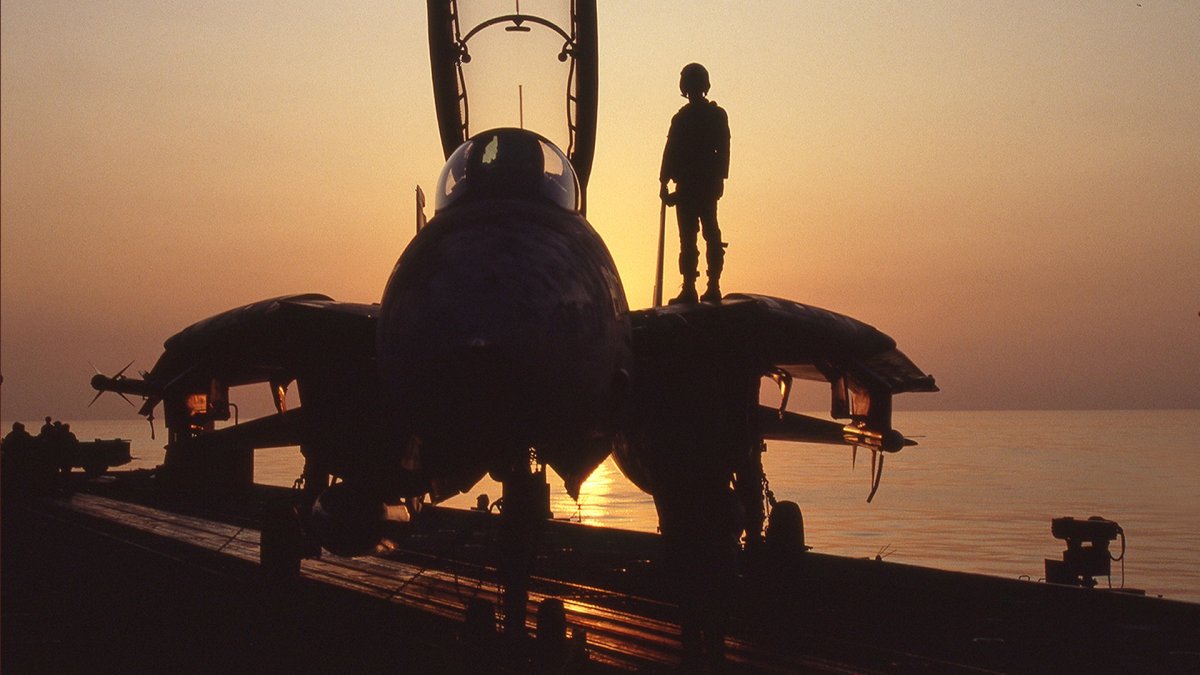
By Paul Nickell And Tyler Rogoway
Updated Jul 3, 2020 4:21 AM EDT
Fighter pilot-in-training Paul Nickell made it through the rigors of primary and advanced flight training to earn his coveted wings of gold—and an assignment to fly what was then the Navy’s newest and most complex fighter, the F-14A Tomcat. Going from the spritely TA-4J Skyhawk to Grumman’s fleet defender would prove to be a bigger challenge than Paul imagined, and the aircraft’s unique handling qualities during landing were a beast that he had to quickly learn to control in order for his dream of flying Navy fighters to finally come true.
In this the fourth and final installment of our in-depth series recounting Paul’s time at the stick of an F-16N , flying as a Topgun student and as an instructor , and deploying on his first cruise with the Tomcat , we see what it took to begin his career as a fighter pilot, and the rocky start of his love affair with the most iconic fighter jet of all time.
Mastering the Skyhawk
I joined the navy with no previous flight training. However, I had flown several times in small aircraft, including the T-34B on several occasions with Navy recruiters. For someone with no flying experience, Navy flight training is very difficult. Early on, you’re being exposed to so many new things that it is simply overwhelming. By the time I started advanced jet training in the TA-4J Skyhawk, things had changed. I knew how to fly, navigate, adhere to ATC procedures, and it was just a matter of learning a new jet. Also the syllabus started to focus on more tactical missions such as low level flying, bombing, strafing, and air combat maneuvering (ACM). It was just a taste of all the excitement to come.
The TA-4J was a great aircraft to fly. It was a two seat version of a real combat aircraft, the A-4 Skyhawk, a workhorse of the Vietnam War. It was small and agile, boasting a 720 degree per second roll rate which would bang your helmet on the side of the canopy if you slammed the stick to the side. It was a tight cockpit, which fit like a glove.
Courtesy of Paul Nickell
Once strapped in with the canopy closed, your shoulders were touching the sides of the canopy rails. You felt like you were a part of the jet—the two of you were one. One of the beauties of the TA-4 was that in the approach environment, it flew exactly like what you were taught to think a navy jet should fly like. Attitude controlled airspeed and power controlled rate of descent. So once you got it trimmed in pitch, it pretty much maintained that speed. If you started to see a change in glideslope from the meatball, you simply made the appropriate power correction to return to a centered ball. I loved flying it, and the way that it flew.
By the time I completed the advanced jet training syllabus, culminating in six traps ( ed. note: a “trap” is an arrested carrier landing ) aboard USS Lexington (CV16), I was extremely comfortable and confident flying a true navy carrier aircraft, especially in the landing environment. However, the skills that I had mastered flying the TA-4 would to some extent come back to haunt me as I moved on to the mighty F-14A Tomcat.
After earning my wings of gold, I reported to the west coast F-14 replacement air group (RAG)—VF-124 at NAS Miramar. It was a great time to be in the navy in San Diego! The anti-military sentiment that had existed through the latter part of the Vietnam war and beyond was dying off as we rolled into the Reagan years.
I had several months before I started F-14 training. During that time I completed an instrument refresher course with VF-126 flying in the back seat, once again in the TA-4J, and also spin and out of control flight training in the T-2C Buckeye. Additionally I accomplished my Survival, Evasion, Resistance, Escape training, otherwise known as SERE school. To this day, I still have copies of my SERE school completion letter to ensure that I never have to go through it again!
Finally I started F-14 training. After weeks of ground school and simulators for this complex aircraft, it was finally time to man up an actual F-14 and go fly. Even though the F-14 was a two seat aircraft, there were no trainer versions. No F-14s had flight controls in the back seat, only weapons system controllers. So your first flight in the jet was essentially a solo.
For your first two flights you were scheduled with an F-14 instructor pilot in the back seat, but he could only talk to you, he could not fly the aircraft from there. But not to worry, statistically the odds were good that nothing would go wrong on that first flight or two. I’ll never forget walking out to the jet for my first F-14 flight. Compared to anything I had flown before, it was huge, and it was awesome looking! We preflighted the aircraft, manned up, and after starting the engines, completed about 10 minutes of systems and control checks. After that it was a short five minute taxi to Runway 24 Right and we were ready to go.
We made our way onto the runway and as I lined up on centerline, we were cleared for takeoff. I held the brakes, ran the engines up to full military power, then released the brakes and lit the afterburners. We began to accelerate rapidly and within seconds we were approaching 80 knots. Suddenly there was a huge boom and the jet immediately started veering to the left. Even though it was my first takeoff, it was obvious to me that things were not going well. I jerked the throttles back to idle, deployed the speed brakes, and started manually braking while correcting back to runway centerline. We slowed, cleared the runway, and taxied back to our ramp.
The F-14 had ramps in each engine intake that were hydraulically driven down at high mach numbers to reduce the area of the intake. It turned out that the left ramp intake had incorrectly deployed as we were on our takeoff roll, causing the left engine to enter into a compressor stall and lose thrust. Sucking a ramp down was not a common occurrence with the F-14, and with over 1100 hours in the Tomcat, it only happened to me one time…on my first takeoff roll!
Wrestling the Turkey Bird to the Ground
Because of aircraft availability and due to other phases of training having higher priority for the jets, it ended up being several days before my first actual flight. Fortunately this time there were no problems on the takeoff roll. The big thing on the first flight was to go supersonic, not that there was really much to it. The F-14 would easily go supersonic and within the cockpit you noticed very little.
As you approached mach one, the acceleration rate would decrease somewhat, and then as you went through the number, the acceleration rate would increase again. After 30-40 minutes of familiarizing myself with the handling of the F-14 in the Southern California Warning Area of San Diego, we headed back to Miramar with plenty of gas to do multiple touch and go’s.
With all of the different training phases required to master the varied weapons systems of the F-14, the phase that washed the most pilots out of the syllabus was carrier qualifications (CQ). It didn’t matter how well you could fight and employ the weapons systems of the jet, if you couldn’t get back aboard the ship, you were not going the fly the F-14.
For that reason, emphasis on carrier type landings started with your first flight, and continued until your last night trap and completion of the CQ phase. Returning to Miramar, we smoked into the break at the standard 325 knots, made a crisp roll to almost 90 degrees of bank, and pulled about five Gs in a decelerating turn to downwind. Quickly slowing, I configured for landing and rattled through the before landing checklist.
I had all of the pattern altitude gouge numbers and landmarks firmly committed to memory and flew them as precisely as possible so that I would roll into the groove with a centered meatball and a good start for the approach. At Miramar, Runway 24 Left was a shorter runway and was usually used for touch and go’s. It had a meatball and a carrier deck landing area painted on it. As the wings came level I noticed that the ball was starting to go slightly high, so I reduced the power, but after several seconds the ball was getting higher and I was starting to get indications of being slightly slow. I tried giving it a little more time, but the situation only got worse.
Finally I pushed the nose down and the ball started to come down and we got back on speed. As we approached a centered ball I added power to slow the descent, but very quickly we were getting low and fast. These cycles continued down to an uneventful touch and go and then a turn to downwind for another approach. After seven to eight more touch and go’s, we were down to 2,000 pounds of fuel remaining, and it was time for a full stop landing.
By this time I was beginning to realize that the techniques and motor skills that had worked so well for me in the TA-4J were not working so well in the F-14. The Tomcat was definitely a different jet to land. It had a lot of lift when fully configured to land, especially with no missiles, rails, or external fuel tanks. The old adage of “attitude controls airspeed and power controlled rate of descent” didn’t work the same way in the F-14. If you wanted to change the rate of descent, it needed a power correction, but you also had to nudge the nose up or down some to get a quicker response to the power change. To help with this, it had a system called Direct Lift Control, or DLC.
In the landing configuration you pushed a button on the side of the stick to engage DLC. It caused all of the spoilers on the top of the wings to extend slightly. Once engaged, there was a small thumb wheel on the stick, spring loaded to centered, that you could roll forward to cause the spoilers to raise higher and cause the aircraft to “elevator down.” If you rolled the wheel aft, the spoilers would go down causing the aircraft to “elevator up.” DLC up was not very effective, but DLC down would help as you got close to the ground and started to flatten out in ground effect.
Needless to say, the jet was large and had a lot of moving parts when coming aboard the boat. Because of it’s tendency to slide around laterally in the groove, some called it the “frisbee.” Lineup was difficult to maintain, especially at night, yet it was critical due to it’s large wingspan. Because of it’s size and many moving flight control surfaces flapping around on an approach, most called it the “turkey.”
After 6-7 flights I was starting to get much more comfortable in the Tomcat. The next flight was what we called an FCLP hop, which stood for Field Carrier Landing Practice. The difference now was that instead of myself and the Radar Intercept Officer (RIO) I was flying with being the judge of my landings, a fully qualified Landing Signal Officer (LSO) would be out by the runway grading every landing. All of the pilots in my class went out and got in 8 to 10 touch and go’s, or what we called “bounces.” Once complete, we all waited in the squadron ready room for the LSO to come in and individually debrief us.
When it came to my turn, the LSO informed me that he was giving me an UNSAT (unsatisfactory) grade for my landings, otherwise known as a “down.” I was surprised, but accepted it from someone who had a lot of experience with carrier landings. I had made it all the way through the training command and gotten my wings without any UNSATs, so needless to say this was difficult to swallow. But realistically I knew that I was struggling to land the F-14 well.
When my brain got overloaded with flying the jet on the approach, it would revert back to what had worked well for me in the TA-4, “first learned/best remembered,” and that just didn’t hack it in the Tomcat. Several weeks later, after mentally recovering from the down, I flew one of my last FAM (familiarization stage) flights on a Friday afternoon. When we returned to the ready room, it was desolate. My RIO instructor sat down and informed me that he was giving me an UNSAT for my landings because as I came through the 45 and rolled into the groove on one landing, he saw the ball go from high on the lens to low on the lens. To me, this was devastating!
After eight to ten landings, I couldn’t even remember seeing that, but I was in no place to argue. He started telling me that not everyone was cutout to be a pilot, and at that point I pretty much tuned him out. I had worked way too hard and come way too far, straight from the flight training to the F-14 RAG, to start thinking I couldn’t hack it now. I later learned that this RIO had originally started out in pilot training, washed out, and then went through Naval Flight Officer (NFO) training, and ended up as an F-14 RIO. Maybe that was his course, but it wasn’t going to be mine.
I spent a miserable weekend in beautiful San Diego, knowing what Monday would bring. I hadn’t been the only one in my class of seven pilots to receive a down during the earlier FCLP period, but this second down for landings really put me up on the rig-line—highly visible for the wrong reasons—a place that I did not want to be! I knew that word of my second down for landings would spread quickly through my class, and I was embarrassed to walk in to the squadron on Monday morning. Fortunately my class leader was a great guy and what we called a RIO retread. He had previously been an F-4 and F-14 RIO who after his first sea tour had gone back through pilot training, and was now checking out an an F-14 pilot. We talked a good bit and he was nothing but positive, giving me great encouragement. I also sat down and talked to the two squadron LSOs, one of which was the one who had given me the first down from the FCLP period, and they also were very positive.
F-14A over the farms of Southern California. , USN
They decided to get me a couple of extra FCLP periods, no pressure, just to let me relax and fine tune things. No one ever insinuated that I was dangerous, but the reality is that there’s a huge difference in not being dangerous landing on a 14,000 foot runway, and being ready to go land on an aircraft carrier in the day, much less at night.
In one of the extra FCLP periods, the LSO who had downed me earlier actually rode in the backseat of the F-14 I was flying to see if he could determine any trends that I needed to correct. We even turned the air system in the jet off to minimize cockpit noise so that he could hear the engines as I worked the throttles. At the end of those two periods, both LSOs were satisfied that I was making good progress and should continue on to the next phase of training, while getting as many landings at the end of each training flight as possible. Both of those LSOs were great guys, and I started spending more time with them, picking their brains for every tidbit I could get about landing the F-14. They also let me to start coming out to the LSO platform when they were waving other classes to see what landings looked like from that perspective. Maybe that would help me when I was landing the F-14.
Even “Basic” Tomcat Training Can be Deadly
The next phase of F-14 training was basic Intercepts. On one of the hops, my instructor RIO and I went out into the warning area to fly intercepts against a TA-4J. In the briefing he told me about a way to do a vertical intercept. Normally on an intercept you would come in with possibly some vertical separation, but in particular with lateral offset so that you would have room to turn and join or attack, depending on the mission. For the vertical intercept he had the A-4 come in at about 10,000 feet and we were somewhere above 15,000 feet, at about 325 knots. We had no lateral offset—a 180 degree out pass.
At a certain range he instructed me to roll inverted and start my pull down so as to roll out behind the TA-4. The problem was that I had yet to visually acquired the TA-4 and was very concerned about blindly pulling down into him. As a result I pulled very easily and as the nose came down with a light G pull, the F-14 started to accelerate rapidly. I never acquired the TA-4 visually and by about 10,000 feet I had a bigger problem on my hands. I was now pointed straight down, supersonic, and accelerating.
By then I realized that it was time to pull and pull hard! The marine cloud layer off the coast of southern California usually came up to about 2,000 feet above the water. I don’t remember what altitude we descended to, what our speed was, or how many Gs we pulled, but we were down in the marine cloud layer when we finally bottomed out and started climbing again. My heart was pounding, and it was quiet in the cockpit. I’m sure it scared the instructor RIO also, but he never really mentioned it. He knew how to do the vertical attack from his perspective, but there were some things I needed to know from a pilot’s perspective that were never briefed.
I learned some very valuable lessons that day! It’s interesting how old fighter pilots’ “funny stories” often involve a brush with death. That was a close one, but not my closest. That was yet to come.
Learning to Fight in the F-14
The last phase of training prior to carrier quals was the ACM/Tactics phase. The early flights were one F-14 verses one bogey (1 V 1). The bogey’s were usually an A-4 simulating a MIG-17 or an F-5 simulating a MIG-21. Usually they were flown by VF-126, Topgun, or VFC-13. The F-14 could easily defeat either one of these adversaries, if the Tomcat was flown correctly, and especially when it employed its forward quarter missile capability. However, it was very easy to get suckered into a slow speed, high angle of attack fight, at which the A-4 in particular excelled. Even when you knew that the bogey was bleeding off his energy to intimidate you, if you weren’t extremely disciplined about flying your jet by the numbers, you’d find yourself in a slow speed fight, otherwise known as “groveling.” Once in a groveling match, a successful “bug out” was about all you could hope for.
The best pilots in the 1 V 1 arena knew the appropriate game plans for the different threats, could feel the jet’s performance by the way it was handling, and were very disciplined when being intimidated by aggressive bogeys. It took time for most of us to master all of these attributes.
Once we had basic maneuvering of the aircraft mastered, the phase continued with 2 V 1, 1 V 2, 2 V 2, and then 2 V Unknown scenarios. In these flights, the RIOs were much more involved, because most of these engagements would begin with about a 30 mile intercept. The RIO’s ran the intercept until the fighters were in the visual arena, and then the pilots took it from there.
One of the most challenging aspects was communication. You had two pilots and two RIO’s with two radios and an intercom within each aircraft. Additionally there was usually an Air Intercept Controller (AIC) on the primary frequency. This AIC might be land based, on a ship at sea, or in an aircraft such as an E-2C or AWACS. We worked a great deal on comm discipline. Using standard terminology and being brief and specific (comm brevity) could make a huge of difference in the Situational Awareness (SA) that you at the merge.
E-2 Hawkeye, F-14 Tomcat, F-5 Tiger II and the A-4 Skyhawk over Southern California circa the 1980s—three of the four aircraft shown Paul would end up flying. , USN
One of the problems with the Tomcat was that depending on what radar modes the RIO was using, often the pilot had no visual display in the cockpit of the tactical situation. To make matters worse, if the RIO was using a mode which allowed the pilot to see the radar picture, the pilot’s 5 inch square repeater display was located low in the cockpit and directly behind the stick grip. On top of that, if the RIO did not zoom the range scale in as you approached the merge, the pilot would be looking at the entire tactical picture in about one square inch on the display. Consequently, most of the pilots tactical SA approaching the merge was based upon a verbal description between the RIOs and the AIC.
Pre-merge, depending on the weapons loadout and rules of engagement (ROE), we would simulate forward quarter missile shots, but in those days generally we did not call “kills” based upon those shots. Arriving at the merge, the pilots pretty much took over from a comm, maneuvering, and weapons employment standpoint. RIOs would shift their attention more to defensive lookout and helping the pilot maintain good tactical SA through inter-cockpit communication. Overall the ACM/Tactics phase went very well. It was demanding, challenging, exhilarating, and very rewarding. By the time it was complete, I felt like I had a good handle on how to employ the F-14 as a true air-to-air fighter.
Landing on an Island in the Pacific Before a Carrier in the Pacific
The final phase of F-14 training had finally arrived—carrier qualifications. To complete the phase, we would get two daytime touch and goes, ten daytime arrested landings (traps), and six night traps. Prior to going to the carrier, which for me would be the USS Constellation (CV-64), we would accomplish 8-10 FCLP periods getting 8-10 practice approach/landings during each period. We started with a day period at Miramar and from then on about all of the remaining periods were at night. A few were at Miramar, but most were either at NAF El Centro or out on San Clemente island off the coast of San Diego. Both of these airports were much more challenging than Miramar because they were in more remote and darker areas—more like a ship at sea.
San Clemente was particularly challenging. Usually there would be four to five aircraft there flying around a radar pattern with very little help from a ground based controller. Often times at the pattern altitude we were in the marine cloud layer, with the RIOs using the F-14’s AWG-9 radar to keep us clear of each other. And it was dark out there. You would come out of the clouds and see nothing but the lighted carrier deck landing area outlined on the runway, and the meatball. It was a complete black hole. It was by far the closest thing I’ve ever experienced to an aircraft carrier landing, except that it sat on a 100 foot plus cliff of bedrock as opposed to a pitching, rolling, and heaving hunk of steel in the sea. If any place could prepare you for the boat, San Clemente was it.
An A-7 refuels a Tomcat at dusk., Courtest of Paul Nickell
I eked my way through the FCLP periods, surviving one period at a time. I was definitely getting more comfortable landing the Tomcat, but old habits die hard, and at times in the heat of battle, I would revert to them. Finally at the end of the FCLP periods the LSOs informed me that I would be going to the boat for day quals, and if that went ok, night quals as well.
My assigned RIO for this final phase of training was an experienced fleet RIO who was now an instructor at the RAG. His callsign was “Chief.” Chief was my rock through the CQ phase. He flew with me through all of the FCLP periods, and was always positive and supportive. He didn’t try to teach me to be a pilot, but he would offer me his observations and let me try to figure out how to make changes. Over time we developed a great rapport.
Time to Head to the Boat
Finally my day CQ period arrived. Chief and I manned up and launched out to meet up with the “Connie” which was working 40-50 miles west of San Diego. The weather was Case II which meant that there was an overcast layer of clouds, so we would end up holding away from the ship until they had room in the pattern for us. Eventually they called us in, giving us a vector toward the carrier and we began our descent through the cloud layer.
Five to six miles behind the ship I had it in sight. We went into the break at 800 feet, 350 knots. Just as at the field, we turned, slowed, and dirtied up for the approach, only leaving the hook up for the first touch and go. Although this would be my first carrier landing in the F-14, I had the experience of four touch and go’s and ten traps in the T-2C and TA-4J, so this wasn’t a completely new experience. The touch and go’s went relatively well, and after the second, we got a call from the LSO on the radio telling us to drop the hook. I did and successfully trapped on the next pass.
After four or five cat shots and traps, they spun us around into an area between the island and landing area known as the six pack to refuel us. After refueling, I completed the remainder of my ten traps. As we taxied up to the catapult for a shot back to the beach, the LSO came up on the radio, gave me a verbal pat on the back, and told me that they’d see me back tonight for night quals.
To this day, I can still remember the boost in confidence that that radio call gave me. I still had night quals to go, but for the first time since my confidence was shattered back in the FAM phase, I was starting to feel better about my landing abilities and thought that I might actually successfully complete F-14 carrier quals. We blasted off, returned to Miramar, and rested three to four hours before heading back out to the boat.
The Night is Dark and Full of Surprises
That evening we arrived back in the holding pattern, known as the marshall stack, at our scheduled time and commenced holding. We held for about an hour, and finally we were called down. As opposed to the day visual pattern around the ship, night approaches are flown as a straight in approach from well aft of the ship with some approach control guidance and also instrument approach guidance.
I slowed and configured on schedule and by three to four miles out I could see the illuminated landing area. Some F-4 Phantoms were also carrier qualling and as we were switched to the final radio frequency. A Phantom crew that was heading for the beach asked for a burner cat shot and climb. My mind was so busy that the call pretty much went in one ear and out the other.
By now we had called the ball at three quarters of a mile and I was completely absorbed in meatball, line-up, and angle of attack. All of a sudden there was a bright blueish white light illuminating from ahead of the landing area and then up it zoomed through the sky. I immediately thought something had happened on the carrier deck and that I would soon be waved off. That momentary diversion of my attention allowed me to get slightly low. I got an LSO call for “a little power” followed a few seconds later by a “POWER” call. I responded to both, but not enough, and the next call was “WAVE OFF!” Away I went, turning downwind for another approach.
Night carrier quals were not starting off well for me. I got a call on downwind from the LSOs saying that they needed to see a more positive response to their calls from me, and I made up my mind that they would definitely get what they wanted. The next pass went better, with no burner cat shots, and me responding to the LSO’s appropriately. It ended with my first night trap! Immediately the next challenge confronted me, taxiing around on the flight deck at night. It was eerily illuminated by orangish flood lights from the island, so that if you were in that area, you could pretty much see what was happening with aircraft and personnel. Strangely though on approach, you noticed none of this illumination, only the lighted outline of the landing area.
As you taxied away from the island toward the extremities of the deck, everything was dark, including the taxi directors—except for their illuminated wands. As I taxied around the pitching, rolling deck with other aircraft also moving, at times it was almost impossible to tell if I was moving or if other aircraft were moving. At one point, while waiting to taxi onto the catapult, I was holding the brakes and my knees were shaking so badly that I finally had to set the parking brake and relax them for a few seconds. I don’t known if it was fear, stress, or just from mashing the brakes so hard for so long, but later, even after two cruises and over 100 night traps, the same thing would happen if I sat for very long at night holding the brakes. I think I just exerted so much energy mashing the brakes, for fear of unknowingly taxiing over the side of the flight deck into the black abyss of the night sea.
Finally I was directed onto the catapult for my first night cat shot. Boom, the catapult fired, and after a couple of seconds of tremendous acceleration, we were heaved off the deck into total darkness. Once again we were vectored around the pattern. My next five passes all resulted in successful traps. After the last one, the LSOs came up on the radio and congratulated me and told me that my F-14 carrier qualification was complete. They said they would see me back on the beach for my debrief. Finally after many months, the monkey was off my back.
Chief and I returned to Miramar and landed on the 14,000 foot runway there. What a difference in so many ways than the boat! Clearing the runway, Chief called on our squadron frequency to let them know we were on deck. The reply was, “welcome back page boy.” We were both confused, and when Chief queried them, we realized that they were telling me that I had received orders to VF-24. “Page Boy” was a call sign that had been assigned to VF-24 flights years before, but had long since disappeared. Any time someone wanted to get under the skin of a VF-24 pilot, they would bring up the page boy call sign.
It didn’t bother me one bit, I was going to be a VF-24 Fighting Renegade!
Contact the editor: Tyler@thedrive.com
Comments couldn’t be loaded. Please refresh the page.
作者:保罗·尼克尔和泰勒·罗格威
更新于美国东部时间2020年7月3日凌晨4:21
战斗机飞行员学员保罗·尼克尔(Paul Nickell)克服了初级和高级飞行训练的重重考验,获得了梦寐以求的金色飞行徽章,并被分配驾驶当时海军最新、最复杂的战斗机——F-14A“雄猫”战斗机。从轻快的TA-4J“天鹰”教练机过渡到格鲁曼公司的舰队防御者,对保罗来说比他想象的更具挑战性。这架飞机独特的着陆操控特性让他难以驾驭,他必须迅速掌握它的操控技巧,才能最终实现驾驶海军战斗机的梦想。
在本系列文章的第四篇也是最后一篇中,我们将深入讲述保罗驾驶 F-16N 战斗机的经历,包括他作为“壮志凌云”学员和教官的飞行生涯,以及他首次驾驶“雄猫”战斗机执行巡航任务的经历。我们将看到他如何开启战斗机飞行员的职业生涯,以及他与有史以来最具标志性的战斗机之间坎坷的缘分。
掌握天鹰战机
我加入海军时没有任何飞行训练经验。不过,我曾多次驾驶小型飞机,包括几次和海军征兵人员一起驾驶T-34B教练机。对于一个没有飞行经验的人来说,海军的飞行训练非常困难。一开始,你会接触到太多新事物,简直让人应接不暇。等到我开始驾驶TA-4J“天鹰”高级喷气式飞机进行训练时,情况就不同了。我已经掌握了飞行、导航和遵守空中交通管制程序等技能,剩下的只是学习驾驶一架新的喷气式飞机。此外,训练课程也开始侧重于更多战术任务,例如低空飞行、轰炸、扫射和空中机动作战(ACM)。这仅仅是未来精彩挑战的开始。
TA-4J 是一款非常棒的飞机。它是 A-4 天鹰攻击机的双座版本,A-4 天鹰是越战中的主力战机。TA-4J 机身小巧灵活,滚转率高达每秒 720 度,如果你猛拉操纵杆,头盔会撞到座舱盖侧面。它的座舱空间紧凑,但非常贴合。
图片由保罗·尼克尔提供
系好安全带,座舱盖关闭后,你的肩膀紧贴着座舱盖两侧的导轨。你感觉自己仿佛成了飞机的一部分——你和飞机融为一体。TA-4 的一大优点是,在进近阶段,它的飞行方式完全符合你对海军喷气式飞机的预期:姿态控制空速,动力控制下降率。所以,一旦你调整好俯仰配平,它就能基本保持那个速度。如果你发现下滑道偏离了“肉球”形状,只需进行相应的动力修正,就能回到中心位置。我喜欢驾驶它,也喜欢它的飞行方式。
当我完成高级喷气式飞机训练课程,并在“列克星敦”号航空母舰(CV16)上完成六次着舰(编者注:“着舰”是指拦阻着陆)后,我对驾驶真正的海军舰载机,尤其是在着舰环境下,已经非常得心应手,信心十足。然而,我在驾驶TA-4时掌握的技能,在我转而驾驶强大的F-14A“雄猫”战斗机时,却在某种程度上成了我的绊脚石。
获得金翼徽章后,我前往位于米拉马尔海军航空站的西海岸F-14替换航空大队(RAG)——VF-124中队报到。在圣地亚哥海军服役的那段时光真是太棒了!越战后期及之后一直存在的反军国主义情绪,随着里根时代的到来而逐渐消退。
在开始F-14训练之前,我有几个月的时间。这段时间里,我完成了VF-126中队的仪表飞行复习课程,再次驾驶TA-4J教练机,坐在后座。此外,我还驾驶T-2C“七叶树”教练机进行了螺旋和失控飞行训练。同时,我也完成了生存、规避、抵抗和逃脱(SERE)训练。直到今天,我仍然保留着SERE学校的结业证书,以确保我永远不必再经历一次!
终于,我开始了F-14的训练。经过数周的地面理论学习和模拟器训练,我终于有机会驾驶真正的F-14翱翔蓝天。尽管F-14是双座飞机,但并没有教练机版本。F-14的后座没有飞行控制装置,只有武器系统操作员。所以,你的第一次飞行基本上就是单飞。
头两次飞行,你都安排了一位F-14教官坐在后座,但他只能和你通话,不能从那里操控飞机。不过不用担心,从统计数据来看,头一两次飞行不出任何问题的概率都很低。我永远不会忘记第一次登上F-14的情景。和之前我飞过的任何飞机相比,它真是太大了,而且看起来棒极了!我们进行了飞行前检查,人员就位,启动发动机后,又花了大约10分钟进行了系统和控制检查。之后,飞机滑行了短短五分钟就到了24号右跑道,一切准备就绪。
我们驶上跑道,我对准跑道中心线后,获准起飞。我踩住刹车,将发动机推至最大功率,然后松开刹车,打开加力燃烧室。飞机开始迅速加速,几秒钟内速度就接近80节。突然一声巨响,飞机立刻开始向左偏转。虽然这是我第一次起飞,但我很清楚情况不妙。我猛地将油门拉回怠速,放下减速板,开始手动刹车,同时修正方向回到跑道中心线。我们减速,离开跑道,滑回停机坪。
F-14战斗机的每个发动机进气口都装有斜坡,在高马赫数下,斜坡会通过液压装置向下展开,以减小进气口面积。结果发现,在我们起飞滑跑时,左侧斜坡进气口错误地展开,导致左侧发动机进入压气机失速状态,失去推力。斜坡被吸入F-14的情况并不常见,我驾驶“雄猫”战斗机超过1100小时,这种情况也只发生过一次……就在我的第一次起飞滑跑中!
将火鸡摔倒在地
由于飞机可用性问题,以及其他训练阶段对喷气式飞机的优先级更高,我的首次实际飞行最终推迟了几天。幸运的是,这次起飞滑跑一切顺利。首次飞行的重点是超音速飞行,但其实并不难。F-14 很容易就能达到超音速,而且在驾驶舱内你几乎感觉不到任何异样。
当速度接近1马赫时,加速度会略有下降;而当速度超过1马赫后,加速度又会再次上升。在圣地亚哥南加州预警区熟悉了F-14的操控性能30-40分钟后,我们返回米拉马尔空军基地,油箱里装满了燃料,可以进行多次触地复飞练习。
要掌握F-14的各种武器系统,需要经历不同的训练阶段,其中淘汰率最高的阶段是航母资格认证(CQ)。无论你的作战能力和武器系统运用技巧多么精湛,如果你无法返回航母,就无法驾驶F-14。
因此,从你的第一次飞行开始,就一直强调航母着陆的重要性,直到你完成最后一次夜间着陆训练和CQ阶段为止。返回米拉马尔机场时,我们以标准的325节速度冲入空域,迅速滚转至接近90度的坡度,并在减速转弯顺风时承受了大约5个G的过载。飞机迅速减速后,我调整好着陆姿势,并快速完成了着陆前检查清单。
我把所有航线高度刻度和地标都牢记于心,并尽可能精确地按照航线飞行,以便能够以居中的“肉球”标志顺利进入航线,并为进近做好充分准备。在米拉马尔机场,24号左跑道是一条较短的跑道,通常用于触地复飞。跑道上绘有“肉球”标志和航母甲板着陆区。当机翼趋于水平时,我注意到“肉球”标志开始略微升高,于是我减小了油门,但几秒钟后,“肉球”标志仍然升高,而且我开始感觉到速度略微下降。我试图再给它一些时间,但情况却变得更糟。
最后我压低机头,球体开始下降,我们重新加速。接近球体中心时,我加大油门减速,但很快我们又变得又低又快。这样的循环不断进行,直到一次顺利的触地复飞,然后转向顺风准备再次进近。又经过七八次触地复飞后,我们只剩下2000磅燃油,是时候进行完全着陆了。
这时我开始意识到,之前在TA-4J上行之有效的技巧和动作技能在F-14上却不再奏效。“雄猫”的着陆方式与TA-4J截然不同。它在完全着陆配置下拥有巨大的升力,尤其是在没有导弹、挂架或副油箱的情况下。过去“姿态控制空速,动力控制下降率”的理论在F-14上并不适用。如果你想改变下降率,需要进行动力修正,但同时你还必须稍微调整机头,才能更快地响应动力变化。为了解决这个问题,F-14配备了一套名为“直接升力控制”(Direct Lift Control,简称DLC)的系统。
在着陆构型中,按下操纵杆侧面的按钮即可启用DLC(动态控制)。这会使机翼上方的所有扰流板略微展开。启用后,操纵杆上有一个带弹簧的小型拇指轮,向前滚动可以使扰流板抬升得更高,从而使飞机“下降”。向后滚动拇指轮则会使扰流板下降,从而使飞机“上升”。DLC向上效果并不显著,但DLC向下则有助于飞机在接近地面并开始进入地面效应时保持平稳飞行。
毋庸置疑,这架喷气式飞机体型庞大,在登船时有很多活动部件。由于它在凹槽中容易左右滑动,有人戏称它为“飞盘”。保持对准非常困难,尤其是在夜间,但由于其翼展巨大,对准至关重要。由于其体积庞大,且在进近过程中许多飞行控制面都在摆动,大多数人戏称它为“火鸡”。
经过六七次飞行后,我对“雄猫”战斗机的操控越来越得心应手。下一次飞行是所谓的“野战航母着陆练习”(FCLP hop),也就是“野战航母着陆练习”。这次的不同之处在于,不再是我和雷达拦截官(RIO)共同评判我的着陆,而是由一位经验丰富的着陆信号官(LSO)在跑道旁对每一次着陆进行评分。我们班的所有飞行员都进行了八到十次触地复飞,也就是我们常说的“弹跳”。练习结束后,我们都在中队准备室等待着陆信号官进来,对我们每个人进行单独汇报。
轮到我时,着陆指挥官告诉我,我的着陆成绩是“不合格”(UNSAT),也就是“着陆失败”。我很惊讶,但考虑到他是一位经验丰富的航母着陆专家,我还是接受了这个结果。我一路顺利通过了训练,拿到了飞行员徽章,之前没有任何不合格的记录,所以这个结果让我难以接受。但说实话,我知道自己在F-14的着陆方面确实存在困难。
当我的大脑因为驾驶喷气式飞机进近而超负荷运转时,它就会不自觉地回到我在TA-4上行之有效的“最先学会/记忆最深刻”的模式,但这在F-14上却完全行不通。几周后,在精神状态从低谷中恢复过来后,我在一个星期五的下午进行了最后一次熟悉阶段(FAM)飞行。当我们回到准备室时,那里一片萧条。我的后勤评估教官坐下来告诉我,他要给我的着陆成绩不合格(UNSAT),因为在一次着陆中,当我完成45度转弯并滚入跑道时,他看到瞄准镜上的小球从高处移到了低处。对我来说,这简直是晴天霹雳!
着陆八到十次之后,我甚至都记不起刚才看到过那一幕,但我当时根本没资格反驳。他开始跟我说,不是每个人都适合当飞行员,那时我已经完全听不进去他的话了。我付出了太多努力,走了这么远的路,从飞行训练直接跳到F-14 RAG,我可不想现在就觉得自己不行。后来我才知道,这位雷达拦截官最初也是从飞行员训练起步的,被淘汰后又接受了海军飞行军官(NFO)的训练,最终才成为F-14的雷达拦截官。也许那是他的道路,但那不会是我的。
我在美丽的圣地亚哥度过了一个糟糕的周末,因为我知道周一会发生什么。在之前的飞行教练员培训计划(FCLP)期间,我们班七名飞行员中不止我一个人被扣分,但这次第二次因为着陆问题被扣分,真的让我成了众矢之的——因为一些不好的原因而备受瞩目——我可不想待在那里!我知道我第二次着陆扣分的消息很快就会在班里传开,周一早上走进中队时,我感到很尴尬。幸运的是,我的班长是个很棒的人,他是一位我们称之为“后备拦截官(RIO)”的“老手”。他之前是F-4和F-14的后备拦截官,在完成第一次海上任务后,他又重新接受了飞行员训练,现在正在接受F-14飞行员的考核。我们聊了很久,他一直都很积极,给了我很大的鼓励。我还和中队的两位着陆安全官(LSO)坐下来聊了聊,其中一位就是之前在FCLP期间给我第一次扣分的那位,他们也都非常支持我。
美国海军F-14A战斗机飞越南加州农场。
他们决定给我安排几个额外的飞行教官实习期,没有给我任何压力,只是为了让我放松一下,完善一下飞行技能。从来没有人暗示过我很危险,但事实是,能够在14000英尺长的跑道上安全着陆,和能够在白天(更不用说夜间)在航空母舰上安全着陆,这两者之间有着巨大的差别。
在一次额外的飞行控制课程(FCLP)中,之前击落我的那位着陆控制官(LSO)特意坐进了我驾驶的F-14的后座,看看能否发现我需要改进的地方。我们甚至关闭了飞机的空气系统,以尽量降低座舱噪音,这样他就能听到我操作油门时的发动机声。两次课程结束后,两位着陆控制官都对我的进步感到满意,认为我应该继续进入下一阶段的训练,并在每次训练飞行结束时尽可能多地完成着陆。这两位着陆控制官都非常棒,我开始花更多时间和他们在一起,尽可能多地向他们请教关于F-14着陆的各种技巧。他们还允许我在他们向其他学员挥手示意着陆时走到着陆控制官的平台上,从那个角度观察着陆的情况。也许这对我驾驶F-14着陆会有帮助。
即使是“基础”的雄猫训练也可能致命
F-14训练的下一阶段是基础拦截。在一次飞行训练中,我的教官雷达拦截官(RIO)和我飞到警戒区,与一架TA-4J进行拦截演练。在简报中,他向我介绍了一种垂直拦截的方法。通常情况下,拦截时会保持一定的垂直距离,但更重要的是要留出横向偏移,以便根据任务需要进行转向并加入或攻击。而这次垂直拦截,他让A-4从大约10000英尺的高度进入,而我们则在15000英尺以上,速度大约为325节。我们没有横向偏移——完全是180度的外飞。
在一定距离上,他指示我翻滚倒飞并开始拉杆,以便滚到TA-4的后方。问题是我当时还没能目视发现TA-4,非常担心盲目拉杆撞上去。结果,我拉杆拉得很轻,机头带着轻微的过载下落,F-14开始迅速加速。我始终没能目视发现TA-4,大约在10000英尺的高度,我遇到了更大的麻烦。现在我的机头垂直向下,超音速飞行,并且还在加速。
那时我意识到必须全力拉升!南加州沿岸的海洋云层通常上升到水面以上约2000英尺的高度。我不记得我们下降到了什么高度,速度是多少,或者承受了多少G力,但我们最终到达最低点并开始重新爬升时,已经身处海洋云层之中。我的心怦怦直跳,驾驶舱里一片寂静。我确信教官兼雷达拦截官(RIO)也吓坏了,但他从未真正提起过。他从他的角度知道如何进行垂直攻击,但从飞行员的角度来看,有些我需要了解的事情却从未有人讲解过。
那天我学到了很多宝贵的教训!老战斗机飞行员的“趣事”里,经常会提到与死神擦肩而过的经历,这很有意思。那次确实很惊险,但还不是我最惊险的一次。最惊险的还在后面。
学习驾驶F-14战斗机作战
在进行航母资格训练之前的最后一个阶段是空战/战术训练阶段。早期的飞行训练是一架F-14对一架假想敌(1对1)。假想敌通常是一架A-4模拟米格-17,或是一架F-5模拟米格-21。这些假想敌通常由VF-126、Topgun或VFC-13中队驾驶。如果F-14“雄猫”战斗机的飞行操作得当,尤其是在使用其前部四分之一导弹能力的情况下,它可以轻松击败任何一个对手。然而,很容易陷入低速、高攻角的空战,而A-4在这方面尤其擅长。即使你知道假想敌正在消耗能量来威慑你,如果你没有严格按照既定的飞行规则来驾驶你的战机,你最终还是会发现自己陷入了低速空战,也就是所谓的“苦战”。一旦陷入苦战,成功“撤退”几乎就是你所能奢望的一切了。
在1对1的空战中,最优秀的飞行员懂得针对不同威胁制定合适的作战计划,能够通过战机的操控感受其性能,并且在面对咄咄逼人的敌机时也能保持高度的自律。我们大多数人都需要时间才能掌握所有这些技能。
一旦我们掌握了飞机的基本机动操作,训练阶段就继续进行,包括2V1、1V2、2V2以及2V未知场景的演练。在这些飞行中,雷达拦截官(RIO)的参与度更高,因为大多数交战都始于大约30英里的拦截。雷达拦截官负责拦截,直到战斗机进入目视范围,然后由飞行员接手后续行动。
最具挑战性的方面之一是通信。每架飞机上都有两名飞行员和两名雷达拦截官(RIO),配备两部无线电台和一套机内通话系统。此外,通常还有一名空中拦截管制员(AIC)在主频率上工作。这名空中拦截管制员可能驻扎在陆地、海上舰艇上,或者在E-2C或预警机等飞机上。我们花了大量时间练习通信纪律。使用标准术语,言简意赅(通信简洁性)对于在交战时对态势感知(SA)至关重要。
20世纪80年代左右,E-2“鹰眼”预警机、F-14“雄猫”战斗机、F-5“虎II”战斗机和A-4“天鹰”攻击机在南加州上空——保罗最终驾驶的正是图中这四种飞机中的三种。(美国海军)
“雄猫”战斗机的一个问题是,根据雷达拦截官(RIO)使用的雷达模式,飞行员往往无法在座舱内看到战术态势的实物显示。更糟糕的是,即使RIO使用的模式允许飞行员看到雷达图像,飞行员那块5英寸见方的复示显示器也位于座舱下方,就在操纵杆握把的正后方。此外,如果RIO在接近交会区域时没有放大距离刻度,飞行员只能在显示器上看到大约一平方英寸大小的整个战术态势。因此,飞行员在接近交会区域时的战术态势感知大多依赖于RIO和空中情报员(AIC)之间的口头描述。
在合并演习之前,我们会根据武器挂载和交战规则(ROE)模拟前向四分之一导弹射击,但当时我们通常不会根据这些射击结果判定“击落”。进入合并阶段后,飞行员几乎完全接管了通信、机动和武器运用方面的指挥。雷达拦截官(RIO)则将更多精力放在防御侦察上,并通过座舱间通信帮助飞行员保持良好的战术态势感知(SA)。总的来说,空战/战术演习阶段进行得非常顺利。它既充满挑战,又令人兴奋,而且收获颇丰。演习结束后,我感觉自己已经很好地掌握了如何将F-14作为真正的空对空战斗机来使用。
在太平洋上的一艘航母之前,登陆太平洋上的一个岛屿
F-14训练的最后阶段终于到来——航母资格认证。为了完成这一阶段,我们需要进行两次白天触地复飞、十次白天拦阻着陆(拦阻着陆)和六次夜间拦阻着陆。在前往航母(对我来说是“星座”号航空母舰,CV-64)之前,我们需要完成8-10个飞行控制着陆训练(FCLP)周期,每个周期进行8-10次进近/着陆练习。我们首先在米拉马尔机场进行白天训练,之后几乎所有的训练周期都在夜间进行。虽然有些训练在米拉马尔机场,但大部分训练都在埃尔森特罗海军航空站或圣地亚哥海岸附近的圣克莱门特岛进行。这两个机场都比米拉马尔机场更具挑战性,因为它们位于更偏远、更黑暗的地区——更像是一艘航行在海上的船只。
圣克莱门特机场的飞行尤其具有挑战性。通常会有四五架飞机在那里围绕雷达航线飞行,地面管制员几乎不提供任何帮助。很多时候,我们在航线飞行高度处于海洋云层中,雷达拦截官(RIO)使用F-14的AWG-9雷达来确保我们彼此之间保持安全距离。而且那里一片漆黑。当你从云层中飞出时,除了跑道上划出的航母甲板着陆区和那颗“肉丸”状的着陆平台之外,什么也看不到。那简直就是一个漆黑的黑洞。这绝对是我经历过的最接近航母着陆的场景,只不过它停泊在一百多英尺高的基岩峭壁上,而不是在海中摇晃颠簸的钢铁巨兽。如果说有什么地方能让你为航母着陆做好准备,那非圣克莱门特莫属。
黄昏时分,一架A-7攻击机正在为一架F-14“雄猫”战斗机加油。(图片由Paul Nickell提供)
我艰难地熬过了飞行教练员培训计划(FCLP)的各个阶段,一个阶段一个阶段地熬过去。我驾驶F-14“雄猫”战斗机着陆确实越来越得心应手了,但旧习惯难以改掉,有时在激烈的战斗中,我还是会不自觉地犯错。最终,在FCLP培训计划结束时,着陆指挥官通知我,我将前往舰艇进行日间资格考核,如果一切顺利,还将进行夜间资格考核。
在训练的最后阶段,我被分配的雷达拦截官(RIO)是一位经验丰富的机队雷达拦截官,当时他已是无线电辅助队(RAG)的教官。他的呼号是“Chief”。在飞行资格(CQ)阶段,Chief 是我的精神支柱。他陪我完成了所有飞行指挥官领导力课程(FCLP)的飞行训练,始终给予我积极和支持。他并没有试图教我如何成为一名飞行员,而是会提出他的观察结果,让我自己尝试找出改进的方法。随着时间的推移,我们建立了良好的关系。
该上船了。
终于到了我当天的呼叫值班时间。我和长官整装待发,起飞与“康妮”号会合,它当时正在圣地亚哥以西40-50英里处作业。天气状况为二级,这意味着有一层阴云,所以我们只能在航道上保持一定距离,直到他们找到空位。最终,他们呼叫我们靠近,并指示我们飞向航母,我们便开始穿过云层下降。
在距离舰艇五六英里处,我已能目视到它。我们以800英尺的高度和350节的速度进入空域。就像在机场一样,我们转弯、减速,并扬起尘土准备进近,只在第一次触地复飞时才放下起落架。虽然这将是我第一次驾驶F-14在舰载机上着舰,但我之前驾驶T-2C和TA-4J已经完成过四次触地复飞和十次滑行,所以这对我来说并非完全陌生。触地复飞进行得相对顺利,第二次触地复飞后,我们接到着舰信号官(LSO)的无线电呼叫,指示我们放下起落架。我照做了,并在下一次滑行中成功完成了滑行。
经过四五次猫式射击和诱饵射击后,他们把我们调到岛屿和着陆区之间的一个叫做“六人包”的区域加油。加油后,我完成了剩下的十次诱饵射击。当我们滑行到弹射器准备返回海滩时,着陆指挥员通过无线电联系我,口头表扬了我一下,并告诉我今晚会安排我进行夜间资格考核。
直到今天,我仍然记得那次无线电通话带给我的信心提升。我当时还没通过夜间飞行资格考核,但自从在飞行适应阶段信心受挫以来,我第一次开始对自己的着陆能力感到满意,甚至觉得或许真的能顺利完成F-14舰载机资格考核。我们起飞后返回米拉马空军基地,休息了三四个小时,然后再次出海。
夜色漆黑,充满惊喜
当晚,我们按计划时间返回等待航线(也称“马歇尔航线”),开始盘旋等待。我们等待了大约一个小时,最终被要求降落。与白天在舰艇周围进行的目视进近不同,夜间进近是从舰艇后方较远的位置进行直线进近,并辅以进近管制引导和仪表进近引导。
我按计划减速并调整好姿态,在距离目标三四英里处,我看到了灯光照亮的着陆区。一些F-4“鬼怪”战斗机也在进行航母起降资格训练,就在我们切换到最终无线电频率时,一架正准备降落在海滩的“鬼怪”战斗机机组请求加力燃烧室并爬升。我当时脑子里一片混乱,几乎没听清他们的呼叫。
这时我们已经在四分之三英里处报出了落点,我完全专注于目标点、航线和迎角。突然,一道明亮的蓝白色光芒从着陆区前方射来,然后迅速冲上天空。我立刻想到航母甲板上发生了什么事,我很快就会被取消进场。这短暂的注意力分散让我得以稍微降低高度。我收到着陆信号官的“稍微加大油门”的指令,几秒钟后又收到“加大油门”的指令。我响应了这两个指令,但力度不够,下一个指令是“取消进场!”我随即转向顺风,准备进行另一次进场。
我的夜间航母资格训练一开始并不顺利。在下风航段,我接到着舰信号官的电话,他们说我需要对他们的指令做出更积极的回应。我下定决心,一定要让他们满意。下一次飞行就顺利多了,没有出现加力燃烧室爆燃的情况,我也对着舰信号官的指令做出了恰当的回应。最终,我成功完成了第一次夜间着陆!紧接着,下一个挑战摆在了我面前:在夜间滑行。驾驶舱被舰岛上橙色的泛光灯照亮,显得格外诡异。如果你身处那个区域,几乎可以看清飞机和人员的动静。奇怪的是,进近时,这些灯光却消失了,只剩下着陆区的轮廓线。
当你滑行离开岛屿,驶向甲板边缘时,周围一片漆黑,包括滑行引导员——除了他们手中的照明棒。我和其他飞机一起在颠簸摇晃的甲板上滑行,有时几乎无法分辨是我在移动还是其他飞机在移动。有一次,在等待滑行到弹射器时,我紧紧踩着刹车,膝盖抖得厉害,最后不得不拉起驻车制动器,放松几秒钟。我不知道这是恐惧、压力,还是因为长时间用力踩刹车造成的,但后来,即使在两次巡航和超过100次夜间滑行之后,如果我晚上长时间踩着刹车,仍然会发生同样的情况。我想,我只是因为害怕不知不觉滑出甲板,坠入漆黑的夜海深渊,而过度用力地踩着刹车。
最后,我被引导到弹射器上,进行我的第一次夜间弹射。轰隆一声,弹射器启动,几秒钟的猛烈加速后,我们被猛地抛离甲板,坠入一片漆黑之中。我们再次按照预定航线飞行。接下来的五次飞行全部成功命中目标。最后一次飞行结束后,着舰指挥官通过无线电向我表示祝贺,并告诉我F-14舰载机资格认证已经完成。他们说会在海滩边等我进行任务汇报。几个月过去了,我终于卸下了心头的重担。
我和队长回到了米拉马尔,降落在了那里14000英尺长的跑道上。这和船上的情况真是天壤之别!飞机滑行完毕后,队长用我们中队的无线电频率通知他们我们已经到达甲板。对方回复说:“欢迎回来,小传令兵。”我们俩都一脸茫然,队长询问后才明白,他们是在告诉我,我接到了调往VF-24中队的命令。“小传令兵”是VF-24中队多年前的一个飞行代号,但早已不再使用。每当有人想激怒VF-24的飞行员时,他们就会提起“小传令兵”这个代号。
我一点也不介意,我注定要成为VF-24战斗叛徒的一员!
联系编辑:Tyler@thedrive.com
评论加载失败,请刷新页面。