Why is China strengthening its military? It’s not all about war.中国为什么要加强军备?这并非完全是为了战争。
A grasp of the myriad drivers could help observers more accurately assess the danger posed by the People's Liberation Army modernization.
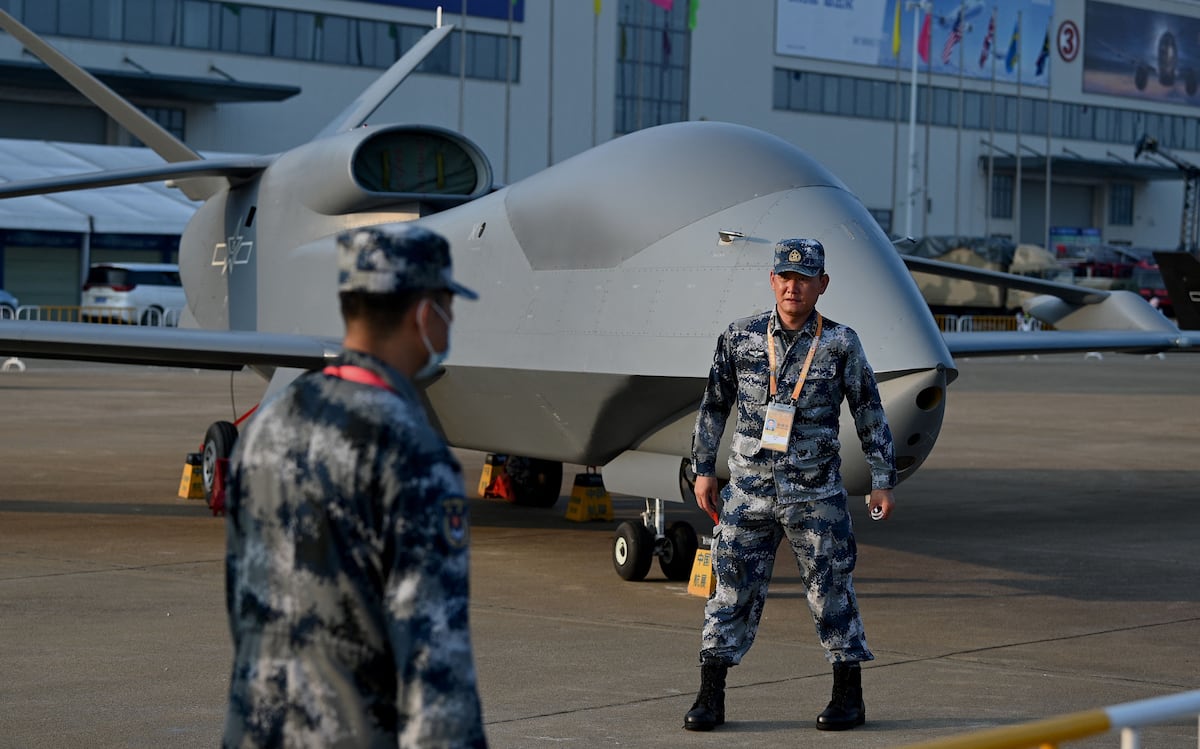
China’s rapid military modernization has spurred considerable fear that the country could provoke a war with the United States. Such fear may owe to an exaggerated view of the importance of war preparation as a driver of the People’s Liberation Army’s buildup.
In fact, a broad variety of political and security drivers underpin the military’s modernization, many of which have nothing to do with waging war. U.S. interests could benefit from a more accurate understanding of the reasons for China’s military buildup and from a perspective that balances attention to the military with a greater appreciation of the nonmilitary aspects of U.S.-China competition.
China’s military has experienced a dramatic buildup in recent years, owing in part to soaring defense budgets. From 2000 to 2016, China’s military budget increased annually by about 10% , although this growth subsequently slowed to about 5-7% per year. According to People’s Republic of China government sources , China’s defense budget was $230 billion in 2022, second only to the United States. The budget understates the amount of resources committed to the military. Western experts suggest that the difference could amount to $60 billion per year.
Surging defense budgets have yielded an increasingly lethal and capable PLA. U.S. officials have steadily warned of an eroding military advantage in the face of rapid PLA gains. During his service, U.S. Air Force Maj. Gen. Cameron Holt stated that China was acquiring weapons at “ five to six times ” the rate of the United States.
For some, the buildup alone provides reasons to fear conflict. Observers point to the rapid modernization as unambiguous evidence that China is preparing for war with the United States. In March 2021, Adm. Philip Davidson, then-head of U.S. Indo-Pacific Command, warned that China could take military action against Taiwan by 2027. Adm. Michael Gilday, the chief of naval operations, added that he can’t rule out a Chinese attempt to invade as early as 2023.
Preparation for war is one possibility for the PLA’s buildup, but it is not the only one. The military’s modernization goals serve a variety of political and military purposes, none of which imply any intent to actually start a war. A grasp of the myriad drivers could help observers more accurately assess the danger posed by the PLA’s modernization.
A first major reason Chinese leaders seek a powerful military owes to basic security. History matters greatly here: Chinese leaders are acutely aware of the downfall of past dynasties when a weak military permitted adversaries to bring the empire to its knees. Chinese leaders routinely invoke past humiliations, such as the Opium Wars, to remind the population of the dangers that weakness might pose. Maintaining a strong deterrence, including through a large nuclear arsenal , is a fundamental reason that China seeks a powerful military.
Second, a growing China requires a more capable military to handle a growing range of missions, including the possibility of a conflict with Taiwan. China faces a difficult geography, with many hostile and suspicious powers along its periphery. Defense whitepapers highlight a multitude of threats , including the dangers of Taiwan separatism, disputes in the East and South China seas, border disputes, and the dangers of great power rivalry with the United States.
Accordingly, the PLA has organized five theaters of command to better align resources with designated missions. The PLA is also charged with a wide range of non-war missions , including humanitarian assistance, disaster relief, maritime patrols and noncombatant evacuation. These are small in scale but important. Indeed, every Chinese military intervention since the 2000s has consisted of non-war missions.
A third, widely underappreciated reason owes to national prestige. Like autocrats elsewhere, Chinese leaders regard a powerful military as a sign of national status and as a way of whipping up patriotic enthusiasm. This explains in part the government’s pursuit of high-profile status symbols such as aircraft carriers . Underscoring this point, China holds many lavish military parades and exercises, all of which receive extensive coverage in Chinese media.
Chinese President Xi Jinping is seen on a screen showing the evening news in 2020 in Beijing. (Kevin Frayer/Getty Images)
Building a powerful military is also an important source of political power for the country’s supreme leader. Xi Jinping’s power hinges, in part, on his command of the military, which helps explain why he is often photographed in military uniforms or settings. Yet like his predecessors Jiang Zemin and Hu Jintao, Xi recognizes that generous defense budgets are the price he must pay to ensure the military’s loyalty .
A fifth reason lies in keeping the military focused on its responsibilities and resisting tendencies of slipping into corruption and lethargy . Xi’s instructions to remain focused on military duties takes place within the context of a broader effort to improve the overall modernization, competence and effectiveness of the government, which authorities regard as critical to realizing the country’s goals of national revival.
Consistent with this broader imperative, Xi has repeatedly paired a crackdown on the rampant corruption with calls on the military to improve its combat readiness , which is another way of saying the military should become more competent at its job.
In conclusion, China’s military buildup owes to a variety of political and security drivers. The buildup does not by itself indicate a drive to war. Indeed, there currently remains no evidence China plans to attack Taiwan any time soon . To best protect U.S. interests, decision-makers could maintain a balanced view of China’s military buildup and regard the technological, economic and diplomatic dimensions of U.S.-China competition as of equal or greater importance to the military dimension.
Timothy R. Heath is a senior international defense researcher at the think tank Rand.
中国快速的军事现代化引发了人们对中国可能挑起与美国战争的极大担忧。这种担忧或许源于对战争准备作为解放军军事建设驱动力的重要性的过分重视。
事实上,推动中国军事现代化的因素多种多样,其中许多与发动战争无关。美国若能更准确地理解中国军事扩张的原因,并以一种既关注军事又更重视美中竞争非军事层面的视角来看待问题,将有助于维护自身利益。
近年来,中国军力发展迅猛,部分原因是国防预算大幅增长。2000年至2016年,中国军费预算年均增长约10%,尽管此后增速放缓至每年5%至7%左右。据中国政府消息,2022年中国国防预算为2300亿美元,仅次于美国。然而,这一预算低估了中国在军事上投入的资源。西方专家认为,实际投入可能高达每年600亿美元。
国防预算的激增造就了一支日益强大且杀伤力极强的解放军。面对解放军的快速发展,美国官员不断警告称,美国的军事优势正在逐渐丧失。美国空军少将卡梅伦·霍尔特在其服役期间曾表示,中国的武器采购速度是美国的“五到六倍”。
对一些人来说,仅凭军事集结就足以令人担忧冲突。观察人士指出,中国的快速现代化是其正在为与美国开战做准备的明确证据。2021年3月,时任美国印太司令部司令菲利普·戴维森海军上将警告称,中国可能在2027年前对台湾采取军事行动。海军作战部长迈克尔·吉尔迪海军上将补充说,他不能排除中国最早在2023年入侵台湾的可能性。
解放军的军事扩张可能是为了备战,但并非唯一原因。军队现代化目标服务于多种政治和军事目的,但这些目的都不意味着有意发动战争。了解其背后的诸多驱动因素,有助于观察人士更准确地评估解放军现代化所带来的风险。
中国领导人寻求强大军队的首要原因在于基本的安全保障。历史在此至关重要:中国领导人深知,以往王朝的覆灭往往源于军队软弱,最终被敌人击垮。他们经常提及鸦片战争等历史耻辱,以此警醒民众,警惕军队软弱可能带来的危险。维持强大的威慑力,包括拥有庞大的核武库,是中国寻求强大军队的根本原因之一。
其次,日益强大的中国需要一支更强大的军队来应对日益增多的任务,包括与台湾发生冲突的可能性。中国面临着复杂的地理环境,周边环绕着许多敌对和猜忌的大国。国防白皮书强调了诸多威胁,包括台湾分裂主义的危险、东海和南海争端、边界争端以及与美国大国竞争的风险。
因此,解放军划分了五个战区,以便更好地将资源与既定任务相匹配。解放军还承担着广泛的非战争任务,包括人道主义援助、灾害救援、海上巡逻和非战斗人员撤离。这些任务规模虽小,但意义重大。事实上,自2000年以来,中国的所有军事干预行动都属于非战争性质。
第三个常被低估的原因在于国家威望。与世界其他国家的独裁者一样,中国领导人将强大的军队视为国家地位的象征,也是激发爱国热情的一种方式。这在一定程度上解释了中国政府为何追求诸如航空母舰等引人注目的地位象征。为了强调这一点,中国举行了许多盛大的阅兵式和军事演习,所有这些都得到了中国媒体的广泛报道。
2020年,中国国家主席习近平的身影出现在北京晚间新闻屏幕上。(Kevin Frayer/Getty Images)
打造一支强大的军队也是国家最高领导人政治权力的重要来源。习近平的权力在一定程度上取决于他对军队的指挥,这也解释了为什么他经常身着军装或出现在军装场景中。然而,与他的前任江泽民和胡锦涛一样,习近平也认识到,慷慨的国防预算是他必须付出的代价,才能确保军队的忠诚。
第五个原因在于确保军队专注于自身职责,并抵制滋生腐败和懈怠的倾向。习近平指示军队专注于军事任务,这是在提升政府整体现代化、能力和效能的更广泛努力背景下提出的,当局认为这对于实现国家复兴的目标至关重要。
与这一更广泛的要务相一致,习近平多次将打击猖獗的腐败与呼吁军队提高战备水平结合起来,换句话说,就是军队应该提高其工作能力。
总之,中国的军事建设源于多种政治和安全因素。军事建设本身并不代表其意图发动战争。事实上,目前没有任何证据表明中国计划在近期内攻击台湾。为了更好地维护美国利益,决策者应以平衡的视角看待中国的军事建设,并将美中竞争中的技术、经济和外交层面视为与军事层面同等重要甚至更为重要的因素。
蒂莫西·R·希思是兰德智库的高级国际防务研究员。