The SR-71 Blackbird Was Almost Brought Back For The Global War On TerrorSR-71“黑鸟”侦察机差点被重新投入全球反恐战争使用。
A little known chapter in the twilight of the SR-71 program became the final nail in its coffin.
新闻视频
Updated Mar 28, 2020 5:36 PM EDT
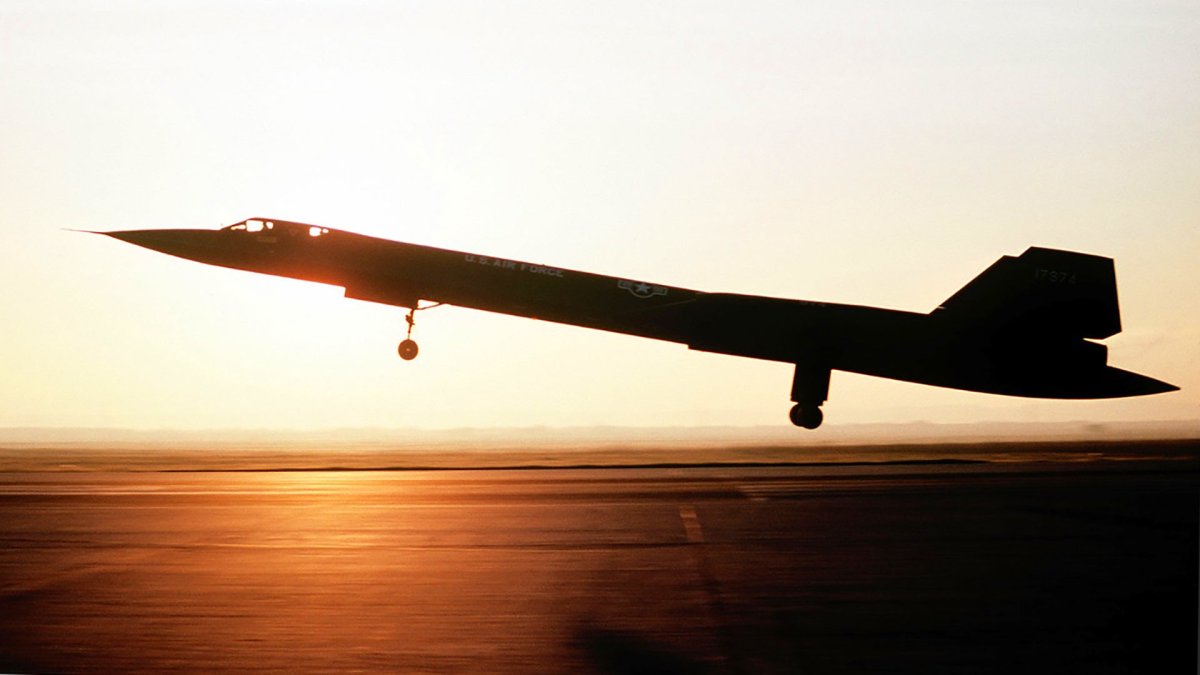
On September 11th, 2001, the unthinkable happened and the United States of America was attacked on its own soil. Much has been written about the events of 9/11 and the ensuing Global War On Terror, but as the years pass, more details and personal accounts are making their way into broader public knowledge. One of the least known events to fans of the SR-71 Blackbird and aviation aficionados everywhere is the Blackbird program’s brush with resurrection in the early 2000s.
The original SR-71 program was officially terminated on the 22nd of November of 1989. A few flights occurred in 1990, including the coast-to-coast record-setting flight on the 6th of March to deliver Blackbird 61-7972 to the National Air & Space Museum in Washington DC.
Proponents of the Blackbird believed a mistake had been made with its withdrawal from service and fought tooth and nail for its return. With enthusiasts around the world, and more importantly in Congress, the SR-71 was a hard program to kill. They prevailed and 100 million dollars were allocated by Congress in 1994 to return three SR-71s to Air Force service. However, the fight to end their service lives wasn’t over. In 1996 they were grounded again by Deputy Defense Secretary John White, but funding returned the same year.
The program was ultimately canceled by President Clinton with a line-item veto in 1997. A Supreme Court ruling determined that the line-item veto was unconstitutional, but the funds were never issued. The final shut down of the United States Air Force SR-71 program occurred on Jun 30th, 1999 at DET 2, Edwards AFB. All remaining SR-71s were transferred to NASA . The final SR-71 flight was made by 61-7980 on October 9th of the same year at the Edwards AFB open house air show.
Less than two years later and in the immediate aftermath of the 9/11 attacks on the 13th of September, 2001, the Pentagon asked if the SR-71 could be brought back. Not only was the answer yes, but the now-scattered Blackbird community could reconvene and provide intelligence products within 60 to 90 days at a cost of 45 million dollars for startup and one year of operations. The proposal went on to outline that year two costs would be reduced to 40 million dollars.
The role for the SR-71 Blackbird in the Global War On Terror was purported by Major William Michael Zimmerman, SR-71 Reactivation Program Manager, to be wide-area mapping in addition to the ongoing strategic deterrent of making non-lethal shows of force in the form of sonic booms over or near enemy territory as directed by elected leaders and combatant commanders.
From the beginning of the program upstarts and shutdowns of the 1990s, five SR-71 Blackbirds were retained between NASA and the USAF, and all were based at Edwards AFB. Those included SR-71A 61-7968, which was prepped for a return to service, but kept in storage and not flown at all after February 12th, 1990. Ultimately, It was sent to the Virginia Aviation Museum in October 1999 and subsequently would have been unavailable for the 2001 proposed return.
A total of four SR-71s were flown by the Air Force and NASA at different times as the program morphed in the 1990s. 61-7980 Stayed with NASA as #844 from 1990 on, 61-7967 was reactivated by the Air Force in 1995 from storage, and 61-7971 went to NASA as #832 in 1990, but was given back to the Air Force in 1995. The first built and last surviving of two SR-71B dual front cockpit trainer, 61-7956 , had stayed active at Edwards AFB supporting SR-71 flight training for both NASA (as #831) and Air Force aircrews. In early July 1999, all four flyable Blackbirds were transferred to NASA.
SR-71B in full reheat for takeoff in from Edwards AFB in the 1990s. , NASA
Three SR-71As remained available at Edwards AFB as of September 13th, 2001. Those included 61-7980 , 61-7971 , and 61-7967 . If the proposal to return SR-71 Blackbirds to service in the 2000s would have been pursued further, SR-71B 61-7956 more likely than not would have been pressed into duty for crew training and any combination of SR-71A tail numbers 61-7967, 61-7971 and 61-7980 would have been returned to the Air Force for operational missions.
During the first reactivation of the SR-71 Blackbird in the mid-1990s, those five existing jets that had not been sent to museums were updated into relevance. The upgrades performed then would’ve carried them into the 2000s and enabled their integration into an Air Force that would have otherwise, in terms of technology and direction, moved on without them. To keep costs low, off the shelf parts were used to support this upgrade program.
The best example of this upgrade effort was the inclusion of the L-52M datalink, which was listed as excess property by the U-2 program, but proved useful for Blackbirds after upgrading some of its components. The L-52M was engineered to access the same data interfaces as other in-use reconnaissance systems at the time. One benefit of this approach was the fact that intelligence analysts would not need to learn to interpret new data or learn new interfaces to do so. After the L-52M modifications, the SR-71’s intelligence products, namely those garnered from its Advanced Synthetic Aperture Radar System (ASARS-2), now functioned like those of the other reconnaissance systems the analysts were familiar with and were now provided in near-real-time.
Limited support from Air Force leadership and the perceived high cost of operation, which had been the bane of its existence for much of its later life, doomed the SR-71 Blackbird for a final time. Beyond the request to look into whether it could be brought back and the production of the subsequent proposal for doing so, the matter was not pursued any further. The reality was that the nature of airborne reconnaissance was deeply in flux at the time, which you can read about in detail here , here , and here , and spy satellites and the U-2s still in service could provide similar products as what the SR-71 could provide in many circumstances.
The SR-71 Blackbird next to its U-2 Dragonlady progenitor, a plane that ended up surviving long after the SR-71 was retired. , National Archives
The four remaining flyable SR-71 Blackbirds were disposed of by the end of 2003. 61-7980 stayed at Edwards AFB and was moved to a display near the Armstrong Flight Research Center in March of 2002. The other Blackbirds required shipping to their final resting places which necessitated their wings being sawed off by Worldwide Aircraft Recovery.
The SR-71B trainer, 61-7956, lasted until March of 2003 at Edwards AFB when it was trucked to the Kalamazoo Air Zoo Museum in Michigan. 61-7971 was similarly sent to the Evergreen Aviation Museum in Mcminnville Oregon starting in 2002. In December of 2003 61-7967 was the last to leave Edwards AFB on its way to Barksdale AFB, Louisiana where it was placed on display at the 8th Air Force Museum.
SR-71 61-7967 seen at Barksdale AFB. , National Archives
The Blackbird community largely considers SR-71B 61-7956’s dismantling the conclusive end of the Blackbird program. With no trainer available to keep crews proficient, any hope of a return to service was lost.
These events are well documented, but few people know that the Blackbirds actually had a chance at joining coalition efforts in the aftermath of the 9/11 attacks. No matter why it would have or didn’t come back that final time in 2001, it’s noteworthy that the Blackbird’s capabilities were still missed, at least to a limited degree, even in a new millennium it was never designed for.
Contact the editor: Tyler@thedrive.com
Comments couldn’t be loaded. Please refresh the page.
更新于美国东部时间2020年3月28日下午5:36
2001年9月11日,骇人听闻的事件发生了,美国本土遭受了恐怖袭击。关于9/11事件及其引发的全球反恐战争,已有大量著述,但随着时间的推移,更多细节和个人叙述逐渐被公众所知。对于SR-71“黑鸟”侦察机的爱好者和世界各地的航空迷来说,鲜为人知的事件之一是“黑鸟”项目在21世纪初的复兴尝试。
SR-71 计划于 1989 年 11 月 22 日正式终止。1990 年进行了几次飞行,其中包括 3 月 6 日创纪录的横跨美国东西海岸的飞行,将黑鸟 61-7972 号交付给华盛顿特区的国家航空航天博物馆。
黑鸟的支持者认为将其从现役中移除是一个错误,并为此竭力争取使其回归。由于世界各地,尤其是国会中都有爱好者,SR-71项目很难被取消。最终,他们取得了胜利,国会在1994年拨款1亿美元,用于让三架SR-71重返空军服役。然而,结束其服役生涯的斗争并未就此结束。1996年,国防部副部长约翰·怀特再次下令停飞SR-71,但同年拨款又恢复了。
1997年,克林顿总统最终以逐项否决权取消了该项目。最高法院裁定该逐项否决权违宪,但资金从未拨付。1999年6月30日,美国空军SR-71项目在爱德华兹空军基地第二分遣队(DET 2)正式关闭。所有剩余的SR-71飞机均移交给了美国国家航空航天局(NASA)。同年10月9日,编号为61-7980的SR-71飞机在爱德华兹空军基地开放日航展上完成了最后一次飞行。
不到两年后,在2001年9月13日9·11恐怖袭击事件发生后不久,五角大楼询问SR-71侦察机是否可以重新投入使用。答案不仅是肯定的,而且当时分散各地的“黑鸟”侦察机部队可以在60到90天内重新集结并提供情报产品,启动和第一年的运营成本为4500万美元。该方案还指出,第二年的成本将降至4000万美元。
SR-71 黑鸟侦察机重新激活项目经理威廉·迈克尔·齐默尔曼少校声称,SR-71 黑鸟侦察机在全球反恐战争中的作用是进行大范围测绘,此外,它还根据民选领导人和作战指挥官的指示,在敌方领土上空或附近进行非致命的武力展示,发挥持续的战略威慑作用。
从上世纪90年代SR-71“黑鸟”项目启动和终止的初期开始,美国国家航空航天局(NASA)和美国空军共保留了五架SR-71“黑鸟”侦察机,全部驻扎在爱德华兹空军基地。其中包括SR-71A 61-7968,该机曾做好重新服役的准备,但自1990年2月12日之后便一直处于封存状态,从未飞行过。最终,它于1999年10月被送往弗吉尼亚航空博物馆,因此无法参与2001年计划中的复飞。
在20世纪90年代SR-71项目发展演变的过程中,美国空军和NASA共先后使用过四架SR-71。61-7980自1990年起一直留在NASA,编号为844;61-7967于1995年由空军从封存状态重新启用;61-7971于1990年交付NASA,编号为832,但于1995年归还空军。两架SR-71B双座前座教练机中的第一架也是最后一架幸存的,编号为61-7956,一直驻扎在爱德华兹空军基地,为NASA(编号831)和空军机组人员提供SR-71飞行训练支持。1999年7月初,所有四架可飞行的“黑鸟”飞机全部移交给NASA。
20世纪90年代,一架SR-71B侦察机在爱德华兹空军基地起飞前进行全功率加力燃烧。(美国国家航空航天局)
截至2001年9月13日,爱德华兹空军基地仍有三架SR-71A可用,分别是61-7980、61-7971和61-7967。如果2000年代SR-71“黑鸟”重返现役的提议得以继续推进,SR-71B 61-7956很可能会被征用用于机组人员训练,而SR-71A 61-7967、61-7971和61-7980这三架飞机中的任意一架都可能被交还给空军执行作战任务。
在20世纪90年代中期SR-71“黑鸟”侦察机首次重新启用期间,当时未被送往博物馆的五架现存飞机进行了升级改造,使其恢复了作战能力。这些升级改造原本可以使它们服役到21世纪初,并使其能够融入当时的空军体系。否则,在技术和发展方向上,空军可能早已将它们抛在身后。为了降低成本,此次升级改造采用了现成的零部件。
此次升级的最佳例证是L-52M数据链的加入。该数据链曾被U-2项目列为剩余资产,但在对其部分组件进行升级后,却被证明对黑鸟侦察机非常有用。L-52M的设计使其能够访问与当时其他侦察系统相同的数据接口。这种方法的优势之一在于,情报分析人员无需学习解读新数据或学习新的接口。经过L-52M的改进,SR-71的情报产品,特别是其先进合成孔径雷达系统(ASARS-2)所获取的情报,现在能够像分析人员熟悉的其他侦察系统一样运作,并且能够近乎实时地提供。
空军领导层的支持有限,以及其高昂的运行成本(这在其服役后期一直是其最大的难题),最终导致SR-71“黑鸟”侦察机的退役。除了请求研究其复飞的可能性以及随后提出的复飞方案之外,此事再无后续进展。事实上,当时空中侦察的性质正处于剧烈变革之中(详情请见此处、此处和此处),而且在许多情况下,间谍卫星和仍在服役的U-2侦察机也能提供与SR-71类似的侦察能力。
SR-71“黑鸟”侦察机与其前身U-2“龙夫人”侦察机并排停放,U-2“龙夫人”的服役时间比SR-71退役后还要长。(美国国家档案馆)
剩余的四架可飞行的SR-71黑鸟侦察机在2003年底被全部拆解。61-7980号机留在爱德华兹空军基地,并于2002年3月被移至阿姆斯特朗飞行研究中心附近展出。其他黑鸟侦察机需要运送到最终的安息之地,这需要由环球飞机回收公司锯掉它们的机翼。
SR-71B教练机(编号61-7956)一直驻扎在爱德华兹空军基地,直到2003年3月被卡车运往密歇根州的卡拉马祖航空动物园博物馆。编号61-7971的另一架SR-71B教练机也于2002年被运往俄勒冈州麦克明维尔的常青航空博物馆。2003年12月,编号61-7967的SR-71B教练机成为最后一架离开爱德华兹空军基地的SR-71B教练机,前往路易斯安那州的巴克斯代尔空军基地,并在那里的第八航空队博物馆展出。
SR-71 61-7967 曾在巴克斯代尔空军基地被发现。(美国国家档案馆)
黑鸟侦察机爱好者普遍认为SR-71B 61-7956的拆解标志着黑鸟计划的彻底终结。由于没有教练机来维持机组人员的熟练度,任何重返服役的希望都已破灭。
这些事件都有详细的记载,但鲜为人知的是,黑鸟侦察机在9·11事件后其实有机会加入联合行动。无论它在2001年最后一次回归的原因是什么,值得注意的是,即使在它并非为之设计的新千年,人们仍然在一定程度上怀念黑鸟侦察机的作战能力。
联系编辑:Tyler@thedrive.com
评论加载失败,请刷新页面。