US-Philippine task force to reestablish South China Sea ‘deterrence’美菲联合特遣部队将重建南海“威慑”
The U.S. and the Philippines announce a joint task force to deter what Defense Secretary Pete Hegseth calls Beijing’s “coercion” in the South China Sea.
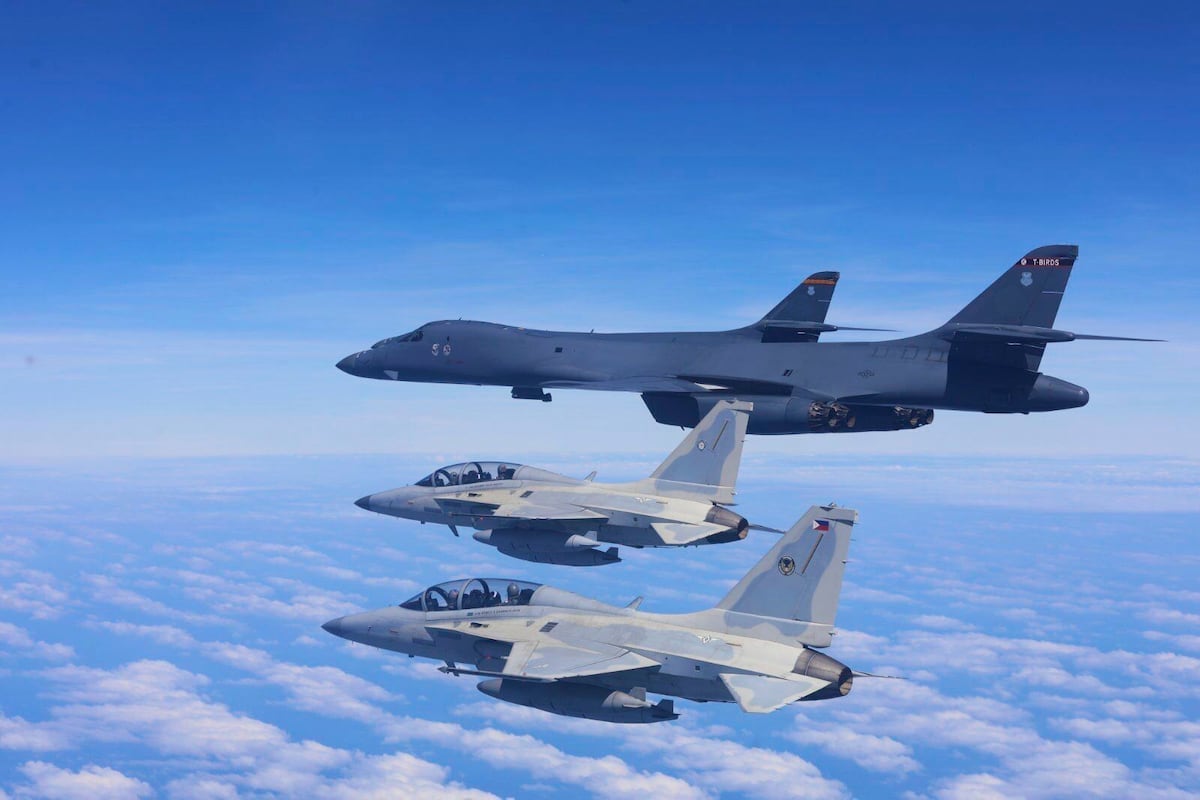
BANGKOK — The United States and the Philippines have announced the creation of a joint task force aimed at further deterring what U.S. Defense Secretary Pete Hegseth called Beijing’s “coercion” in the South China Sea.
It is the first of its kind in Southeast Asia, where not only the Philippines but also Brunei, Indonesia, Malaysia and Vietnam have overlapping claims with China in the sea, a major international shipping route.
Analysts tell Military Times the task force could help deter Beijing’s efforts to enforce its sweeping claims to the sea by allowing U.S. and Philippine forces to react much more quickly to Chinese ships in contested waters around the Philippines, where the two countries have often clashed.
Hegseth and his counterpart, Philippine Defense Secretary Gilbert Teodoro Jr., unveiled Task Force-Philippines on the sidelines of the Association of Southeast Asian Nations defense ministers’ summit in Kuala Lumpur, Malaysia, on Oct. 31.
“We don’t seek confrontation, but of course we’re ready to protect our interests, individually and mutually. And that’s why we’re publicly announcing the Task Force-Philippines here with you today,” Hegseth told a press conference.
He called it “another step in our cooperation, increasing interoperability, exercising and preparedness for contingencies, so that we can decisively respond to crises or aggression and reestablish deterrence in the South China Sea.”
The U.S. Pacific Fleet later added in a statement that the task force, which covers the full sprawl of the Philippines archipelago, will have about 60 dedicated staff and be led by either a one-star general or flag officer. The fleet said it would not involve new combat forces, offensive operations or permanent military basing.
Rommel Jude Ong, a professor at Ateneo de Manila University, told Military Times that the task force is the culmination of growing cooperation between the U.S. and Philippines, which have been defense treaty allies since 1951.
He cited the annual Balikatan military exercise , the more limited joint task forces in past years, and a pact the two countries signed in 2024 to share classified military information.
“Those are developments that need to happen before you can actually have an operational task force,” he said. “Because they were resolved, a task force is now a viable mechanism.”
Now that it is viable, the two forces should be able to share sensitive intelligence “almost in real time,” said Jude Ong, a retired rear admiral who served over three decades in the Philippine navy.
Until now, operational information typically had to travel back and forth between Manila and Hawaii, where INDOPACOM is headquartered.
“That is a cumbersome way of doing business and is dependent on a secure communication setup that has very stringent protocols to use,” Jude Ong said.
“Having the [Task Force] Philippines based in Manila allows for a faster and convenient way of collaborating on combined operations … between the two allied militaries,” he added.
To truly deter China, he said, the United States and other Philippine allies would have to commit far more ships to patrolling the contested waters and maybe even basing them in the Philippines. In its statement, the U.S. Pacific Fleet ruled out basing its ships in the Philippines, but Jude Ong said he believed the task force may yet encourage the development of more related U.S. logistics in the country.
By helping U.S. forces react to events in the South China Sea in real time, though, the task force could still add some deterrence as it is, said Euan Graham, a senior fellow at the Australian Strategic Policy Institute, a think tank established by the Australian government.
“Part of the problem is that the Chinese have learned that the Americans come for exercises like Balikatan and then they sail off, and they [the Chinese] can very quickly come in and out from their new bases in Mischief Reef and elsewhere, and that obviously undercuts the American deterrence proposition,” he said.
Mischief Reef is an artificial South China Sea island that Beijing has turned into a military base.
The task force, Graham added, makes the U.S. “more agile and more responsive so that things don’t just have to get put all the way up the decision chain into INDOPACOM headquarters or Washington.”
He said the creation of a standing task force also helps reassure Manila and Washington of each other’s long-term military commitments should moods change in either capital.
Philippine relations with the United States have warmed under President Ferdinand Marcos Jr., who succeeded the more China-friendly administration of Rodrigo Duterte in 2022. Duterte’s daughter, Sara, however, who shares her father’s China leanings, is the current frontrunner for president in elections due by 2028.
“So, this [task force] may be part of the trend to institutionalize this alliance and other security partnerships as far as possible while the political window is open under Marcos. Because if the Dutertes get back in, that’s clearly not going to be good for the U.S.,” said Graham.
In the meantime, tensions continue to run high between Beijing and Manila, with several encounters around contested shoals in recent months.
Graham said the task force could, in time, help stabilize the situation by allowing U.S. forces to respond more effectively to the pressure being applied by China.
Starting off, though, he said it may face “teething issues” as both sides work out where to draw ships for the joint operations from, and that China may try testing the task force to see whether and how much those operations actually improve the Philippines’ defenses.
China may also react by scaling up its own patrols or blocking Philippines supply ships to some shoals more aggressively, said Abdul Rahman Yaacob, a security analyst and academic adviser at the Australian National University.
He said that would raise the odds of an accident, which could in turn stoke tensions further.
“Most likely it may lead to increased tensions, because once you have a task force, you have more military activities. … And how will the Chinese respond? Will [more] Chinese war ships actually patrol and try to monitor Philippines-U.S. activities?” he asked.
“More military activities mean more potential for accidents to happen.”
However Beijing reacts, Rahman Yaacob said the task force will force China to reevaluate its approach.
“This task force will … cement further the American military presence in this part of the world, and … this will force Beijing, or China, to actually recalculate its strategic policy vis-à-vis the Philippines and the rest of Southeast Asia,” he said.
曼谷——美国和菲律宾宣布成立联合特遣部队,旨在进一步遏制美国国防部长皮特·赫格塞斯所称的北京在南海的“胁迫”行为。
这是东南亚首例此类事件,不仅菲律宾,文莱、印度尼西亚、马来西亚和越南也与中国在该海域(一条重要的国际航运路线)拥有重叠的主权声索。
分析人士告诉《军事时报》,该特遣部队可以帮助阻止北京强制执行其对海洋的广泛主张,使美国和菲律宾军队能够更快地对菲律宾附近争议水域中的中国船只做出反应,而这两个国家经常在这些水域发生冲突。
10 月 31 日,在马来西亚吉隆坡举行的东南亚国家联盟国防部长峰会期间,赫格塞斯和他的对口官员、菲律宾国防部长吉尔伯特·特奥多罗共同宣布成立菲律宾特遣部队。
“我们不寻求对抗,但我们当然准备好保护我们各自的利益以及共同的利益。这就是为什么我们今天在这里向大家公开宣布成立菲律宾特别工作组的原因,”赫格塞斯在新闻发布会上说。
他称之为“我们合作的又一步,旨在提高互操作性,加强演练和应对突发事件的准备,以便我们能够果断应对危机或侵略,并在南海重建威慑力。”
美国太平洋舰队随后在一份声明中补充说,这支覆盖菲律宾群岛全境的特遣部队将配备约60名专职人员,由一名准将或海军将领领导。舰队表示,此次行动不会涉及新的作战部队、进攻性行动或永久性军事基地。
马尼拉雅典耀大学教授罗梅尔·朱德·翁告诉《军事时报》,该特遣部队是美国和菲律宾之间日益密切的合作的最终成果,两国自 1951 年以来一直是防务条约盟友。
他提到了每年举行的“肩并肩”联合军事演习、过去几年规模较小的联合特遣部队,以及两国在2024年签署的共享机密军事信息的协议。
他说:“这些都是组建一支实际运作的特别工作组之前必须完成的事项。由于这些问题都已得到解决,组建特别工作组现在才成为一种可行的机制。”
菲律宾海军退役少将朱德·翁表示,既然现在可行,双方应该能够“几乎实时”共享敏感情报。朱德·翁曾在菲律宾海军服役三十余年。
此前,作战信息通常需要在马尼拉和印太司令部总部所在地夏威夷之间来回传递。
“这种做生意的方式很麻烦,而且依赖于安全的通信机制,该机制需要使用非常严格的协议,”Jude Ong说道。
他补充说:“将菲律宾特遣部队设在马尼拉,可以更快、更方便地促进两国盟军在联合行动中的合作。”
他表示,要真正遏制中国,美国和其他菲律宾盟友必须投入更多舰艇巡逻争议水域,甚至可能需要在菲律宾设立基地。美国太平洋舰队在声明中排除了在菲律宾设立基地的可能性,但朱德·翁表示,他相信该特遣部队或许会促使美国在菲律宾发展更多相关的后勤设施。
澳大利亚战略政策研究所(澳大利亚政府设立的智库)高级研究员尤安·格雷厄姆表示,尽管如此,通过帮助美军实时应对南海局势,该特遣部队仍然可以起到一定的威慑作用。
他说:“部分原因是,中国人已经了解到,美国人会来参加像‘肩并肩’这样的演习,然后就离开,而中国人可以非常迅速地从他们在美济礁和其他地方的新基地进出,这显然削弱了美国的威慑作用。”
美济礁是北京在南海建造的人工岛,已被改造成军事基地。
格雷厄姆补充说,该特别工作组使美国“更加灵活、反应更加迅速,这样事情就不必一步一步地上报到印太司令部总部或华盛顿的决策链上。”
他表示,成立常设特遣部队也有助于让马尼拉和华盛顿确信彼此的长期军事承诺,以防任一首都的情绪发生变化。
在费迪南德·马科斯二世总统的领导下,菲律宾与美国的关系有所升温。马科斯二世于2022年接替了对中国更为友好的罗德里戈·杜特尔特政府。然而,杜特尔特的女儿萨拉·杜特尔特继承了她父亲对中国的倾向,目前是2028年总统选举的领跑者。
格雷厄姆说:“所以,这个(特别工作组)可能是趁着马科斯执政时期政治窗口仍然开放,尽可能将这一联盟和其他安全伙伴关系制度化的一种趋势。因为如果杜特尔特家族重新掌权,那显然对美国不利。”
与此同时,北京和马尼拉之间的紧张局势持续高涨,近几个月来,双方在有争议的浅滩附近发生了多次冲突。
格雷厄姆表示,该特别工作组假以时日,能够让美军更有效地应对中国施加的压力,从而帮助稳定局势。
不过,他表示,一开始可能会遇到一些“初期问题”,因为双方需要确定从哪里抽调舰艇进行联合行动,而且中国可能会尝试测试这支特遣部队,看看这些行动是否以及在多大程度上真正提高了菲律宾的防御能力。
澳大利亚国立大学安全分析师兼学术顾问阿卜杜勒·拉赫曼·雅各布表示,中国也可能通过加强巡逻或更积极地阻止菲律宾向某些浅滩运送补给船来做出反应。
他表示,这样做会增加发生事故的几率,进而可能进一步加剧紧张局势。
“这很可能会导致紧张局势加剧,因为一旦成立了特遣部队,军事活动就会增多……中国会作何反应?中国会派出更多军舰巡逻,试图监视菲律宾和美国的行动吗?”他问道。
“军事活动越多,发生事故的可能性就越大。”
拉赫曼·雅各布表示,无论北京作何反应,该工作组都将迫使中国重新评估其方针。
他说:“这个特别工作组将……进一步巩固美国在世界这一地区的军事存在,并且……这将迫使北京或中国重新评估其对菲律宾和东南亚其他国家的战略政策。”