‘Singapore is not boring’: Meet the urban explorer revealing the city's hidden stories“新加坡一点也不无聊”:认识一下这位城市探险家,他将带你揭开这座城市不为人知的故事
Ho Yong Min, better known as The Urbanist, has built a following by uncovering the hidden stories behind Singapore's streets, buildings and public spaces.
新闻视频
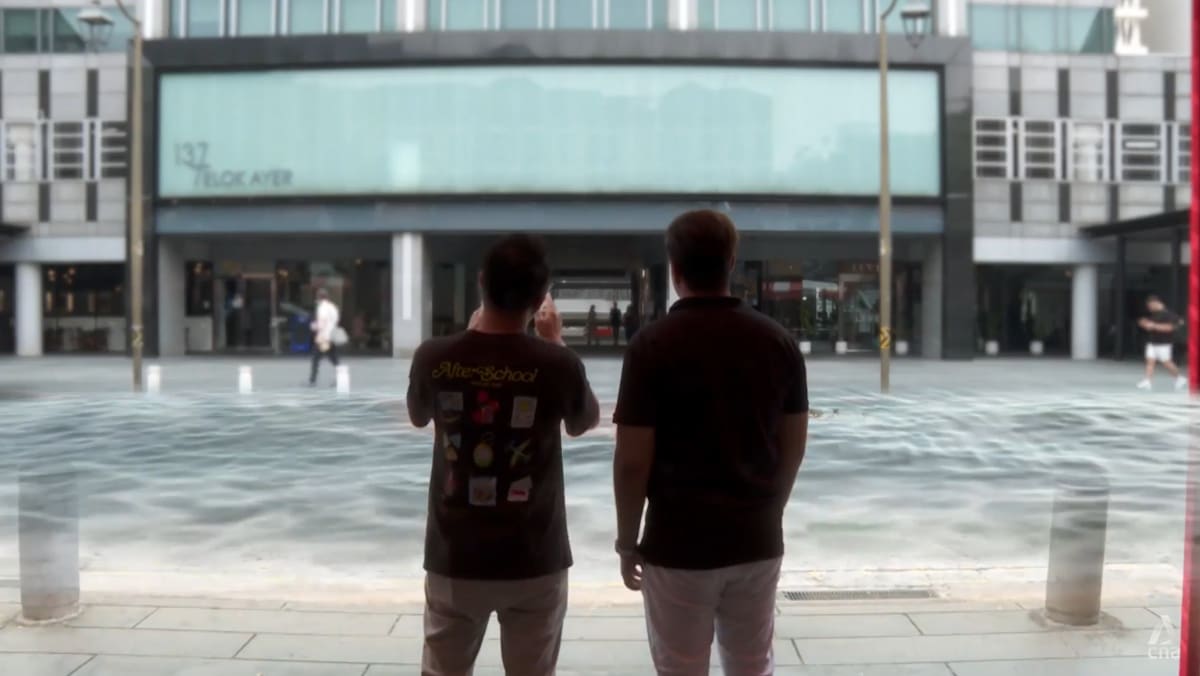
Ho Yong Min, better known as The Urbanist, has built a following by uncovering the hidden stories behind Singapore's streets, buildings and public spaces.
Ho Yong Min, better known as The Urbanist, with CNA's Nikhil Khattar along Telok Ayer Street. (Image: CNA)
This audio is generated by an AI tool.
Most people walking along Telok Ayer Street today would not realise they are standing where Singapore's shoreline once was.
But to former urban planner Ho Yong Min, better known as The Urbanist, clues to the area’s history are everywhere.
A temple’s orientation. A street name. Inscriptions on a stone tablet.
"If you look around, you don't see any remnants of the sea at all," he told CNA while on a walk through the area.
"But there are clues in our city that tell you that this temple used to face the sea."
Telok Ayer, Ho explained, used to be a bay that once greeted immigrants arriving by boat. Many would stop at Thian Hock Keng Temple, built in 1842, to pray and give thanks for a safe voyage before embarking on new lives in Singapore.
The district's name, which means "bay water" in Malay, also hints at its past as a point of entry for new arrivals.
That maritime past is also etched into the temple itself: A stone tablet mounted on its wall bears repeated inscriptions of the Chinese character for “boat”.
"Back in the day, when you're on a voyage from China to Singapore, just being able to land in Singapore is already a blessing because you may have been shipwrecked or gotten ill along the way," Ho said.
"That's why temples were pretty much established along the shoreline. If you look at the places of worship along Telok Ayer, you notice there are quite a number of them, and they all tell the same story of the safe arrival of immigrants in the past."
Finding hidden stories in familiar places is at the heart of Ho's work as founder of The Urbanist Singapore, a content platform dedicated to heritage storytelling and urban design.
Through social media videos, guided walks and school programmes, the 42-year-old Singaporean has built a growing audience, including more than 62,000 followers on Instagram, by uncovering the tales behind Singapore's streets, buildings and public spaces.
FAMILIAR STREETS, UNTOLD STORIES
Some of Ho’s most popular videos begin with a simple question about something most people might walk past without a second thought.
One such vlog explored an unusual feature along a tiny stretch of the underground CityLink Mall: Why visitors have to take an escalator further down, only to head back up another mere metres away.
The dip exists to avoid the Stamford Canal above.
The canal, which stretches from Tanglin to Marina Bay, passes through Orchard Road and City Hall, including the area now occupied by Plaza Singapura and CityLink Mall.
In the past, Indian laundry workers known as dhobies washed clothes there before laying them out to dry on the grounds where Singapore Management University's School of Economics now stands. The washing activity gave rise to the area's name, Dhoby Ghaut.
As Singapore developed, newer structures had to work around the canal's path, creating unexpected quirks in the urban landscape, including the one Ho highlighted at CityLink Mall.
When Ho posted the video online explaining the canal’s influence on the mall’s design, he was surprised by the response. He got over 700,000 views on TikTok and more than 130,000 views on Instagram, along with hundreds of comments.
"When I woke up the next day and saw more notifications than I've ever seen in my life, I noticed that people actually connected," he said.
For many viewers, he added, the video offered a new perspective on a place they thought they knew well.
"I think people are generally still curious," he said. "They just need someone to share it with them in a way (that is) understood."
Ho Yong Min with CNA's Nikhil Khattar outside Thian Hock Keng Temple at 158 Telok Ayer Street. (Image: CNA)
LEAVING CORPORATE LIFE BEHIND
What started as an interest in Singapore's urban landscape and its stories eventually became more than a side project.
About two years ago, Ho left his corporate job as an associate director of education strategy at the Singapore Management University to do this full-time.
Today, he splits his time between producing content, researching new tours, acting as a heritage guide and working with students.
Ho said his decision was driven partly by concerns that younger Singaporeans are increasingly distracted by the endless stream of online "brain rot" content competing for their attention.
"I wanted people to realise that Singapore is not boring," he added.
Much of his work now involves introducing students to heritage research and trail guiding in person, with the hope of nurturing a lasting curiosity about the places around them.
"I really see myself as just presenting the door to our younger generation," he said.
"Hopefully, they open it, they like what they see … and they can take further steps into exploring our heritage."
Ho Yong Min leading a group of students on a heritage tour. (Image: CNA)
Ho’s curiosity goes back to his childhood.
When he was growing up, his grandparents often took him on bus rides around Singapore, including trips to newly opened McDonald’s outlets in the 1980s.
While travelling across the island, he found himself wondering about the buildings and the origins of street names they passed.
Those questions never went away and as an urban geography student, he became fascinated by what he described as the "different layers" of Singapore and the process of "peeling them back".
That passion translates into up to four to five months of research for every new tour Ho develops.
Research, however, is only part of the challenge.
"It's not just research," he said. "It's about the translation.
"How do we tell it in a story that would resonate and linger on after the tour?"
A temple along Telok Ayer Street, which used to be a bay where new arrivals to Singapore landed. (Image: CNA)
SEEING SINGAPORE WITH FRESH EYES
For Ho, the goal is not simply to preserve history.
It is also to help people feel more connected to the place they call home.
"I want people to see that Singapore … is not just buildings and more buildings," he said.
"There are stories behind them. There is interesting history behind road names and street orientation."
He believes such stories can help Singaporeans feel more rooted and perhaps even "fall in love with Singapore all over again".
"Curiosity is a great teacher," Ho added.
"Pause, slow down, start to observe. Why is the road curved this way? Why is a building shaped this way?
"You might be surprised at the stories it tells you."
In a country that is constantly evolving and focused on what comes next, Ho's message is straightforward: look again.
The next discovery, he suggests, may not require travelling somewhere new.
It may simply mean looking at a familiar place with fresh eyes.
A single handpicked story that we think you shouldn't miss. Just one a day.
何永敏(Ho Yong Min),更为人熟知的名字是“城市学家”(The Urbanist),他通过挖掘新加坡街道、建筑和公共空间背后的故事,积累了一批追随者。
何永敏(Ho Yong Min,网名“城市规划师”)与亚洲新闻台记者尼基尔·卡塔(Nikhil Khattar)在直落亚逸街(Telok Ayer Street)合影。(图片:亚洲新闻台)
这段音频由人工智能工具生成。
如今走在直落亚逸街上的大多数人,都不会意识到他们正站在新加坡曾经的海岸线上。
但对于前城市规划师何永敏(人称“城市规划师”)来说,该地区的历史线索无处不在。
寺庙的朝向。街道名称。石碑上的铭文。
“如果你环顾四周,你会发现根本看不到任何海洋的痕迹,”他在该地区散步时告诉亚洲新闻台。
“但我们城市里的一些线索表明,这座寺庙过去是面向大海的。”
何先生解释说,直落亚逸海湾过去曾是迎接乘船抵达的移民的海湾。许多人会在建于1842年的天福宫停留,祈祷并感谢一路平安,然后再启程前往新加坡开始新的生活。
该地区的名称在马来语中意为“海湾之水”,也暗示了它过去曾是新移民的入境点。
这段航海历史也镌刻在寺庙本身:墙上镶嵌的一块石碑上反复刻着汉字“船”。
“以前,如果你从中国乘船前往新加坡,能够抵达新加坡就已经是一种幸运了,因为你可能在途中遭遇海难或生病了,”何先生说。
“这就是为什么寺庙几乎都建在海岸线上的原因。如果你看看直落亚逸沿岸的宗教场所,你会发现数量相当多,而且它们都讲述着同一个故事:过去移民安全抵达。”
在熟悉的地方发现隐藏的故事是何女士作为新加坡城市主义者(The Urbanist Singapore)创始人的工作核心,该内容平台致力于讲述文化遗产故事和城市设计。
这位 42 岁的新加坡人通过社交媒体视频、导览步行和学校项目,挖掘新加坡街道、建筑和公共空间背后的故事,从而建立起不断增长的受众群体,其中包括在 Instagram 上超过 62,000 名粉丝。
熟悉的街道,不为人知的故事
何的一些最受欢迎的视频都是以一个简单的问题开头,这个问题是关于大多数人可能不会多想的事情。
其中一期视频博客探索了 CityLink 地下购物中心一小段不寻常的特色:为什么游客必须乘坐扶梯向下走一段,然后再走几米回到上方。
此处的凹陷是为了避开上方的斯坦福运河。
这条运河从东陵延伸至滨海湾,途经乌节路和市政厅,包括现在狮城广场和城市连接购物中心所在的区域。
过去,被称为“多比”(dhobies)的印度洗衣工在这里洗衣服,然后把衣服晾晒在如今新加坡管理大学经济学院所在的空地上。洗衣活动也因此得名“多比歌”(Dhoby Ghaut)。
随着新加坡的发展,新建的建筑不得不围绕运河的走向而建,这在城市景观中造成了意想不到的怪异之处,包括何先生在 CityLink 购物中心提到的那个怪异之处。
何先生将一段解释运河对商场设计影响的视频发布到网上后,其反响之热烈令他感到惊讶。该视频在TikTok上获得了超过70万次观看,在Instagram上获得了超过13万次观看,以及数百条评论。
“第二天醒来,我看到的通知比我这辈子见过的都多,我意识到人们真的在互相联系,”他说。
他补充说,对于许多观众来说,这段视频让他们对一个他们自认为很了解的地方有了新的认识。
“我认为人们普遍仍然充满好奇心,”他说。“他们只是需要有人以他们能够理解的方式与他们分享。”
何永敏与中央通讯社的 Nikhil Khattar 在直落亚逸街 158 号天福宫外。 (图片来源:中央社)
告别企业生活
最初只是对新加坡的城市景观及其故事感兴趣,但最终却发展成了一项超越业余爱好的事业。
大约两年前,何先生辞去了他在新加坡管理大学担任教育战略副总监的企业工作,全职从事这项工作。
如今,他将时间分配在内容制作、新旅游线路研究、担任文化遗产导游和指导学生等方面。
何先生表示,他做出这一决定的部分原因是担心新加坡年轻人越来越容易被网上层出不穷的“精神腐蚀”内容分散注意力,这些内容都在争夺他们的注意力。
“我希望人们意识到新加坡并不无聊,”他补充道。
他现在的大部分工作是亲自带领学生进行遗产研究和徒步旅行,希望以此培养他们对周围地方的持久好奇心。
“我真的觉得自己只是为我们年轻一代打开了一扇门,”他说。
“希望他们能打开参观,喜欢他们所看到的……然后他们就能进一步探索我们的文化遗产。”
何永敏带领一群学生进行文化遗产之旅。(图片:中央社)
何的好奇心可以追溯到他的童年时期。
在他成长的过程中,他的祖父母经常带他乘坐巴士游览新加坡,包括 20 世纪 80 年代去新开的麦当劳餐厅。
在岛上旅行的过程中,他不禁对沿途的建筑物和街道名称的由来感到好奇。
这些问题一直萦绕在他心头,作为一名城市地理专业的学生,他开始对新加坡的“不同层次”以及“揭开这些层次”的过程着迷。
这份热情体现在 Ho 为开发的每个新旅游线路都要进行长达四到五个月的研究。
然而,研究只是挑战的一部分。
“这不仅仅是研究,”他说。“这关乎转化。”
“我们如何用一个能引起共鸣并在巡演结束后仍能让人回味的故事来讲述它呢?”
位于直落亚逸街的这座寺庙,这里曾经是新加坡新来者登陆的海湾。(图片:CNA)
用全新的视角看新加坡
对何来说,目标不仅仅是保存历史。
这也是为了帮助人们感受到与他们称之为家的地方的更紧密联系。
“我希望人们看到,新加坡……不仅仅是高楼大厦,”他说。
“这些名称背后都有故事。道路名称和街道走向背后都有着有趣的历史。”
他认为这样的故事可以帮助新加坡人找到归属感,甚至“再次爱上新加坡”。
“好奇心是最好的老师,”何补充道。
停下来,慢下来,开始观察。为什么道路是这样的弯曲的?为什么建筑物是这样的形状?
“它讲述的故事可能会让你感到惊讶。”
在一个不断发展并专注于未来发展的国家,何的信息很直接:再看看。
他认为,下一个发现可能不需要去新的地方旅行。
这可能仅仅意味着用全新的视角去看待一个熟悉的地方。
每天一篇,我们精心挑选一篇您不容错过的精彩故事。