The CIA’s Bird-Shaped Aquiline Drones Could Still Be Caged Up At Area 51中央情报局的鸟形阿奎林无人机可能仍将被关押在51区。
It's unknown what became of the CIA's Project Aquiline assets once they were boxed up and stored at the infamously secretive desert testing facility.
新闻视频
Updated Jun 28, 2021 6:42 PM EDT
Documents declassified about the CIA’s Project Aquiline, which sought to develop a small, stealthy drone that resembled a bird in flight, ended up being stored at Area 51 after the project was cancelled. Like so many other aerospace projects that were kept from the public eye, the Aquiline drones could very well still be kept at the secretive Nevada base collecting dust in a storage facility or even buried in the dirt.
According to the CIA’s paper trail, Aquiline was intended for “multi-sensor collection and advanced emplacement capability for collection of intelligence” and to “enable an almost completely surreptitious penetration” into unfriendly skies. Aquiline’s designers attempted to mimic the characteristics of a bird in order to allow it to remain as undetectable as possible, a feature that can clearly be seen in some of the drone’s prototypes. While the project was terminated before it ever reached operational status, the Aquiline documentation released by the CIA shows that after it ended, all Project Aquiline assets were stored at Area 51 “semi-permanently.” It’s unknown what became of them after that.
The CIA hosts the full collection of declassified documents related to Aquiline on its online reading room site.
CIA/Public Domain/Roadrunners Internationale
In the midst of the Cold War, the CIA found itself in need of an unmanned aerial reconnaissance vehicle that could be sent deep into adversarial airspace. The U-2 spy plane was proving itself too vulnerable to missile defense systems, particularly after the Soviet Union shot one down flown by pilot Gary Powers, marking the end of manned overflights of America’s Cold War adversary. While the A-12 Oxcart and SR-71 programs were underway at the time the Aquiline project began, Aquiline was designed to offer a very different capability: the ability to conduct overhead penetrating surveillance completely undetected.
Reconnaissance satellites were becoming more prevalent at the time, but early designs had limited capabilities, not to mention the fact that satellite launches require a much larger share of resources and time to prepare than the deployment of a small unmanned aircraft system. Most of all, the enemy knew when spy satellites were overhead and they could only capture a moment in time. Thus, throughout the 1960s, the Department of Defense (DOD) continued to be interested in more flexible options that could be deployed rapidly, in an unpredictable fashion, and could provide persistent reconnaissance right over the enemy’s heads without them even knowing.
It is worth noting that by the early 1980s, Northrop’s Tacit Blue demonstrator would finally prove that a penetrating, persisting, and survivable airborne reconnaissance capability was possible via leveraging stealth technology, as well as low probability of intercept datalinks and radar. Even so, the concept of using stealth technology to do this dates back to two decades earlier, via the far ahead of its time Quiet Bird concept . Regardless, Tacit Blue would go on to secretly change the reality of what airborne reconnaissance in denied environments could be. Today, the RQ-170 Sentinel fills this role in an operational sense, among potentially even more clandestine, strategically oriented assets .
Quiet Bird was an early 1960s stealth concept by Boeing for a battlefield scout aircraft. It never flew, but was wildly ahead of its time. , Boeing
Back to 1965—in order meet the need for a penetrating, low-observable (of sorts) vehicle for intelligence gathering in denied airspace, the CIA’s Office of Special Activities (OSA) began working together with the Office of Research and Development’s Applied Physics Division to develop an unmanned aircraft referred to by the codename Aquiline. The Aquiline project, from the Latin word meaning “eagle,” specifically sought to develop a small stealthy drone that resembled a bird and had low radar, acoustic, infrared, and visual signatures. While the Aquiline program ended prematurely, as so many other ambitious aerospace projects of the era did, it nonetheless had a long-lasting influence on future surveillance drone designs.
In 1969, the CIA signed a contract with the McDonnell Douglas Astronautics Corporation (MDAC) to begin developing technologies for the Aquiline program. Personnel were deployed to Area 51 the next year to begin flight testing, which was set to end in early 1971 when the contract reached completion. It was thought that a working Aquiline drone would have been developed by that date, at which point the program would have entered operational status.
The Aquiline drones were intended to have first entered into service on a “limited capability” capacity in early 1971 , meaning that some of the planned capabilities would have not been ready by this point. Full capability was planned to be ready by July 1, 1972, including a full-range airborne communications relay. It was thought that the drones would be able to fly one mission per month during this phase.
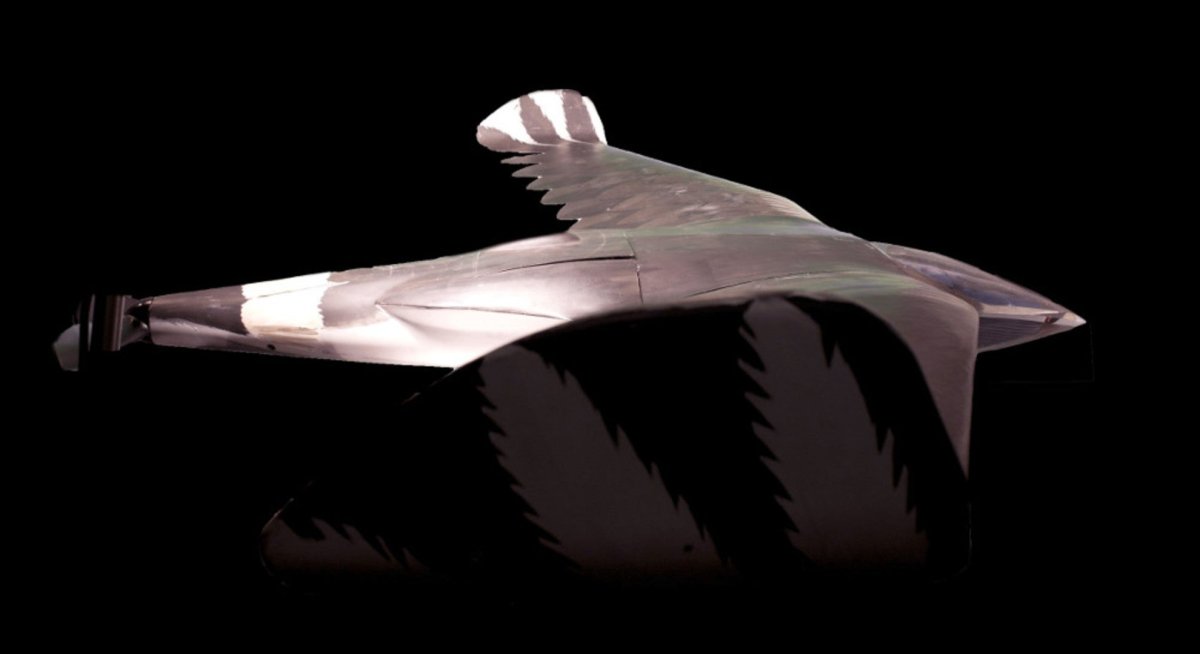
Exact specifications and design details are scarce, but what is known is that Aquiline drones were made to resemble birds and featured a single tail propeller. Initially, the prototypes were powered by chainsaw motors. In one memo in the CIA’s reading room, the Aquiline drone is referred to as a “high characteristic operating model plane with a lot of expensive gadgetry.”
Sensor systems were embedded in the aircraft’s nose, and included optical cameras and infrared sensors, and even electronic intelligence packages. The drones were intended to have also been able to drop “black box” sensor systems into hostile territory, as well, so some form of payload carrying capability must have been included in at least some of the Aquiline designs. Specifically, one of the CIA’s documents states that one of the test drones was designed to carry payloads weighing up to five pounds.
In a research and development study published in 1967, it’s stated that Aquiline’s low-altitude and low-speed capabilities would give it long loiter times, allowing for unprecedented levels of intelligence gathering for the time. “Further,” the authors wrote, “its small size and innocuous nature would make it more politically palatable in tense situations than conventional aircraft.” The CIA even planned for Aquiline to help support on-the-ground operations by providing clandestine overhead surveillance for agents conducting missions in the field.
A flight test range was established for Aquiline at Randsburg Wash at the Naval Ordnance Test Station at China Lake, California in 1967. “The facilities and facilities support are being supplied by the Navy under a task order from the Agency,” one document states about the range.
The Aquiline drones were so difficult to observe visually during testing that engineers once had to paint one of the drones bright orange so that it could be more easily seen by a chase plane during a test flight. Despite the paint, the crew of the chase plane still found it difficult to see the drone in the air.
The exact range of the Aquiline drones remains unknown, and is redacted in all of the CIA’s declassified documents.
However, one account states that Aquiline was able to fly for 130 miles while obtaining “very high resolution photography,” while another document states one of the proposed mobile control units would have a range of 1,200 miles. A dedicated satellite was planned to offer a long distance communications link for Aquiline drones, but was never launched.
There were even plans to use radioisotope propulsion systems later in the program’s development, which were claimed to be able to give the drones 50-day endurance . These types of propulsion systems are powered by the heat given off by radioactive isotopes as they decay, and have been used for decades by NASA and the DOD for space missions. The Apollo missions to the moon and the Viking and Curiosity missions to Mars all used radioisotope systems to power various systems, which have no moving parts, can last decades, and can be miniaturized to fit in a variety of vehicles and systems.
Another document declassified by the CIA states that by 1971, Aquiline drones would have an unlimited range and be able to reach “any target.”
This document is incredibly telling as it gives potential target locations, ranges with different powerplants, and payload types., CIA
That same document lists several potential targets for Aquiline, including the coasts of Cuba, the Barents Sea in the Arctic near the border of the then-Soviet Union and Norway, the Lop Nor nuclear facility in northwestern China, and Sary Shagan, a Soviet anti-missile weapons testing facility. The Aquiline program intended to have secure communications and sensor emplacement capabilities by 1969, and unlimited loiter times by 1970. While initial intelligence-gathering capabilities in 1968 would have been limited to “low altitude imagery” in addition to signals intelligence (SIGINT) and electronic intelligence (ELINT), the Aquiline program intended its drones to be capable of collecting missile telemetry reconnaissance, nuclear staging and yield intelligence, and even real-time “intelligence processing.” It’s unknown exactly what form these more advanced capabilities would have taken.
Despite these impressive planned capabilities, Aquiline drones had a major drawback: they possessed no landing gear of their own, and so they had to land by careening into nets. This caused frequent damage to the wings and propellers of the drones, creating major testing delays due to constant repairs being made. Three Aquiline prototypes were destroyed entirely from these net landings.
In a personal account hosted on RoadrunnersInternationale.com , a site which preserves “the history of the aviation pioneers and programs that developed the U-2, A-12 and YF-12 during the Cold War,” John H. Meierdierck , retired Air Force Lieutenant Colonel, offers a brief recollection of the Aquiline program as he remembered it, writing:
The vehicle was a six foot long plane that had a small pusher prop and actually looked like an Eagle or Buzzard when it was in the air. It was designed to fly at very low levels along communications lines and intercept their messages. It also had a small television in the nose as an aid to navigation and to photograph targets of opportunity. There were several successful flights and some crashes [reason unknown] and some lousy landings.
Accompanying Meierdierck’s account is a series of images depicting a small, bird-like model, and the note “The fotos [sic] shown are of the only model ever made of the ‘BIRD’. I have the model at home, on my bar.”
RoadrunnersInternationale.com
Fast forward to today, and some smaller reconnaissance drones commonly use nets for recovery. While it may have not worked out for the material and mechanical capabilities of its time, the concept was, without a doubt, ahead of its time.
Area 51: The Perfect Cage For A Secret Bird
Like a number of highly classified programs centered around intelligence-gathering aircraft, the Aquiline project was housed at Area 51, the existence of which was still largely unknown to the American public at the time. That level of security was exactly what a program as sensitive as Aquiline needed. A 1969 CIA document outlining the objectives of the project states that “An important element in the security of the vehicle’s operation is that its existence, configurations and unique operating characteristics not be known, thus, every effort is being made to avoid any publicity or knowledge of the vehicle.” To that end, all of the program’s activities were classified at the Secret level . The CIA’s Aquiline Concept of Operations document even states that the final drones, when built, would live at Area 51 in between being flown to and from mission areas along with their control units.
In the end, Aquiline was doomed like so many other ambitious military or intelligence programs due to rising costs and the difficulty in making new technologies practical for deployment. In 1971, after being estimated to take two to three more years and require $35 million more in funding, Aquiline was cancelled.
Project Aquiline phaseout documents reveal that after the program’s termination, all assets were transferred to Area 51 to “protect the Agency role in the Program and prevent unauthorized individuals from becoming aware of the existence of the AQUILINE vehicle, the covert testing site and the Agency’s overt/covert procurement and contracting methods.” Another memo laying out the disposition of the program’s assets states that all Aquiline hardware would be stored at Area 51 “semi-permanently” in one of the base’s buildings.
Individuals from the U.S. Army, Air Force, Navy, and Marine Corps were briefed on the Aquiline program upon its cancellation and offered all remaining Aquiline assets. None of the branches was interested in the Aquiline program as a whole, but “low key inquiries” were made into various subsystems and components developed for or used aboard the Aquiline drones. “Therefore, predicated on the absence of any demonstrated interest in acquiring the program intact,” one Disposition of Project Aquiline Assets memo reads, “it is believed that the AQUILINE Program assets should be made available for redistribution on a subsystem, subcomponent level, effective on or about 1 July 1972.”
The Aquiline program apparently had a little-known successor program, Axillary, another CIA effort to build a “Miniature Multi-Purpose Airborne Vehicle.” In the now-declassified document titled “The Central Intelligence Agency and Overhead Reconnaissance: The U-2 and OXCART Programs, 1954-1974,” the authors write that while the Axillary drone’s radar cross section and acoustic signatures rendered it useless as a covert recon vehicle, it could have been armed with a small warhead and repurposed as a remotely-piloted munition for targeting surface-to-air missile radar systems in North Vietnam. However, like Aquiline, it seems Axillary was cancelled before it ever saw deployment. Nevertheless, Axillary can in some ways be seen as the grandfather of modern suicide drones and loitering munitions as we know them today.
The fact that the Aquiline assets came to be stored at Area 51 would seem to confirm at least some of the longstanding rumors that the base serves as an exotic boneyard and museum of sorts, at least in a secondary role, alongside its primary mission as a development and flight test facility. One popular, but still unconfirmed, rumor states there is a facility known as “ Dyson’s Dock ,” named after test pilot Norman “Ken” Dyson, at Area 51, in an extension of Hangar 18. Supposedly, it houses some of the still classified prototypes and other experimental vehicles from the installation’s long legacy of clandestine American aerospace innovation. Bird of Prey and Tacit Blue , which were declassified years after their last flights, were rumored to have been stored there before being migrated to the National Museum of the U.S. Air Force following declassification. The facility may serve as something of a treat for distinguished visitors and those who find themselves working at the base in certain capacities. There’s arguably no better way to make the base’s massive value clear for high-ranking visitors.
It is largely understood that the desert surrounding the base is pockmarked with the unmarked “graves” of buried aircraft whose existences were too secret to leave out in the open and for which there was no room inside the facility’s hangars for long-term storage. Properly declassifying them or destroying using traditional channels was likely deemed too costly and/or too risky. As such, base personnel just buried them around the very high security facility, especially those aircraft that were involved with mishaps. It’s certainly possible that some of the Aquiline drone prototypes are among those buried within Area 51’s perimeter, or, just maybe, put on display in what would be the ultimate of all aviation museums—if it does indeed exist.
Regardless, the documents about Aquiline’s storage at Area 51 lend credence to the real possibility that the clandestine test base serves as a long-term depository of sorts for its one-time active residents.
Aside from being stored at Area 51, it could be that at least one of the Aquiline prototypes made it to the CIA’s internal museum, known as the “ best museum you’ll never see ,” in which artifacts from throughout the Agency’s history are preserved for distinguished visitors. While this would make sense, we could not determine that conclusively at this time. Aside from that possibility, as far as we can tell from the CIA’s documentation, the majority of the Aquiline drone prototypes likely lived out their lives cooped up at Area 51 surrounded by miles and miles of Nevada desert sand.
Tracing Aquiline’s Legacy
While the Aquiline drone never made it past the development and testing phase, it was nonetheless an important milestone in the history of unmanned aerial vehicle and reconnaissance aircraft development. In fact, the CIA describes Project Aquiline as a distant ancestor to modern unmanned aerial vehicles on their reading room landing page :
Based initially on the study of flight characteristics of birds, Aquiline was envisioned as a long-range vehicle that could safely and stealthily provide a window into denied areas such as the Soviet Union through photography and other capabilities, and would even support in-place agent operations. While it never became operational, the concept proved invaluable as a forerunner to today’s multi-capability UAVs.
Acquiline’s command and control and communications architecture, at its most basic organizational level, resembles that of the MQ-1 Predator . It entered operational service in 1995 and was a game-changer for the CIA, revolutionizing the Agency’s operations, especially in the post 9/11 era of the Global War on Terror. As such, its roots can be traced tangetially to Aquiline just as the CIA mentions.
Aquiline’s legacy can also be seen in many recent innovative animal-inspired UAV designs that could potentially hide in plain sight. The Defense Advanced Research Projects Agency (DARPA) has developed small, hummingbird-like winged drones small enough to fit in a human hand, for example.
Meanwhile, the Air Force Research Laboratory has experimented with a wide variety of animal- or insect-inspired micro air vehicles, including some small enough to fit on a human fingertip.
Private aerospace firms have developed similar concepts for tiny, sensor-packed UAVs that resemble birds and are incredibly difficult to spot. In 2013, a Florida-based firm was awarded a $4.5 million contract from the U.S. Army’s now-defunct Rapid Equipping Force to produce 36 bird-like drones with flexible wings for “ an urgent, but undisclosed, need. ” Global defense contractor Expal Systems sells its realistic-looking SHEPHERD-MIL autonomous bird drone to customers worldwide.
Start-ups have also popped up exclusively devoted to developing bird drones , such as the aptly-named Bird Drone Company in the Netherlands. The Bird Drone Company designed their falcon-like UAVs with animal control in mind, although the firm notes that its other models are ideal for “covert surveillance, reconnaissance, and other types of monitoring.”
America’s adversaries have pursued similar biomimicry designs for micro UAVs intended for surveillance. China has developed tiny UAVs that look just like doves in flight, even as far as having robotic flapping wings. Meanwhile, Russia has shown off prototype surveillance drones that mimic the appearance of owls . It’s unknown if any of these drone designs ever made it to operational status. After all, if you at least think your adversaries have stealthy, bird-shaped drones in deployment, then it could make you wonder about every bird you see overhead in the field.
In 2011, a bird-shaped drone crashed in southwest Pakistan , and was later reported to be similar to a separate bird drone which turned up in Iraq in 2009. The operators of those bird drones were never identified.
A downed bird-shaped drone found in Pakistan in 2011, Kalam TV
Bird drones have also been deployed in Somalia, as shown in 2016 when a crashed dual-propeller bird drone was found in Mogadishu . Like in Iraq and Pakistan, it remains unknown who was operating it.
A bird drone found crashed in Mogadishu in 2016, Sawirro
The U.S. Navy is currently pursuing a wide range of “bio-inspired” autonomous vehicles, including some that are planned to transition between air and water and others that resemble marine life to conduct essentially similar types of surveillance Aquiline was planned for using innocuous designs that could go unnoticed – except underwater in this case. Given the wide range of animal-inspired designs the DOD has openly researched, there’s no telling what could be deployed in the classified realm.
While ambitious bird-inspired drone designs like Aquiline have long been pursued by militaries and intelligence agencies worldwide, we’ve yet to see evidence that any of them have been deployed operationally in a major capacity. However, given the capabilities of modern UAV technologies, the basic concept behind Aquiline is certainly within reach, especially for tactical applications. But there are other ways of conducting penetrating intelligence, surveillance, and reconnaissance (ISR) duties on a higher end level using larger, more traditional and capable UAV designs . Still, in a new era of menacing loitering munitions and the constant threat of low-end drone surveillance on the battlefield, masquerading as a bird may have more importance than ever.
Nevertheless, the influence that the Aquiline program has had on small, low-observable surveillance drones is clear to see. Given that all four branches of the Armed Forces were interested in at least some of the subsystems involved with Aquiline, it’s possible that some of the drone’s components or concepts made their way into UAV designs that could still be classified to this day. In addition, distributed surveillance and swarming capabilities could also make such a concept more relevant than it had been in decades past and more technologically achievable.
In an age when visual stealth is becoming somewhat more important than it has been for some time, surveillance systems like penetrating UAVs don’t have to disappear completely to reduce their visual signatures, but instead can simply mimic something common and innocuous like a bird in flight or even something far stranger to mask their true nature. This is especially relevant for countries that cannot acquire or develop advanced stealth technologies.
A CIA image depicting Aquiline in flight., CIA
In the end, it seems that Aquiline failed simply because it was too ahead of its technological time. The program also serves as another reminder that Area 51 is built not just for keeping hardware secret, but also for radical designs like the bird-shaped drones to have a safe place to fail in testing outside of the scrutiny of extreme oversight found in the unclassified realm.
If the rumors are to be believed, there’s a chance an example or two of Aquiline still exists among the other strange birds caged up in the darkness at Area 51.
Author’s note: Tyler Rogoway contributed to this report.
Contact the author: Brett@TheDrive.com
Comments couldn’t be loaded. Please refresh the page.
更新于美国东部时间2021年6月28日下午6:42
中情局的“鹰隼计划”(Project Aquiline)旨在研发一种外形酷似飞行中的鸟类的小型隐形无人机,该计划最终被取消后,相关文件被封存在51区。如同许多其他不为人知的航空航天项目一样,“鹰隼计划”的无人机很可能至今仍存放在内华达州这个秘密基地的某个仓库里,积满灰尘,甚至可能已被埋入地下。
根据中央情报局的文件记录,Aquiline无人机旨在“具备多传感器收集和先进部署能力,用于情报收集”,并“实现几乎完全隐蔽地渗透”敌方领空。Aquiline的设计者试图模仿鸟类的特征,使其尽可能难以被发现,这一特点在一些无人机原型机上清晰可见。虽然该项目在投入使用前就被终止,但中央情报局公布的Aquiline文件显示,项目结束后,所有Aquiline资产都被“半永久性地”存放在51区。此后这些资产的下落不明。
美国中央情报局在其在线阅览室网站上提供了与“鹰眼”计划相关的全部解密文件。
CIA/公共领域/国际公路跑者公司
冷战期间,中央情报局急需一种能够深入敌方领空执行任务的无人侦察机。U-2侦察机在导弹防御系统中显得过于脆弱,尤其是在苏联击落飞行员加里·鲍尔斯驾驶的一架U-2之后,这标志着美国在冷战对手领空进行载人侦察的时代终结。虽然A-12“牛车”和SR-71项目在“鹰隼”项目启动时也正在进行,但“鹰隼”的设计目标是提供截然不同的能力:在完全不被察觉的情况下进行高空渗透侦察。
当时侦察卫星的使用日益普及,但早期设计的性能有限,更何况卫星发射所需的资源和准备时间远超小型无人机系统的部署。最重要的是,敌方能够预知间谍卫星何时出现在头顶,而侦察卫星只能捕捉到瞬间的影像。因此,在整个20世纪60年代,美国国防部始终致力于研发更加灵活的方案,这些方案能够快速部署,出其不意,并在敌方毫无察觉的情况下持续进行侦察。
值得注意的是,到了20世纪80年代初,诺斯罗普公司的“静默蓝”(Tacit Blue)验证机最终证明,利用隐身技术以及低截获概率的数据链和雷达,可以实现穿透性强、持久性高且生存能力强的空中侦察。即便如此,利用隐身技术实现这一目标的理念可以追溯到二十年前,当时的“静鸟”(Quiet Bird)概念就已远超时代。无论如何,“静默蓝”计划最终秘密地改变了在敌方控制环境下进行空中侦察的现实。如今,RQ-170“哨兵”(Sentinel)侦察机在作战层面承担着这一角色,而其他一些隐蔽性更强、战略导向性更高的侦察设备也发挥着类似的作用。
“静鸟”(Quiet Bird)是波音公司在20世纪60年代初提出的战场侦察机隐形概念。它从未试飞,但其设计理念却远远超前于时代。
时间回到1965年——为了满足在敌方禁飞区进行情报搜集时对一种具有穿透力且隐蔽性强的飞行器的需求,中央情报局特别行动办公室(OSA)开始与研究与发展办公室的应用物理部门合作,研发一款代号为“鹰隼”(Aquiline)的无人机。“鹰隼”一词源于拉丁语,意为“鹰”,其目标是研发一种外形酷似鸟类、雷达、声学、红外和视觉特征都极低的隐形小型无人机。尽管“鹰隼”计划如同当时许多其他雄心勃勃的航空航天项目一样,最终过早终止,但它对未来的侦察无人机设计产生了深远的影响。
1969年,中央情报局与麦克唐纳·道格拉斯宇航公司(MDAC)签订合同,开始研发“鹰隼”(Aquiline)无人机项目所需的技术。次年,人员被派往51区展开飞行测试,测试原计划于1971年初合同到期时结束。当时人们认为,到那时,一架可用的“鹰隼”无人机应该已经研制成功,该项目也将正式投入运行。
阿奎林无人机原计划于1971年初以“有限能力”投入使用,这意味着当时部分计划功能尚未准备就绪。全面功能计划于1972年7月1日完成,包括全范围机载通信中继。预计在此阶段,无人机每月可执行一次任务。
确切的规格和设计细节鲜为人知,但已知的是,鹰隼无人机外形酷似鸟类,并配备单尾螺旋桨。最初,原型机由链锯发动机驱动。在中央情报局阅览室的一份备忘录中,鹰隼无人机被描述为“一款功能强大的操作模型飞机,配备许多昂贵的装置”。
传感器系统嵌入飞机机头,包括光学摄像头、红外传感器,甚至还有电子情报组件。这些无人机还计划将“黑匣子”传感器系统投放到敌方领土,因此至少部分“鹰隼”无人机设计中必然包含某种形式的有效载荷携带能力。具体而言,中央情报局的一份文件指出,其中一架测试无人机被设计用于携带重达五磅的有效载荷。
1967年发表的一份研发报告指出,Aquiline飞机的低空低速飞行能力使其能够长时间滞空,从而实现当时前所未有的情报收集能力。报告作者写道:“此外,其小巧的体积和隐蔽性使其在紧张局势下比传统飞机更易于被政治接受。” 中央情报局甚至计划让Aquiline飞机为地面行动提供支持,为执行任务的特工提供秘密空中监视。
1967 年,在加利福尼亚州中国湖海军军械试验站的兰兹堡沃什建立了一个阿奎林飞行试验场。“该试验场的设施和设施支持由海军根据该机构的任务订单提供,”一份文件如此描述该试验场。
在测试过程中,Aquiline无人机的目视识别难度极大,以至于工程师们不得不将其中一架无人机涂成亮橙色,以便护航飞机在试飞时更容易发现它。即便如此,护航飞机的机组人员仍然难以在空中看到这架无人机。
阿奎林无人机的确切射程仍然未知,并且在中央情报局所有解密文件中都被涂黑。
然而,一份资料显示,Aquiline无人机能够飞行130英里并拍摄“极高分辨率照片”,而另一份文件则指出,其中一个拟建的移动控制单元的有效范围可达1200英里。曾计划发射一颗专用卫星为Aquiline无人机提供远程通信链路,但该卫星最终未能发射。
该项目后期甚至计划使用放射性同位素推进系统,据称该系统能够使无人机续航50天。这类推进系统利用放射性同位素衰变产生的热量提供动力,美国国家航空航天局(NASA)和国防部(DOD)已将其用于太空任务数十年。阿波罗登月任务以及维京号和好奇号火星探测任务都使用了放射性同位素系统为各种系统提供动力。这些系统没有移动部件,可以持续运行数十年,并且可以小型化以适应各种飞行器和系统。
中央情报局解密的另一份文件指出,到 1971 年,阿奎林无人机将拥有无限的航程,能够到达“任何目标”。
这份文件极具启发性,因为它列出了潜在目标位置、不同动力装置的射程以及有效载荷类型。——中央情报局
同一份文件列出了“鹰隼”无人机的几个潜在目标,包括古巴海岸、位于当时苏联和挪威边境附近的北极巴伦支海、中国西北部的罗布泊核设施以及苏联反导武器试验场萨雷沙甘。 “鹰隼”计划的目标是在1969年实现安全的通信和传感器部署能力,并在1970年实现无限的滞空时间。虽然1968年的初始情报收集能力仅限于“低空成像”以及信号情报(SIGINT)和电子情报(ELINT),但“鹰隼”计划的目标是使其无人机能够收集导弹遥测侦察、核武器部署和当量情报,甚至进行实时“情报处理”。目前尚不清楚这些更先进的能力究竟会以何种形式呈现。
尽管阿奎林无人机拥有令人印象深刻的预定性能,但它存在一个重大缺陷:没有起落架,只能依靠撞击网具着陆。这导致无人机的机翼和螺旋桨频繁受损,需要不断维修,从而造成测试进度严重延误。三架阿奎林原型机就因撞击网具而彻底损毁。
在 RoadrunnersInternationale.com 网站上,退役空军中校约翰·H·迈尔迪尔克(John H. Meierdierck)发表了一篇个人文章,该网站保存着“冷战时期开发 U-2、A-12 和 YF-12 等飞机的航空先驱和项目的历史”。他在文章中简要回忆了自己记忆中的“鹰隼”计划,写道:
这架飞行器是一架六英尺长的飞机,配有小型推进式螺旋桨,飞行时外形酷似老鹰或秃鹰。它的设计目的是沿着通信线路超低空飞行,截获通信信息。机头还装有一台小型电视机,用于辅助导航和拍摄目标。该飞行器曾成功飞行数次,也发生过几次坠毁事故(原因不明)和一些糟糕的着陆。
迈尔迪尔克的描述附带一系列图片,图片上是一个小型的、类似鸟的模型,并附有说明:“所示照片是迄今为止制作的唯一一个‘鸟’模型。我把这个模型放在家里的吧台上。”
RoadrunnersInternationale.com
时至今日,一些小型侦察无人机已普遍使用网具进行回收。虽然受限于当时的材料和机械技术,这种方法可能并不成功,但毫无疑问,这一理念是超前的。
51区:秘密鸟类的完美笼子
与许多以情报收集飞机为中心的高度机密项目一样,“鹰隼”(Aquiline)项目也设在51区,当时美国公众对其存在几乎一无所知。这种级别的安全正是“鹰隼”这样敏感项目所需要的。一份1969年中央情报局的文件概述了该项目的目标,其中指出:“确保飞行器安全运行的一个重要因素是,其存在、配置和独特的运行特性不得为人所知,因此,我们正在尽一切努力避免任何关于该飞行器的公开或知晓。”为此,该项目的所有活动都被列为“秘密”级别。中央情报局的“鹰隼”行动概念文件甚至指出,最终的无人机建成后,将在往返任务区域的间隙,连同其控制单元一起驻扎在51区。
最终,由于成本不断攀升以及新技术难以实际部署,阿奎林计划和其他许多雄心勃勃的军事或情报项目一样,难逃失败的命运。1971年,在预计还需要两到三年时间和3500万美元的额外资金后,阿奎林计划被取消。
“鹰眼计划”的终止文件显示,该计划结束后,所有资产都被转移到51区,以“保护机构在该计划中的角色,并防止未经授权的人员知晓‘鹰眼’飞行器、秘密测试地点以及机构公开/秘密的采购和合同签订方式”。另一份概述该计划资产处置方案的备忘录指出,所有“鹰眼”硬件都将“半永久性地”存放在51区基地的一栋建筑物内。
美国陆军、空军、海军和海军陆战队的相关人员在“鹰隼”计划取消后听取了简报,并被告知所有剩余的“鹰隼”资产。各军种均未对整个“鹰隼”计划感兴趣,但对为“鹰隼”无人机开发或使用的多个子系统和组件进行了“低调的询问”。一份《“鹰隼”项目资产处置》备忘录写道:“因此,鉴于没有任何人表现出对完整收购该计划的兴趣,我们认为‘鹰隼’计划的资产应于1972年7月1日左右以子系统和子组件的形式重新分配。”
“鹰隼”(Aquiline)计划显然有一个鲜为人知的后续计划——“辅助”(Axillary),这是中央情报局(CIA)为研制“微型多用途空中飞行器”而进行的另一项尝试。在现已解密的题为《中央情报局与空中侦察:U-2和OXCART计划,1954-1974》的文件中,作者写道,尽管“辅助”无人机的雷达反射截面和声学特征使其无法用作隐蔽侦察飞行器,但它本可以配备小型弹头,并被改装成遥控弹药,用于打击北越的地对空导弹雷达系统。然而,与“鹰隼”计划一样,“辅助”计划似乎在部署之前就被取消了。尽管如此,“辅助”计划在某种程度上可以被视为现代自杀式无人机和巡飞弹的鼻祖。
“鹰隼”计划的资产最终被存放于51区,这似乎至少证实了长期以来的一些传言:该基地除了作为研发和飞行测试基地这一主要任务外,还兼具某种“异域飞机坟场”和博物馆的功能。一个广为流传但尚未得到证实的传言称,在51区18号机库的延伸部分,有一个名为“戴森船坞”的设施,以试飞员诺曼·“肯”·戴森的名字命名。据说,这里存放着一些仍处于保密状态的原型机和其他实验飞行器,它们见证了该基地悠久的美国秘密航空航天创新历史。“猛禽”和“静默蓝”两架飞机在最后一次飞行多年后才被解密,据说它们在解密后被转移到美国空军国家博物馆之前,就曾被存放于此。对于尊贵的访客以及在基地从事特定工作的人员来说,这个设施或许会成为一种特殊的“福利”。对于高级访客来说,这或许是展现该基地巨大价值的最佳方式。
人们普遍认为,基地周围的沙漠遍布着许多未标记的“坟墓”,埋葬着那些高度机密、无法公之于众的飞机,而基地机库也没有足够的空间长期存放它们。通过传统渠道进行妥善解密或销毁,很可能被认为成本过高或风险过大。因此,基地人员便将它们埋葬在高度戒备的基地周围,尤其是那些发生过事故的飞机。当然,一些“鹰隼”(Aquiline)无人机原型机很可能就埋在51区内,或者,如果真有这样一个终极航空博物馆,它们或许会被展出。
无论如何,有关阿奎林在 51 区存放的文件证实了这样一种可能性:这个秘密试验基地很可能是曾经活跃的居民的长期存放地。
除了存放在51区之外,至少有一架“鹰隼”无人机原型机可能被送进了中央情报局的内部博物馆——这座博物馆素有“你永远看不到的最佳博物馆”之称,专门收藏中情局历史上的文物,供尊贵的参观者参观。虽然这种可能性不大,但我们目前还无法确凿地证实这一点。除此之外,根据我们从中央情报局的档案资料中了解到的情况,大多数“鹰隼”无人机原型机很可能终其一生都被封存在51区,周围是绵延数英里的内华达沙漠。
追溯阿奎琳的遗产
尽管“鹰隼”无人机最终未能超越研发和测试阶段,但它仍然是无人机和侦察机发展史上的一个重要里程碑。事实上,美国中央情报局在其阅览室首页上将“鹰隼”项目描述为现代无人机的远古先驱:
“鹰隼”(Aquiline)无人机最初基于对鸟类飞行特性的研究,被设想为一种远程飞行器,能够安全隐蔽地通过摄影和其他功能,为苏联等禁区提供信息窗口,甚至可以支持就地特工行动。虽然它最终未能投入使用,但其概念被证明是当今多功能无人机的先驱,具有不可估量的价值。
从最基本的组织层面来看,阿奎林(Acquiline)的指挥控制和通信架构与MQ-1“捕食者”无人机类似。MQ-1于1995年投入使用,对中央情报局(CIA)而言意义重大,彻底改变了该机构的行动方式,尤其是在9·11事件后的全球反恐战争时期。因此,正如中央情报局所言,阿奎林的起源可以追溯到其间接的起源。
阿奎林的理念也体现在许多近期创新的、以动物为灵感的无人机设计中,这些设计有可能在人们的视线范围内隐蔽飞行。例如,美国国防高级研究计划局(DARPA)就开发出了小型、类似蜂鸟的带翼无人机,其体积小到可以握在手中。
与此同时,美国空军研究实验室已经试验了各种各样的仿生动物或昆虫的微型飞行器,其中一些小到可以放在人的指尖上。
私营航空航天公司也开发了类似的微型无人机概念,这些无人机体积小巧、配备大量传感器,外形酷似鸟类,极难被发现。2013年,一家位于佛罗里达州的公司从美国陆军现已解散的快速装备部队获得了一份价值450万美元的合同,为“一项紧急但未公开的需求”生产36架带有柔性机翼的鸟形无人机。全球国防承包商Expal Systems公司向世界各地的客户销售其外观逼真的SHEPHERD-MIL自主鸟形无人机。
一些初创公司也应运而生,专门致力于开发鸟类无人机,例如荷兰那家名副其实的“鸟类无人机公司”(Bird Drone Company)。这家公司设计的猎鹰状无人机最初是为动物控制而设计的,不过该公司也指出,其其他型号的无人机非常适合“秘密监视、侦察和其他类型的监控”。
美国的对手也曾致力于研发类似的仿生微型无人机,用于侦察。中国已经开发出外形酷似鸽子的小型无人机,甚至连翅膀的扑动都与鸽子如出一辙。与此同时,俄罗斯也展示了模仿猫头鹰外形的侦察无人机原型。目前尚不清楚这些无人机设计是否最终投入使用。毕竟,如果你认为你的对手已经部署了隐形的、鸟形无人机,那么你或许会对你在田野上空看到的每一只鸟都产生怀疑。
2011年,一架鸟形无人机在巴基斯坦西南部坠毁,后来有报道称,它与2009年在伊拉克出现的另一架鸟形无人机相似。这两架鸟形无人机的操控者从未被确认身份。
2011年,巴基斯坦发现一架坠毁的鸟形无人机,卡拉姆电视台报道
索马里也部署了鸟形无人机,例如2016年在摩加迪沙发现的一架坠毁的双螺旋桨鸟形无人机。与伊拉克和巴基斯坦的情况类似,目前尚不清楚是谁在操控这架无人机。
2016年,一架鸟形无人机在摩加迪沙坠毁,萨维罗
美国海军目前正在研发一系列“仿生”自主航行器,其中包括一些计划在空中和水下之间转换的航行器,以及一些外形酷似海洋生物的航行器,它们将执行与Aquiline计划类似的监视任务。Aquiline的设计初衷是采用不易察觉的隐蔽设计,使其在水下也能被轻易发现。鉴于美国国防部已公开研究了多种仿生动物设计,我们无法预知哪些设计最终会被部署到机密领域。
尽管像“鹰隼”(Aquiline)这样雄心勃勃的仿鸟无人机设计早已受到世界各国军队和情报机构的青睐,但我们尚未看到任何此类无人机被大规模部署到作战行动中的证据。然而,鉴于现代无人机技术的能力,“鹰隼”背后的基本概念无疑是可以实现的,尤其是在战术应用方面。但使用更大、更传统、更强大的无人机设计,也可以在更高水平上执行渗透性情报、监视和侦察(ISR)任务。尽管如此,在巡飞弹威胁日益严峻、低端无人机在战场上持续监视的时代,“伪装成鸟类”或许比以往任何时候都更加重要。
然而,Aquiline计划对小型、低可探测性监视无人机的影响显而易见。鉴于美国武装部队所有四个军种都对Aquiline计划的某些子系统感兴趣,该无人机的某些组件或概念很可能已被应用到至今仍属机密的无人机设计中。此外,分布式监视和集群作战能力也可能使这种概念比几十年前更具现实意义,也更容易在技术上实现。
在视觉隐身技术变得比以往任何时候都更加重要的今天,像穿透式无人机这样的监视系统无需完全消失即可降低视觉特征,而是可以简单地模仿一些常见且无害的事物,例如飞行中的鸟类,甚至是更奇特的物体,以此来掩盖其真实身份。这对于那些无法获得或研发先进隐身技术的国家来说尤为重要。
一张中央情报局拍摄的鹰隼飞行照片。
最终,Aquiline计划的失败似乎仅仅是因为它的技术过于超前。该计划也再次提醒我们,51区不仅是为了保密硬件而建,也是为了让像鸟形无人机这样具有颠覆性的设计能够在不受非保密领域严密监管的严格审查下进行安全测试。
如果传言属实,那么在 51 区黑暗笼子里关着的其他奇异鸟类中,或许还存在一两只鹰隼。
作者注:Tyler Rogoway 对本报道亦有贡献。
联系作者:Brett@TheDrive.com
评论加载失败,请刷新页面。