Cruise missiles are the present and future of warfare巡航导弹是战争的现在和未来。
Opinion: One need not wonder why the U.S., Russia and now China have invested so much in submarine-launched cruise missiles.
There are two competing narratives about the future of warfare. For nearly the past two years, drones and artillery have been hailed as the way forward. The June 2025 Iran-Israel war revived the view that stealth warplanes are the future.
These are two fundamentally different views, however, neither truly unseats the consistently outperforming and cost effective cruise missile.
In the winter of February 2022, the Russian invasion of Ukraine was stopped by artillery, heavy infantry weapons, most notably MANPADs and Javelin missiles, and Russian incompetence. As the war dragged on and expensive weapons became scarce, remote controlled aircraft hobbyists developed weaponized drones.
While pioneered by ISIS in the 2010s, these hobbyists developed a variety of formidable single-use and multi-use attack drones. By 2025, drones have dominated land and naval warfare in the conflict, inflicting the majority of casualties. Drones were even used far from the borders of Ukraine to strike Russia’s prized strategic bomber fleet. Traditional weapons systems were relics of the past, drones appeared to be the future.
Israel’s air campaign ran counter to this narrative. Quick precision strikes early in the conflict combined with stealth F-35 fighter jets enabled Israel to effectively fly unopposed over Iran. Israeli special operations forces appeared unchecked by Iranian forces. Night and day, Israel hit Iranian military targets, crippling Iran’s ability to wage war. Israel and its partners used advanced missile defenses and air strikes to offset Iran’s formidable ballistic missiles. The conflict quickly ended after American B-2 stealth bombers damaged key Iranian nuclear weapons sites.
Neither of the competing narratives fully captures the future of warfare.
One capability has been key in almost every conflict since 1990, the low-altitude cruise missile and, by extension, the low-altitude strike drone.
Most U.S. conflicts have begun with low altitude cruise missile strikes, most notably with the famed Tomahawk missile. While expensive, these missiles cripple air defenses, command and control, and other critical targets which enable any other means of further attacks. Their high rate of successfully neutralizing these valuable targets more than offsets the costs of the missiles themselves.
By flying low, these precision munitions are survivable by avoiding detection by enemy radar and attack from air defenses which typically requires line-of-sight to the target. The vastness of most countries limits any cost-effective air defenses as tens of thousands of air defense systems would be required to protect even modest sized countries. This survivability by geography combined with the long ranges of these missiles enables their significantly greater survivability and success than virtually any alternative.
Beyond the U.S., the U.K., France and Russia have successfully employed cruise missiles early in conflicts to enable future operations.
Given the expense of cruise missiles, lower cost but slower alternatives have filled a similar role. The Israeli Harpy, Iranian Shahed and Ukrainian FP-1 are effectively slow cruise missiles that utilize propellers in lieu of turbofans. While often referred to as one-way attack or strike drones, these are fundamentally no different than their faster cruise missile counterparts.
As seen in the Iran-Israeli, Russo-Ukrainian, and Azerbaijan-Armenian conflicts, low-altitude strike drones have severely damaged military targets and critical infrastructure with devastating results.
Low-altitude cruise missiles and strikes drones now have a 35-year history of destroyed air defenses, shattered command and control, obliterated munition storages and ruined infrastructure such as power facilities and oil refineries.
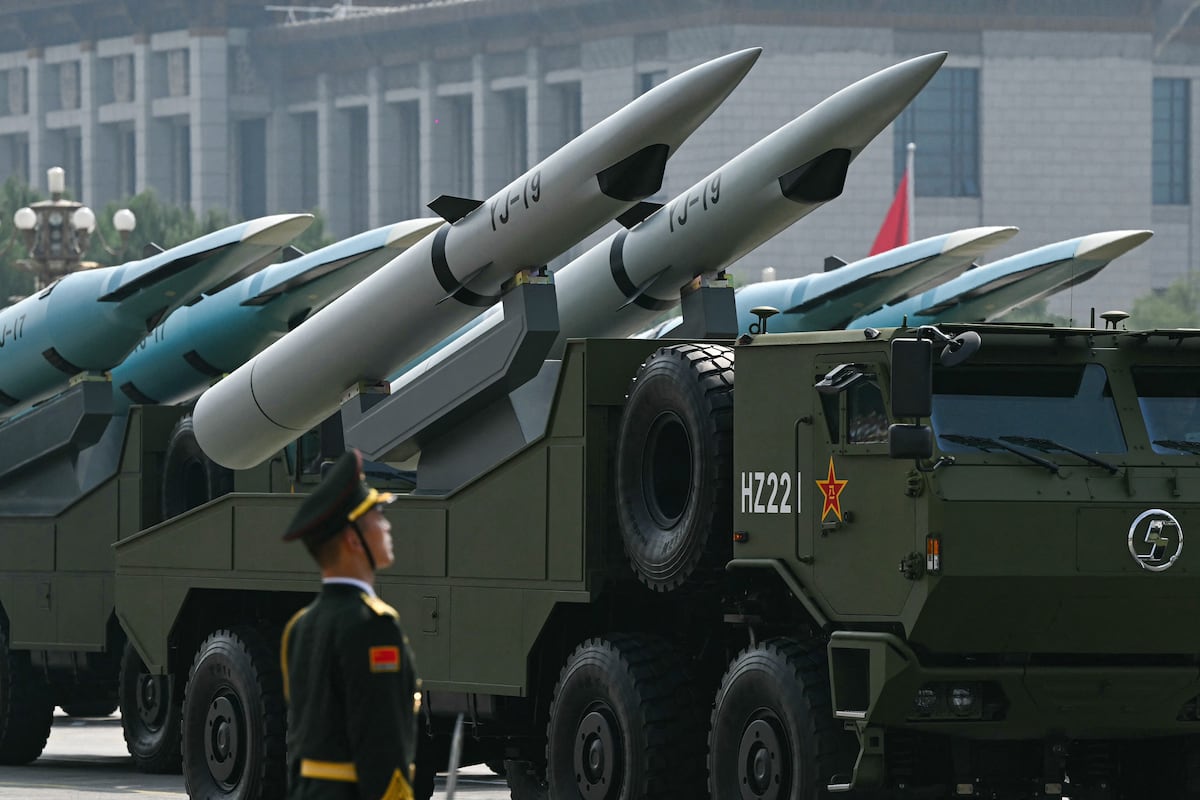
Even the best defenses have been incapable of stopping this threat. The larger the country, the less defensible. Geography and physics are on the side of these weapons. One need not wonder why the U.S., Russia and now China have invested so much in submarine-launched cruise missiles; the added element of surprise provided by submarines makes cruise missiles and similar weapons the ultimate conventional deterrent.
The commencement of strikes early in a conflict enables the employing country the opportunity to operate as it sees fit, with traditional ground invasion, drone combat, air campaign, or no further military action. Given the rapidly reducing costs and lower barriers to acquire and produce cruise missiles, these advantages will only grow in importance moving forward.
Regardless of what develops as the future of warfare, low-altitude cruise missiles and strike drones will always be the opening salvo. Russia demonstrating the ability to cripple the Ukrainian power grid and Ukraine’s ability to ravage Russian oil production are only glimpses of what should be expected in future conflicts.
The combination of high survivability, success, and cost effectiveness will result in cruise missiles and their strike drone counterparts continuing to be the go-to first strike option for the U.S. and other major military powers.
Michael Bohnert is an engineer at RAND who focuses on defense industrial bases and acquisition of naval, air, unmanned, and air defense systems.
关于未来战争的走向,存在两种相互竞争的观点。近两年来,无人机和火炮一直被誉为未来的发展方向。而2025年6月爆发的两以战争则再次引发了人们对隐形战机才是未来发展方向的讨论。
这两种观点本质上截然不同,但它们都无法真正撼动性能始终优异且成本效益高的巡航导弹的地位。
2022年2月,俄罗斯入侵乌克兰的行动被乌克兰军队的炮火、重型步兵武器(尤其是便携式防空导弹和标枪导弹)以及俄罗斯自身的无能所阻止。随着战争的持续和昂贵武器的短缺,遥控飞机爱好者开始研发武装无人机。
虽然无人机技术最初由ISIS在2010年代率先发展,但这些业余爱好者已经研发出各种威力强大的单用途和多用途攻击无人机。到2025年,无人机在冲突中的陆地和海上战争中占据主导地位,造成了绝大多数伤亡。无人机甚至被用于远离乌克兰边境的地区,打击俄罗斯引以为傲的战略轰炸机群。传统武器系统已成为历史的遗物,而无人机似乎代表着未来。
以色列的空袭行动与这种说法截然相反。冲突初期,以色列凭借快速精准的打击以及F-35隐形战斗机,得以在伊朗上空畅通无阻地飞行。以色列特种部队似乎也未受到伊朗军队的阻挠。以色列日夜不停地打击伊朗军事目标,严重削弱了伊朗的战争能力。以色列及其盟友利用先进的导弹防御系统和空袭来抵消伊朗强大的弹道导弹。在美国B-2隐形轰炸机摧毁伊朗关键核武器设施后,冲突迅速结束。
这两种相互竞争的叙事都未能完全描绘出战争的未来。
自 1990 年以来,低空巡航导弹以及由此衍生的低空攻击无人机,在几乎每一场冲突中都发挥了关键作用。
美国发动的大多数冲突都始于低空巡航导弹袭击,其中最著名的当属战斧导弹。虽然造价昂贵,但这些导弹能够瘫痪防空系统、指挥控制系统以及其他关键目标,从而阻止后续任何攻击手段的实施。它们极高的摧毁率足以弥补导弹本身的成本。
这些精确制导武器通过低空飞行,可以躲避敌方雷达探测和防空系统的攻击,从而确保自身生存。通常情况下,防空系统需要与目标保持视线接触才能进行攻击。大多数国家幅员辽阔,难以部署经济有效的防空系统,即使是面积不大的国家也需要数万套防空系统才能有效防御。这种地理优势带来的生存能力,再加上导弹的远射程,使得这些武器的生存能力和命中率远超几乎所有其他替代方案。
除了美国之外,英国、法国和俄罗斯也已在冲突初期成功使用巡航导弹,为未来的作战行动奠定了基础。
鉴于巡航导弹的高昂成本,一些成本更低但速度较慢的替代方案发挥了类似的作用。以色列的“哈比”(Harpy)、伊朗的“沙赫德”(Shahed)和乌克兰的FP-1实际上都是速度较慢的巡航导弹,它们使用螺旋桨而非涡扇发动机。虽然它们常被称作单向攻击无人机或打击无人机,但本质上与速度更快的巡航导弹并无二致。
从伊朗-以色列、俄罗斯-乌克兰和阿塞拜疆-亚美尼亚冲突中可以看出,低空攻击无人机严重破坏了军事目标和关键基础设施,造成了毁灭性后果。
低空巡航导弹和攻击无人机已有 35 年的历史,它们摧毁了防空系统,破坏了指挥控制系统,摧毁了弹药库,并摧毁了电力设施和炼油厂等基础设施。
即使是最好的防御措施也无法阻止这种威胁。国家越大,防御能力就越弱。地理和物理条件都对这些武器有利。不难理解为什么美国、俄罗斯以及现在的中国都在潜射巡航导弹上投入巨资;潜艇提供的突袭优势使得巡航导弹和类似武器成为终极常规威慑力量。
在冲突初期发动打击,使发动国能够根据自身需要采取各种行动,包括传统的地面入侵、无人机作战、空中战役,或者干脆不采取进一步的军事行动。鉴于巡航导弹的获取和生产成本迅速降低,门槛也越来越低,这些优势的重要性只会与日俱增。
无论未来战争发展如何,低空巡航导弹和攻击型无人机始终是战争的开端。俄罗斯展现了瘫痪乌克兰电网的能力,而乌克兰也展现了破坏俄罗斯石油生产的能力,这仅仅是未来冲突中可能发生的情况的冰山一角。
巡航导弹及其打击无人机版本兼具高生存性、高成功率和成本效益,将继续成为美国和其他主要军事强国首选的先发制人打击手段。
Michael Bohnert 是兰德公司的一名工程师,主要研究国防工业基地以及海军、空军、无人系统和防空系统的采购。