German arms makers lukewarm on government stakeholder push德国军火制造商对政府利益相关者的推动反应冷淡
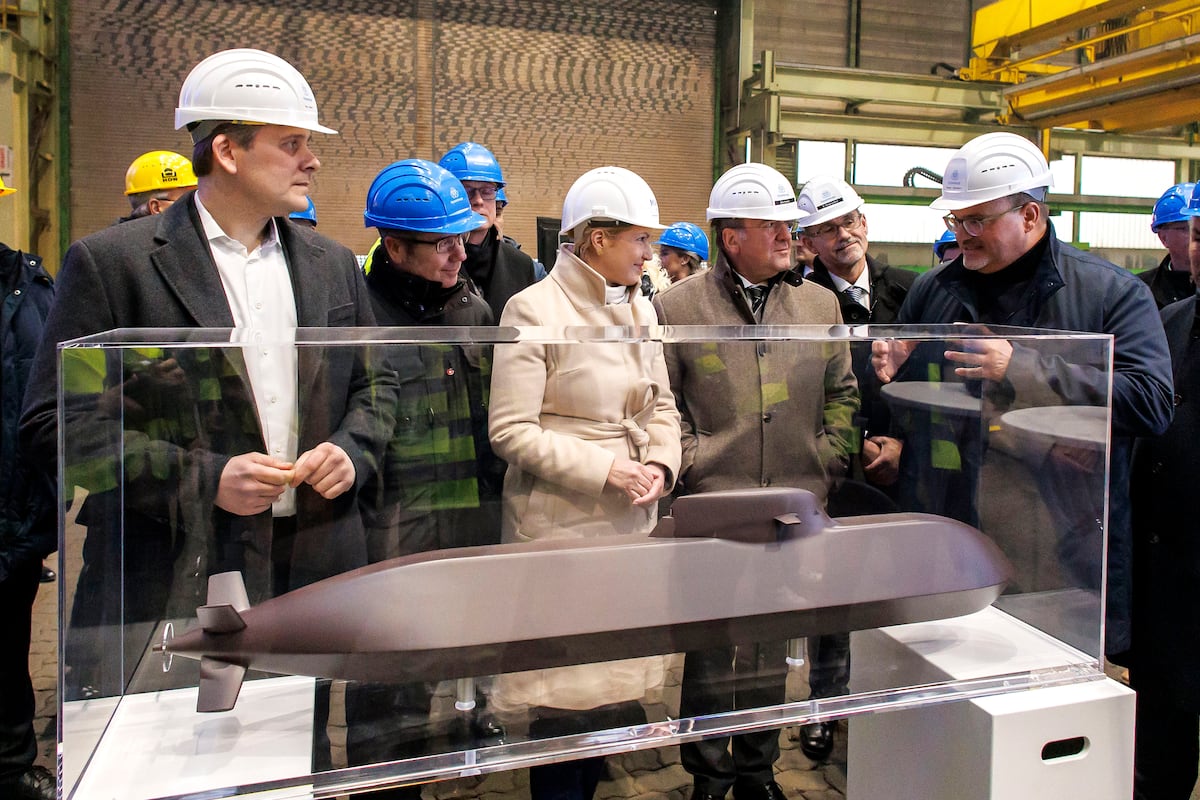
German-French tank maker KNDS and shipbuilder ThyssenKrupp Marine Systems are in the crosshairs for such action.
BERLIN — Representatives of Germany’s defense enterprises have responded cautiously to a proposal for the government to become a shareholder in key companies.
German Defense Minister Borius Pistorius pushed ahead with the idea that the state might play a more active role by becoming a significant stakeholder in key military industries during an interview with the business newspaper Handelsblatt at the start of this week. He indicated the proposal had the support of other Cabinet members, notably of the finance minister.
“I am firmly convinced that we need state participation,” said Pistorius, “also to ensure that expertise and jobs remain in Germany.”
German-French tank maker KNDS and shipbuilder ThyssenKrupp Marine Systems are in the crosshairs for such action, Pistorius revealed.
KNDS, which produces the Leopard and Leclerc tanks among other armored vehicles, is planning to go public as soon as next year. At present, the French state holds half of all shares; the contemplated German government investment would aim to balance out French influence in the crucial company.
Hans Christoph Atzpodien, chairman of the defense contractor lobbying association BDSV, said he welcomed the federal government’s intention to secure domestic skills and jobs in strategic technology areas by way of state investments.
But he defended the industry’s free-market philosophy, arguing that heavy-handed government interference could scare away investors. Such a scenario, he said, could leave both companies and the government as the largest customer of defense goods in a worse spot, potentially unable to deliver the surge of military gear required for the country’s rearmament.
It was thanks to private investment, not state actions, he suggested, that the German defense industry was able to ramp up production on short notice in recent years.
There is precedent for the German government to buy shares in private military enterprises for geopolitical reasons.
Berlin acquired a blocking minority stake of 25.1% in the German sensor specialist Hensoldt in 2021, aimed at countering and balancing Italy’s leverage in the company, which it had gained through its own involvement with Leonardo. And the German state holds 11% of all shares of aerospace giant Airbus, although under an agreement from 2012, major governmental shareholders renege on their right to corresponding seats on the board of directors.
In a written statement published on Monday, Atzpodien also countered the defense minister’s concerns that arms makers may be poised to charge astronomical prices due to the sudden influx of cash. Pistorius had called it a “gold rush mentality” and warned of a possible looming “armaments price inflation.”
According to Atzpodien, government rules and the fact that “there is a high degree of responsibility within the industry itself” would combine to avoid price gouging.
Other European governments maintain stakes in their local defense companies: most prominently France with shares in Dassault Aviation, Naval Group, Thales, KNDS and others; Italy in Leonardo; Spain in Indra Sistemas; Sweden in Saab, and Norway in Kongsberg.
Linus Höller is Defense News' Europe correspondent and OSINT investigator. He reports on the arms deals, sanctions, and geopolitics shaping Europe and the world. He holds master’s degrees in WMD nonproliferation, terrorism studies, and international relations, and works in four languages: English, German, Russian, and Spanish.
柏林——德国国防企业的代表们对政府可能成为关键公司股东的提议反应谨慎。
德国国防部长鲍里乌斯·皮斯托瑞斯本周初在接受《商报》采访时,力陈国家可以通过成为关键军事工业的重要股东,在军事领域发挥更积极的作用。他表示,该提议得到了其他内阁成员的支持,尤其是财政部长的支持。
皮斯托瑞斯说:“我坚信我们需要国家参与,这也是为了确保专业知识和就业机会留在德国。”
皮斯托瑞斯透露,德法合资的坦克制造商 KNDS 和造船商蒂森克虏伯海洋系统公司是此类行动的目标。
生产豹式和勒克莱尔坦克等装甲车辆的KNDS公司计划最早于明年上市。目前,法国政府持有该公司一半的股份;德国政府拟进行的投资旨在平衡法国在该关键企业中的影响力。
国防承包商游说协会 BDSV 主席汉斯·克里斯托夫·阿茨波迪恩表示,他欢迎联邦政府通过国家投资来保障战略技术领域的国内技能和就业机会。
但他捍卫了该行业的自由市场理念,认为政府的强力干预可能会吓跑投资者。他表示,这种情况可能会让企业和作为国防产品最大客户的政府都陷入更糟糕的境地,甚至可能无法交付国家重新武装所需的大量军事装备。
他认为,近年来德国国防工业能够迅速提高产量,要归功于私人投资,而不是国家行为。
德国政府出于地缘政治原因购买私营军事企业股份并非没有先例。
2021年,柏林收购了德国传感器专家亨索尔特公司25.1%的少数股权,旨在对抗和平衡意大利通过其在莱昂纳多公司的投资而获得的对该公司的控制权。此外,德国政府持有航空航天巨头空客公司11%的股份,但根据2012年的一项协议,主要政府股东放弃了在董事会中拥有相应席位的权利。
阿茨波迪恩周一发表的一份书面声明中,也反驳了国防部长皮斯托瑞斯的担忧,即由于资金突然涌入,武器制造商可能会漫天要价。皮斯托瑞斯曾称之为“淘金热心态”,并警告说可能出现“军火价格通胀”。
阿茨波迪恩认为,政府的规章制度以及“行业内部高度负责”的事实,将共同避免哄抬物价的行为。
其他欧洲国家政府也持有本国国防公司的股份:最突出的是法国,持有达索航空、海军集团、泰雷兹、KNDS 等公司的股份;意大利持有莱昂纳多公司的股份;西班牙持有英德拉系统公司的股份;瑞典持有萨博公司的股份;挪威持有康斯伯格公司的股份。
林努斯·霍勒是《防务新闻》的欧洲记者和开源情报调查员。他报道影响欧洲乃至全球的军火交易、制裁和地缘政治。他拥有大规模杀伤性武器不扩散、恐怖主义研究和国际关系三个硕士学位,并精通英语、德语、俄语和西班牙语四种语言。